SyriaCulture · Faith · History

From pain to hope

Syria: from pain to hope

The story of a people who lived through revolution, war, destruction, hunger, cold, detention and displacement – and held on to hope and life.

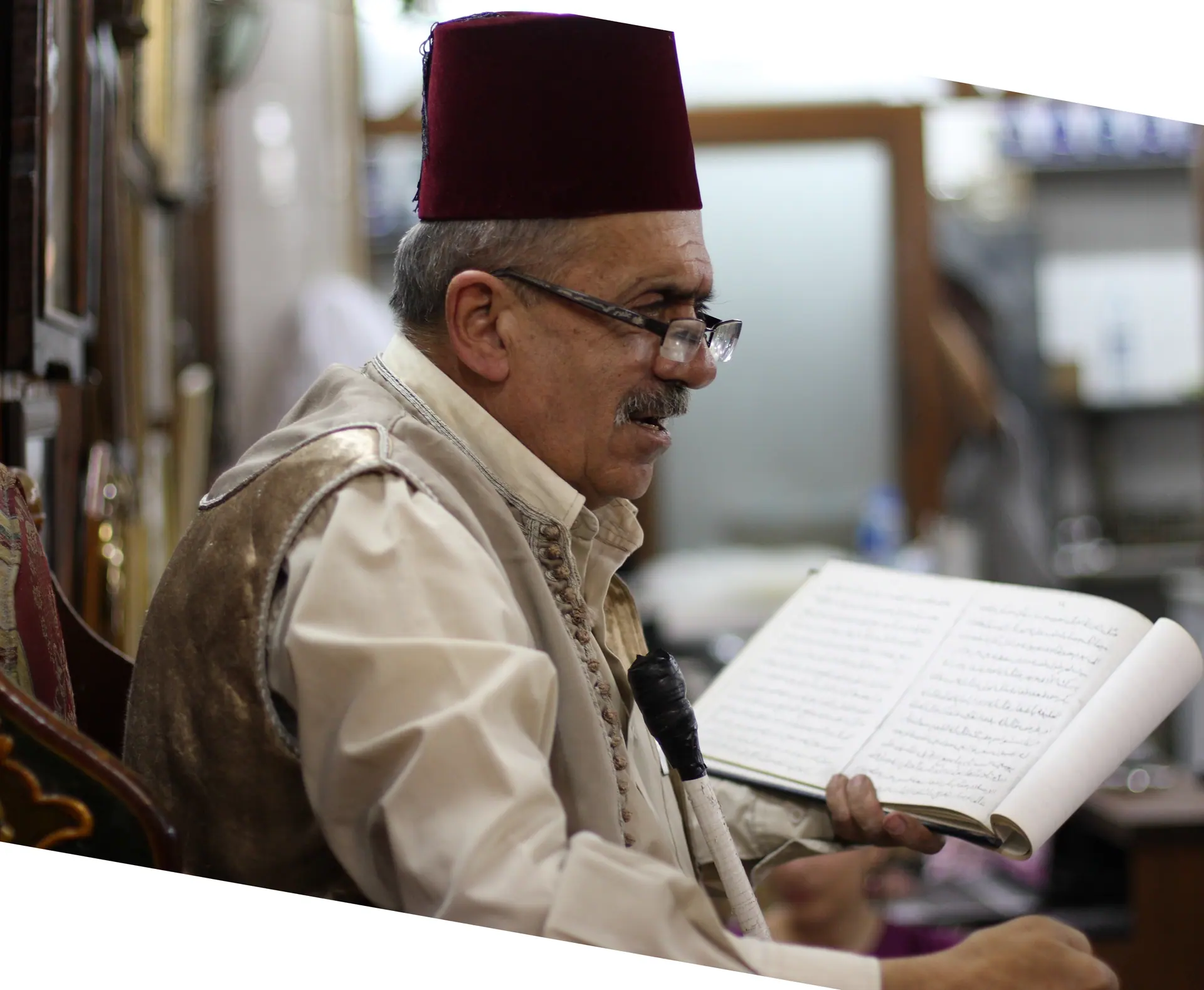
Damascus (an-Nawfara café), 2010-09-10 – Abu Shady, the last professional hakawati (storyteller) in Syria, at the an-Nawfara café, 2010
Damascus · 2010yeowatzup · CC BY 2.0 · Wikimedia Commons
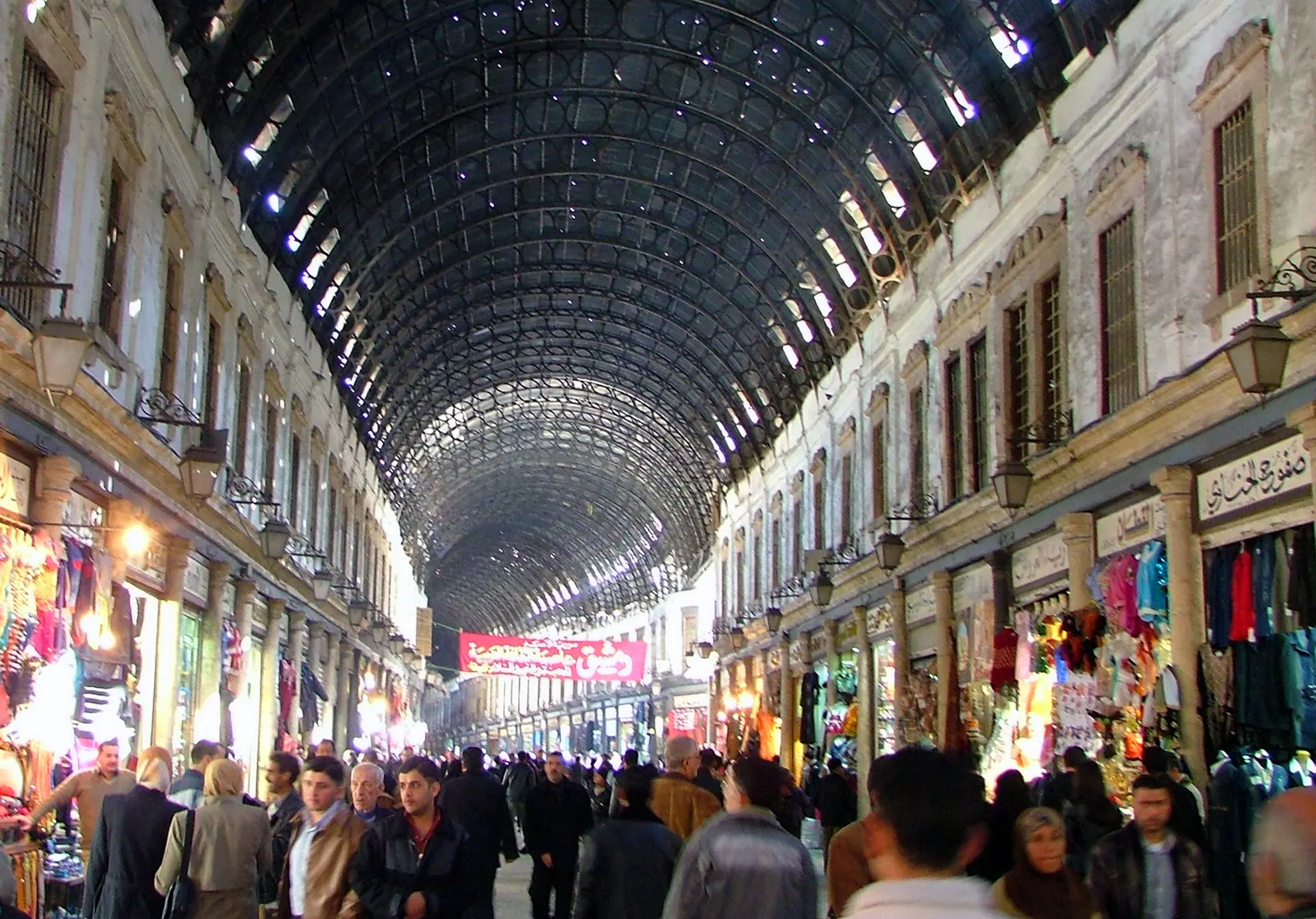
Damascus, 2008-02-07 – Al-Hamidiyah Souq is the largest and the most central souk in Damascus, Syria, located inside the old walled city next to the Citadel. The s
Damascus · 2008James Gordon from Los Angeles, California, USA · CC BY 2.0 · Wikimedia Commons
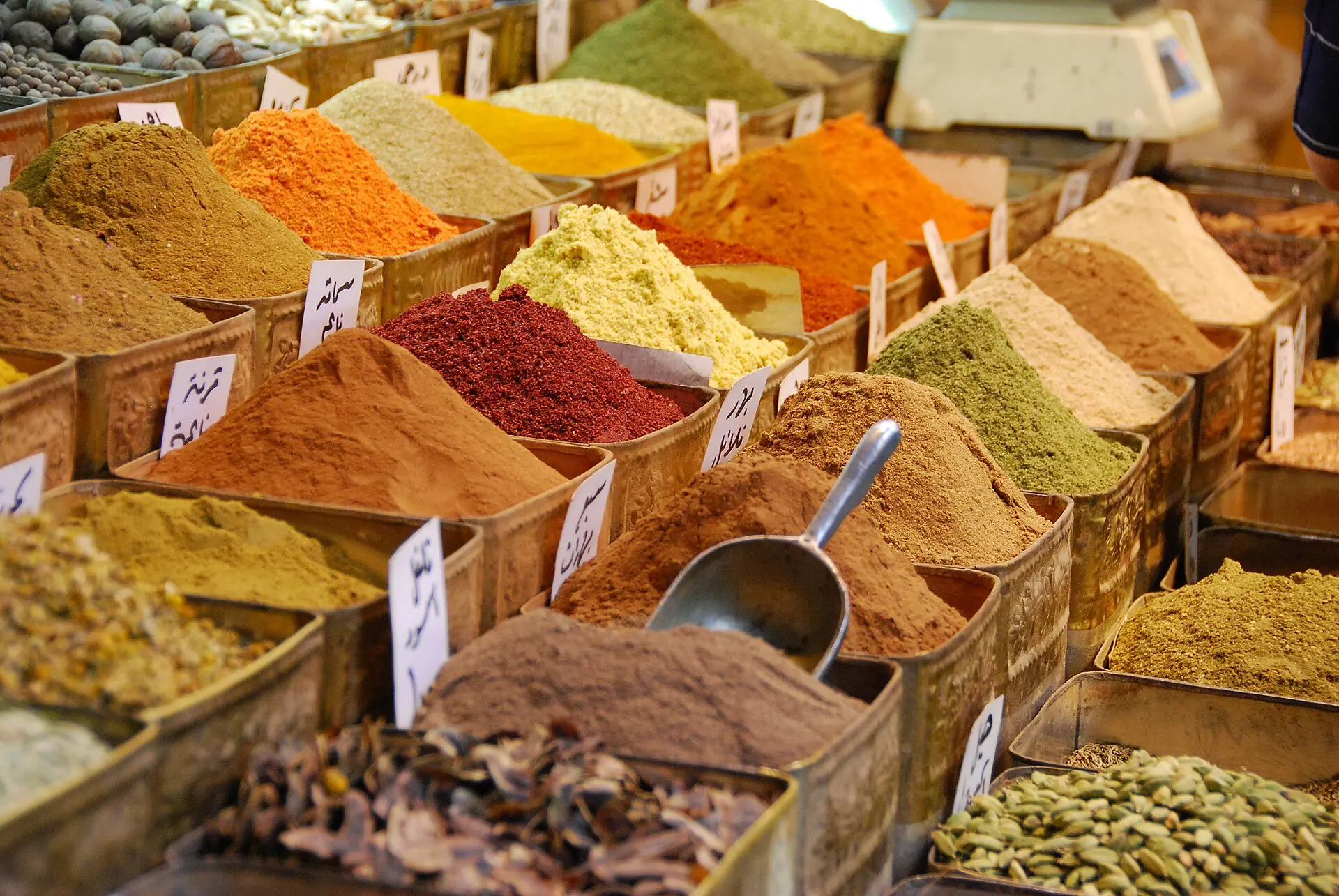
Damaskus, 2008-05-04 – Spice souq, Damascus, Syria
Damascus · 2008James Gordon from Los Angeles, California, USA · CC BY 2.0 · Wikimedia Commons
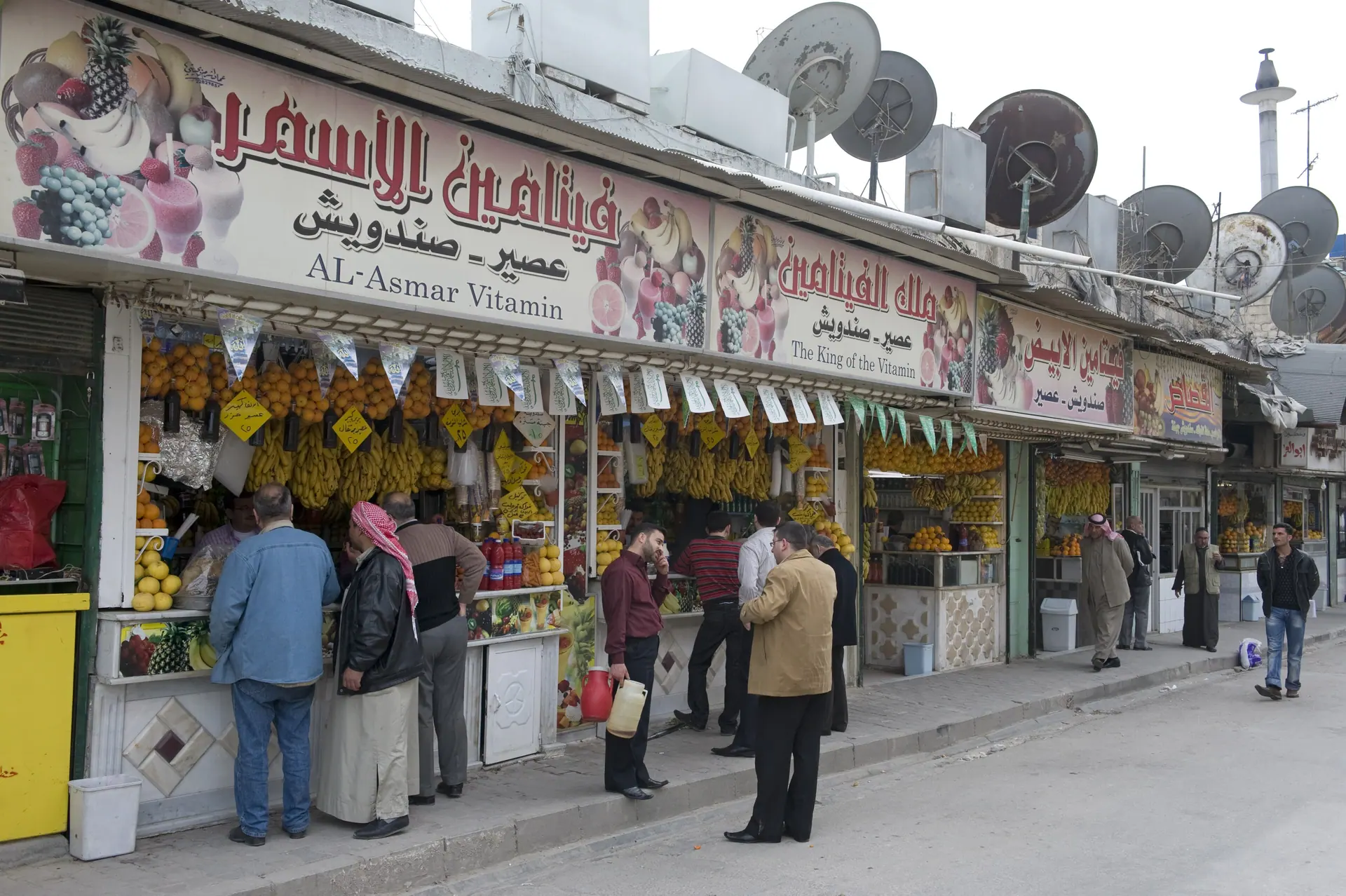
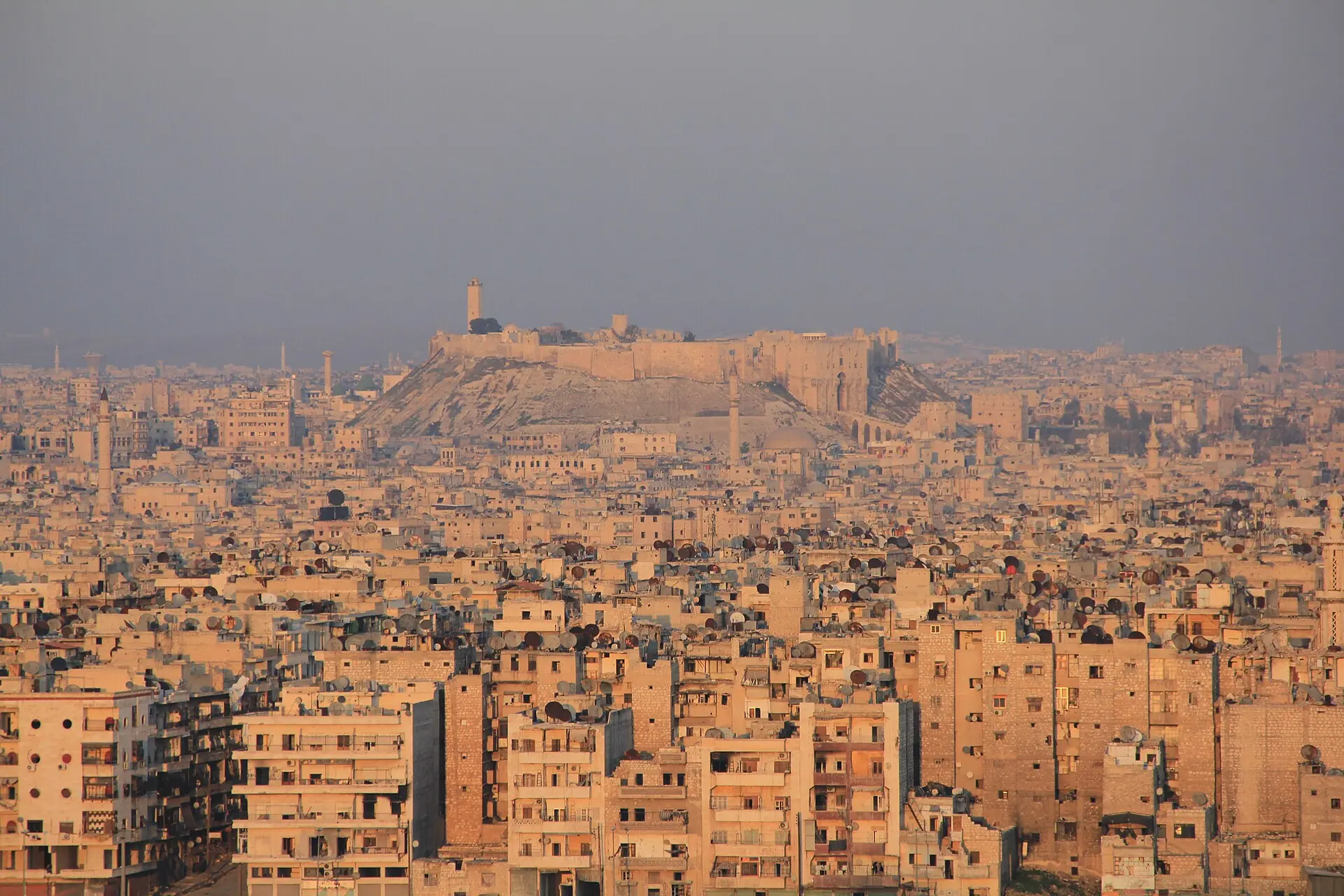
Aleppo, 2009-04-08 – Fresh fruit juice stall in Aleppo, 2009
Aleppo · 2009Dosseman · CC BY-SA 4.0 · Wikimedia Commons
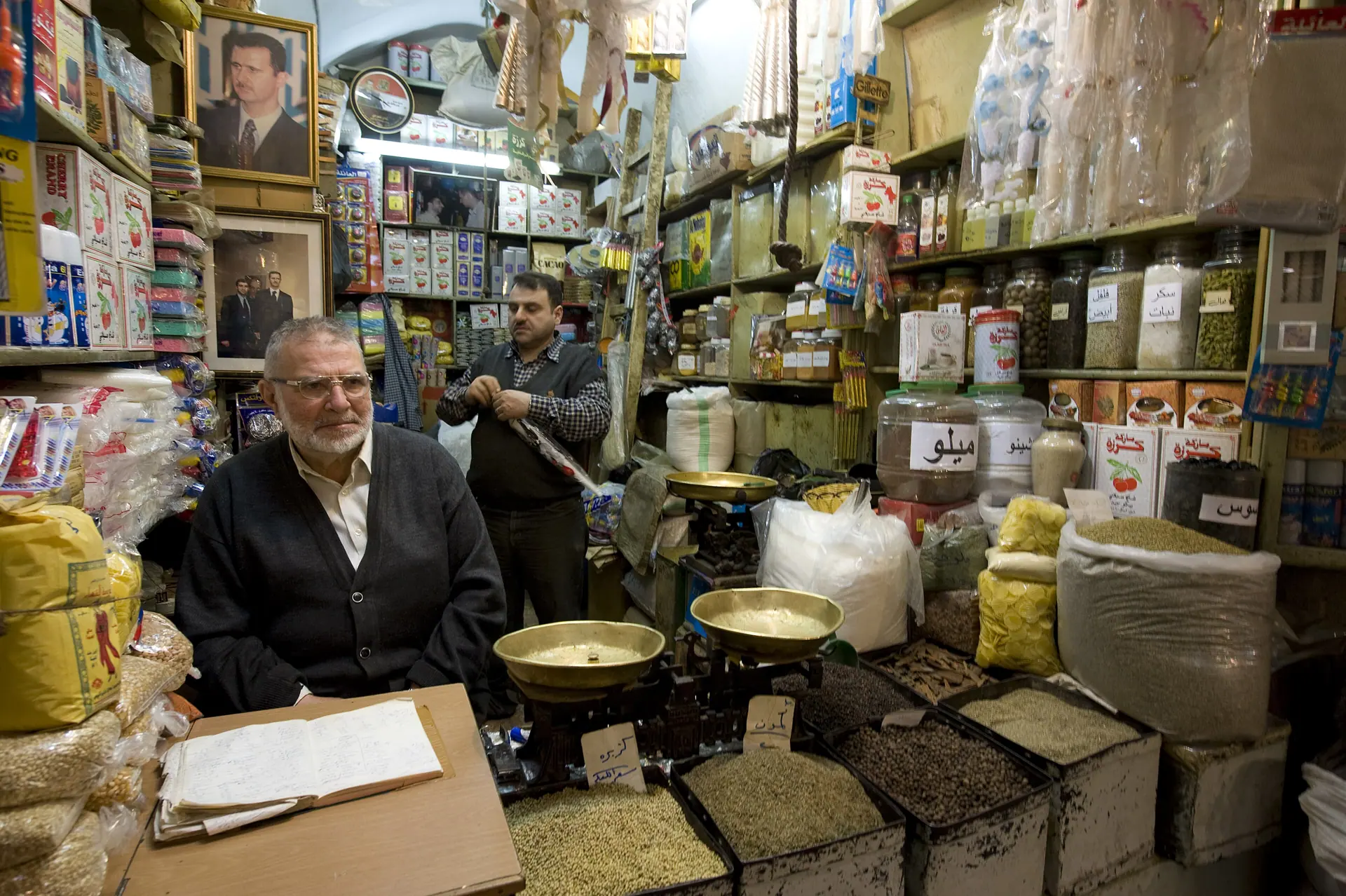
Aleppo, 2009-04-09 – Merchant in the souqs of Aleppo, 2009
Aleppo · 2009Dosseman · CC BY-SA 4.0 · Wikimedia Commons
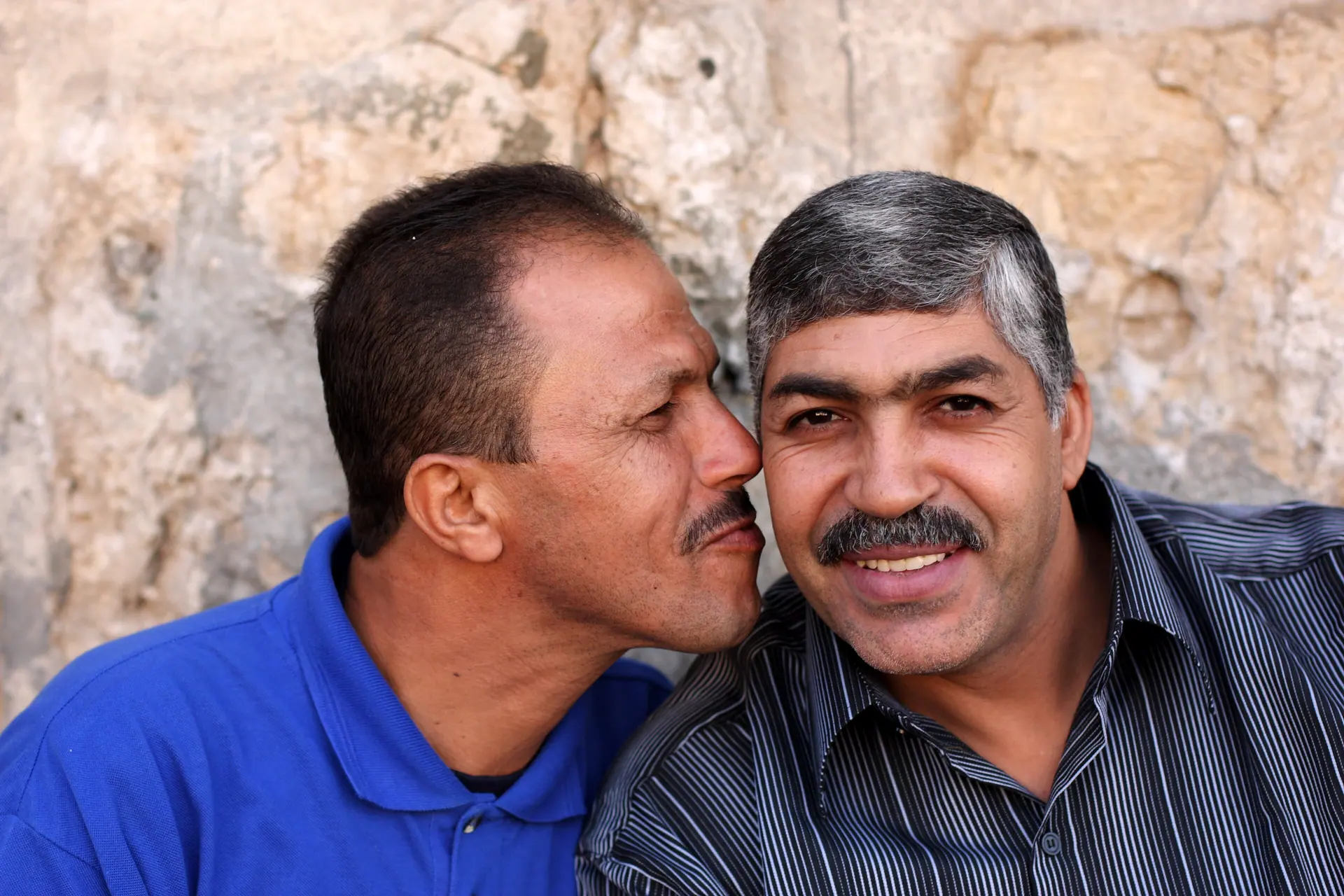
Damascus, 2010-09-11 – Friends in Damascus, 2010
Damascus · 2010yeowatzup · CC BY 2.0 · Wikimedia Commons
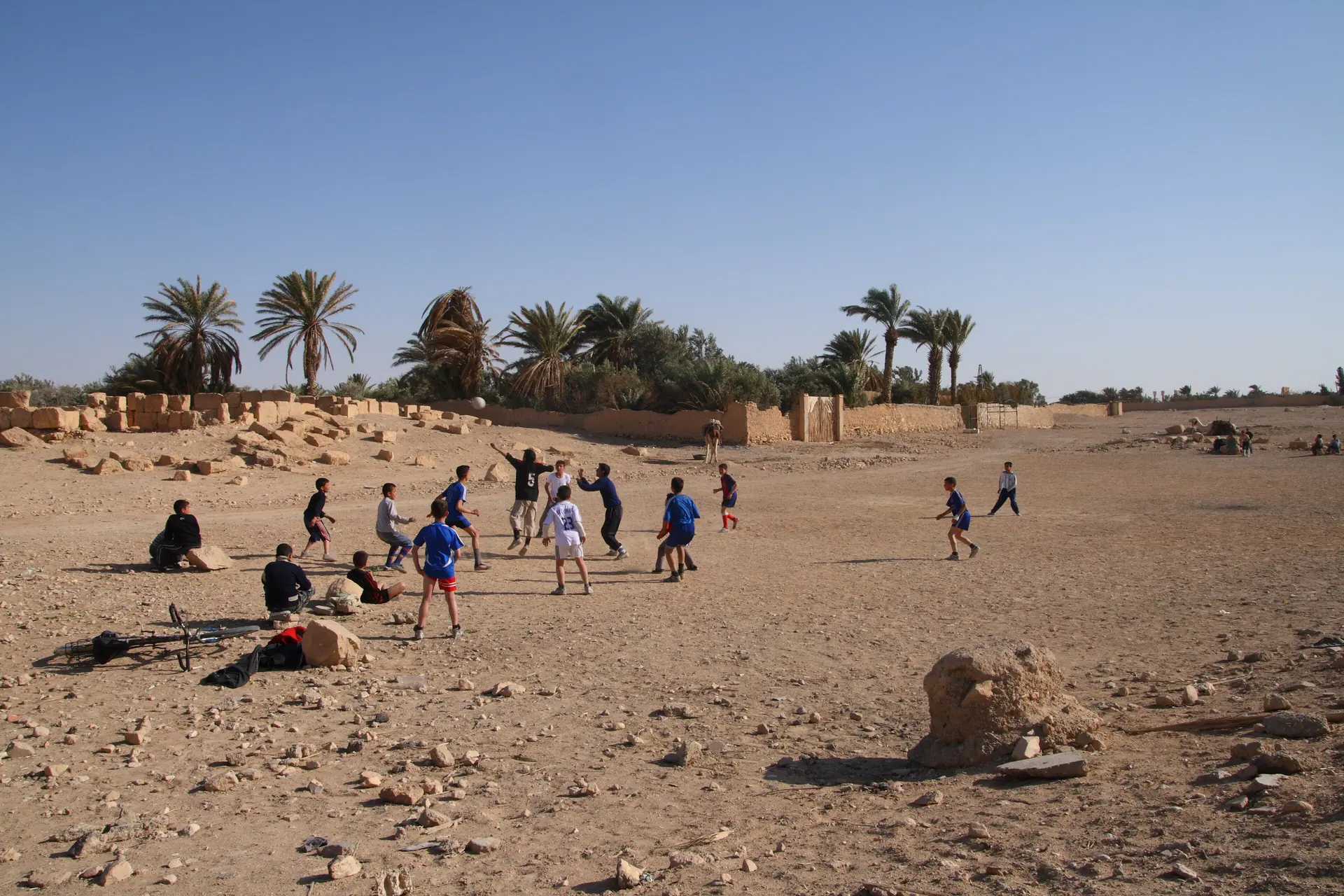
Palmyra, 2009-03-31 – Children playing football beside the ruins of Palmyra, 2009
Palmyra · Homs · 2009Ed Brambley from Cambridge, UK · CC BY-SA 2.0 · Wikimedia Commons
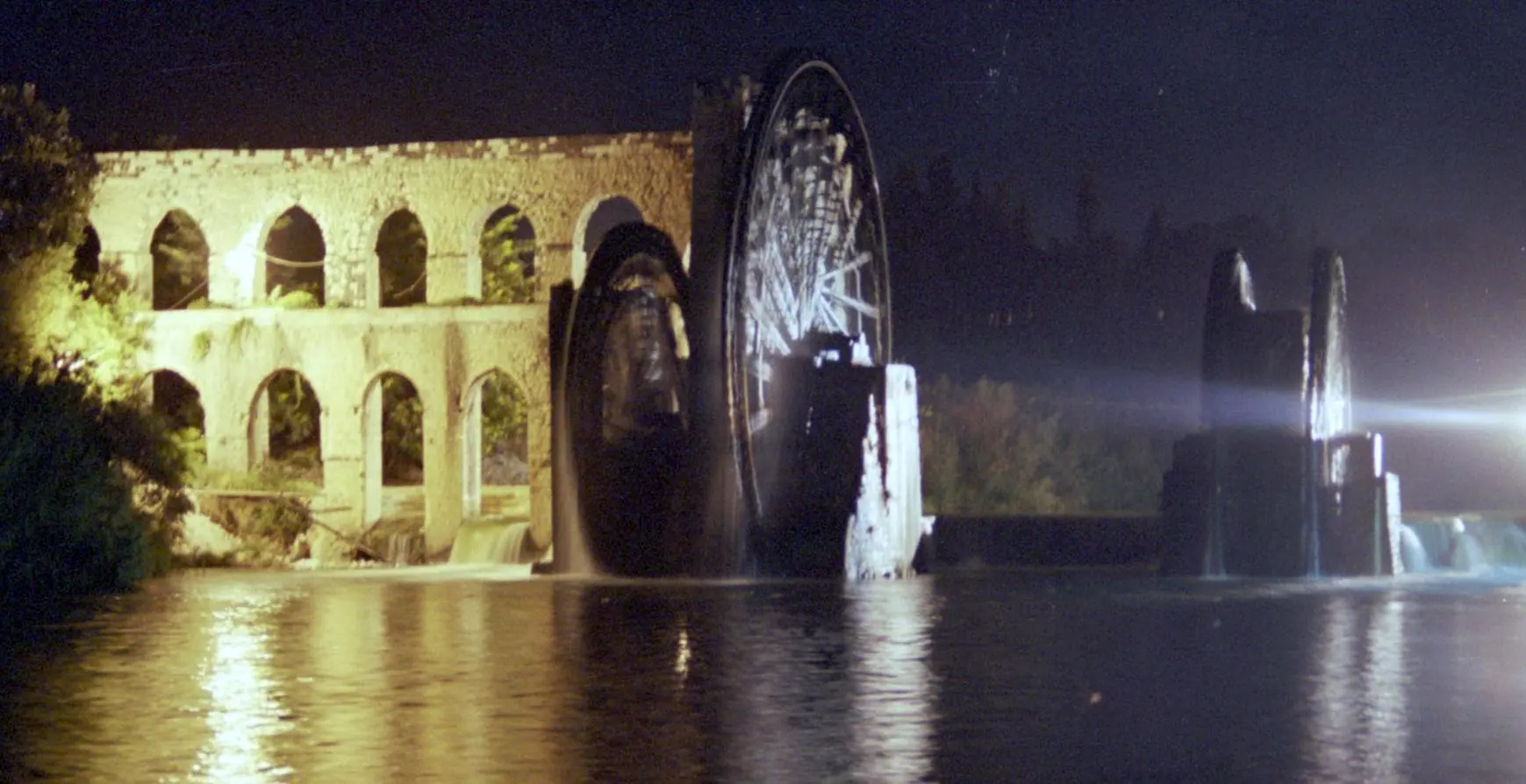
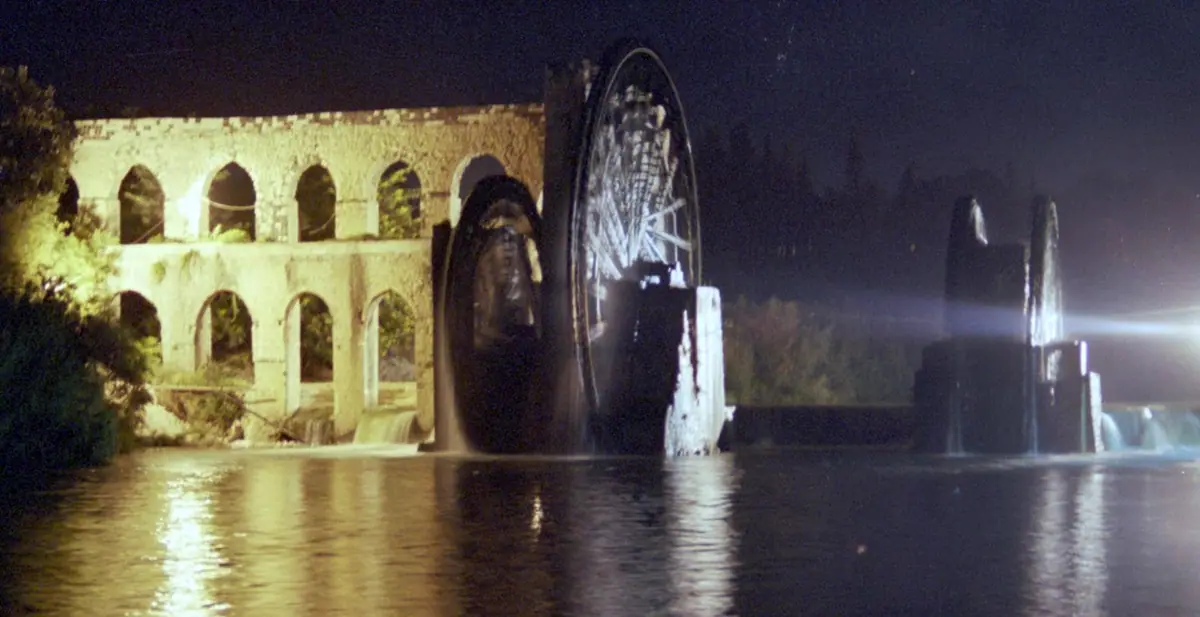
Hama, 2010-10-31 – The norias of Hama at night, 2010
Hama · 2010Fulvio's photos · CC BY-SA 2.0 · Wikimedia Commons
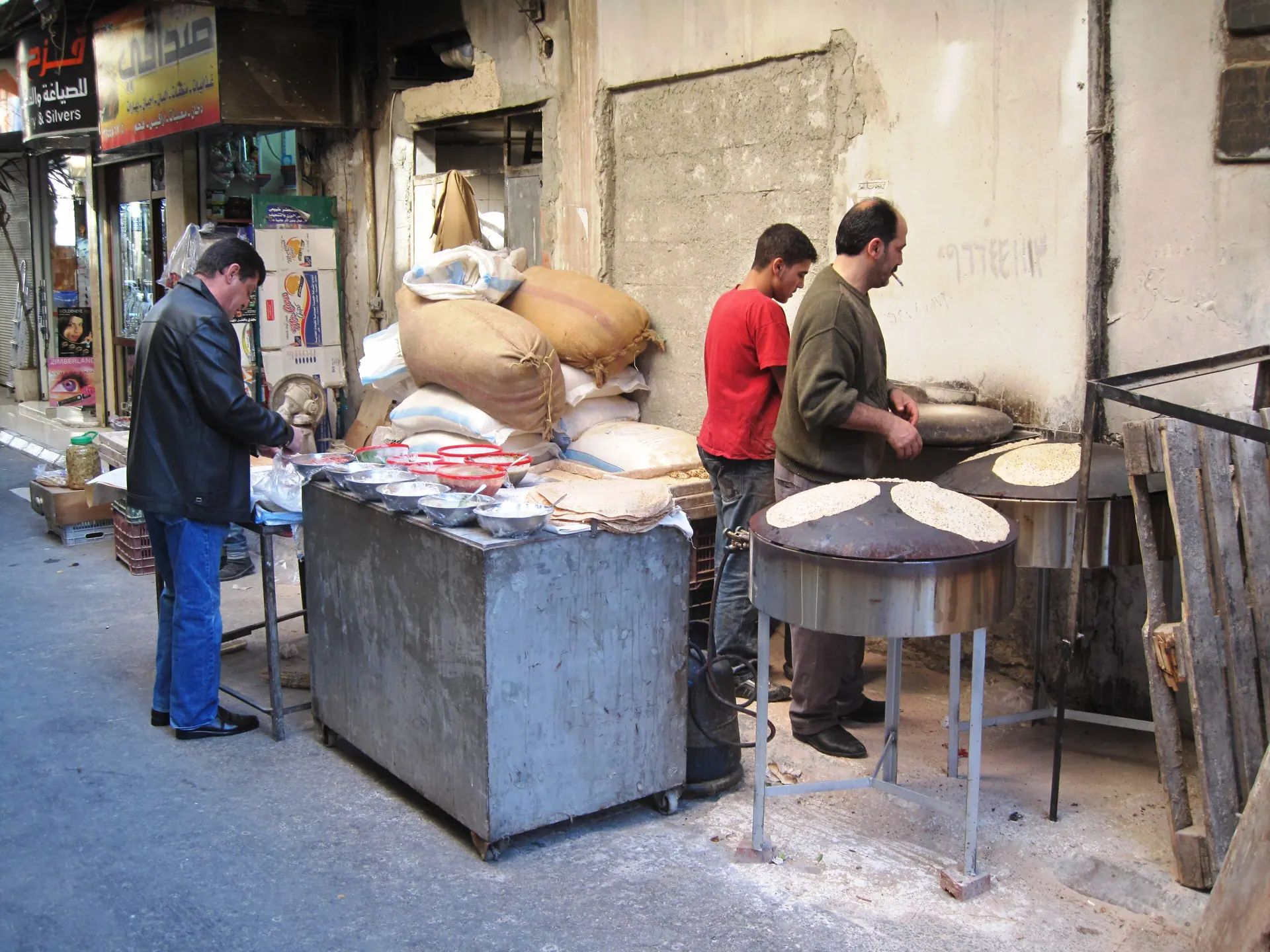
Damascus, 2010-01-01 – Bakers in Damascus, 2010
Damascus · 2010Dickelbers · CC BY-SA 3.0 · Wikimedia Commons
Aleppo, 2010-09-16 – Souq al-Attarine, Aleppo, 2010
Aleppo · 2010yeowatzup · CC BY 2.0 · Wikimedia Commons
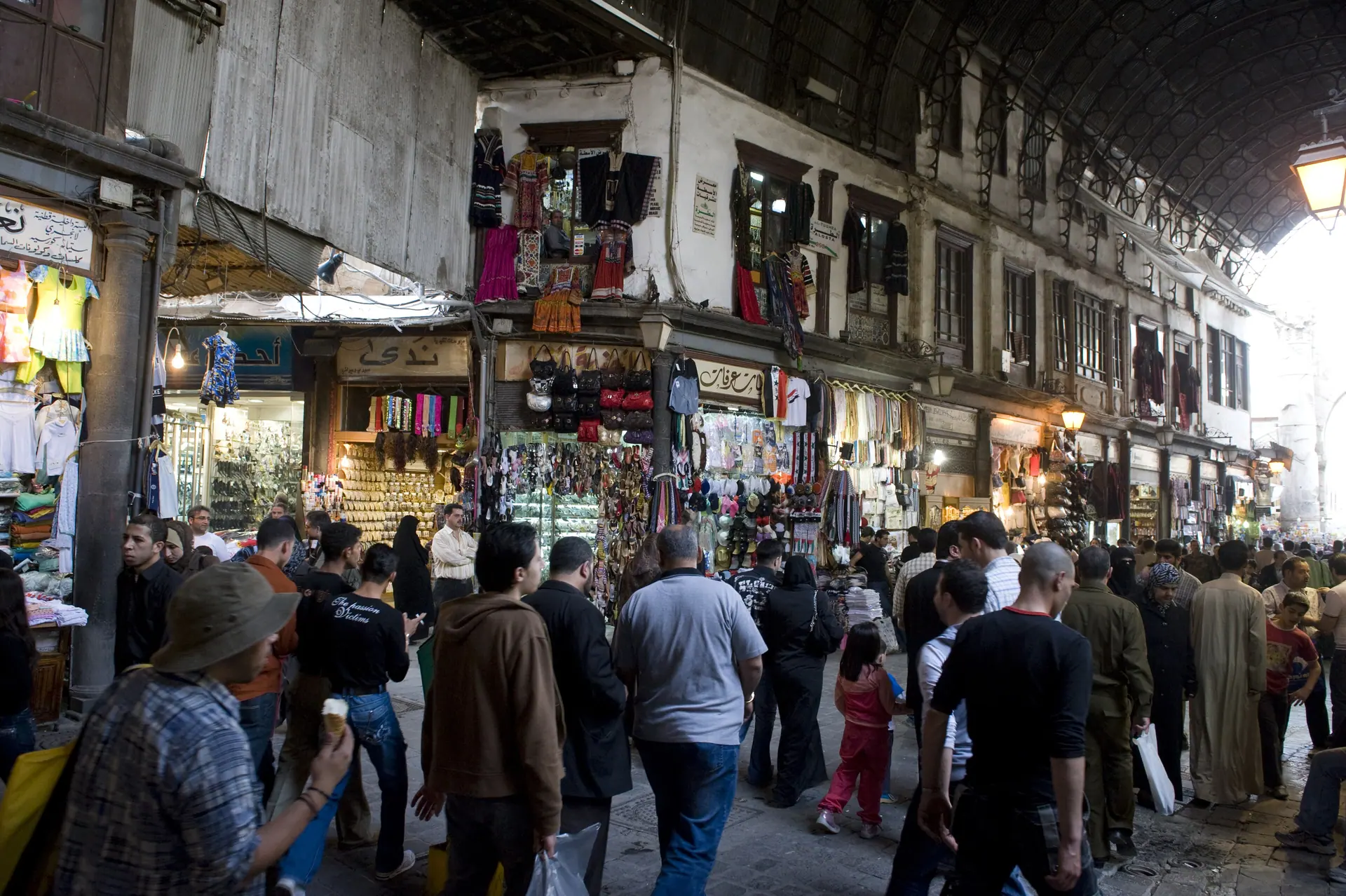
Damascus, 2009-04-14 – Al-Hamidiyah Souq, Damascus, 2009
Damascus · 2009Dosseman · CC BY-SA 4.0 · Wikimedia Commons
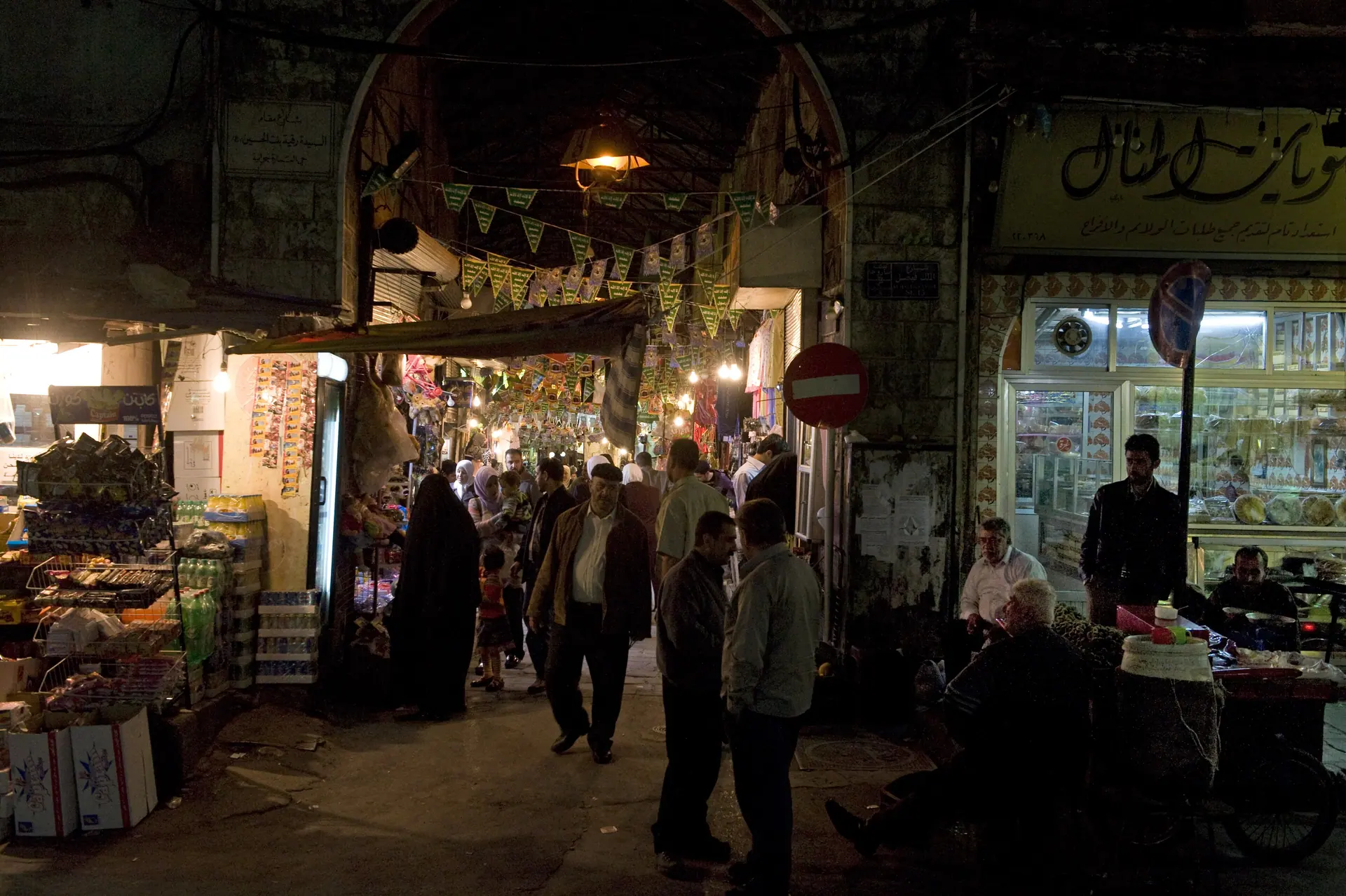
Damascus, 2009-04-15 – Evening in the old city of Damascus, 2009
Damascus · 2009Dosseman · CC BY-SA 4.0 · Wikimedia Commons
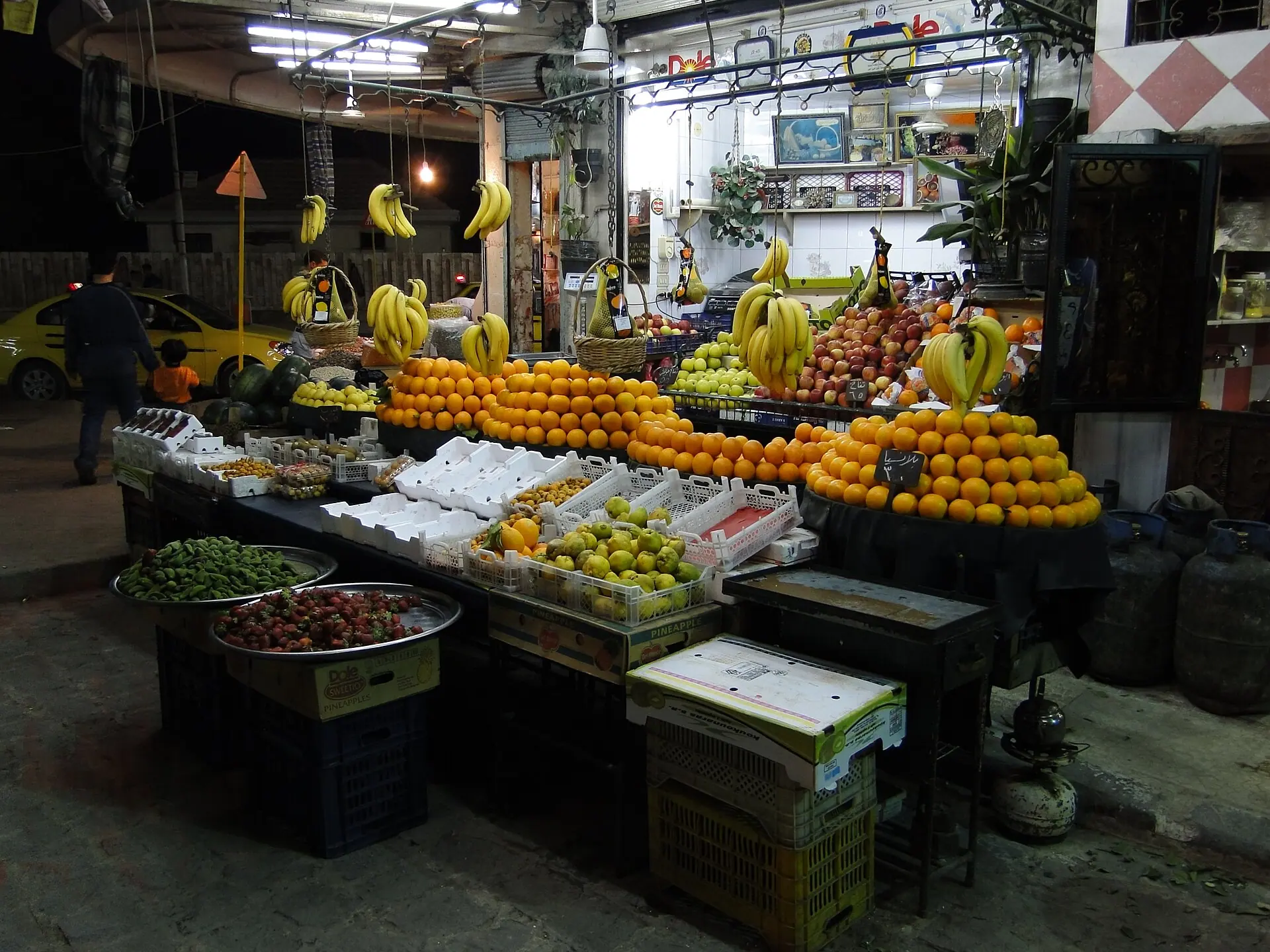
Hama, 2010-04-02 – Fruit market in Hama , Syria
Hama · 2010Bernard Gagnon · CC BY-SA 3.0 · Wikimedia Commons
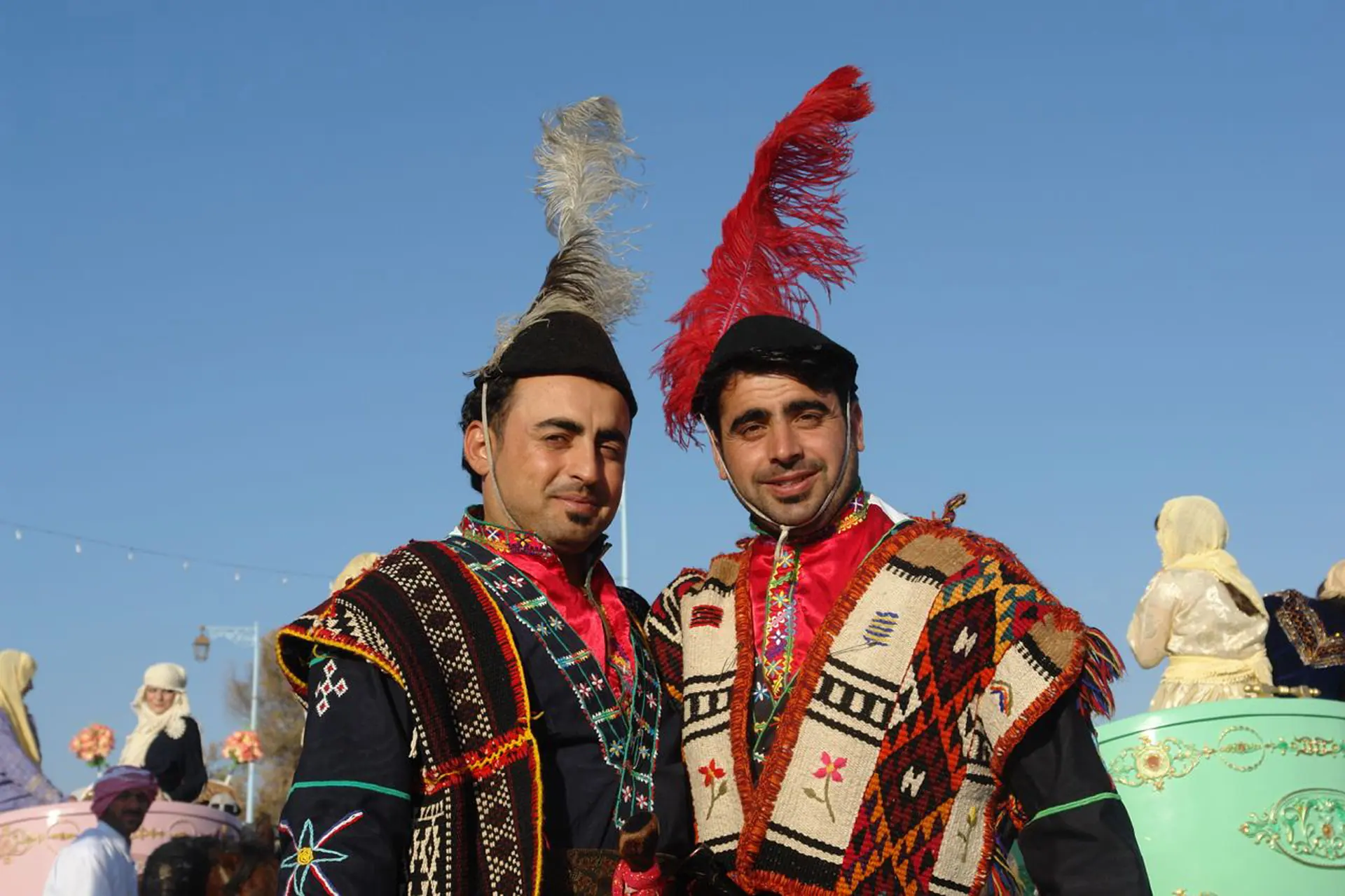
Aleppo, 2008-04-28 – Villagers in traditional dress at the Citadel of Aleppo, 2008
Aleppo · 2008James Gordon from Los Angeles, California, USA · CC BY 2.0 · Wikimedia Commons
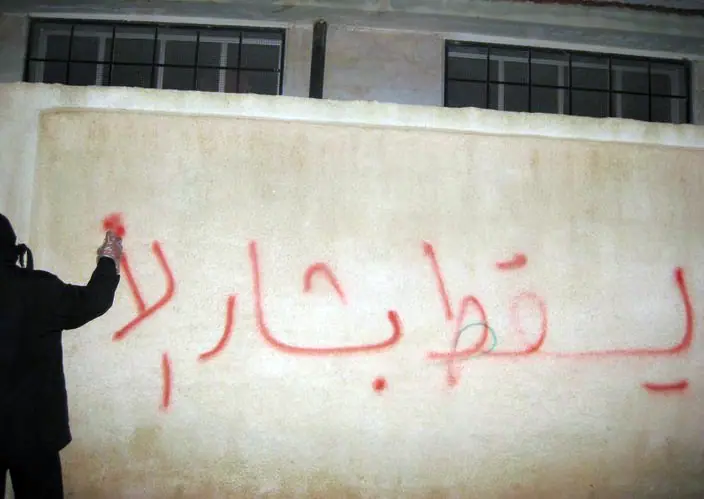
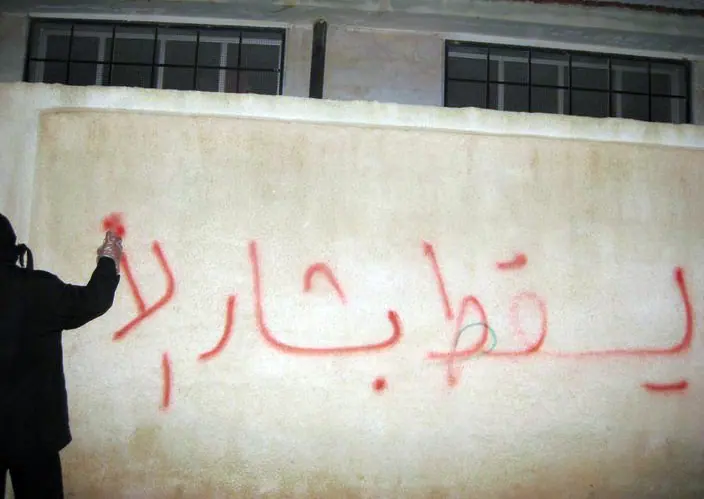
2011-04-12 – The phrase "Down with Bashar" ( yaskut Baššār ), during the Syrian Uprising 2011.
2011jan Sefti · CC BY-SA 2.0 · Wikimedia Commons
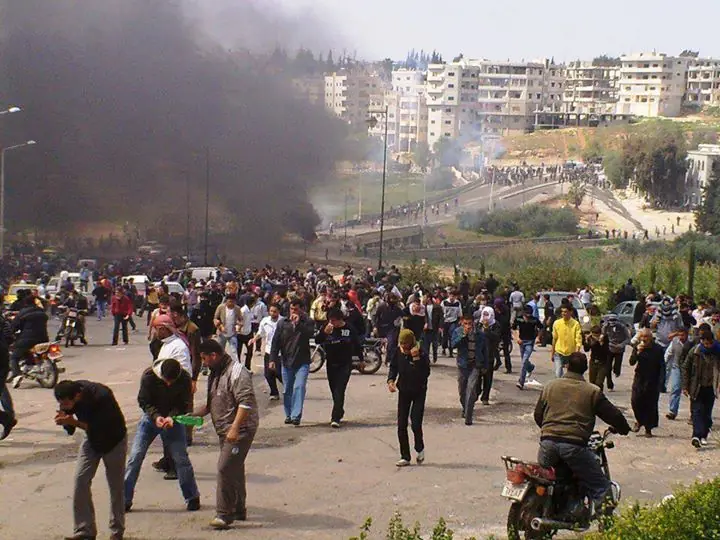
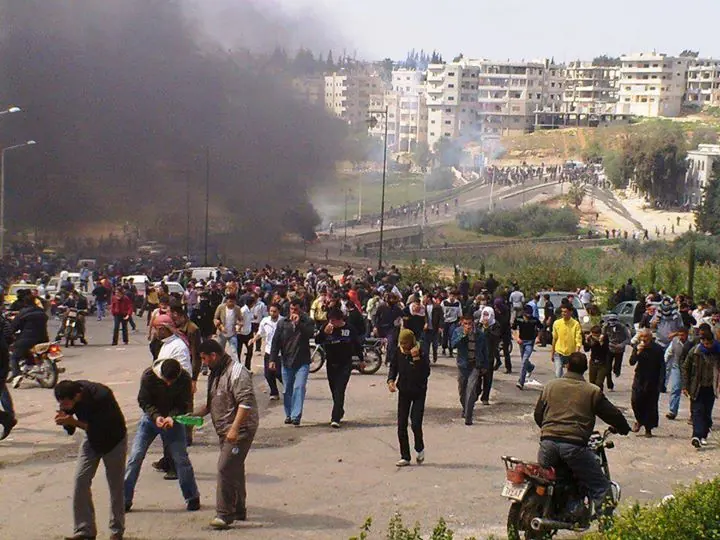
Banyas, 2011-04-29 – Said to be "A demonstration in the city of Banyas," Syria at the "Friday of rage" in 29 ِApril 2011.
Banyas · Tartus · 2011Syria-Frames-Of-Freedom (Pro-FSA information) · CC BY 2.0 · Wikimedia Commons
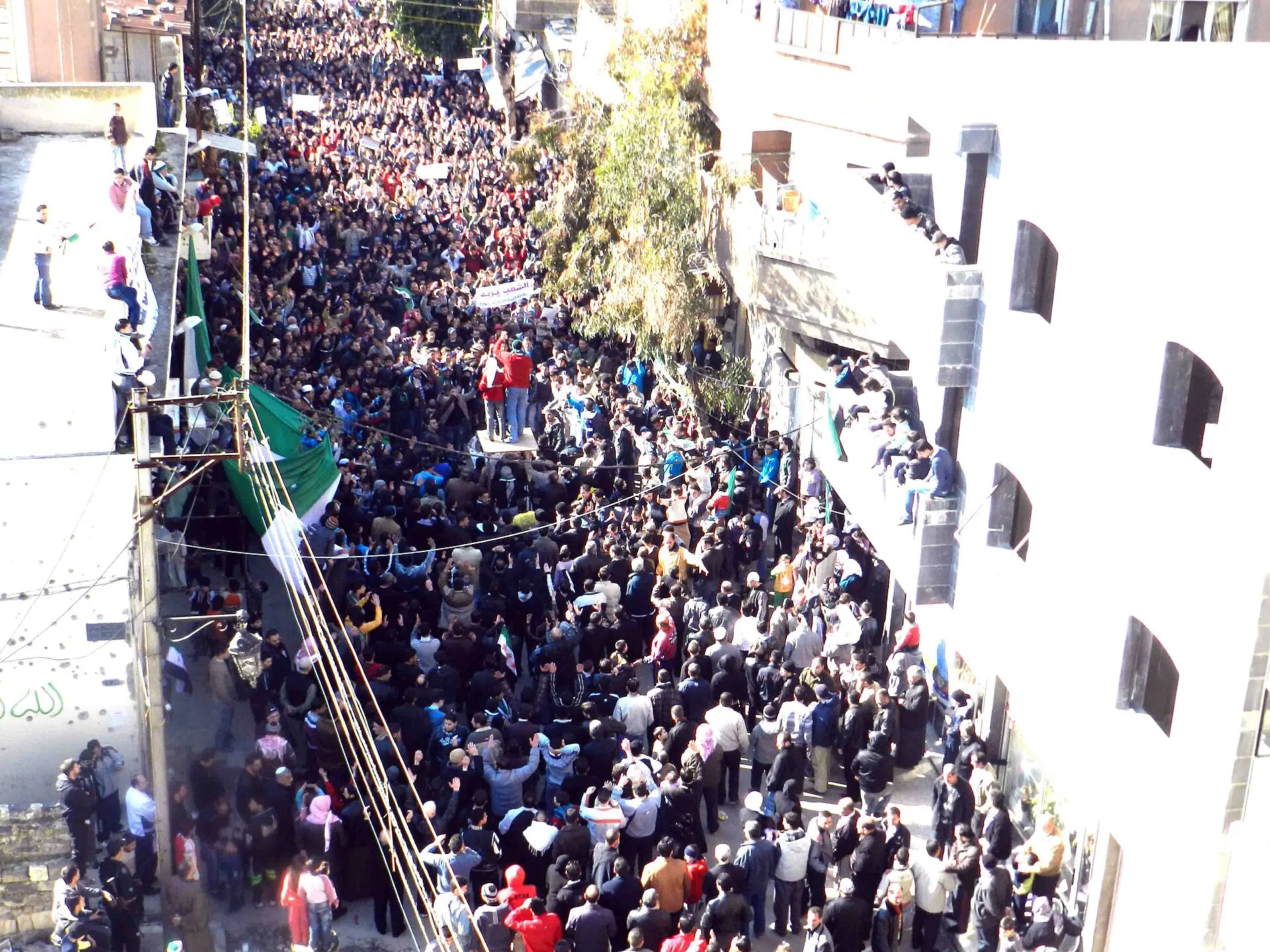
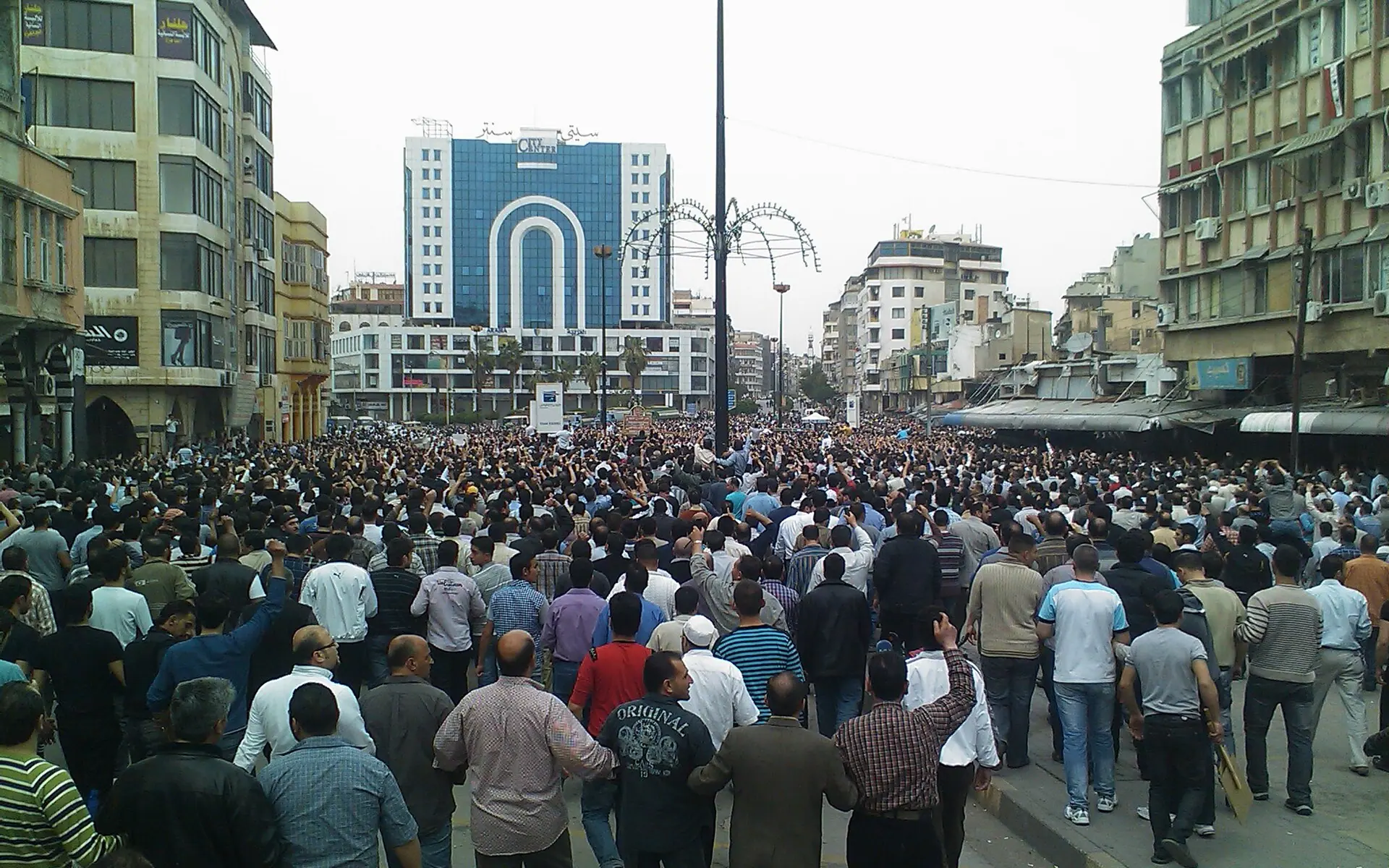
Homs, 2012-02-03 – صورة تظهر مظاهرة حاشدة في حي باب الدريب بمدينة حمص في سوريا ضمن الثورة المطالبة بإسقاط النظام هناك
Homs · 2012Bo yaser · CC BY-SA 3.0 · Wikimedia Commons
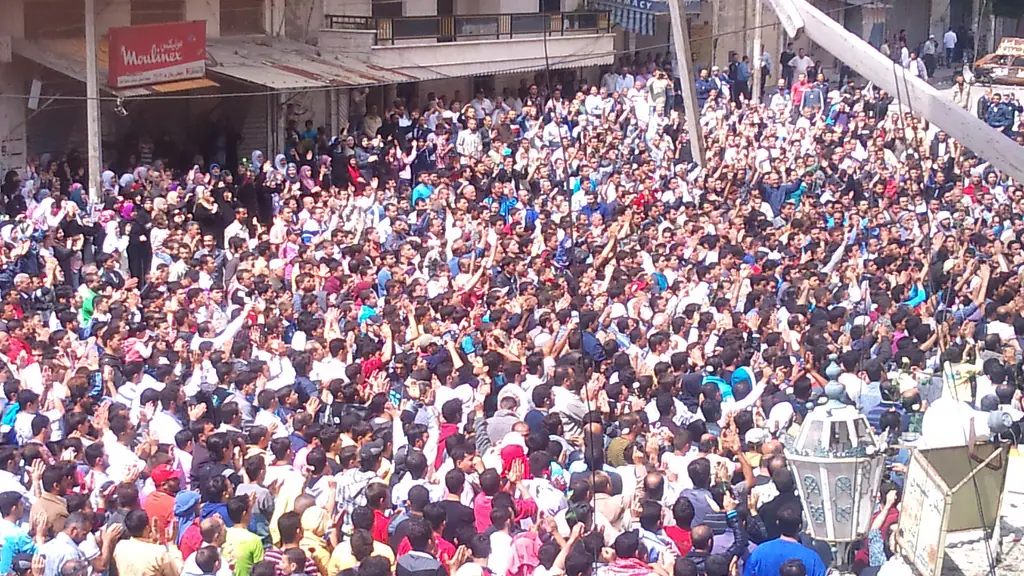
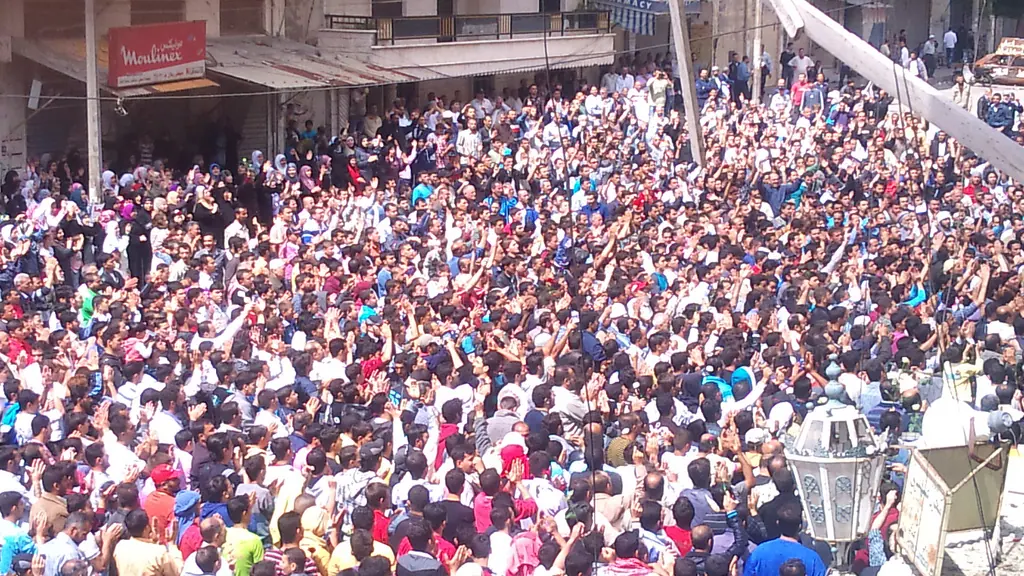
Banyas, 2011-09-16 – A demonstration in the city of Banyas, Syria at 6th may 2011.
Banyas · Tartus · 2011Syria-Frames-Of-Freedom · CC BY 2.0 · Wikimedia Commons
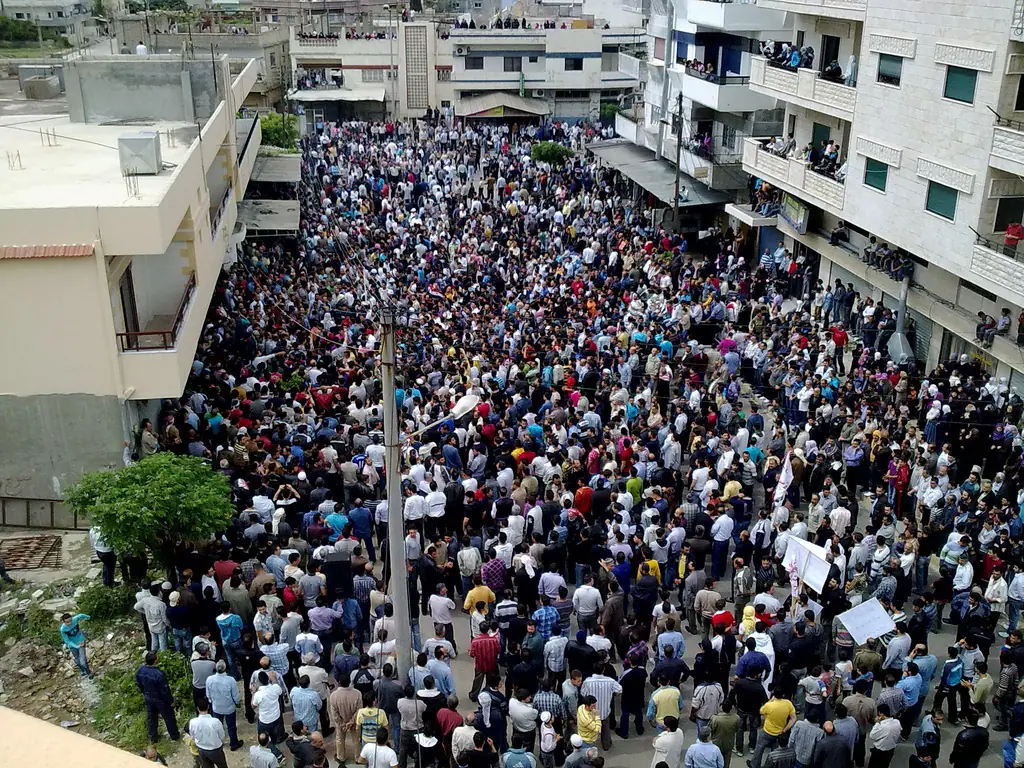
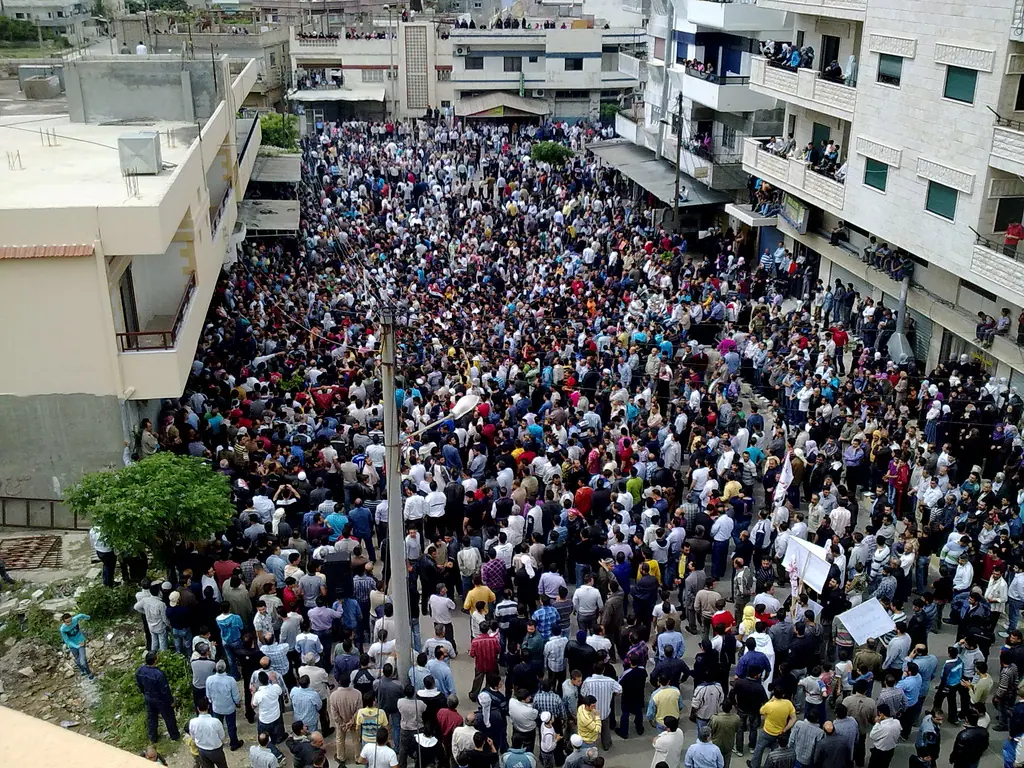
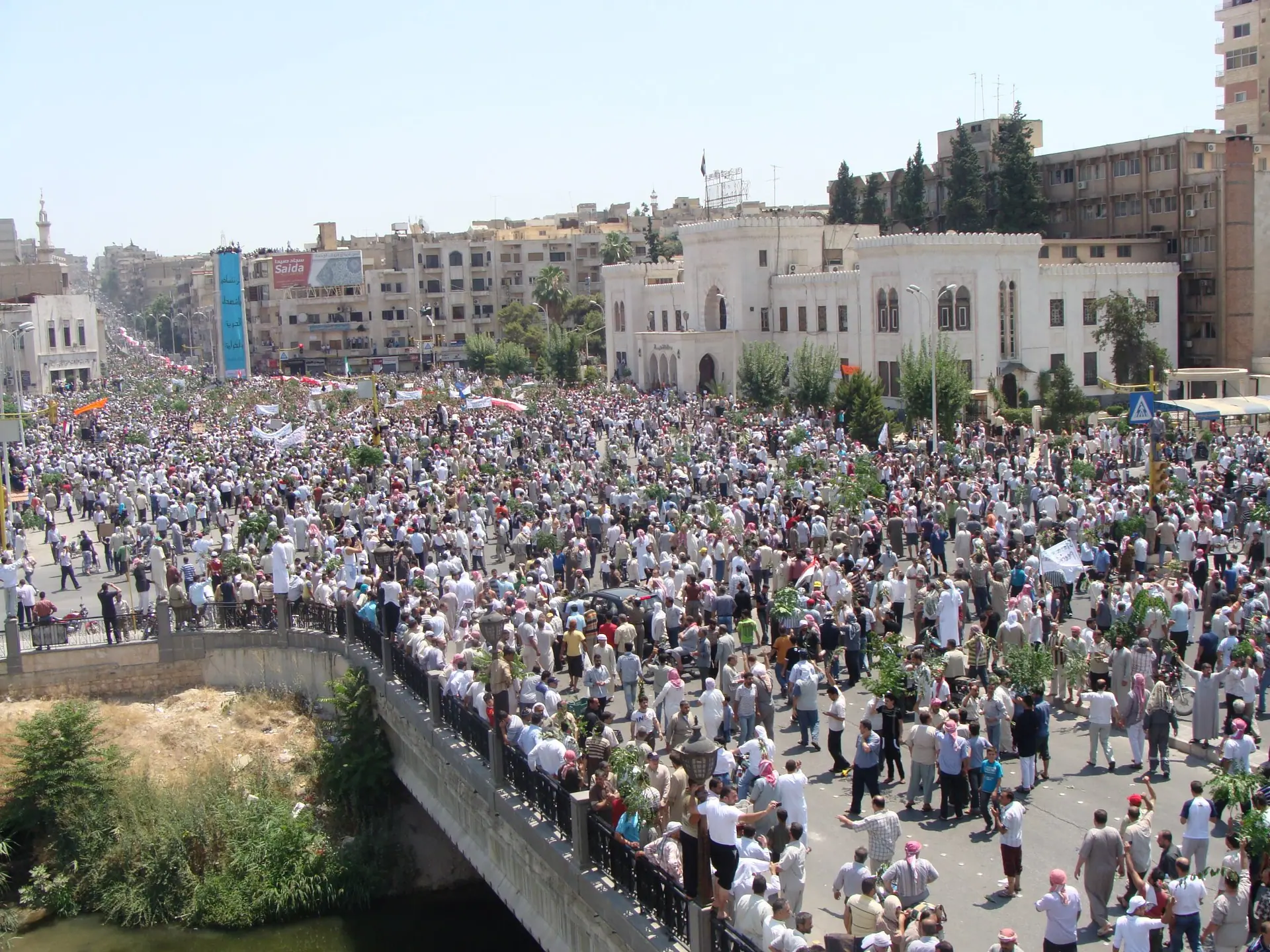
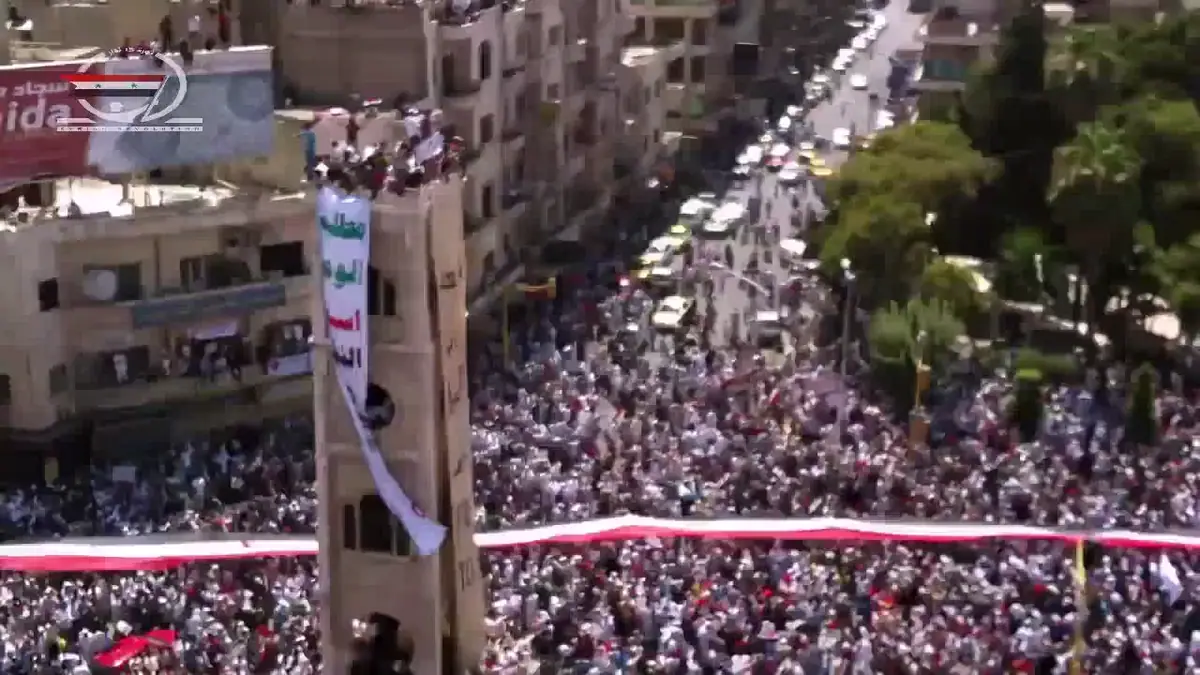
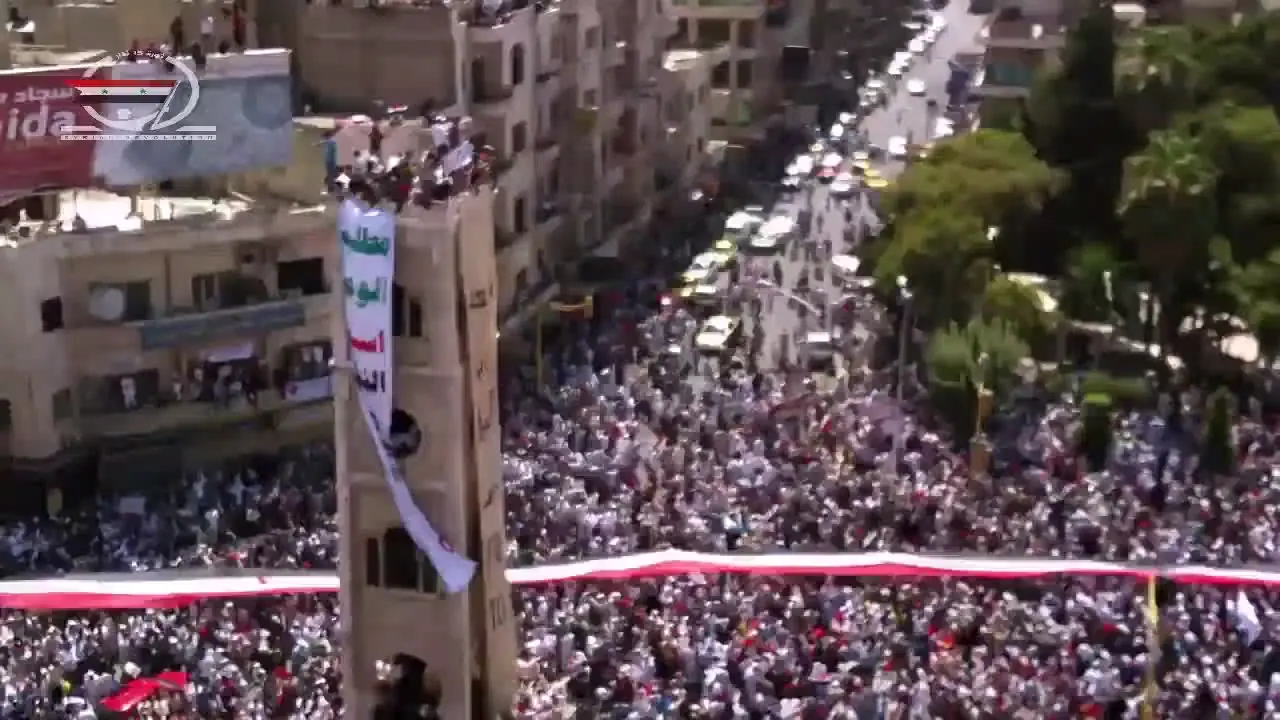
Hama, 2011-07-08 – Hundreds of thousands demonstrate in Hama, 8 July 2011
Hama · 2011The original uploader was Bo yaser at Arabic Wikipedia . · CC BY 2.5 · Wikimedia Commons
Homs, 2011-04-18 – Demonstration in Homs, Syria against Al Assad regime in the Syrian Uprising
Homs · 2011Bo yaser · CC BY-SA 3.0 · Wikimedia Commons
Daraa, 2013 – درعا البلد إحدى المظاهرات في بداية الإحتجاجات
Daraa · 2013User:Ibrahim moukdad · CC BY-SA 3.0 · Wikimedia Commons
Hama, 2011-07-22 – Thousands of protesters parade the flag of Syria and shout " Ash-shab yurid isqat an-nizam " in the Assi square of Hama during the siege in
Hama · 2011Syrian Revolution Network · CC BY 3.0 · Wikimedia Commons
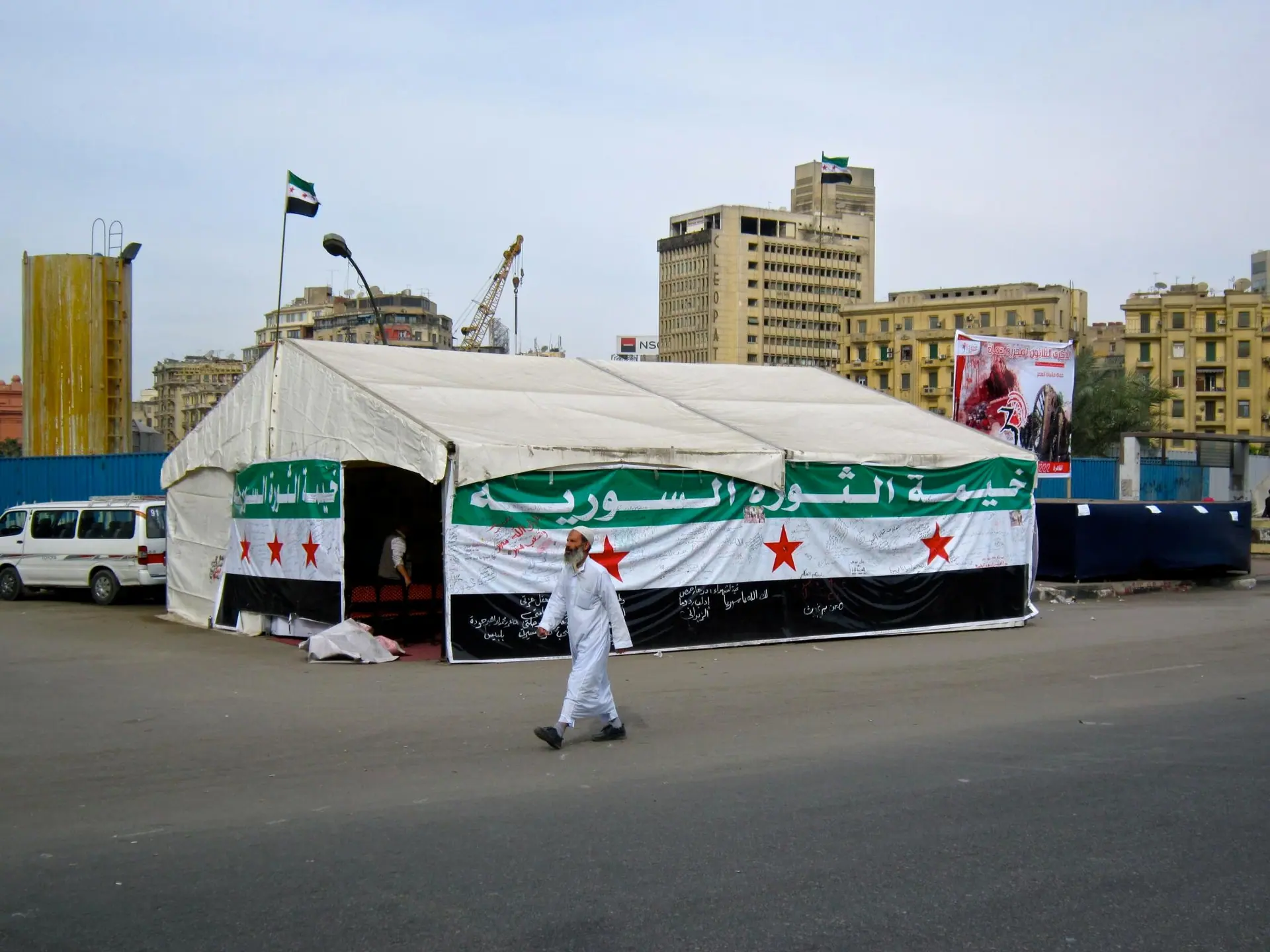
Tahrir Square, Cairo (Egypt), 2012-02-03 – The Syrian Revolution tent in Tahrir
Tahrir Square, Cairo · 2012Gigi Ibrahim from Cairo, Egypt · CC BY 2.0 · Wikimedia Commons
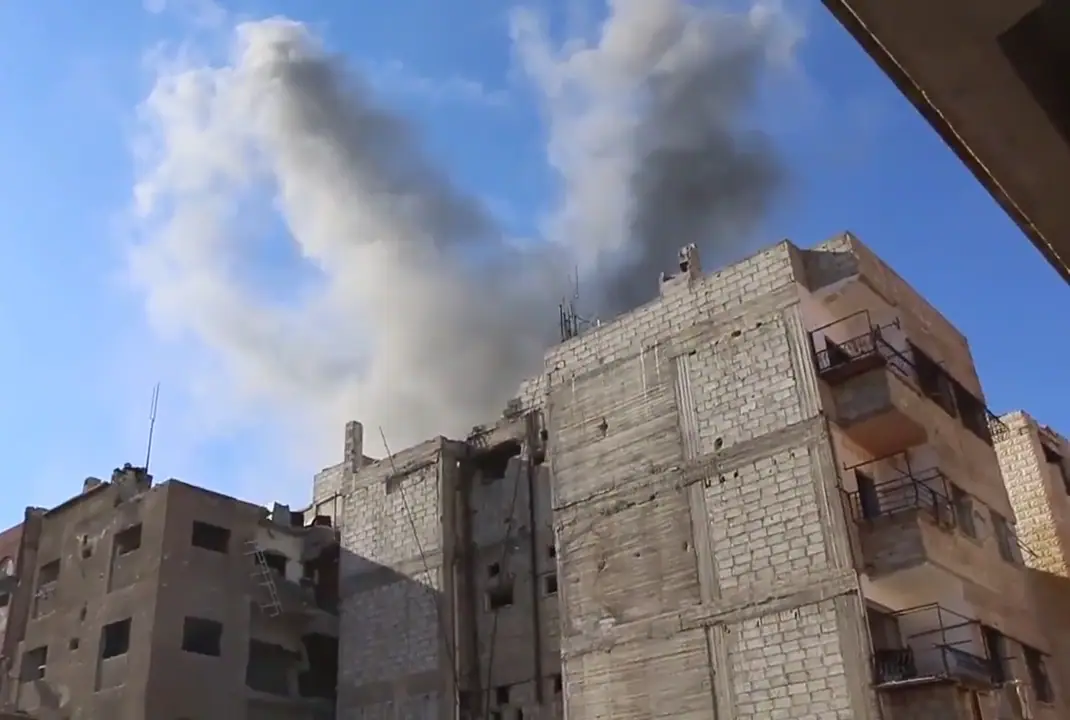
Jobar (Damaskus), 2017-03-20 – Smoke rises from a building in the Damascus suburb of Jobar after being hit by a hit by a bomb during the Qaboun offensive (February–March 2
Jobar · Damascus · 2017Qasioun News Agency · CC BY 3.0 · Wikimedia Commons
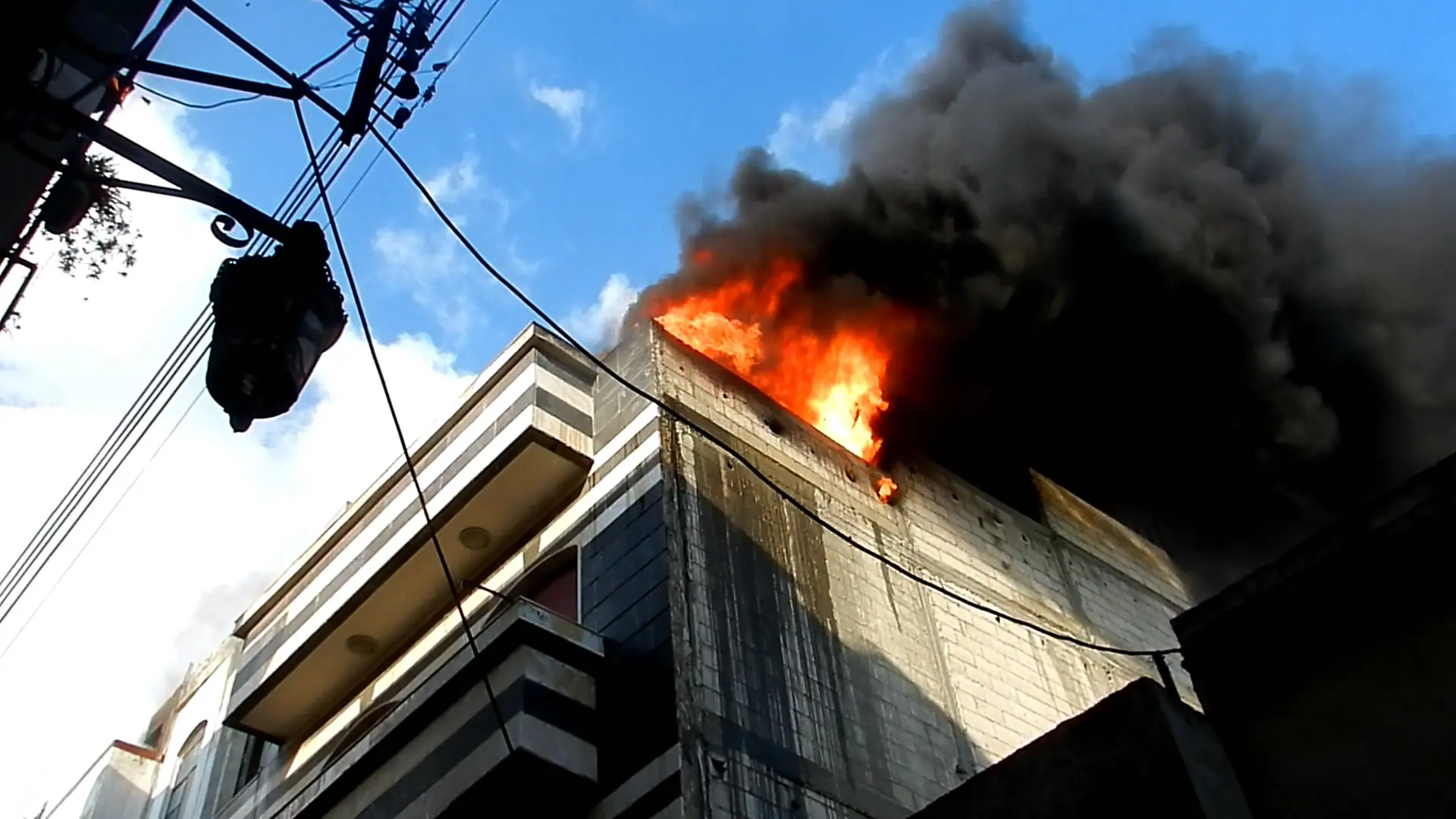
Homs, 2012-02-25 – A burning house in the neighborhood of Orchard Court in Homs Syria after bombing of the Syrian army who is trying to suppress the revolution
Homs · 2012Bo yaser · CC BY-SA 2.5 · Wikimedia Commons
Aleppo, 2016-02-28 – Aleppo in the war
Aleppo · 2016LOUAI BARAKAT · CC BY-SA 4.0 · Wikimedia Commons
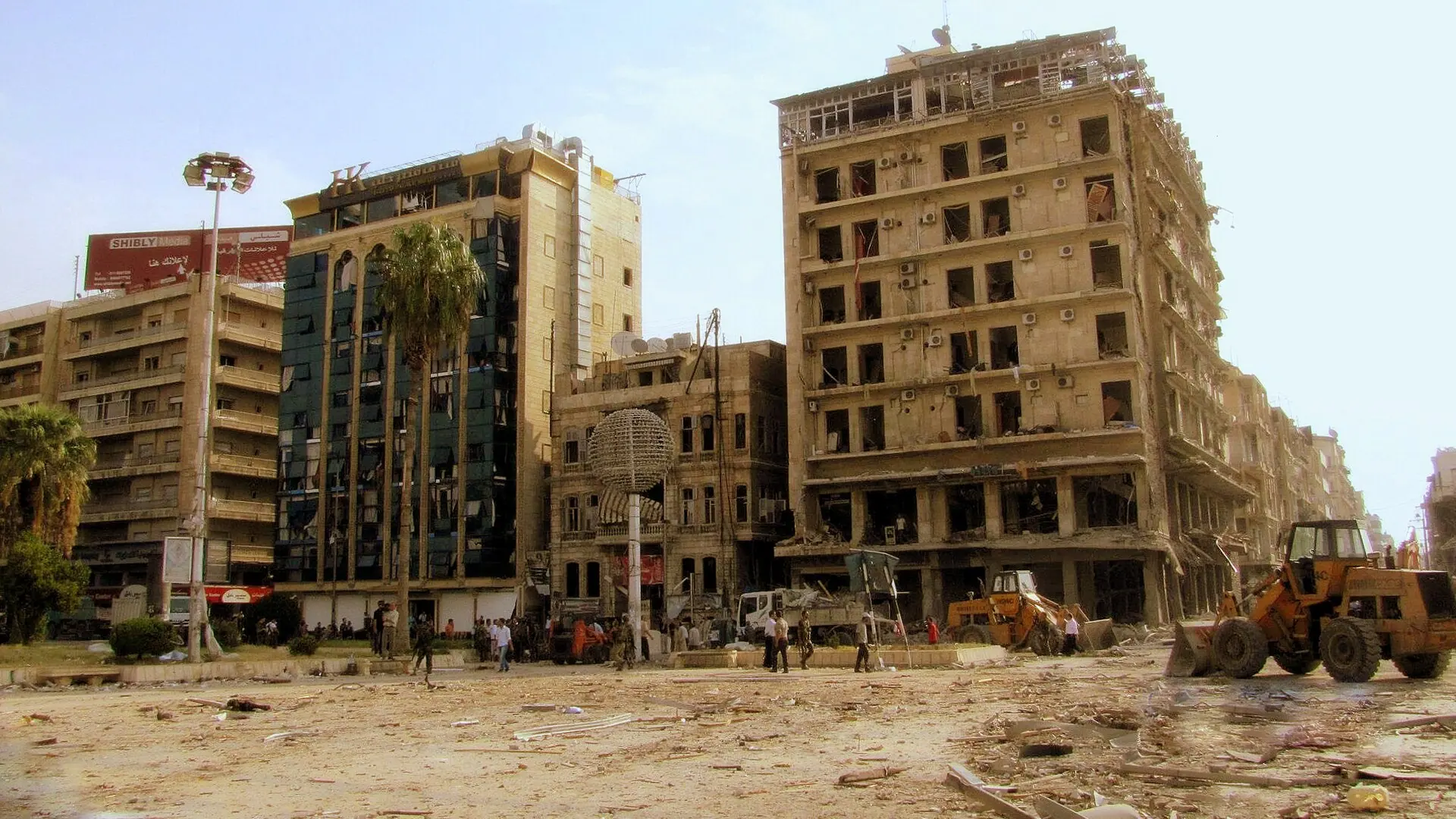
Aleppo, 2012-10-03 – 3 Car bombs hit the central Saadallah al-Jabiri square in Aleppo. [1]
Aleppo · 2012Zyzzzzzy · CC BY 2.0 · Wikimedia Commons
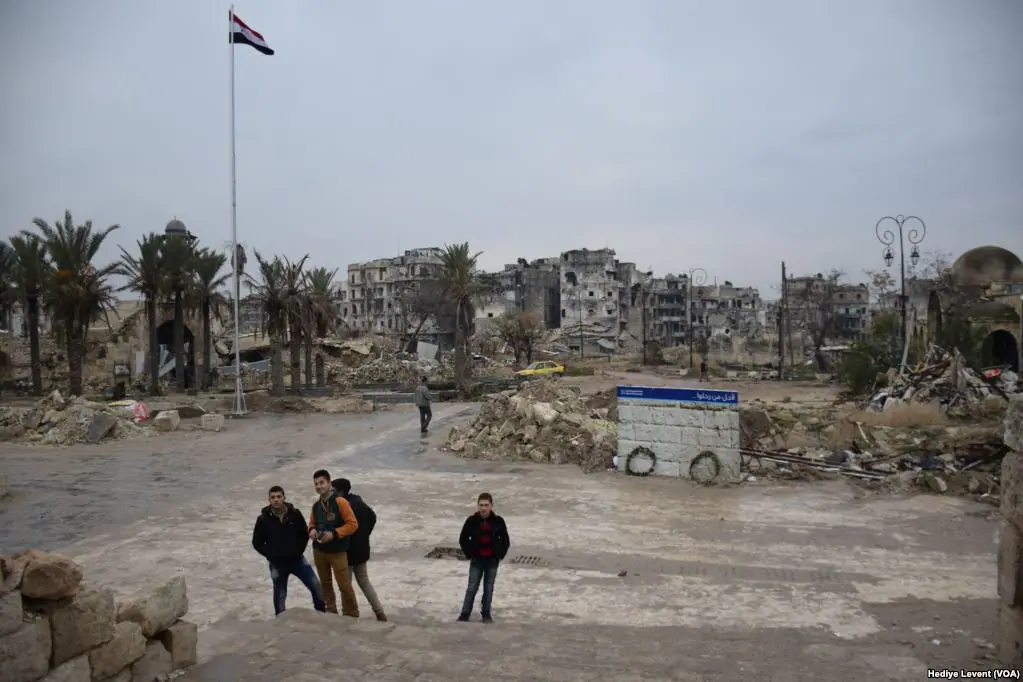
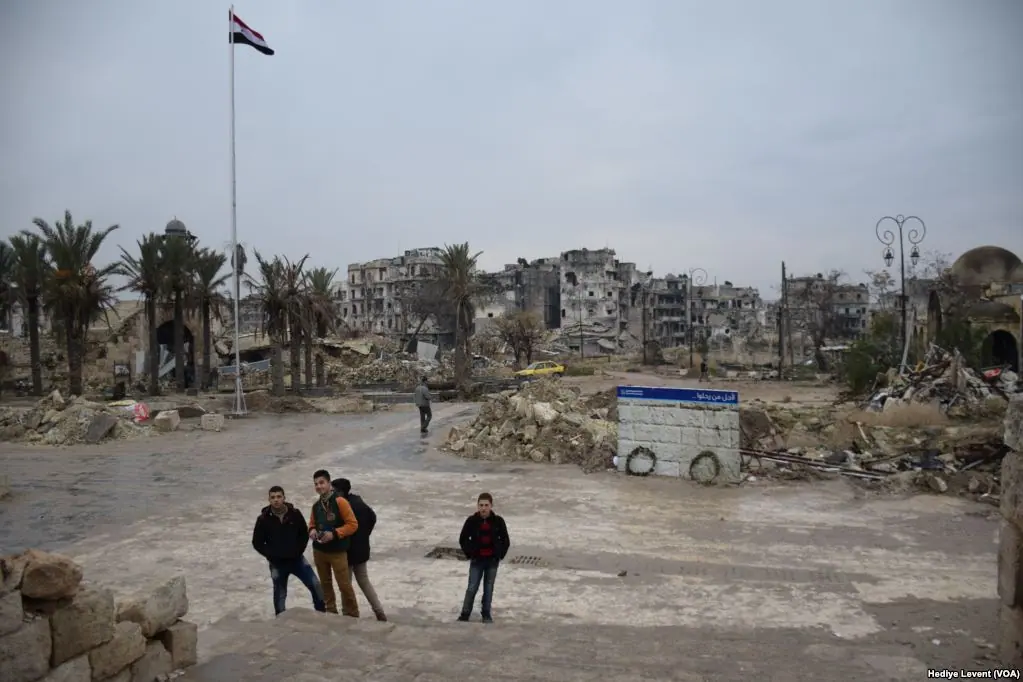
Aleppo, 2017-01-13 – Vieille ville d'Alep, le 13 janvier 2017.
Aleppo · 2017Hediye Levent (VOA) · Public domain · Wikimedia Commons
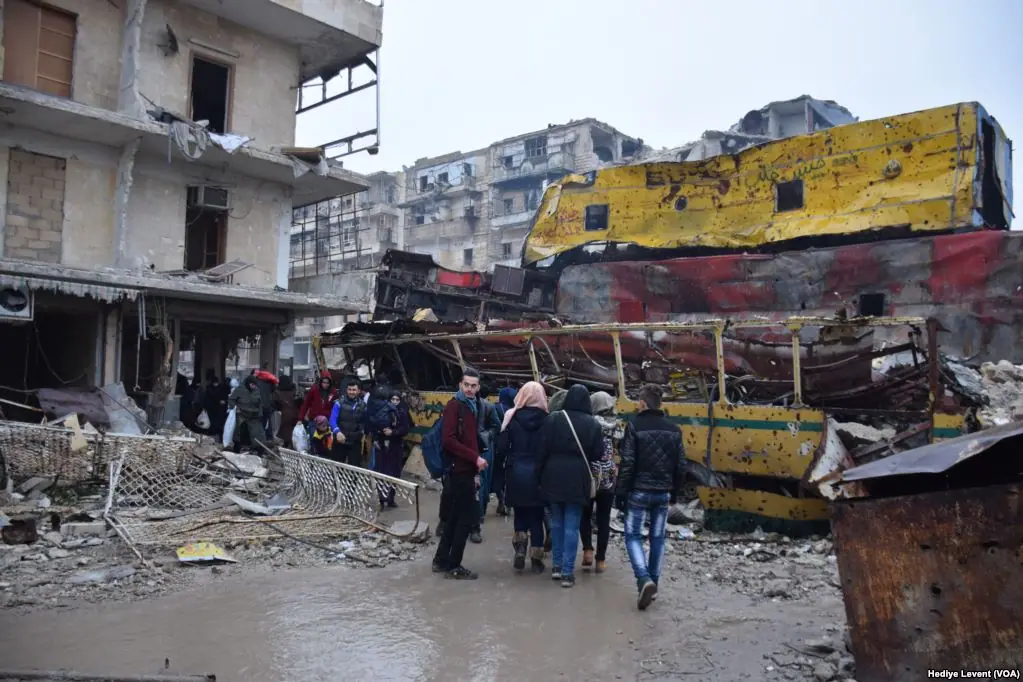
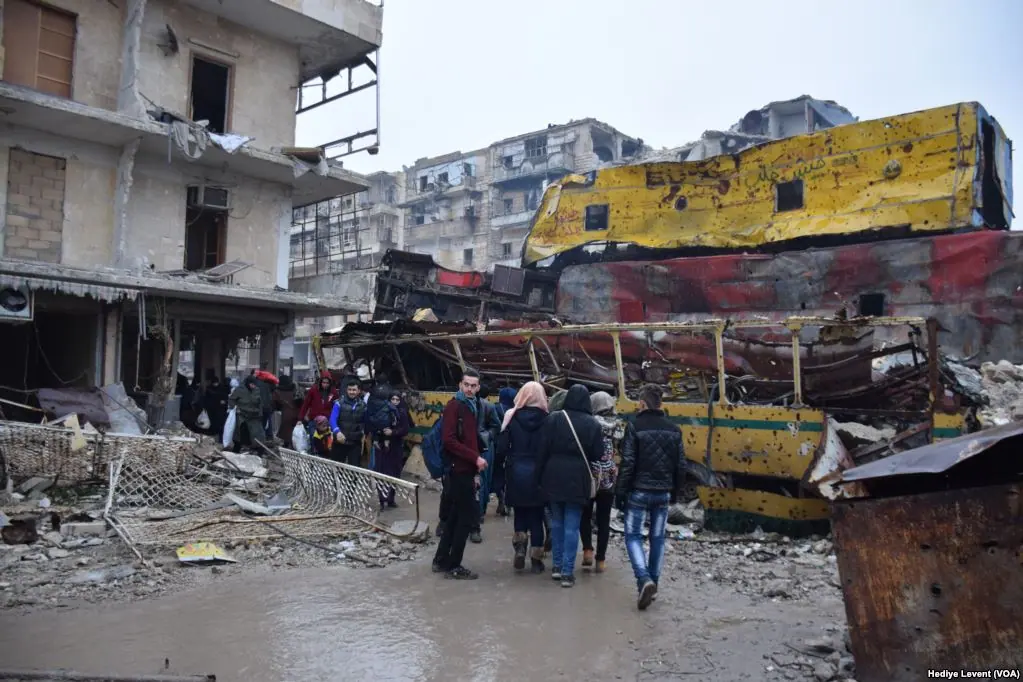
Aleppo, 2019-04-22 – Vieille ville d'Alep, le 13 janvier 2017.
Aleppo · 2019VOA · Public domain · Wikimedia Commons
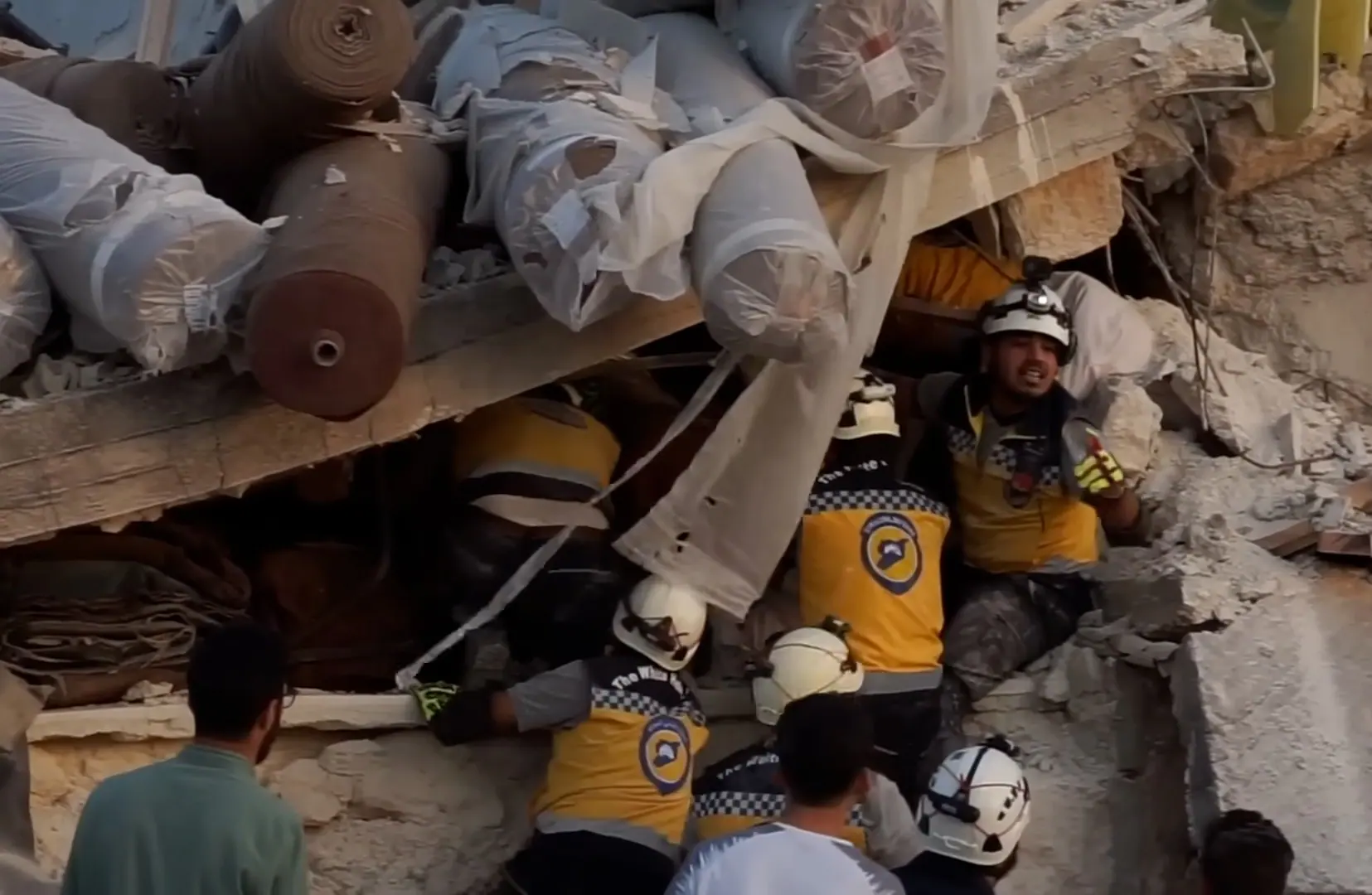
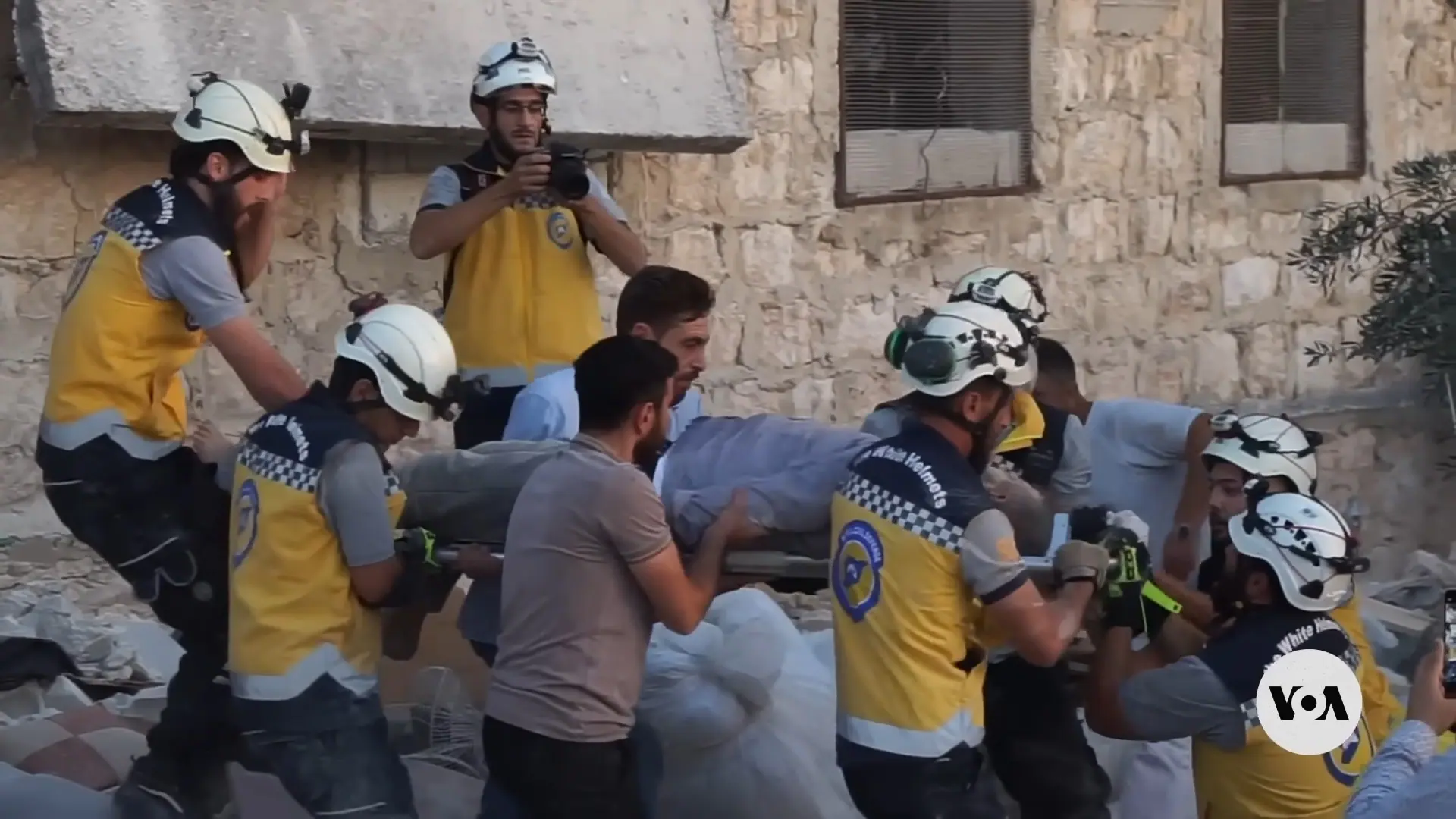
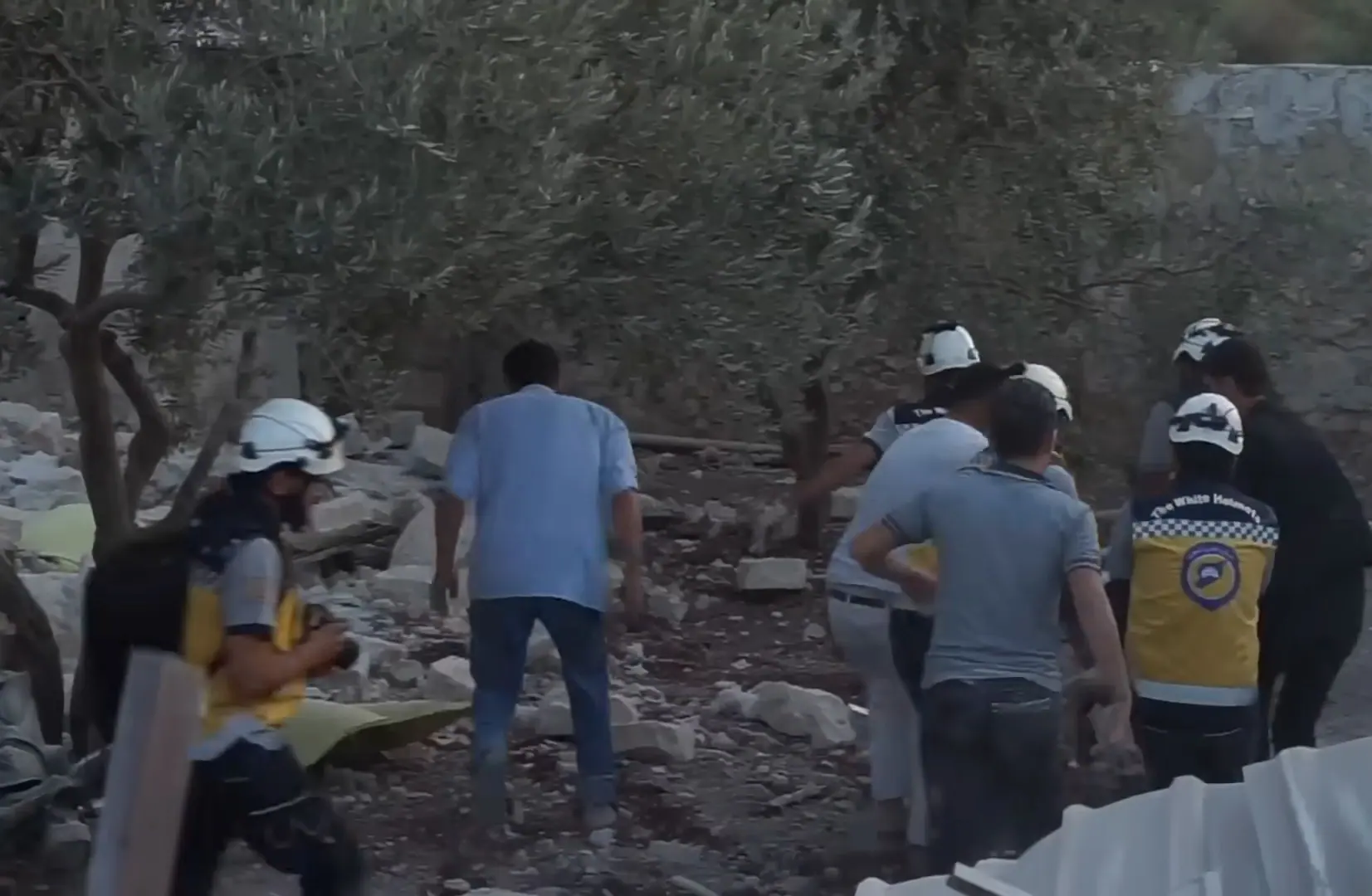
Syria, 2024-12-08 – Syrian White Helmets clears the rubble
Syria · 2024Voice of America · Public domain · Wikimedia Commons
Syria, 2024-12-08 – Syrian White Helmets Extraction
Syria · 2024Voice of America · Public domain · Wikimedia Commons
Syria, 2024-12-08 – Syrian White Helmet Extract
Syria · 2024Voice of America · Public domain · Wikimedia Commons
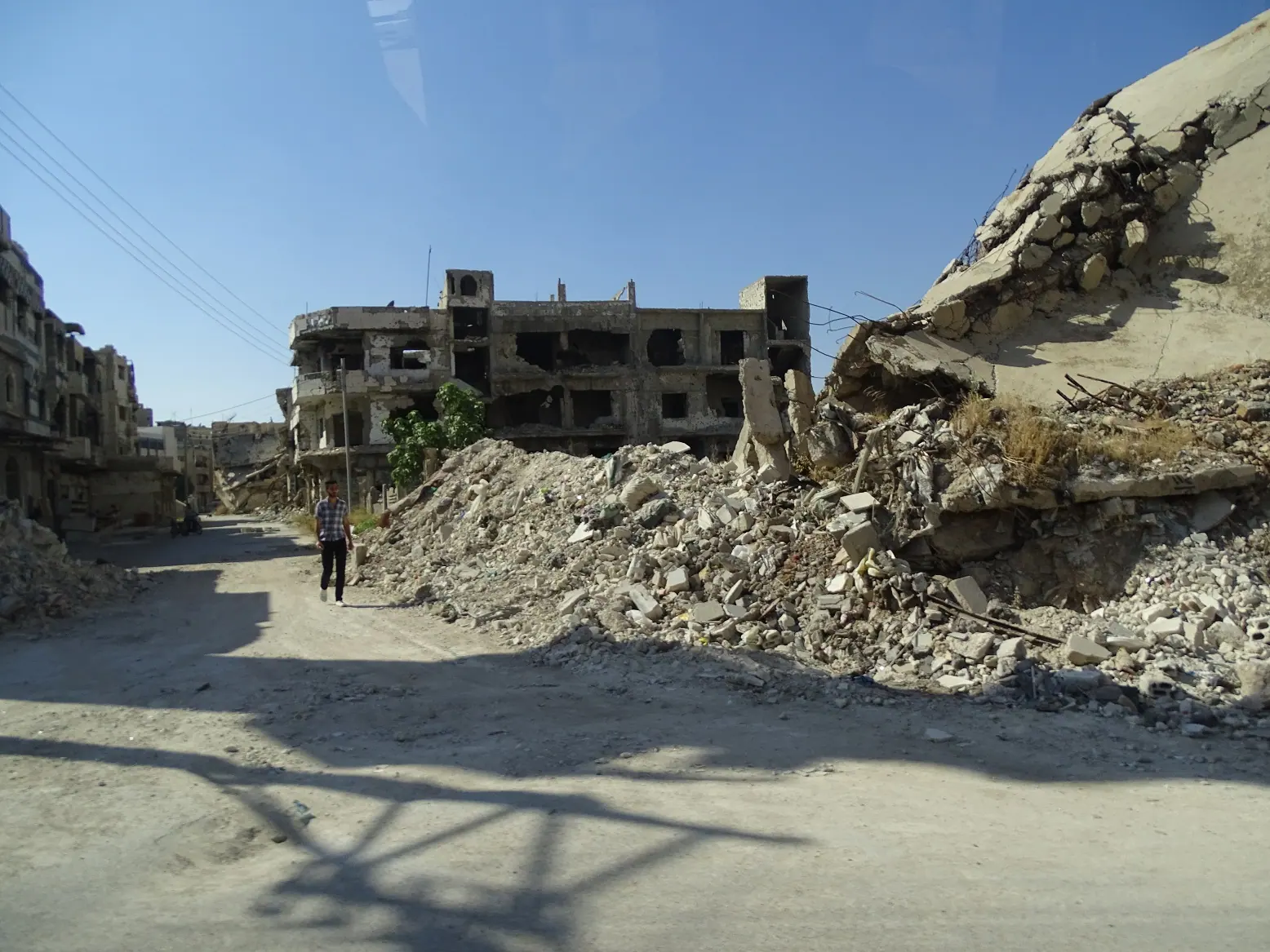
Homs, 2017-06-10 – Homsz háborús nyomai
Homs · 2017Kocsis Fülöp, Hajdúdorogi Főegyházmegye · CC BY-SA 4.0 · Wikimedia Commons
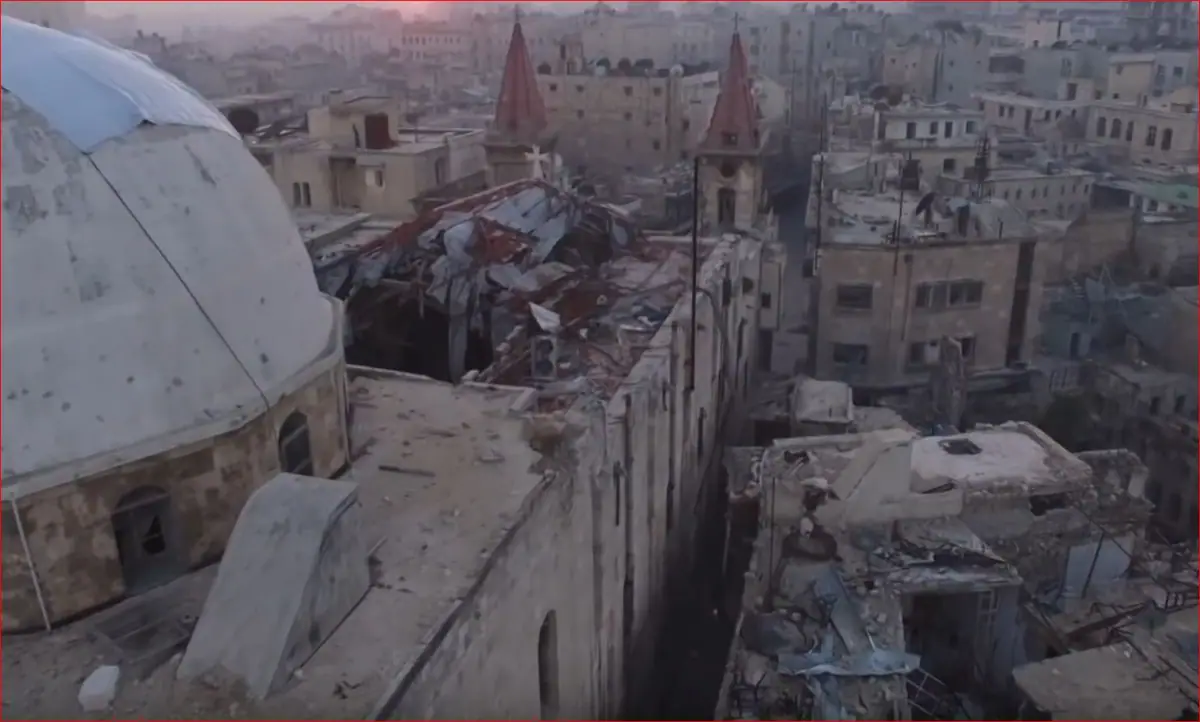
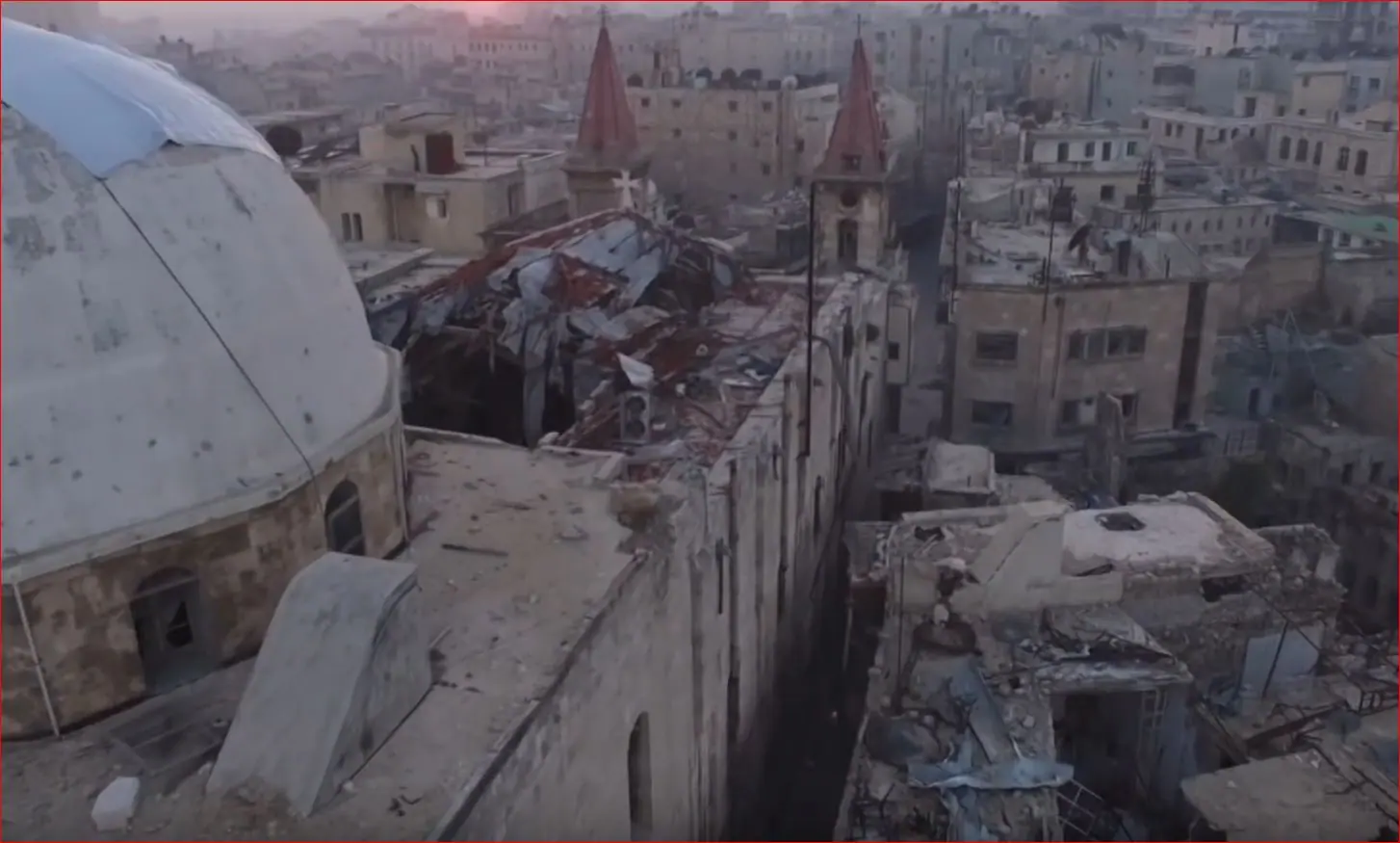
Aleppo, 2016-12-23 – The ruins of Saint Elijah Cathedral in east Aleppo, Old City, December 23st 2016.
Aleppo · 2016Ortho · CC BY-SA 4.0 · Wikimedia Commons
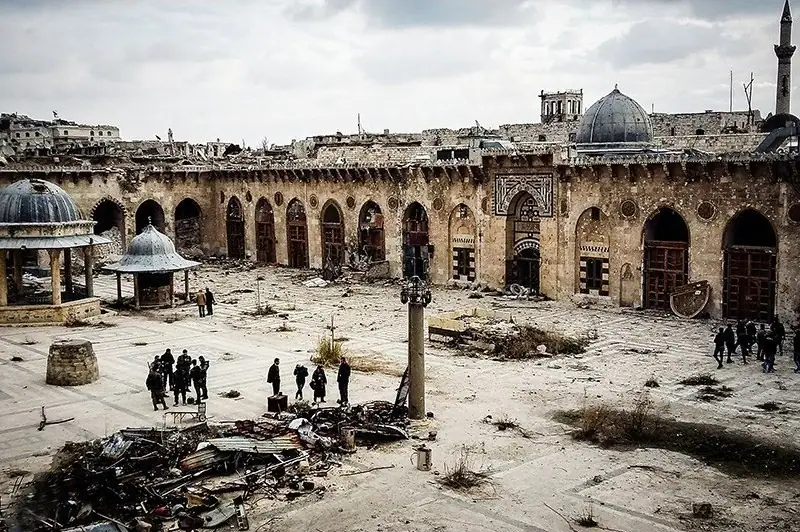
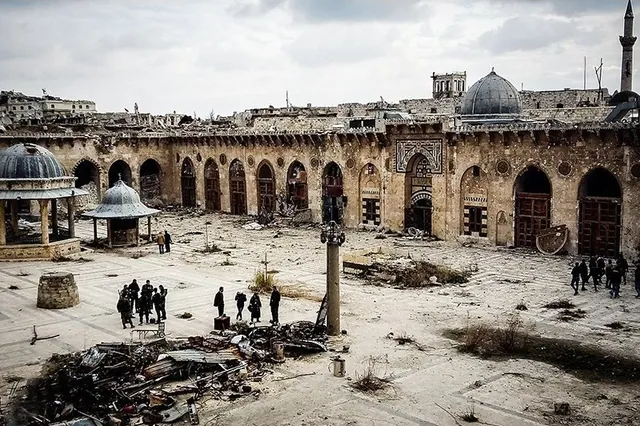
Aleppo, 2016-12-30 – Great Mosque of Aleppo in December 2016
Aleppo · 2016Fathi Nezam from Tasnim News Agency · CC BY 4.0 · Wikimedia Commons
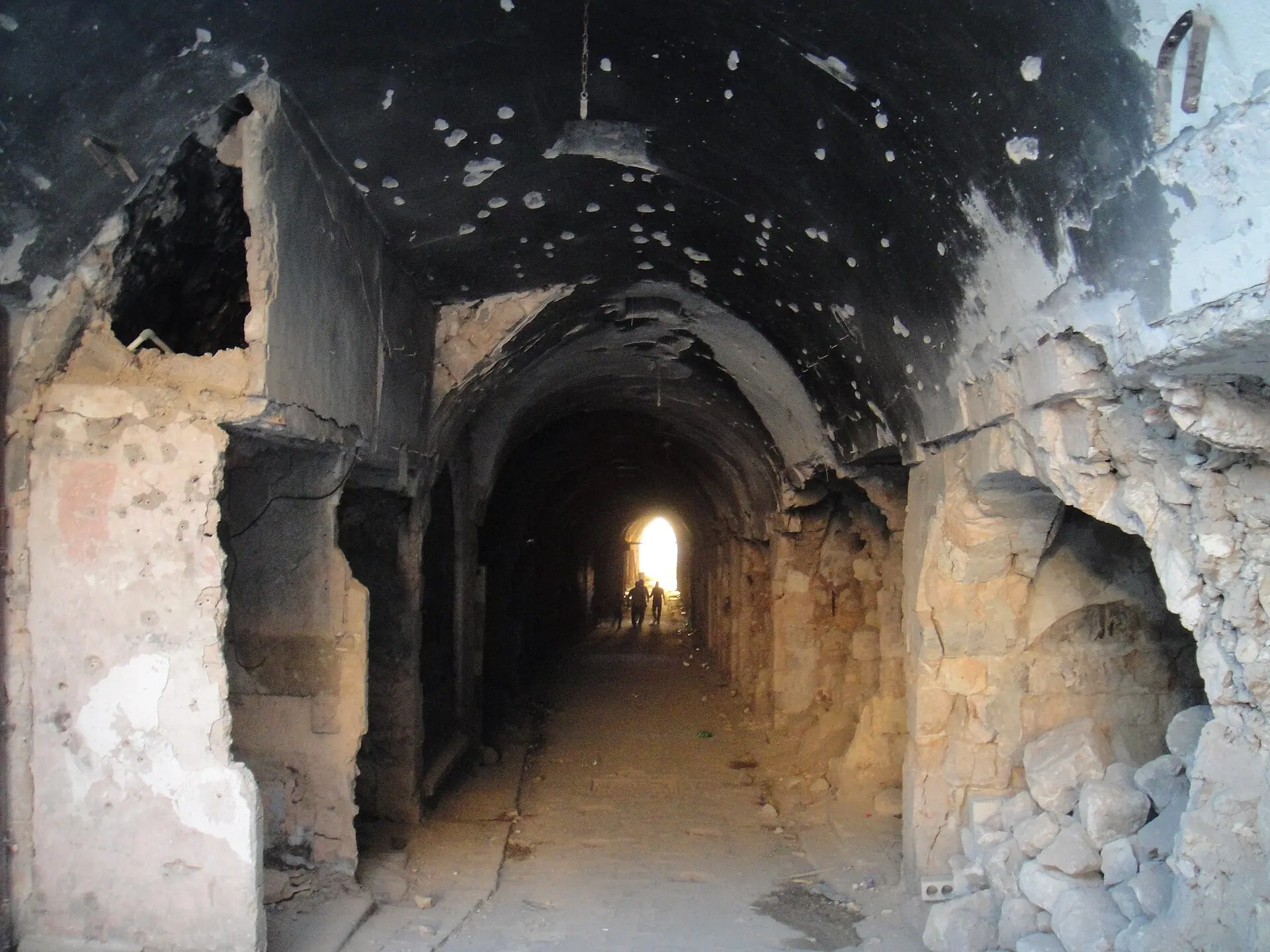
Aleppo, 2018-09-28 – أحد أسواق حلب القديمة وقد دُمر وأُحرق بالكامل جراء الحرب
Aleppo · 2018Hussam.shibli · CC BY-SA 4.0 · Wikimedia Commons
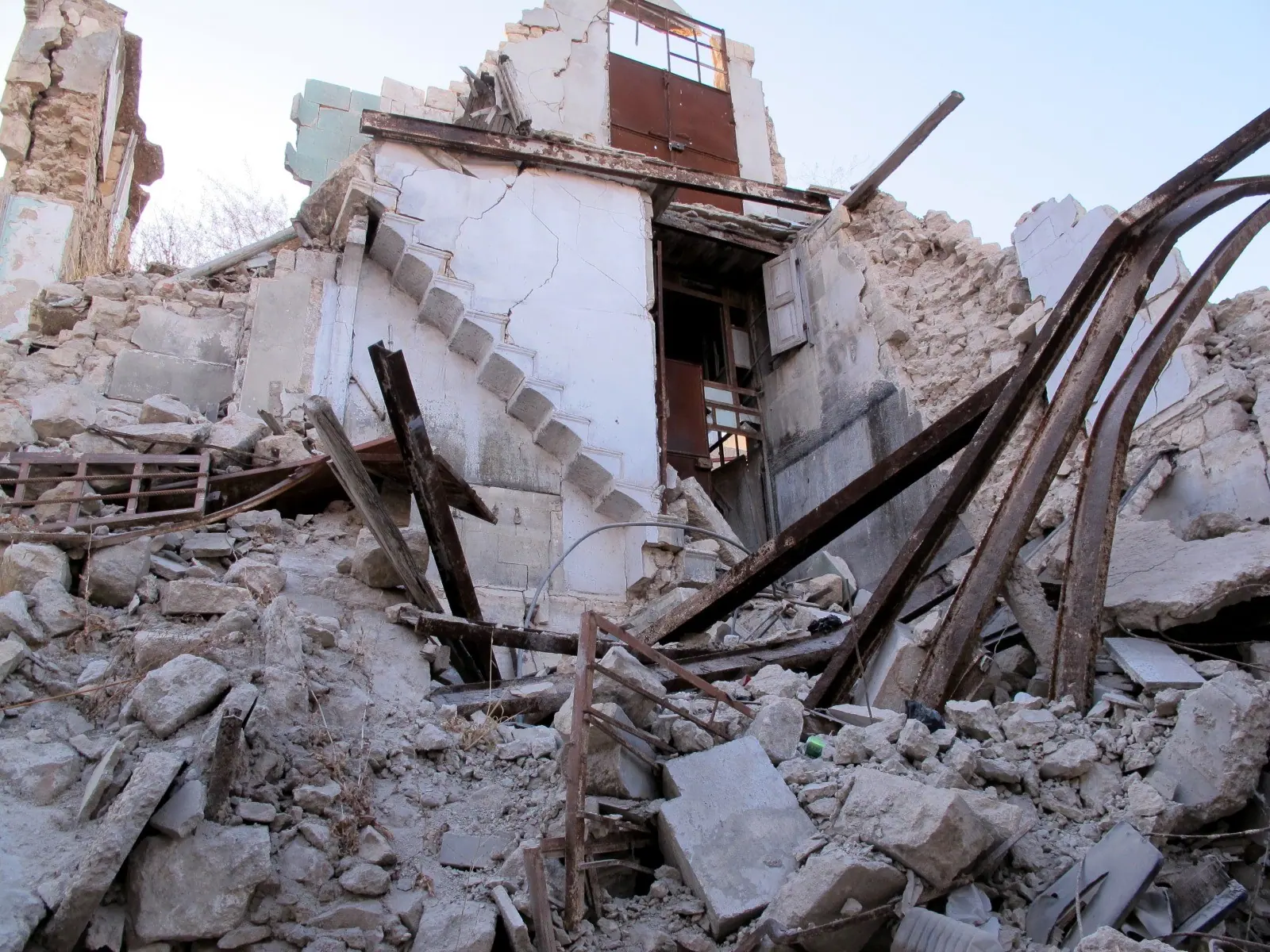
Aleppo, 2019-10-06 – Après les bombardements russes
Aleppo · 2019Cagibi54 · CC BY-SA 4.0 · Wikimedia Commons
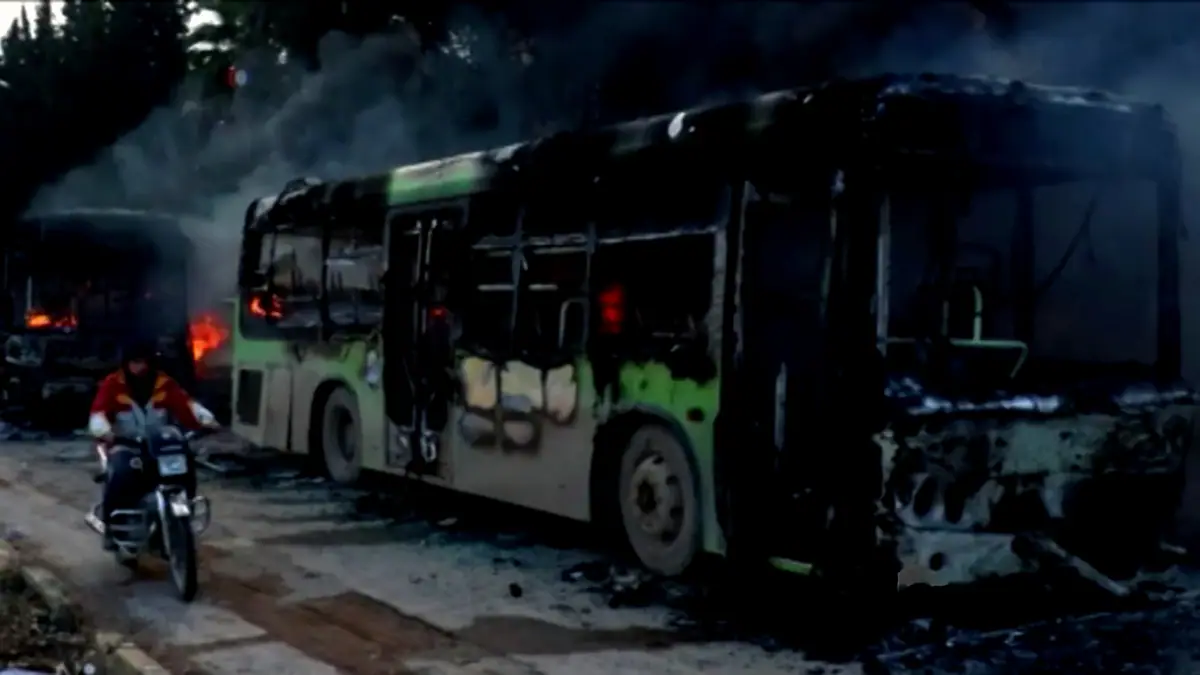
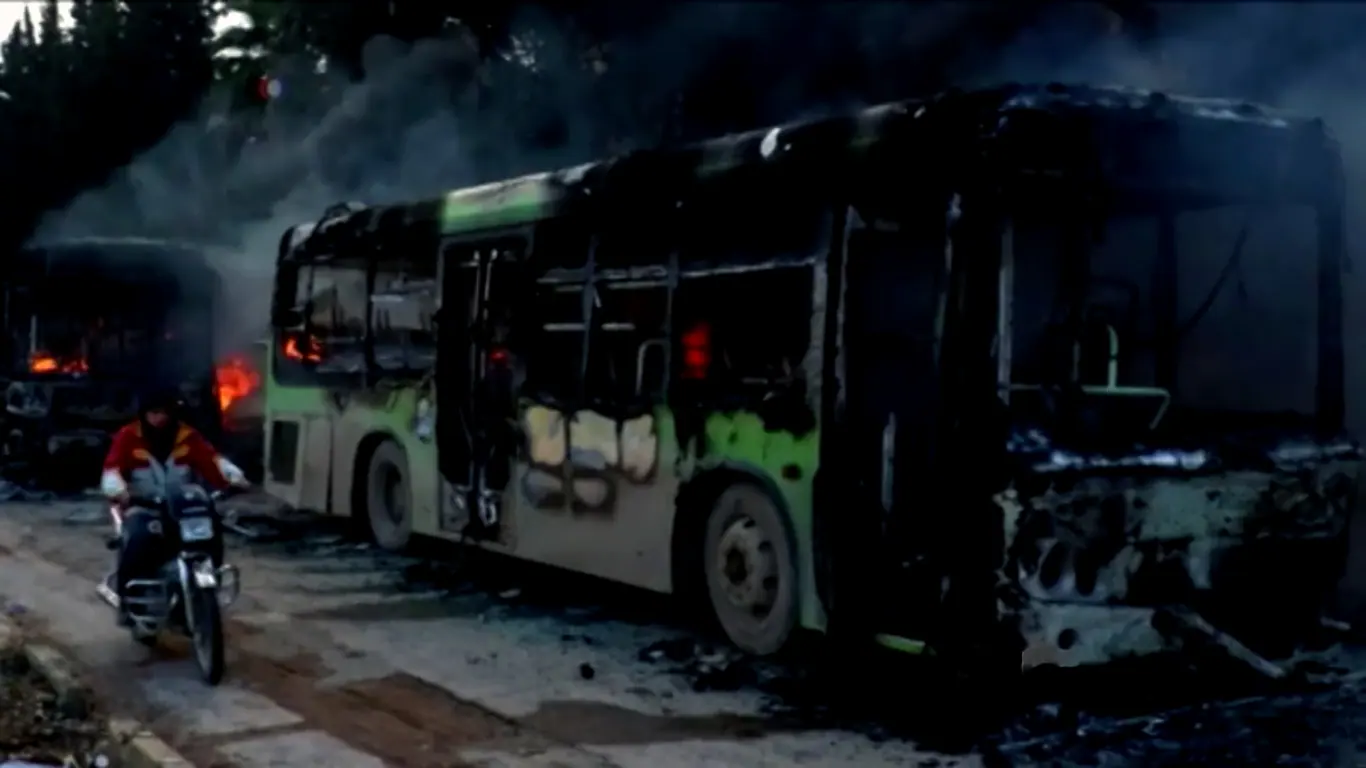
Aleppo, 2016-12-25 – During the evacuation, rebel factions burnt buses meant to evacuate sick and elderly civilians from Aleppo.
Aleppo · 2016VOA News · Public domain · Wikimedia Commons
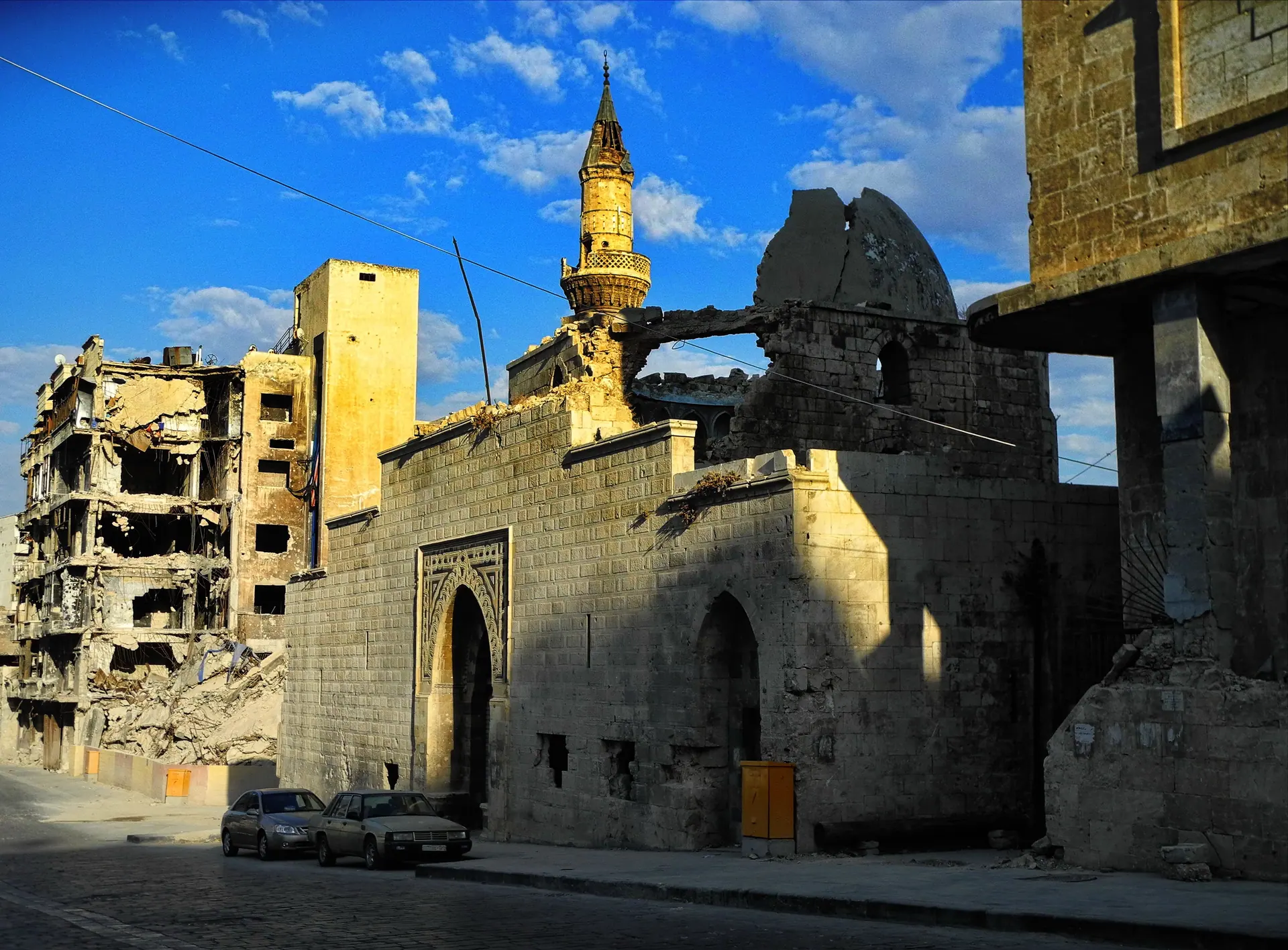
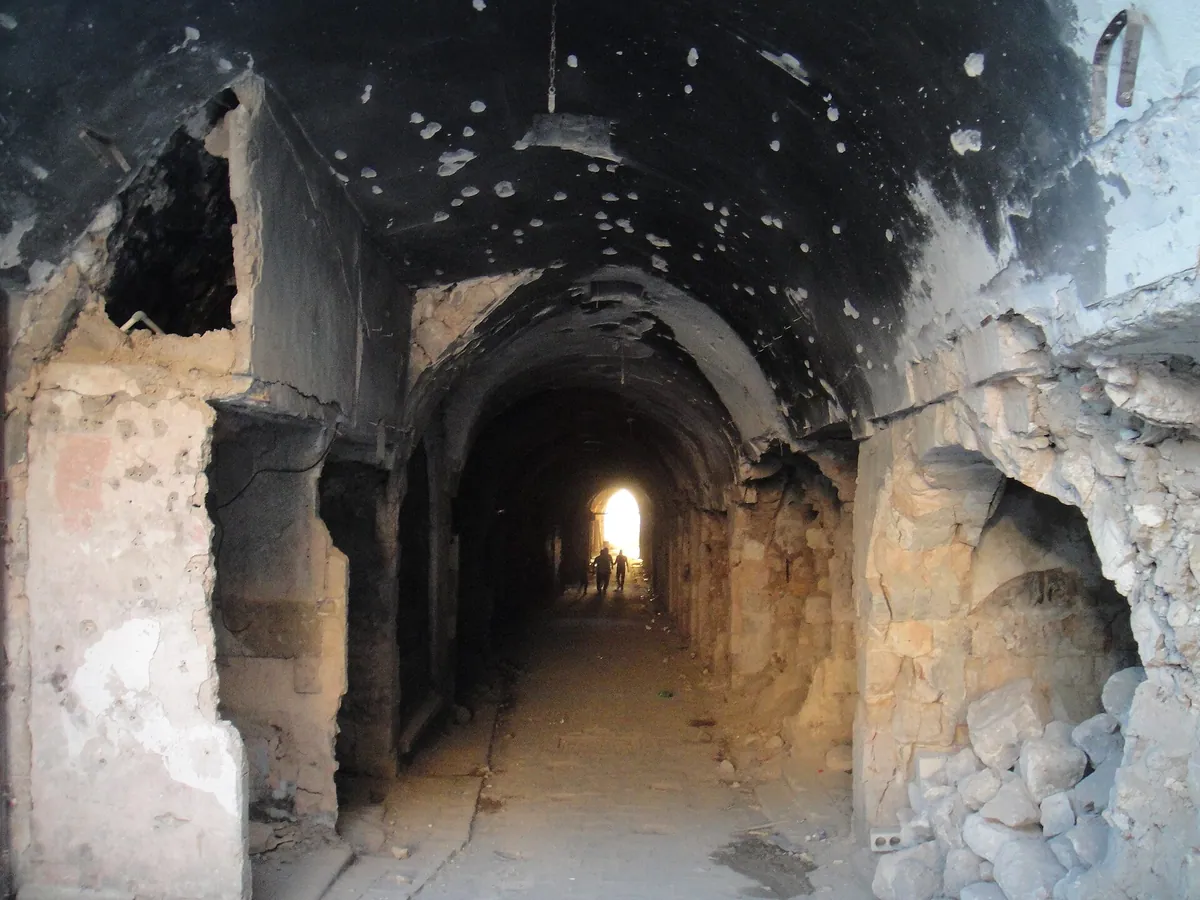
Old City of Aleppo, 2018-08-08
Old City of Aleppo · Aleppo · 2018Modar al mulla · CC BY-SA 4.0 · Wikimedia Commons
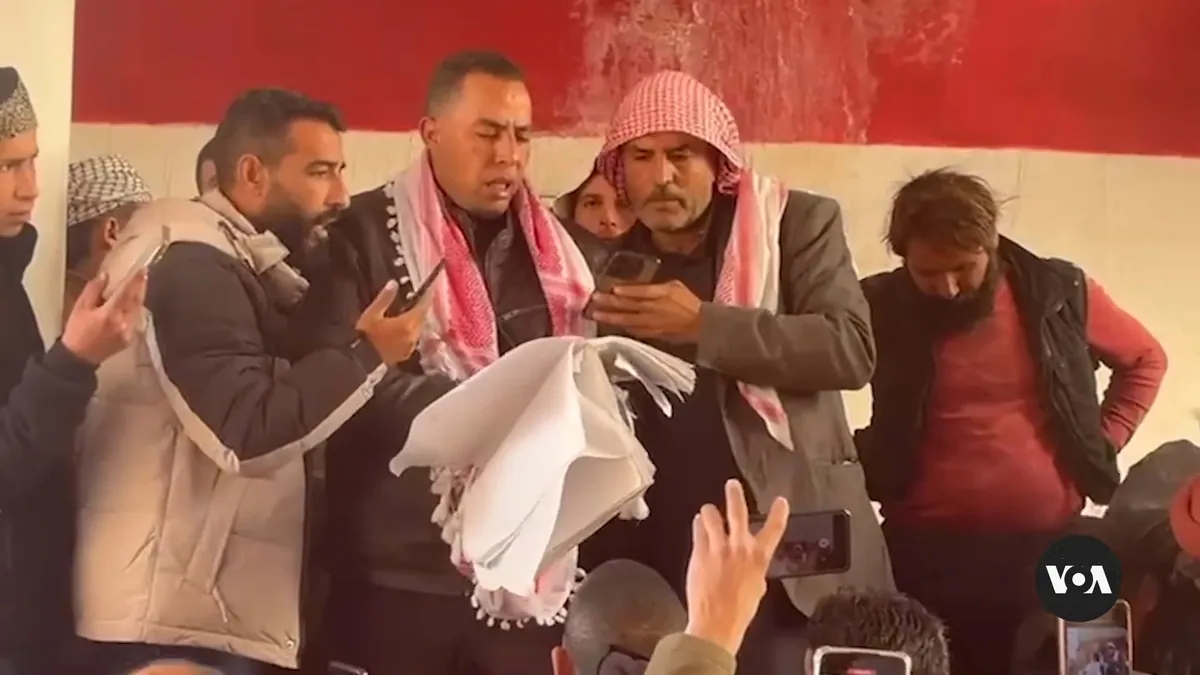
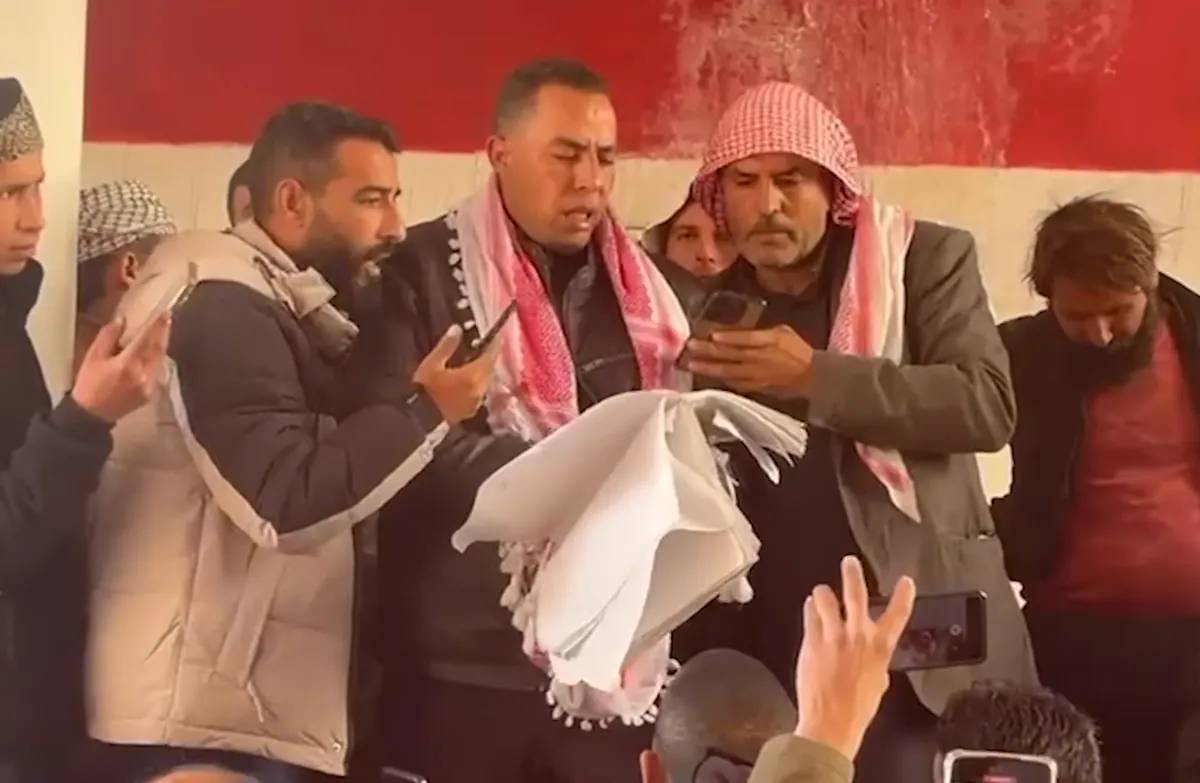
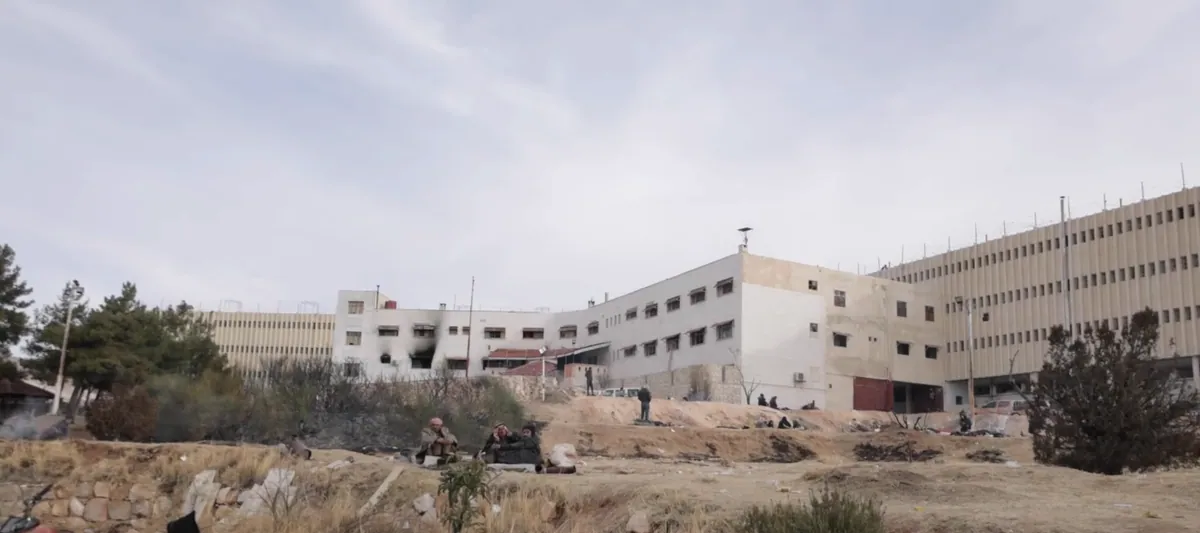
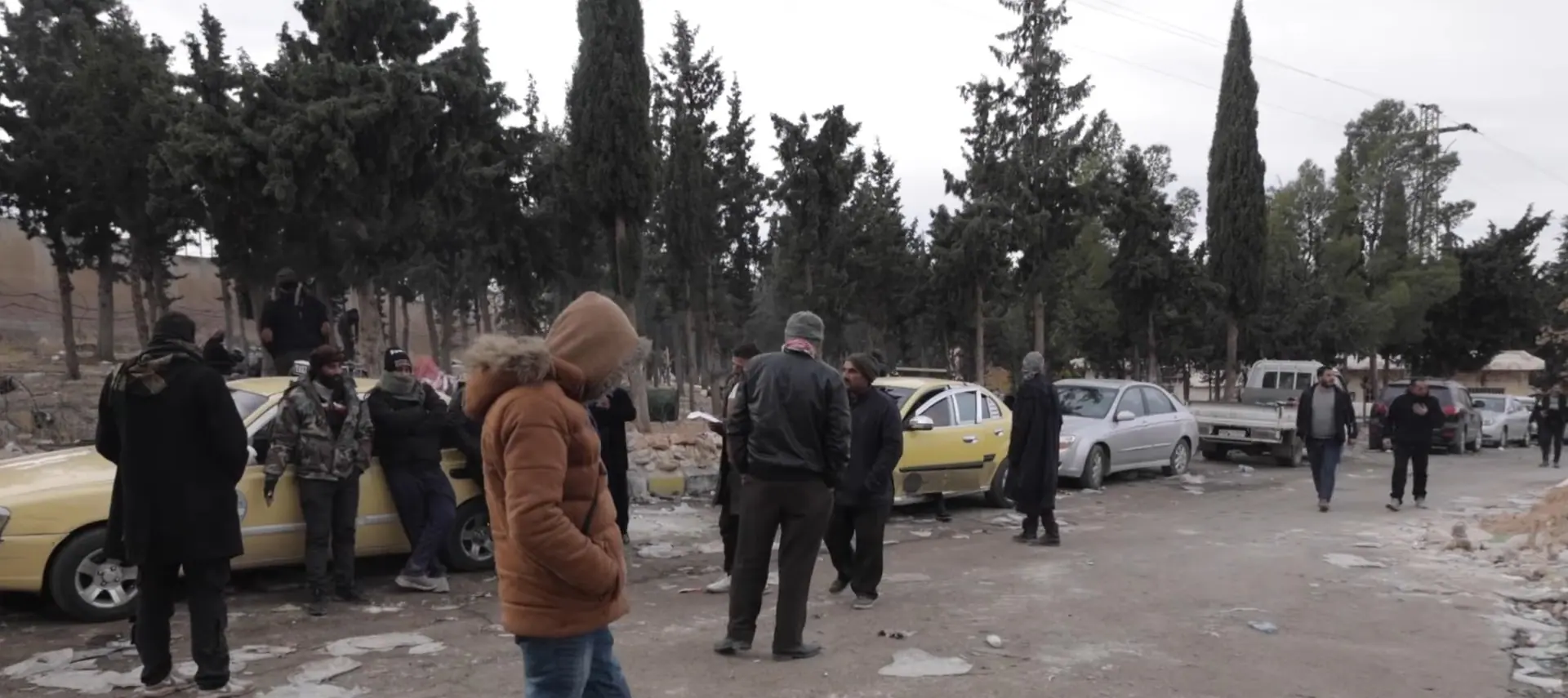
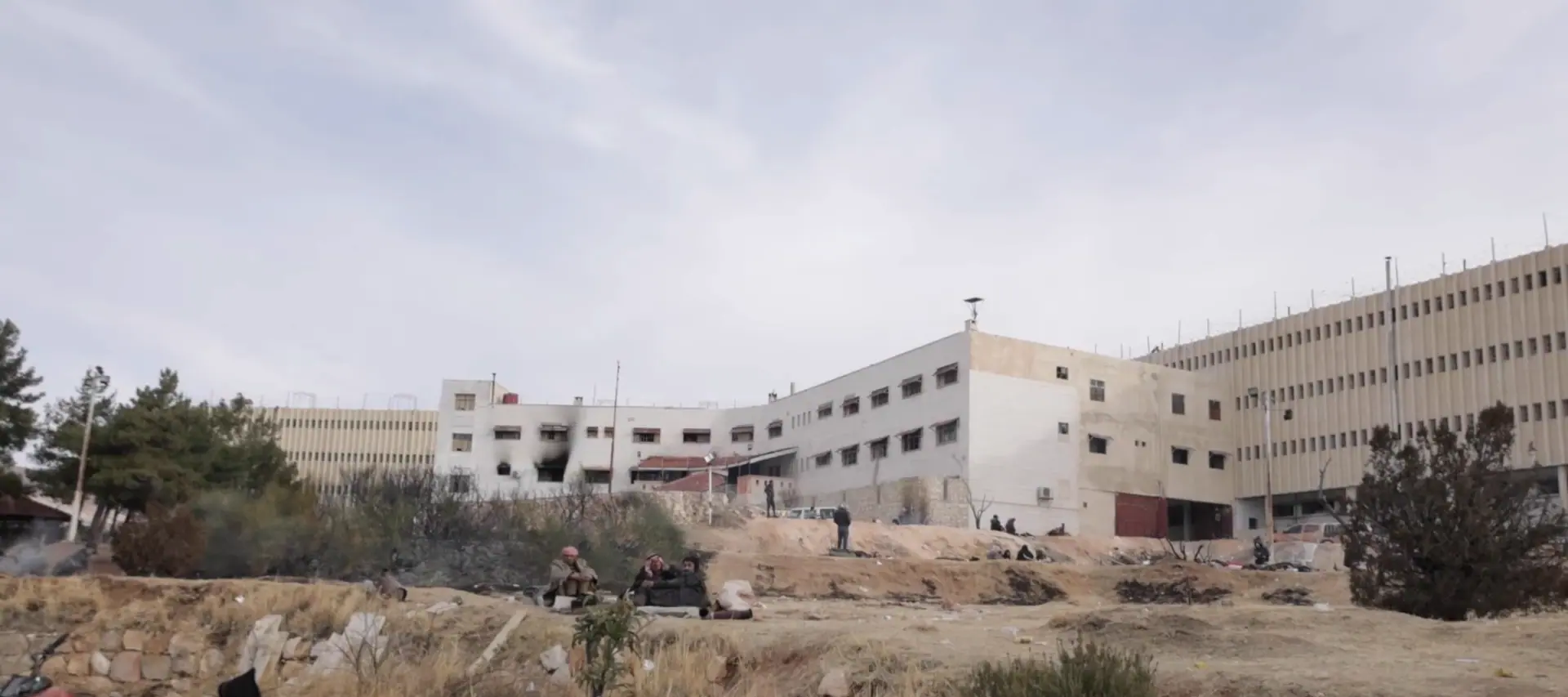
Sednaya, 18 December – Assad's Sednaya prison often last stop in Syrian families’ search
Sednaya · Rif DimashqVoice of America · Public domain · Wikimedia Commons
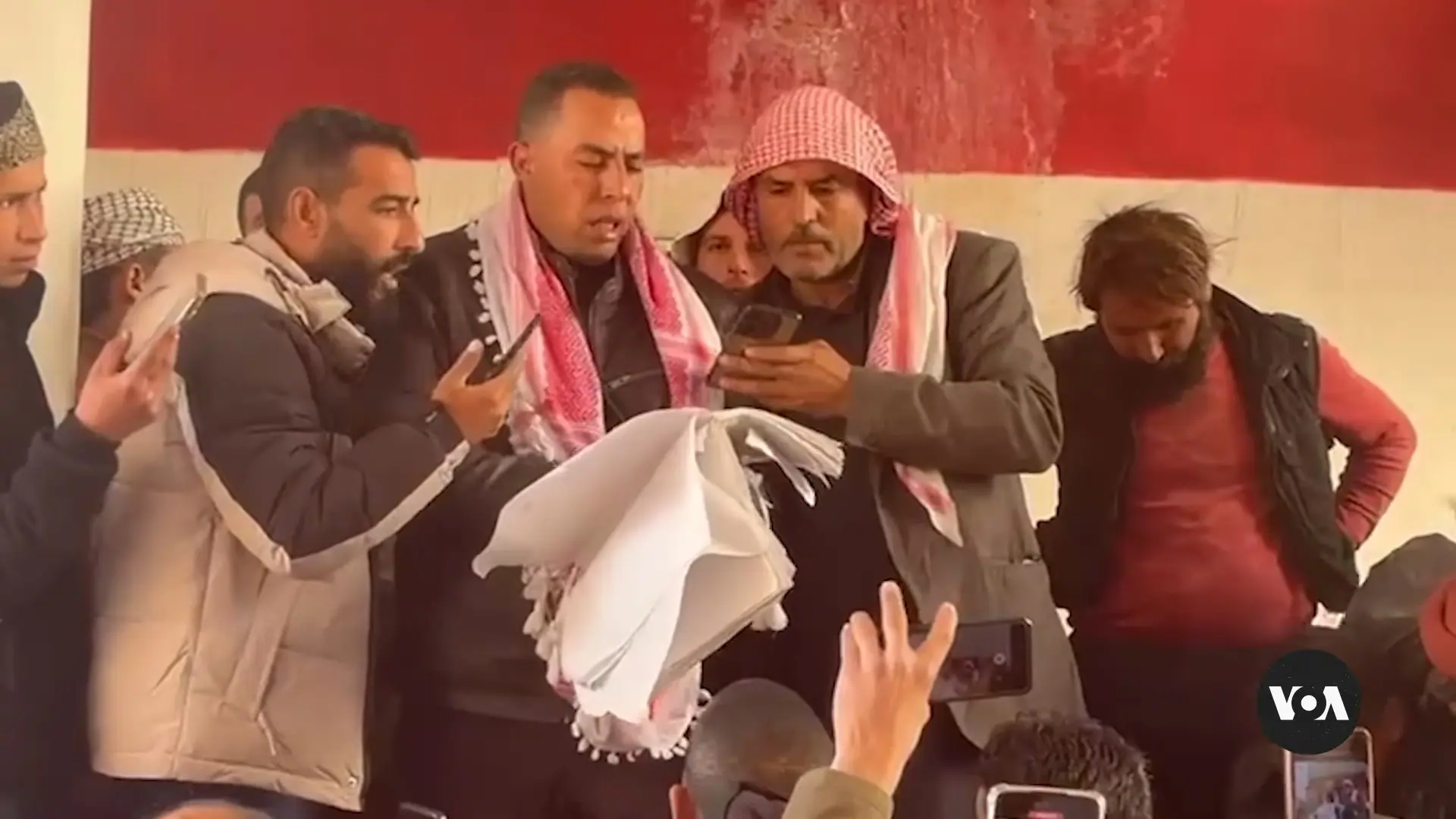
Sednaya, 2024-12-12 – A person reads Sednaya Prison records in search of missing persons, Damascus, Syria.
Sednaya · Rif Dimashq · 2024Voice of America · Public domain · Wikimedia Commons
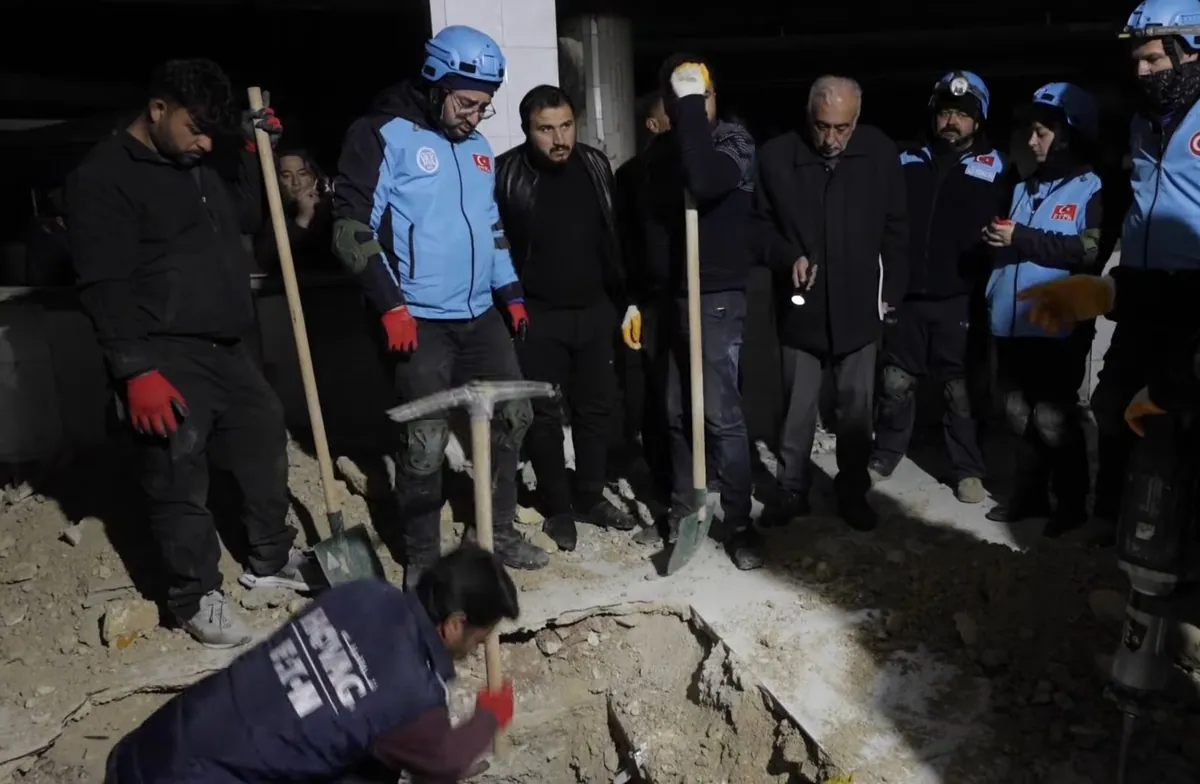
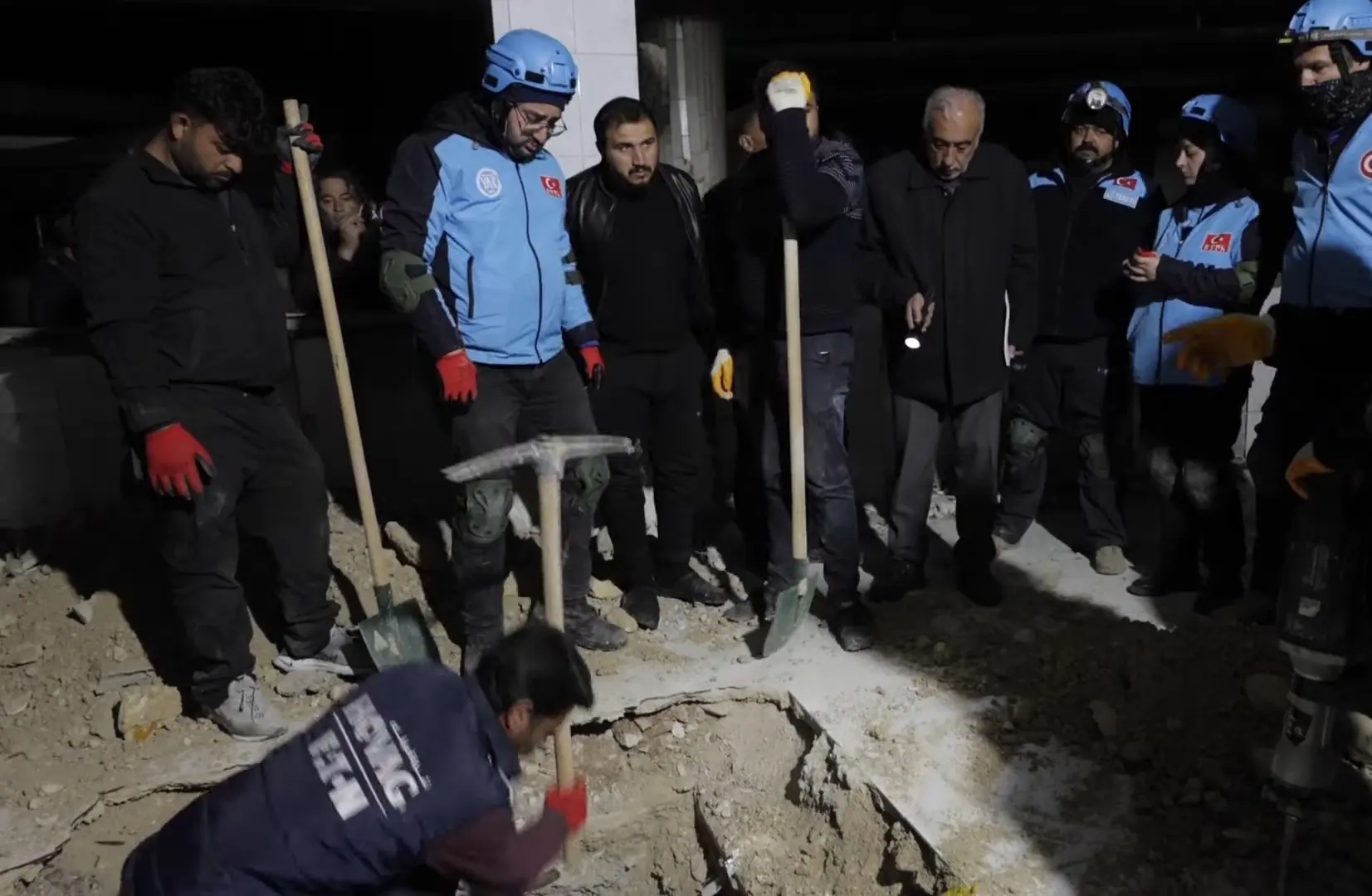
Sednaya, 2024-12-18 – Turkish rescue teams fight against time at Sednaya Prison. Digging through the concrete floors to go to the lower levels at Sednaya prison
Sednaya · Rif Dimashq · 2024Voice of America · Public domain · Wikimedia Commons
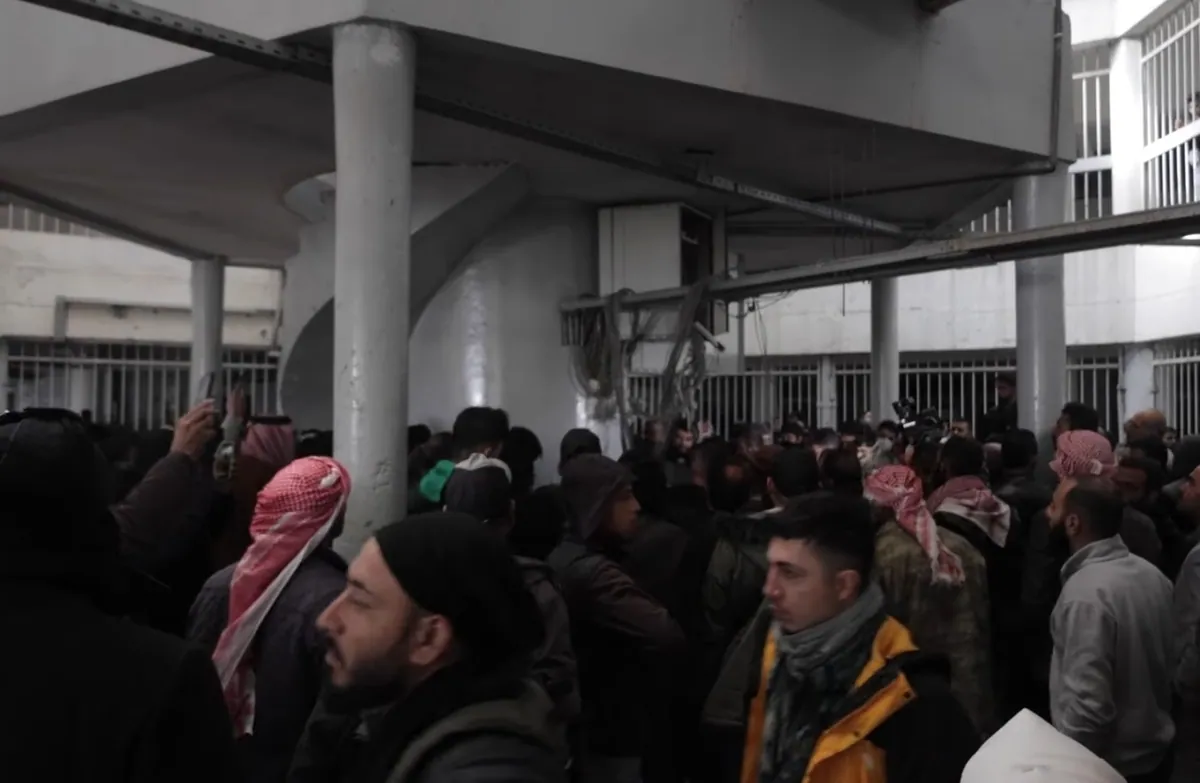
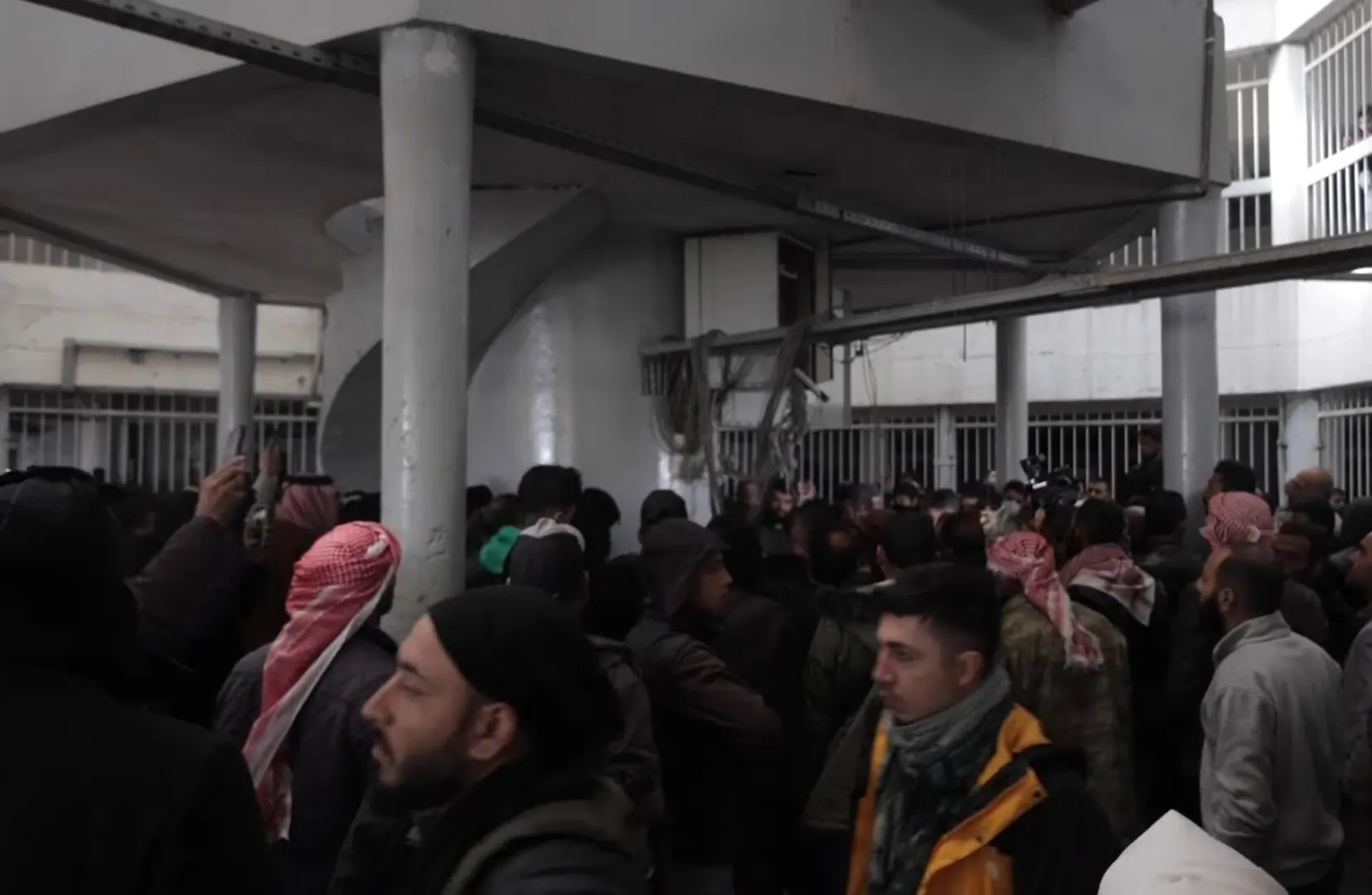
Sednaya, 2024-12-18 – Syrians citizens flock Sednaya Prison to help search effort
Sednaya · Rif Dimashq · 2024Voice of America · Public domain · Wikimedia Commons
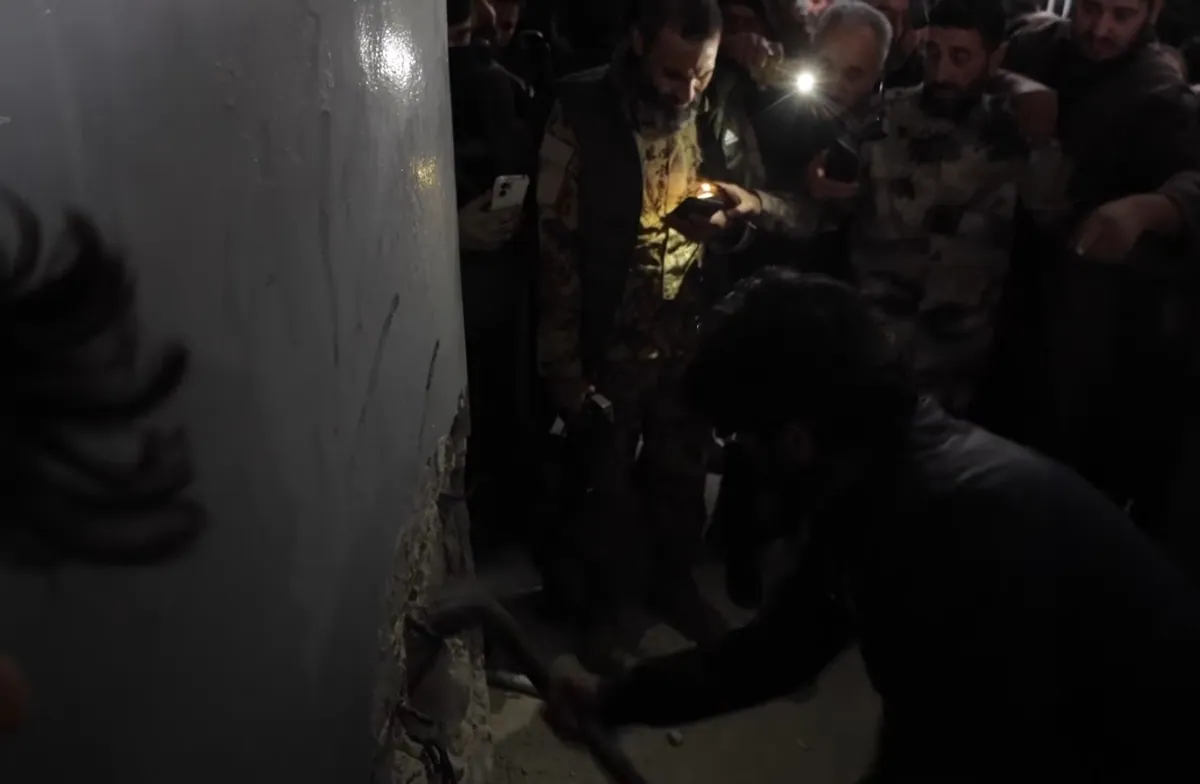
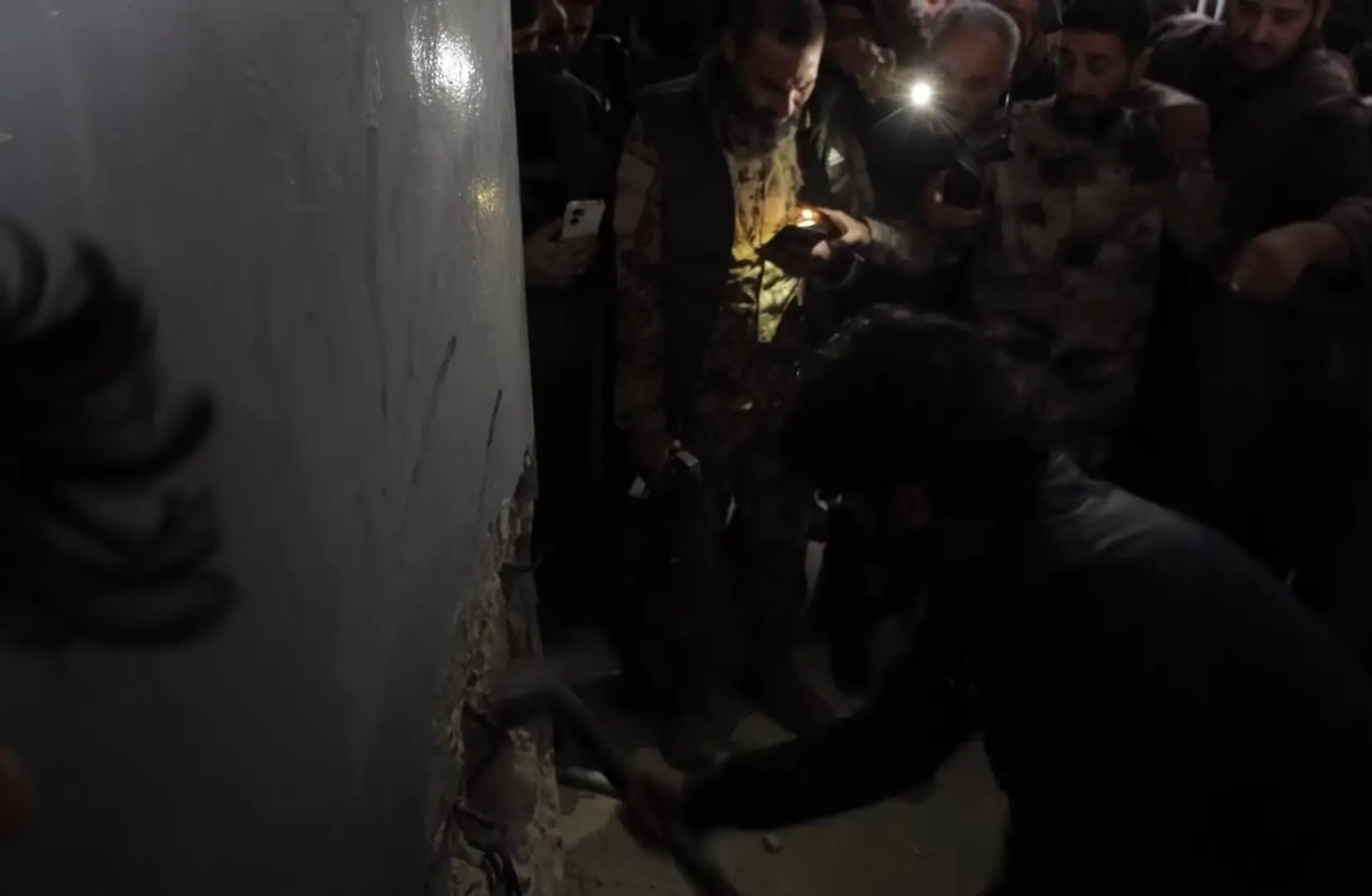
Sednaya, 2024-12-18 – Man attempts to make a hole through concrete at Sednaya Prison to find enclosed rooms
Sednaya · Rif Dimashq · 2024Voice of America · Public domain · Wikimedia Commons
Sednaya, 2024-12-18 – Assad's Sednaya prison often last stop in Syrian families’ search
Sednaya · Rif Dimashq · 2024Voice of America · Public domain · Wikimedia Commons
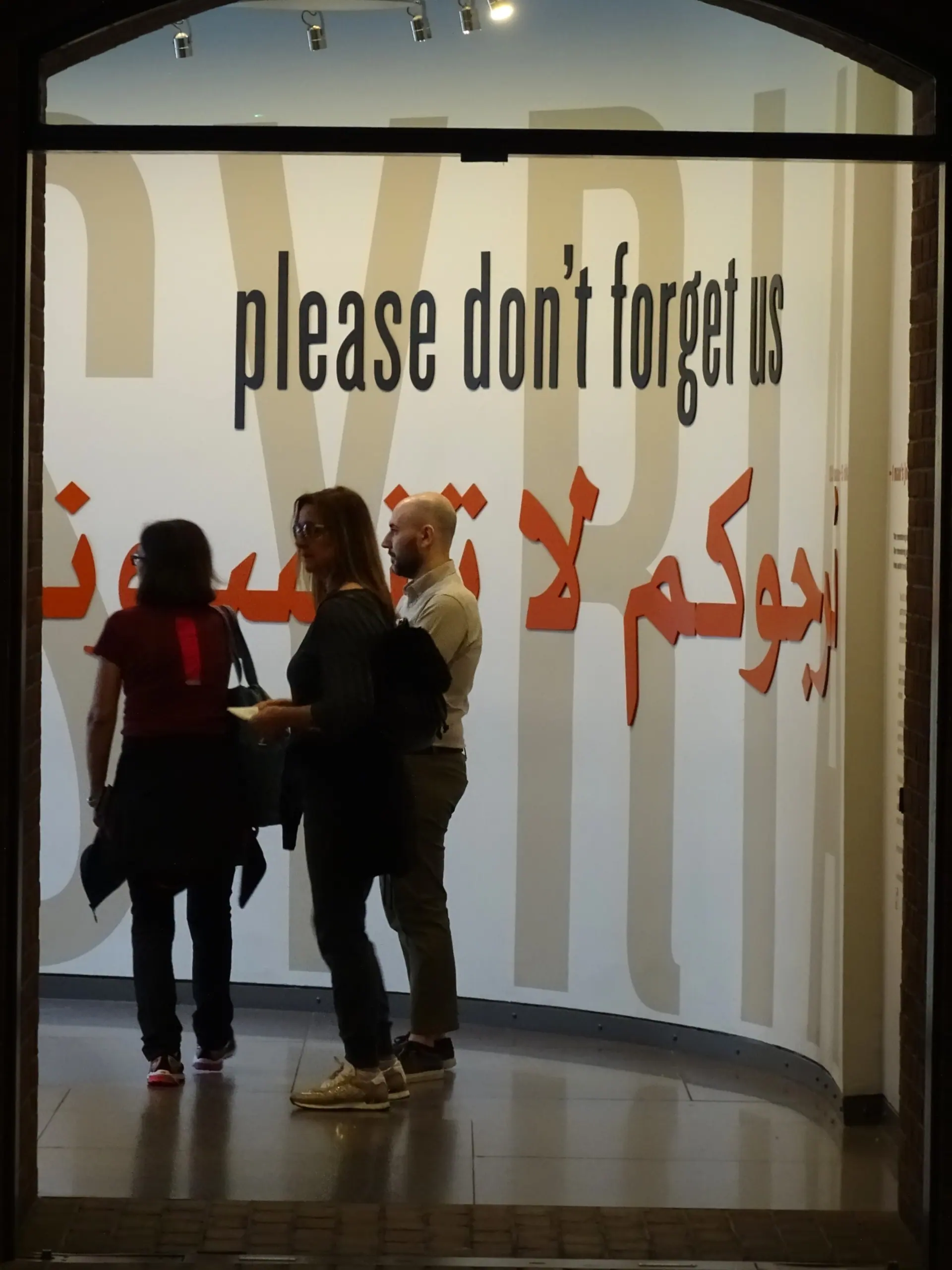
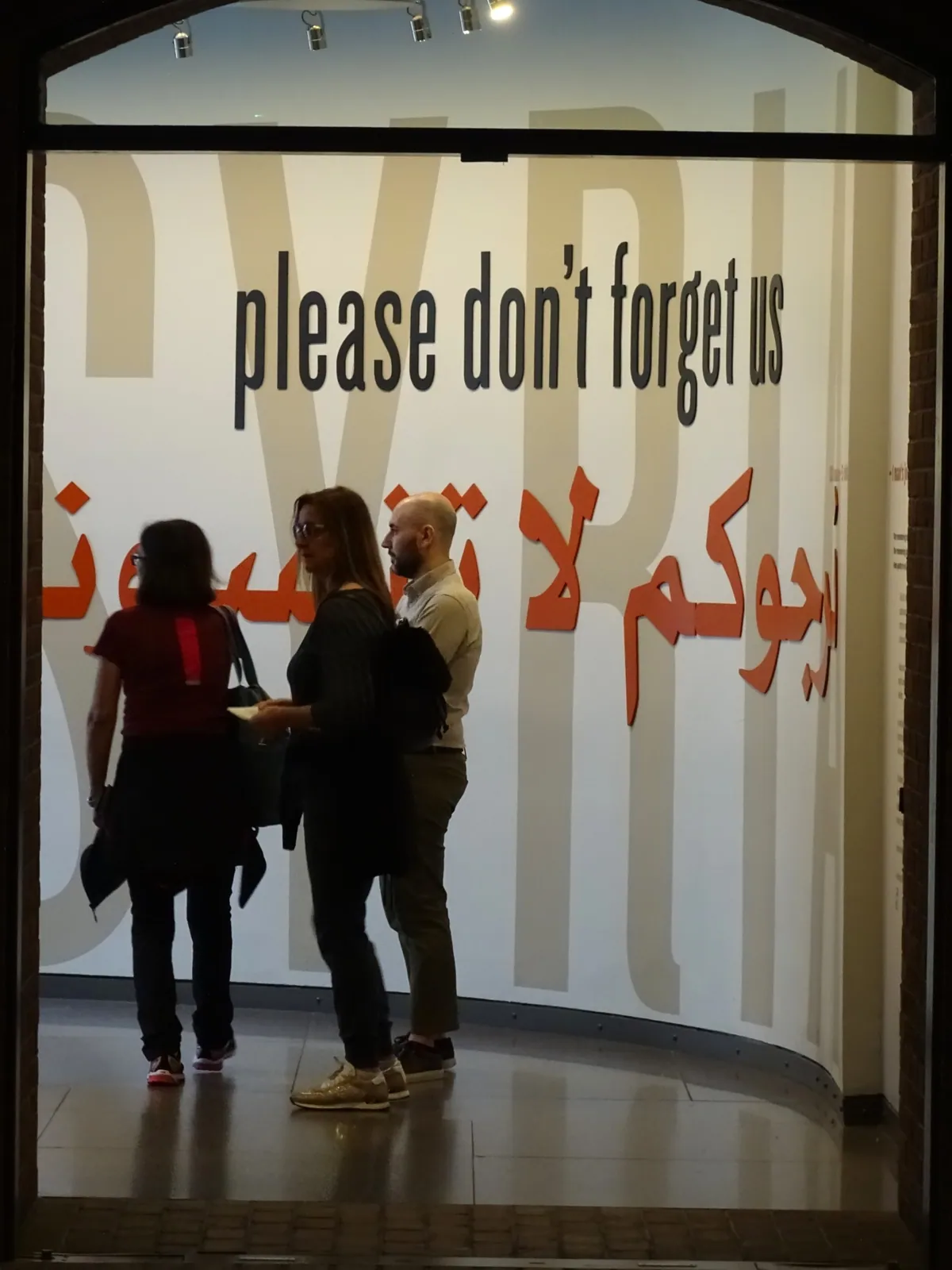
US Holocaust Memorial Museum, Washington (USA), 2019-05-04 – Please Don't Forget Us - Syria Exhibit at US Holocaust Memorial Museum - Washington - DC - USA
US Holocaust Memorial Museum, Washington · United States · 2019Adam Jones from Kelowna, BC, Canada · CC BY-SA 2.0 · Wikimedia Commons

Sarin attack on Ghouta

Source: UN News

Sarin attack on Khan Shaykhun

Source: OPCW

Chlorine attack on Douma (attributed to Syrian Arab Air Forces)

Source: The Spokesman-Review / Associated Press
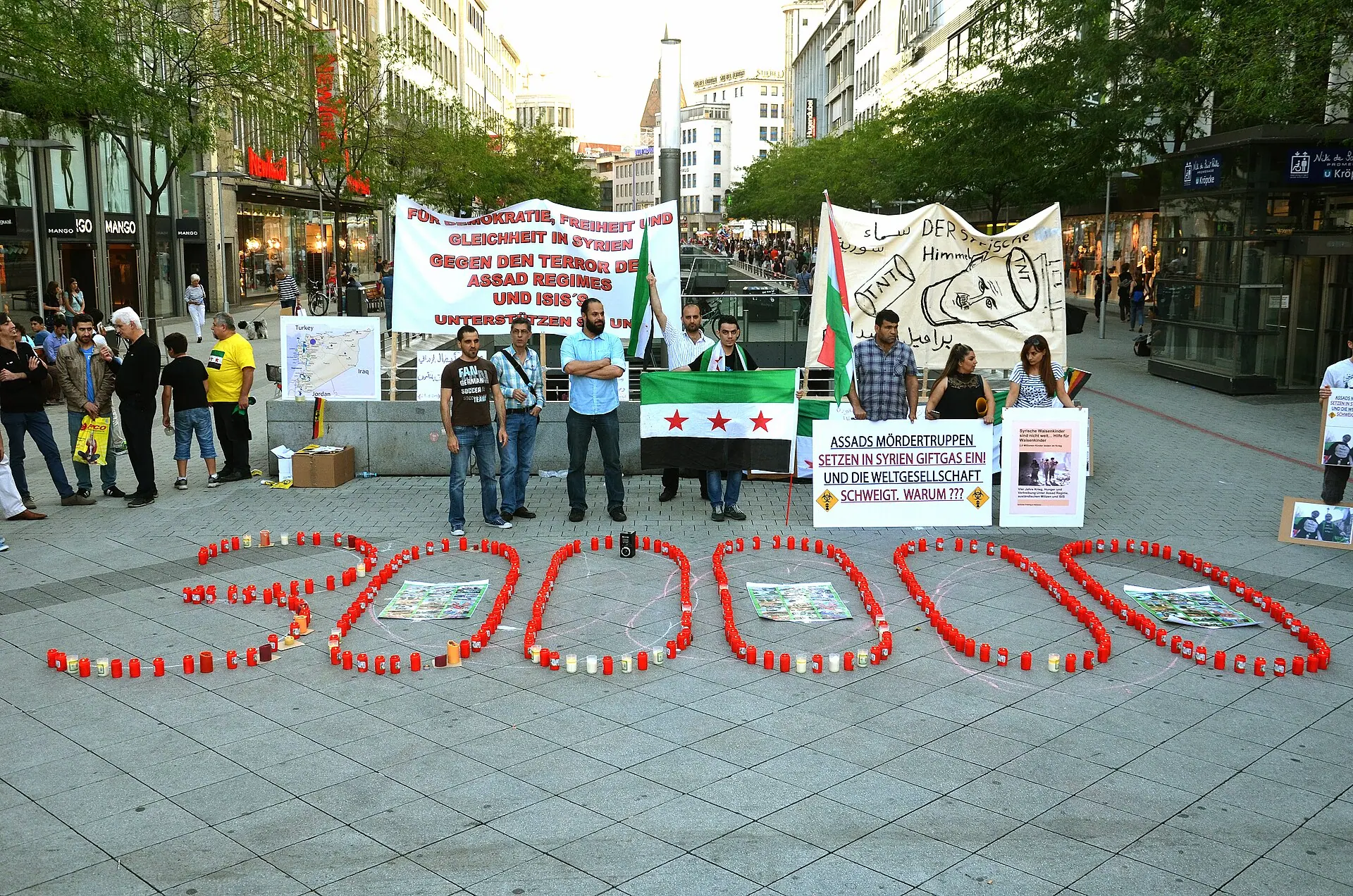
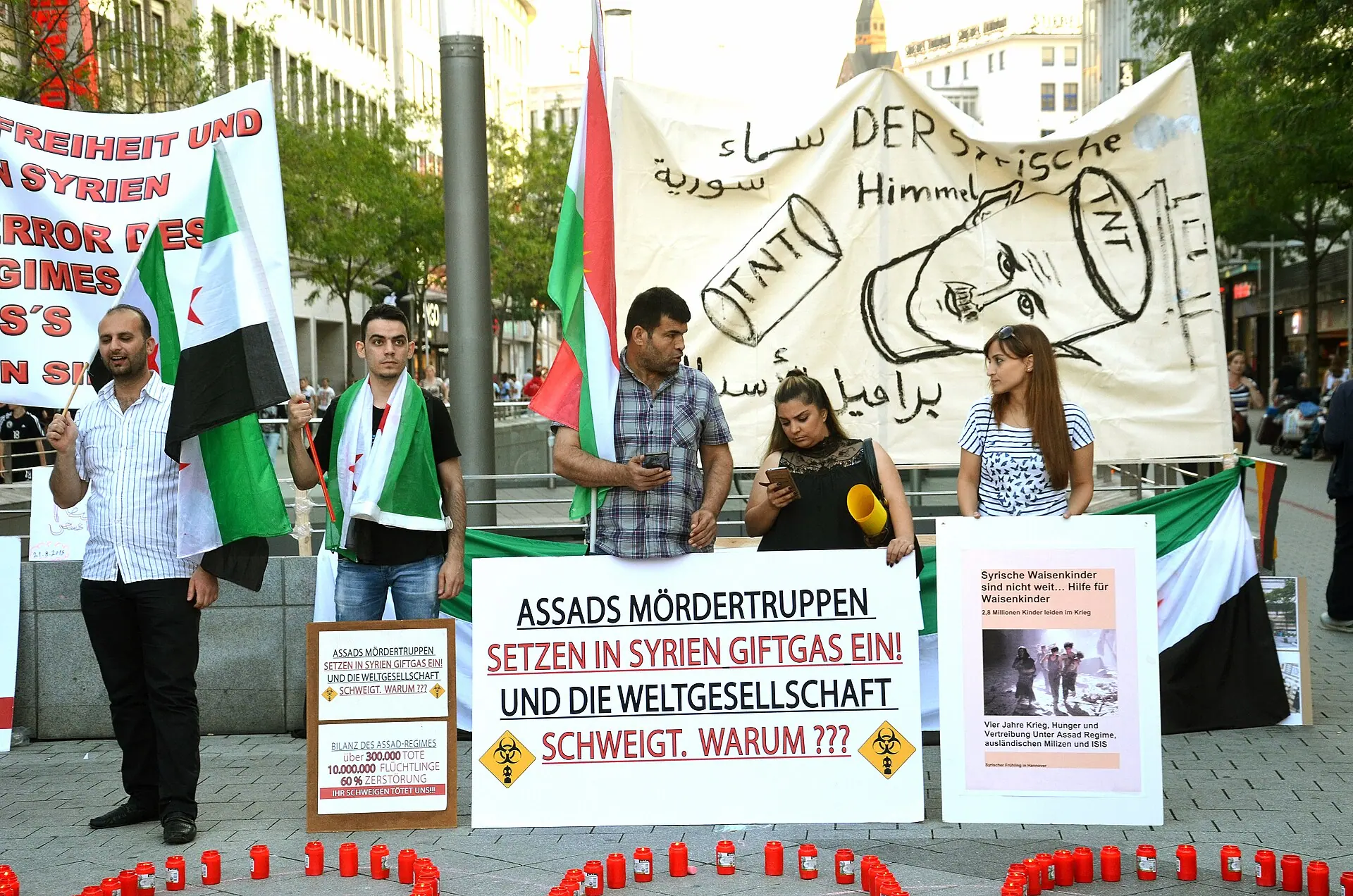
Hannover (Deutschland), 2015-08-21 – On August, 21th 2015 members of the Syrian community of Hannover remembered to the Ghouta chemical attack during the Syrian Civil War ...
Hannover · Germany · 2015Foto: Bernd Schwabe · CC BY-SA 4.0 · Wikimedia Commons
Hannover (Deutschland), 2015-08-21 – On August, 21th 2015 members of the Syrian community of Hannover remembered to the Ghouta chemical attack during the Syrian Civil War ...
Hannover · Germany · 2015Foto: Bernd Schwabe · CC BY-SA 4.0 · Wikimedia Commons
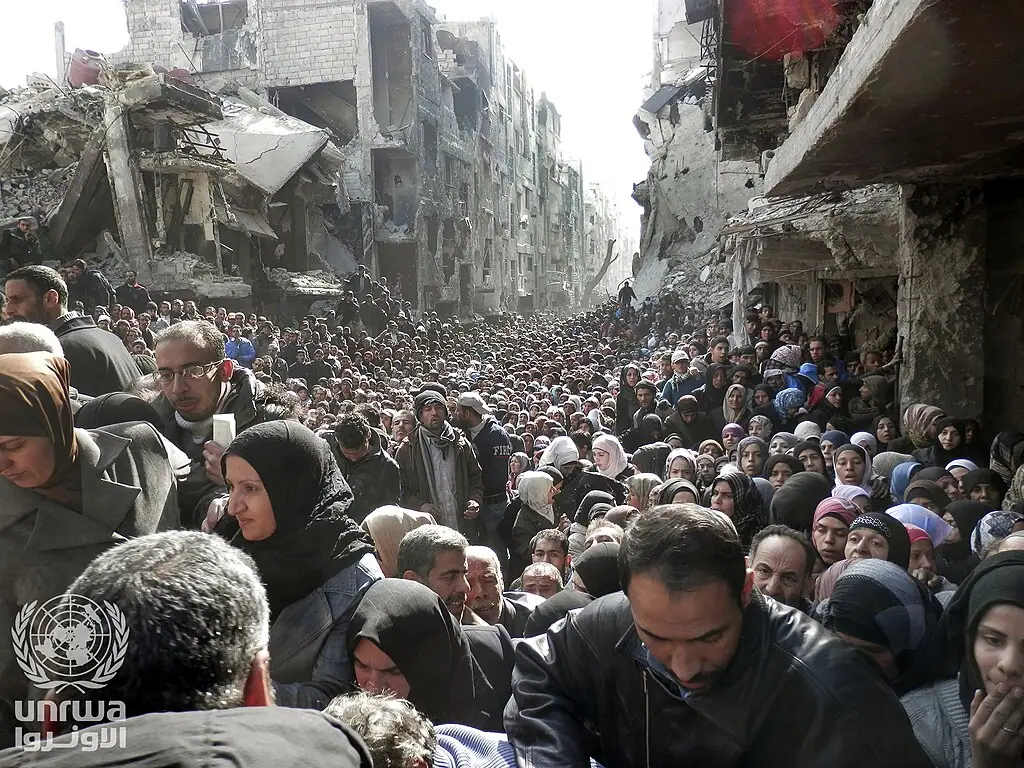
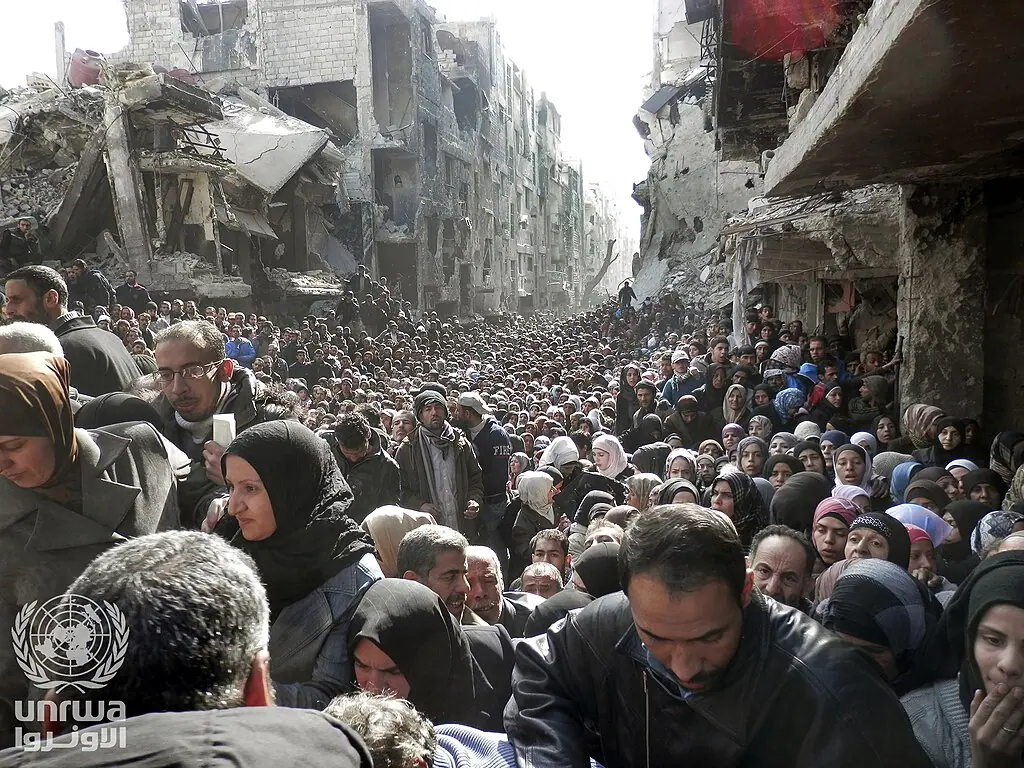
Yarmouk (Damaskus), 2014-01-31 – In January 2014, UNRWA was able to complete its first humanitarian distribution in Yarmouk, Syria, after almost six months of siege. Thousan
Yarmouk · Damascus · 2014UNRWA Archive Photographer Unknown · CC BY-SA 3.0 igo · Wikimedia Commons
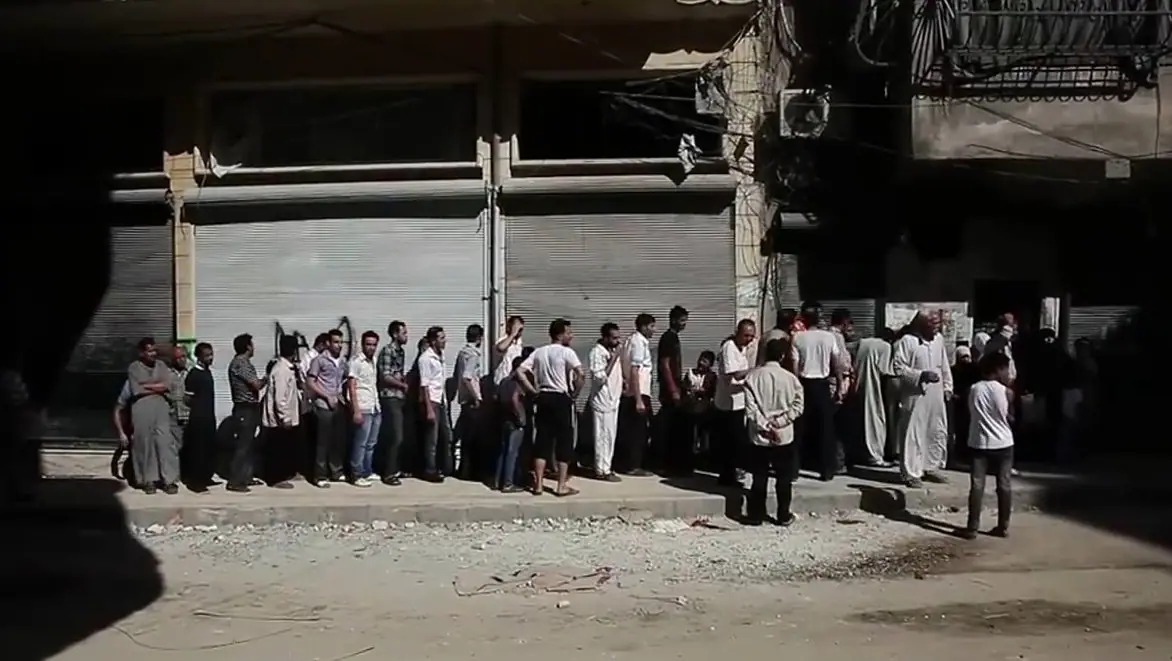
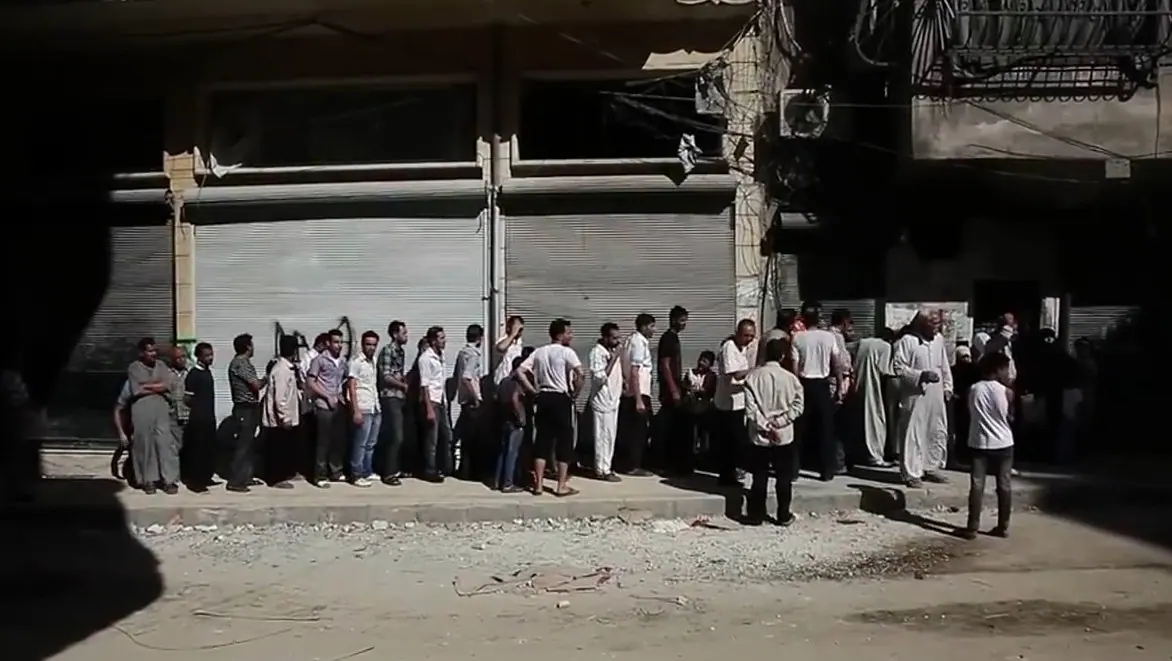
Aleppo, 2012-10-06 – Aleppians waiting in a bread line during the Syrian civil war.
Aleppo · 2012Voice of America News: Scott Bobb reports from Aleppo, Syria · Public domain · Wikimedia Commons
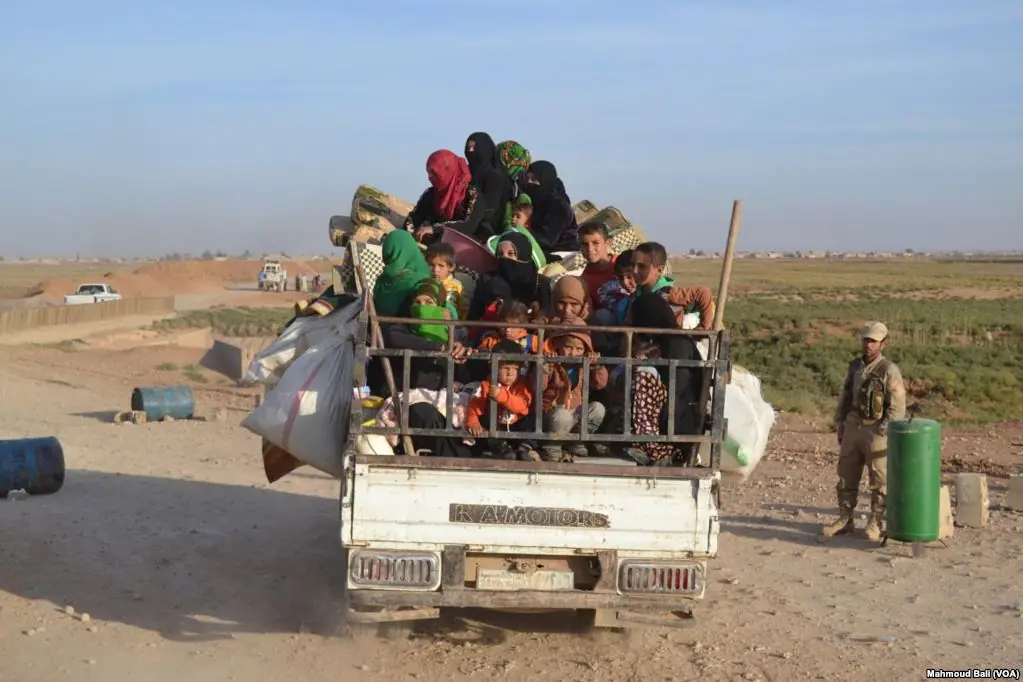
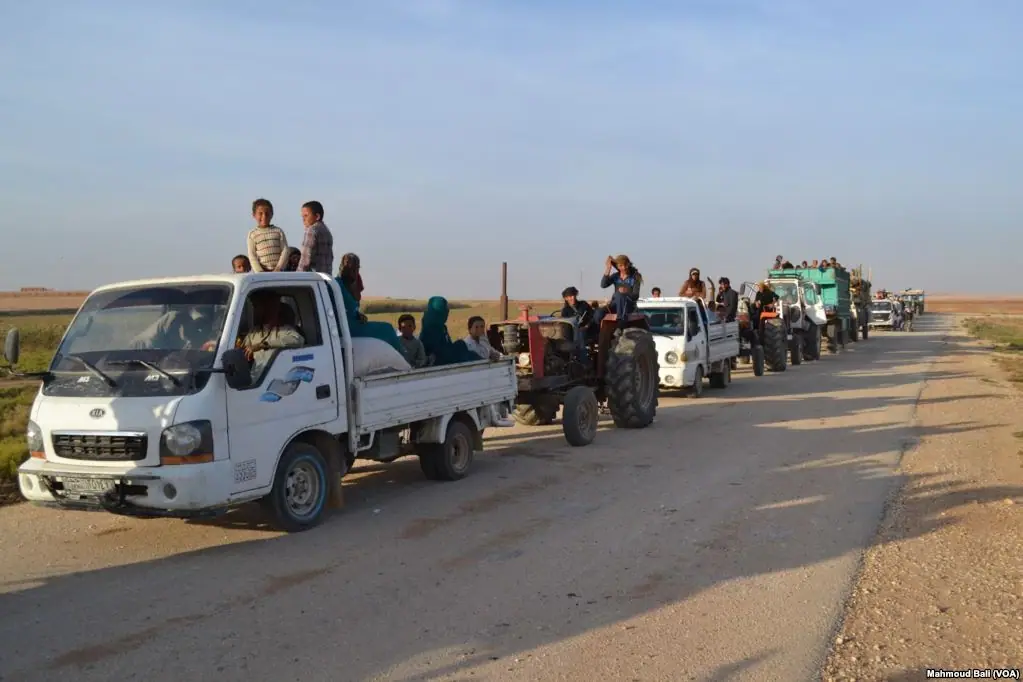
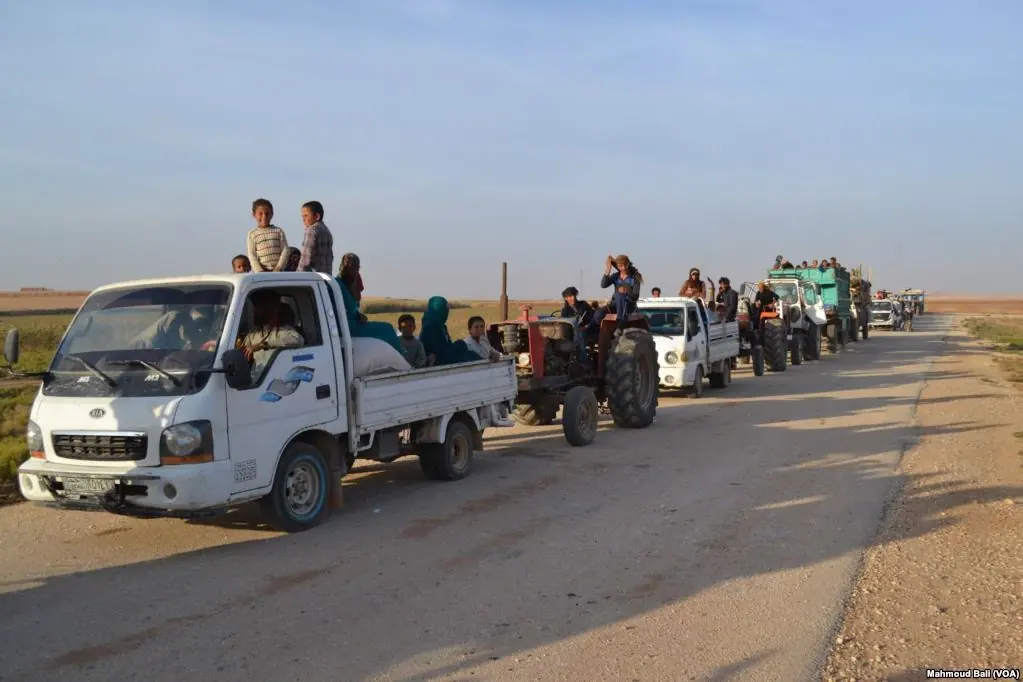
Raqqa, 2017-12-08 – Civils de Raqqa fuyant les combats, novembre 2016.
Raqqa · 2017Mahmud Balî (VOA) · Public domain · Wikimedia Commons
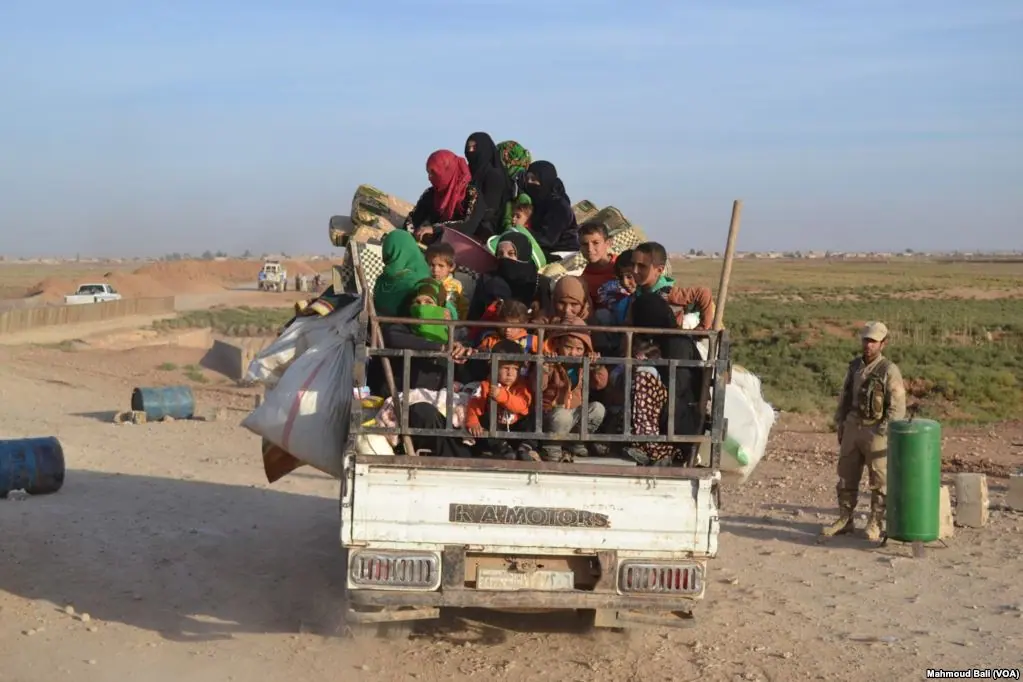
Raqqa, 2017-12-08 – Civils de Raqqa fuyant les combats, novembre 2016.
Raqqa · 2017Mahmud Balî (VOA) · Public domain · Wikimedia Commons
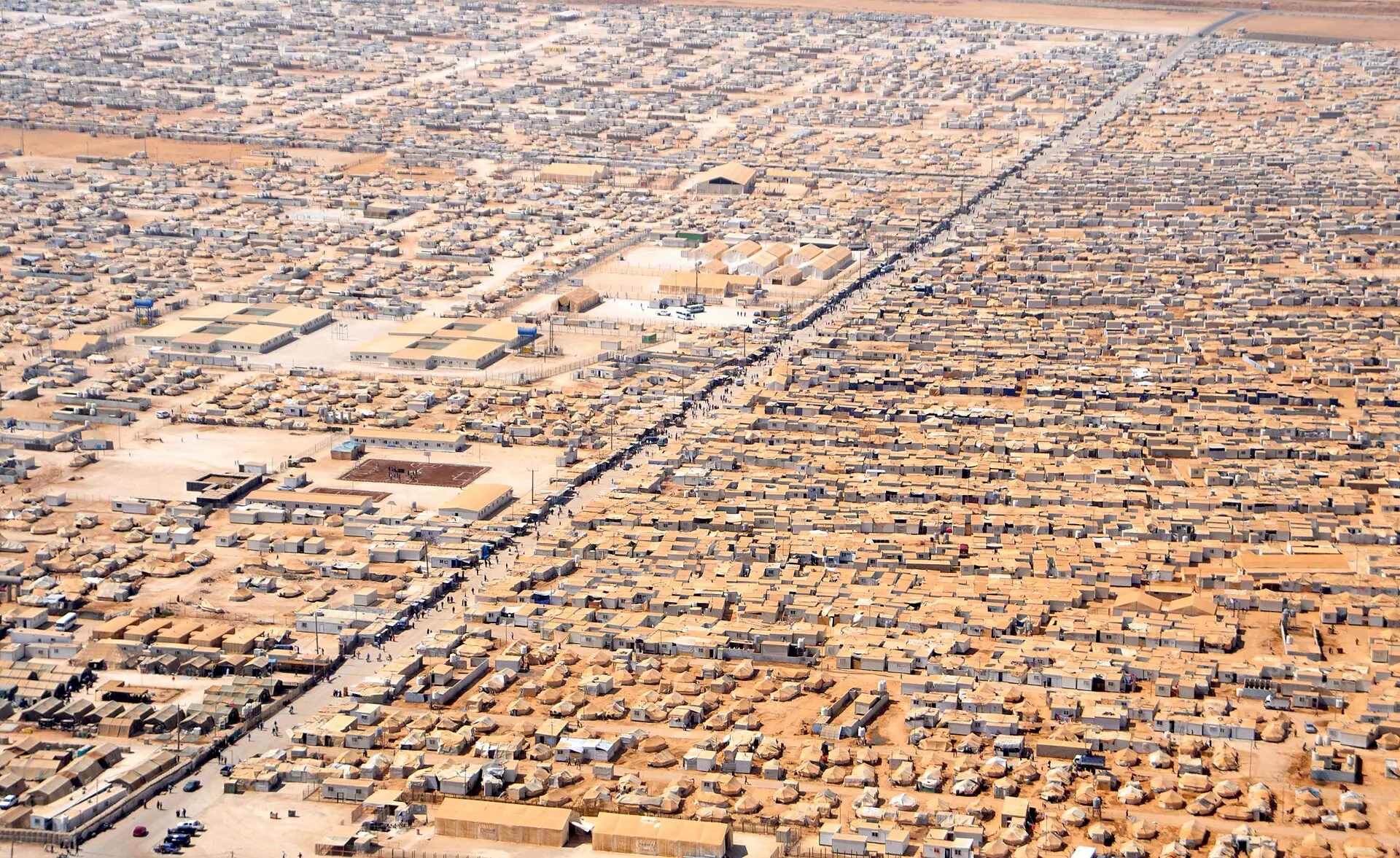
Zaatari-Lager (Jordanien), 2013-07-18 – A close-up view of the Za'atri camp in Jordan for Syrian refugees as seen on July 18, 2013, from a helicopter carrying U.S. Secretary of Sta
Zaatari-Lager · Jordan · 2013U.S. Department of State · Public domain · Wikimedia Commons
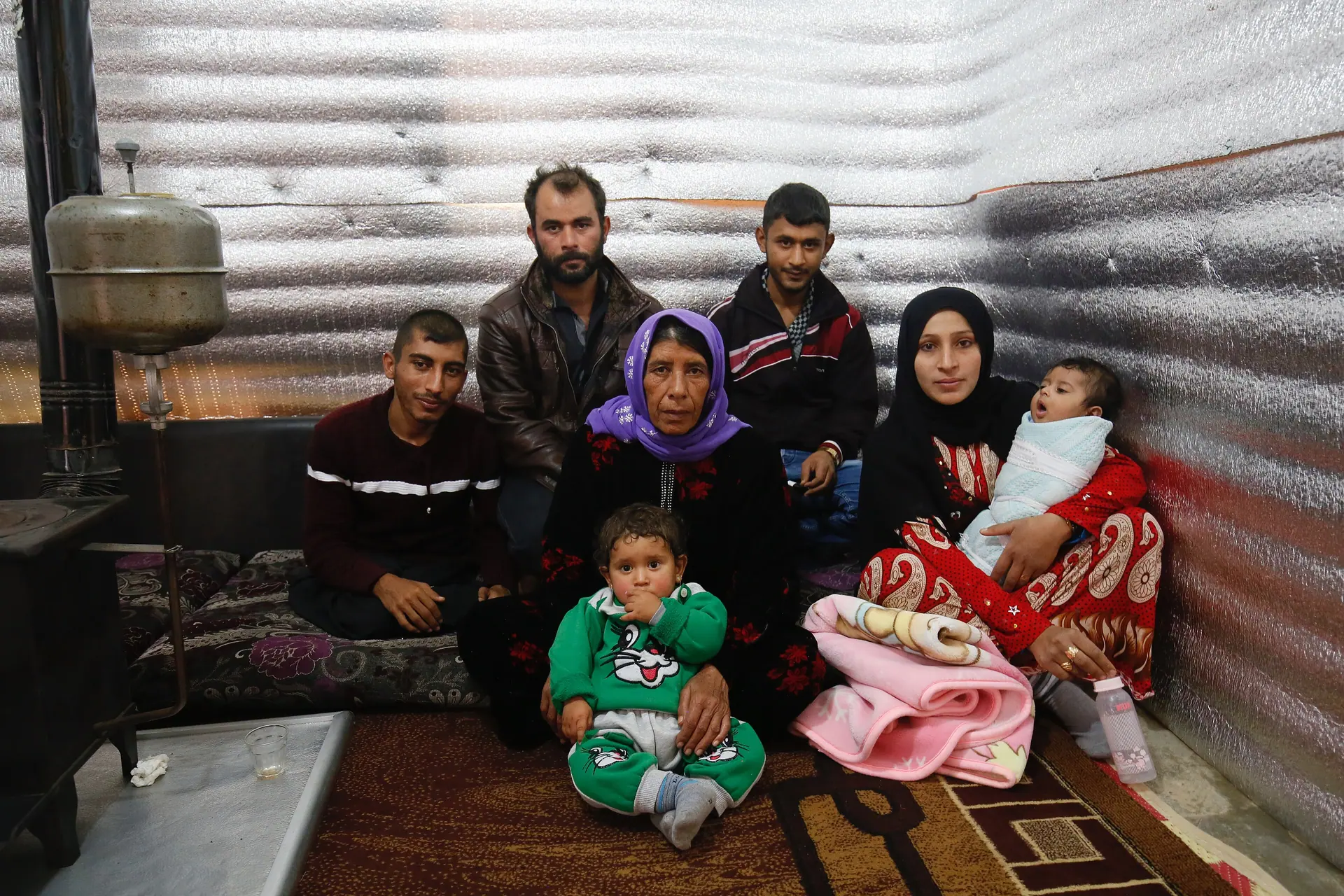
Bekaa Valley, Lebanon, 2017-01-30 – Refugees from Idlib in a camp in Lebanon's Bekaa Valley, 2017
Bekaa Valley, Lebanon · Lebanon · 2017DFID - UK Department for International Development · CC BY 2.0 · Wikimedia Commons
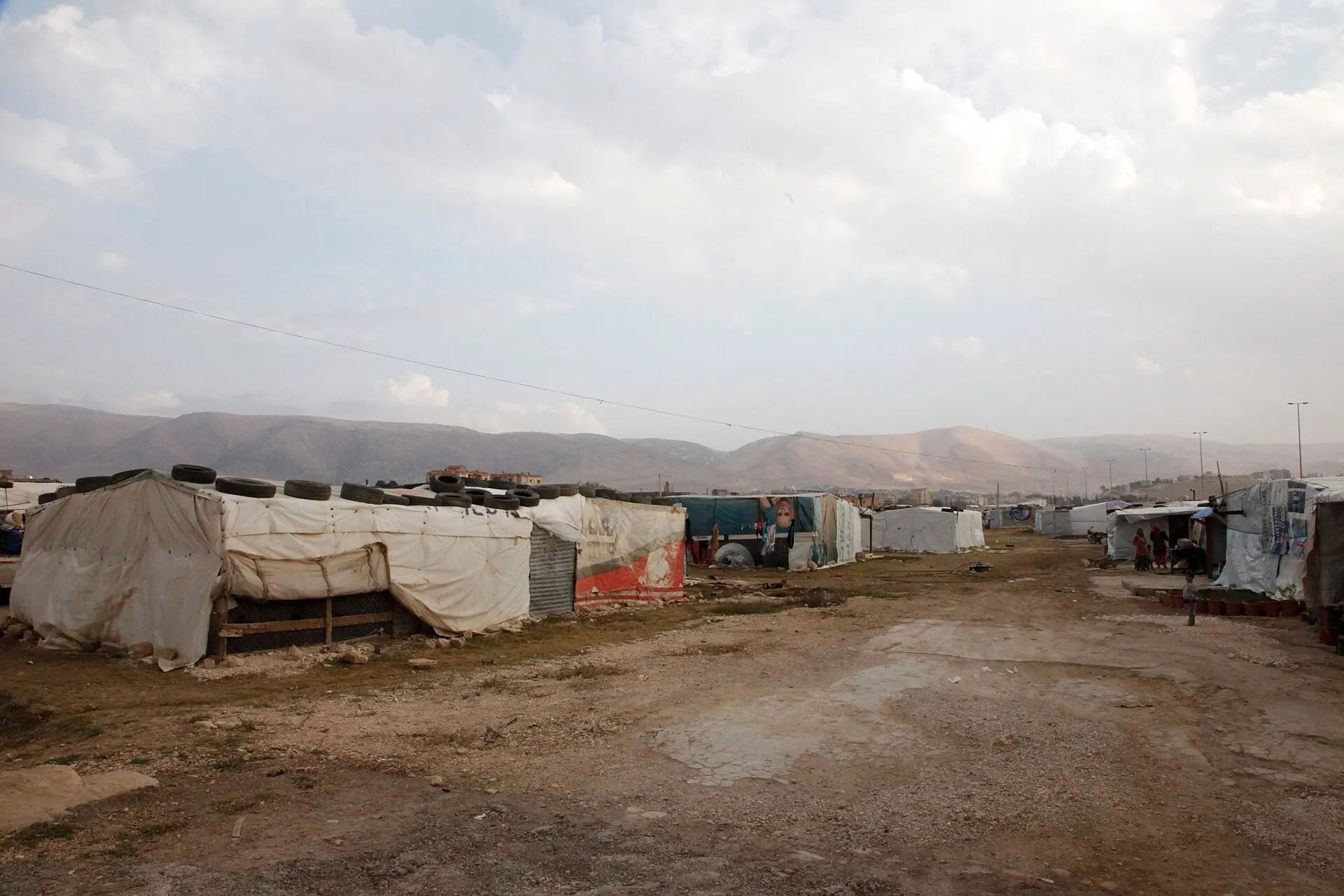
Libanon (Bekaa), 2013-11-05 – An 'informal tented settlement' in Lebanon's Bekaa valley. The mountains in the background form the border with Syria, just a few miles away
Lebanon · 2013DFID - UK Department for International Development · CC BY 2.0 · Wikimedia Commons
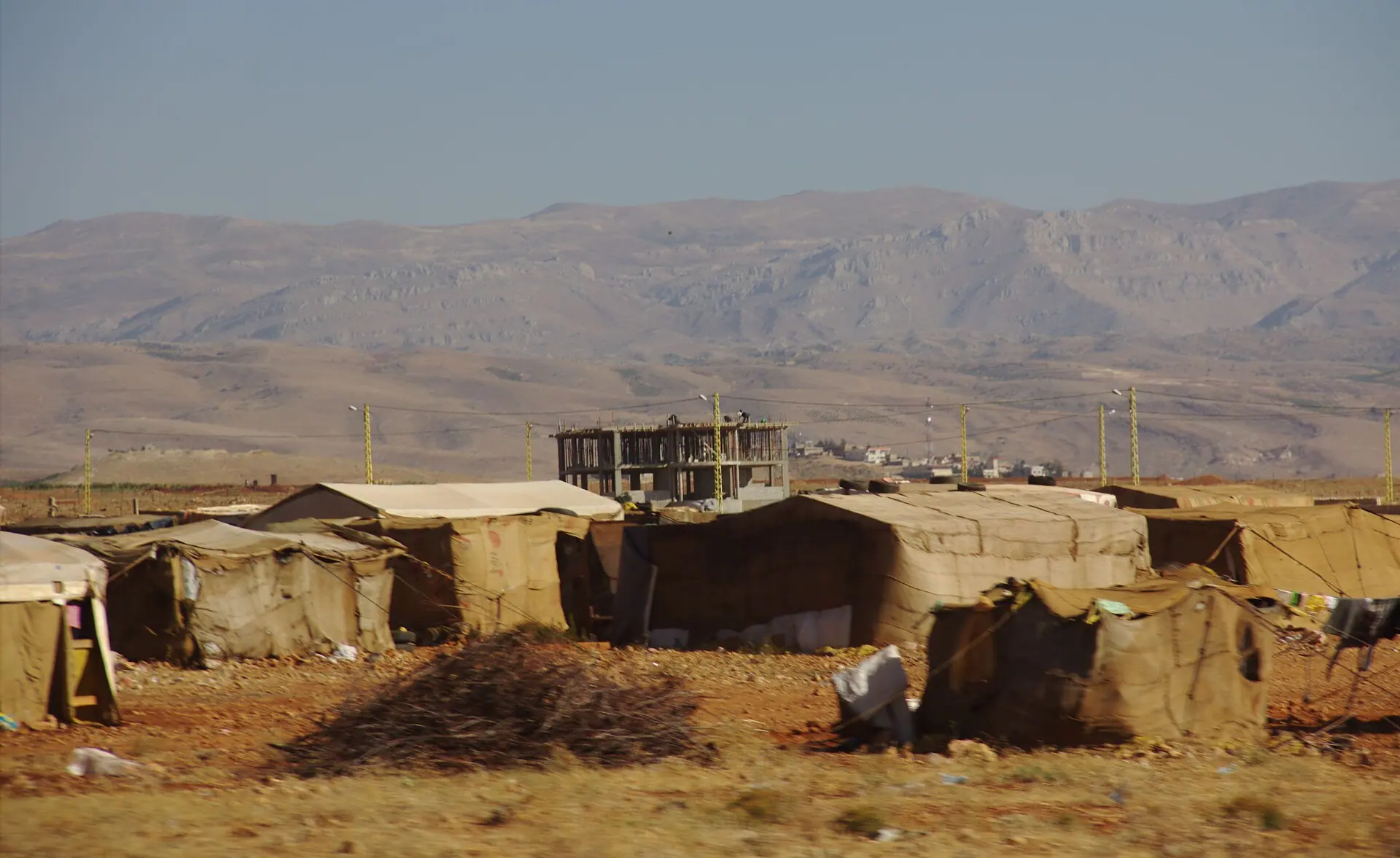
Libanon (Bekaa), 2012-08-26 – Camp in Lebanon close to the Syrian border
Lebanon · 2012Elgaard · CC BY-SA 3.0 · Wikimedia Commons
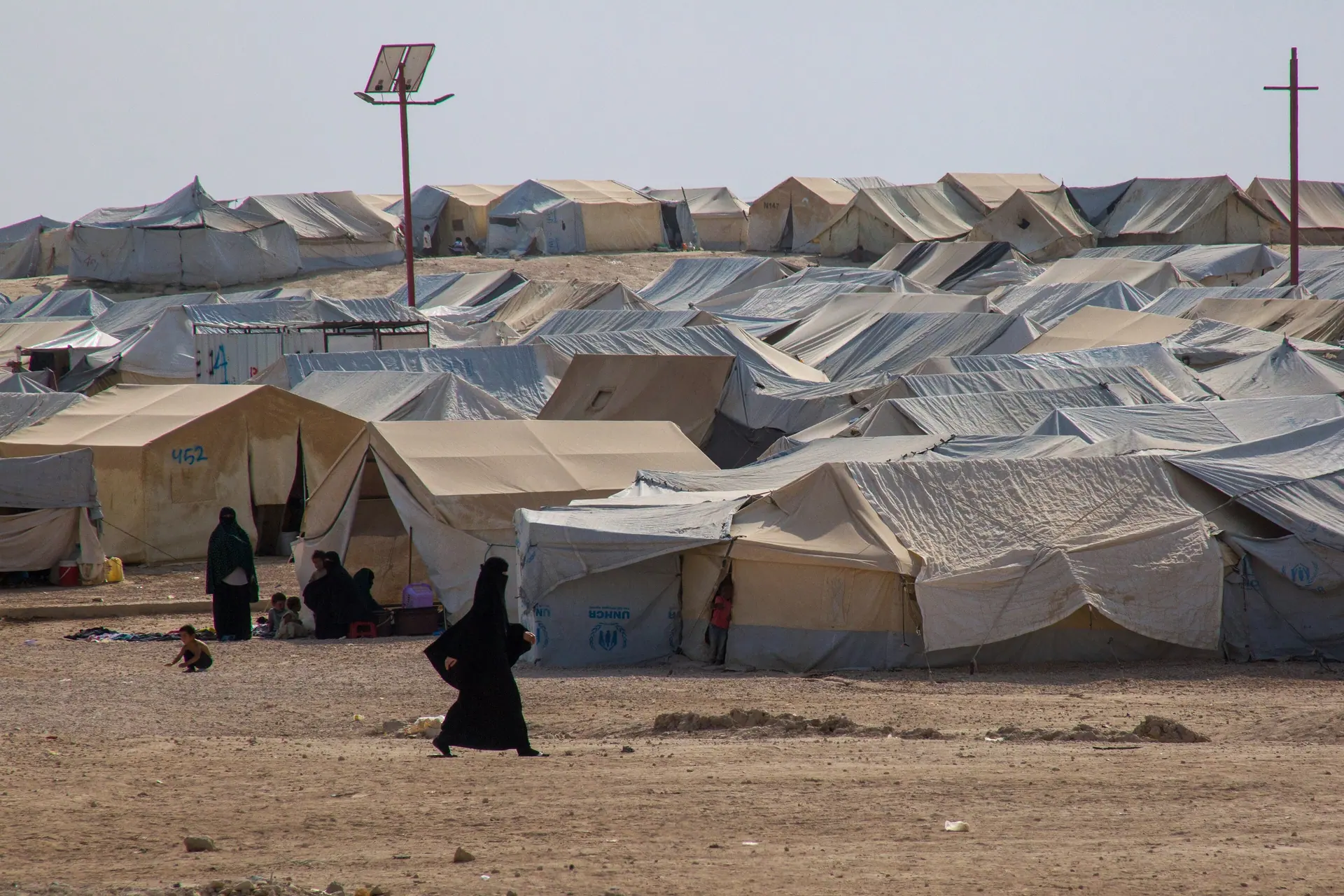
Al-Hol camp, 2019-10-17 – We are the first reporters inside the al-Hol Camp since Turkish military operations began in northeastern Syria last week. Officials say sin
Al-Hol camp · Hasakah · 2019Y. Boechat (VOA) · Public domain · Wikimedia Commons
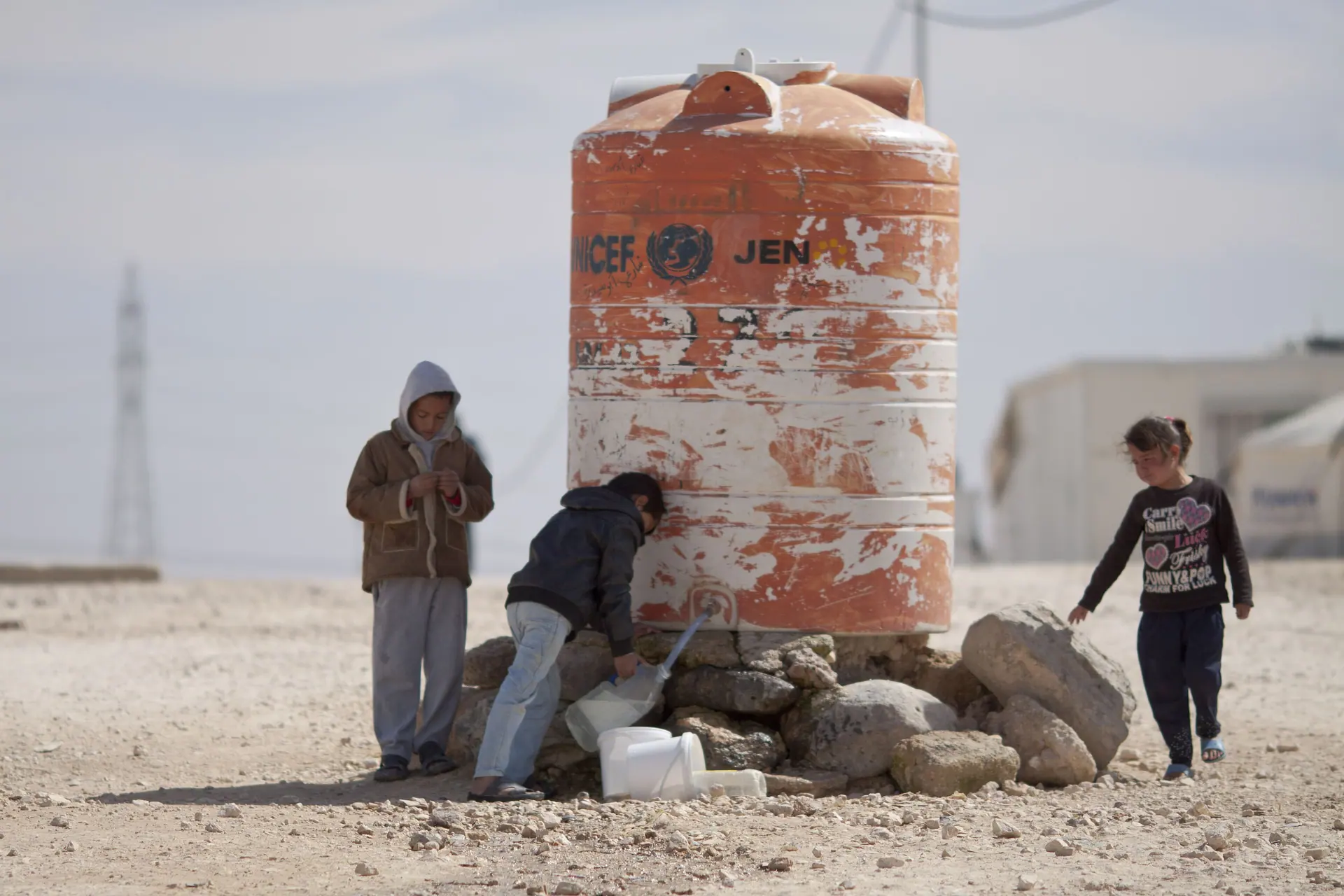
Zaatari camp, Jordan, 2015-02-27 – Syrian children fetch drinking water in the Zaatari camp, Jordan, 2015
Zaatari camp, Jordan · Jordan · 2015Mustafa Bader · CC BY-SA 4.0 · Wikimedia Commons
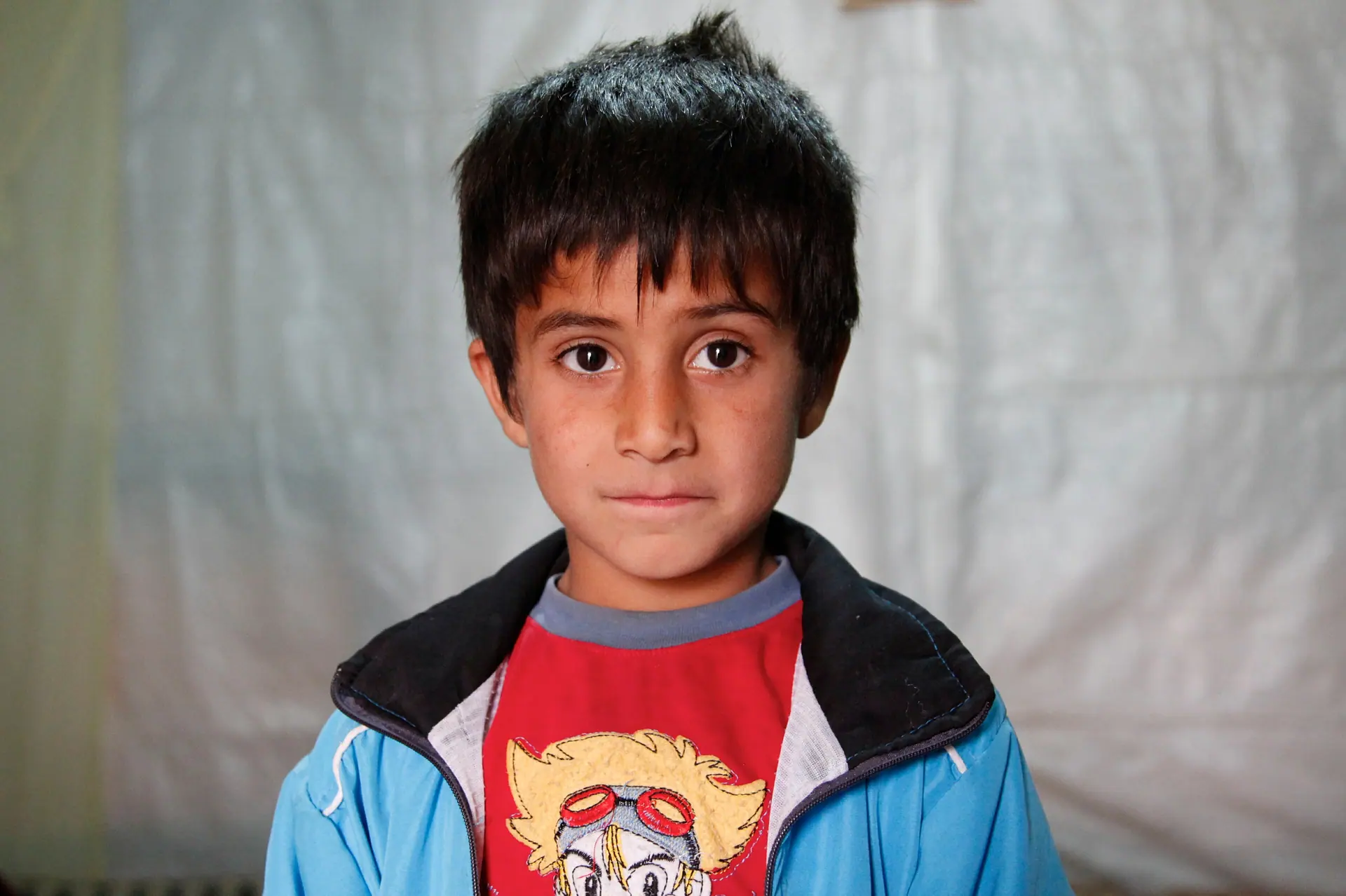
Bekaa Valley, Lebanon, 2013-11-05 – Marwan, 5, a refugee from near Aleppo, in an informal settlement in the Bekaa Valley, 2013
Bekaa Valley, Lebanon · Lebanon · 2013DFID - UK Department for International Development · CC BY 2.0 · Wikimedia Commons
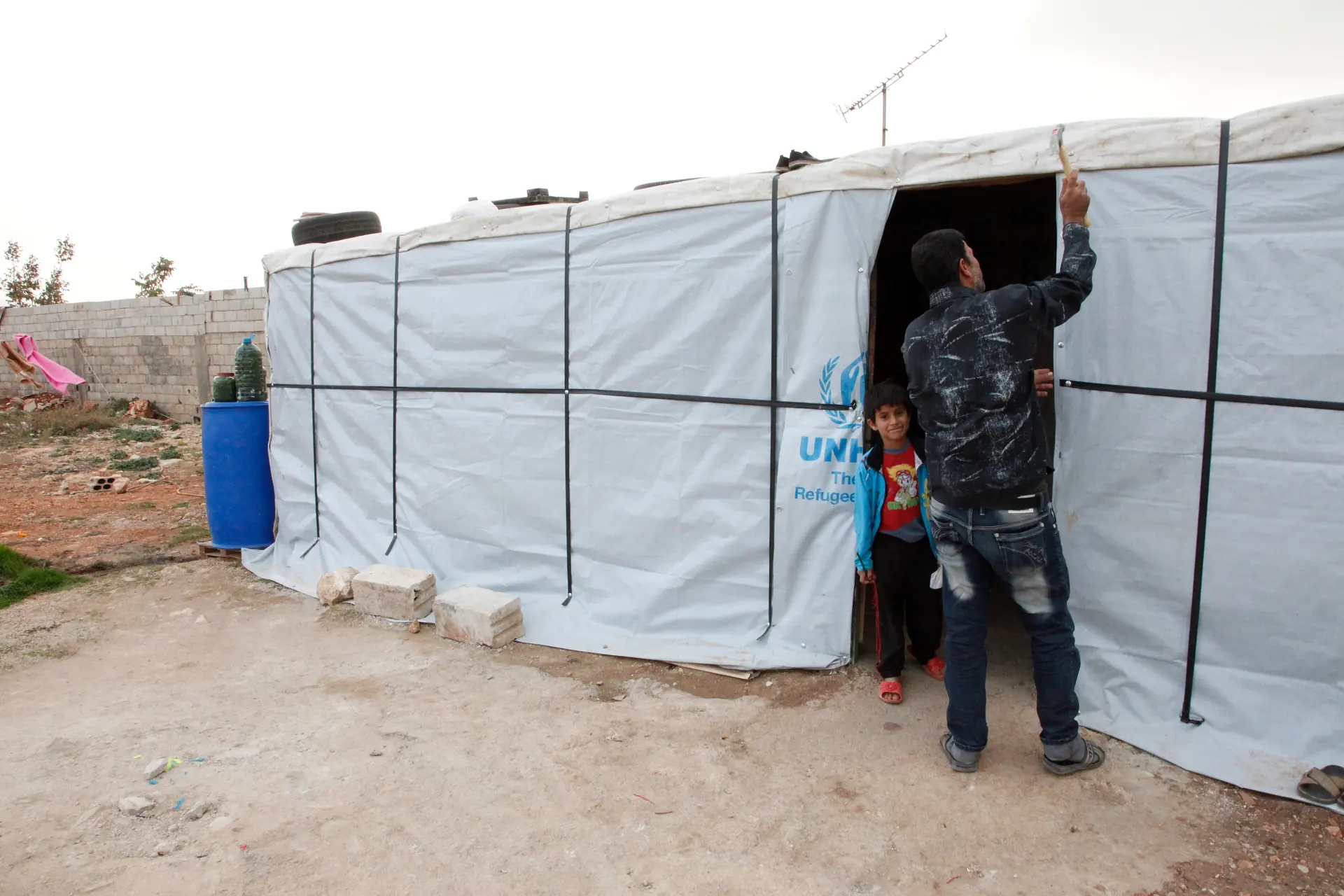
Bekaa Valley, Lebanon, 2013-11-05 – A father reinforces the family's shelter before winter, Bekaa Valley, 2013
Bekaa Valley, Lebanon · Lebanon · 2013DFID - UK Department for International Development · CC BY 2.0 · Wikimedia Commons
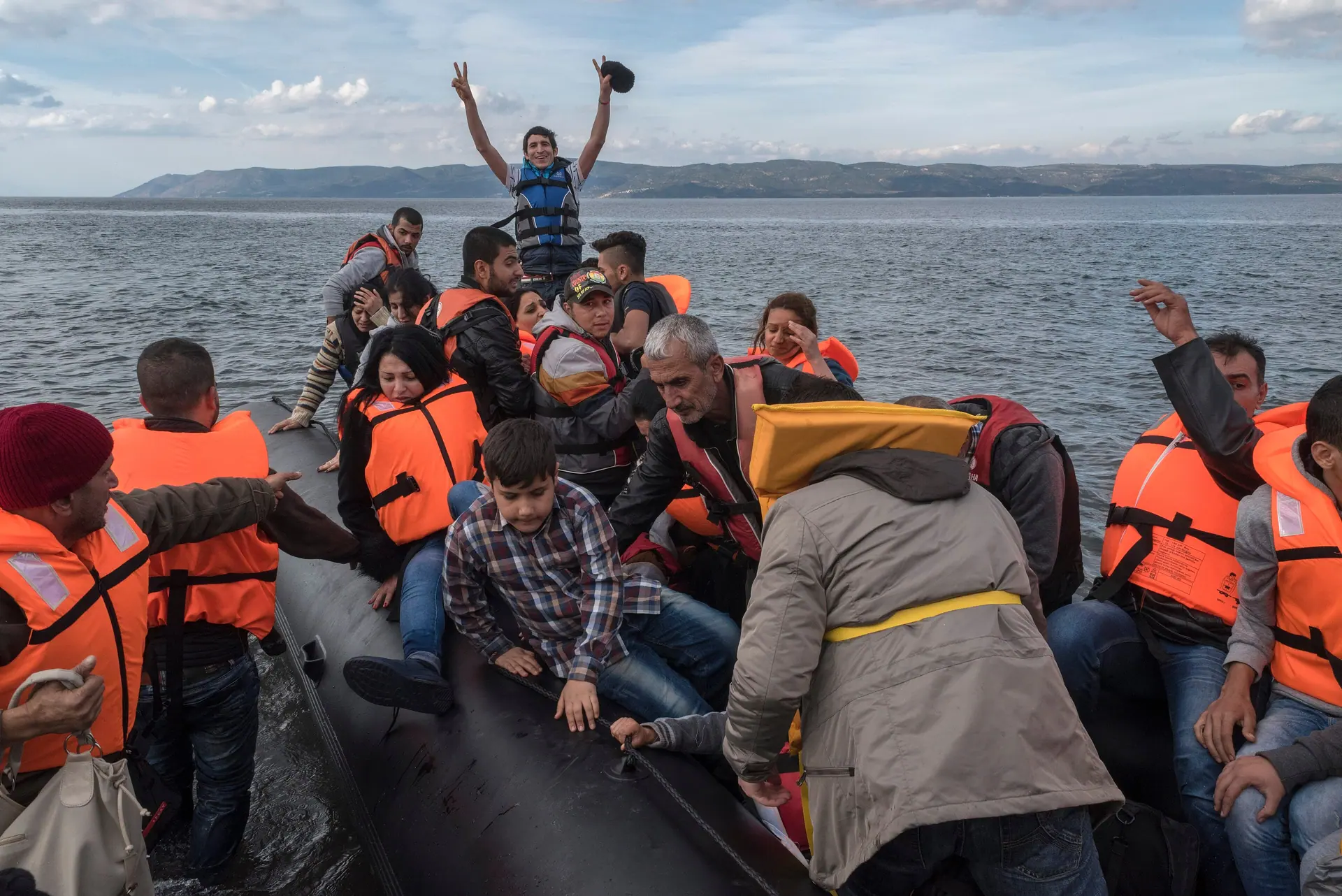
Skala Sykamias, Lesbos (Greece), 2015-10-29 – An inflatable boat with Syrian Refugees just arrived safely to Skala Sykamias, Lesvos island, Greece.
Skala Sykamias, Lesbos · Greece · 2015Ggia · CC BY-SA 4.0 · Wikimedia Commons
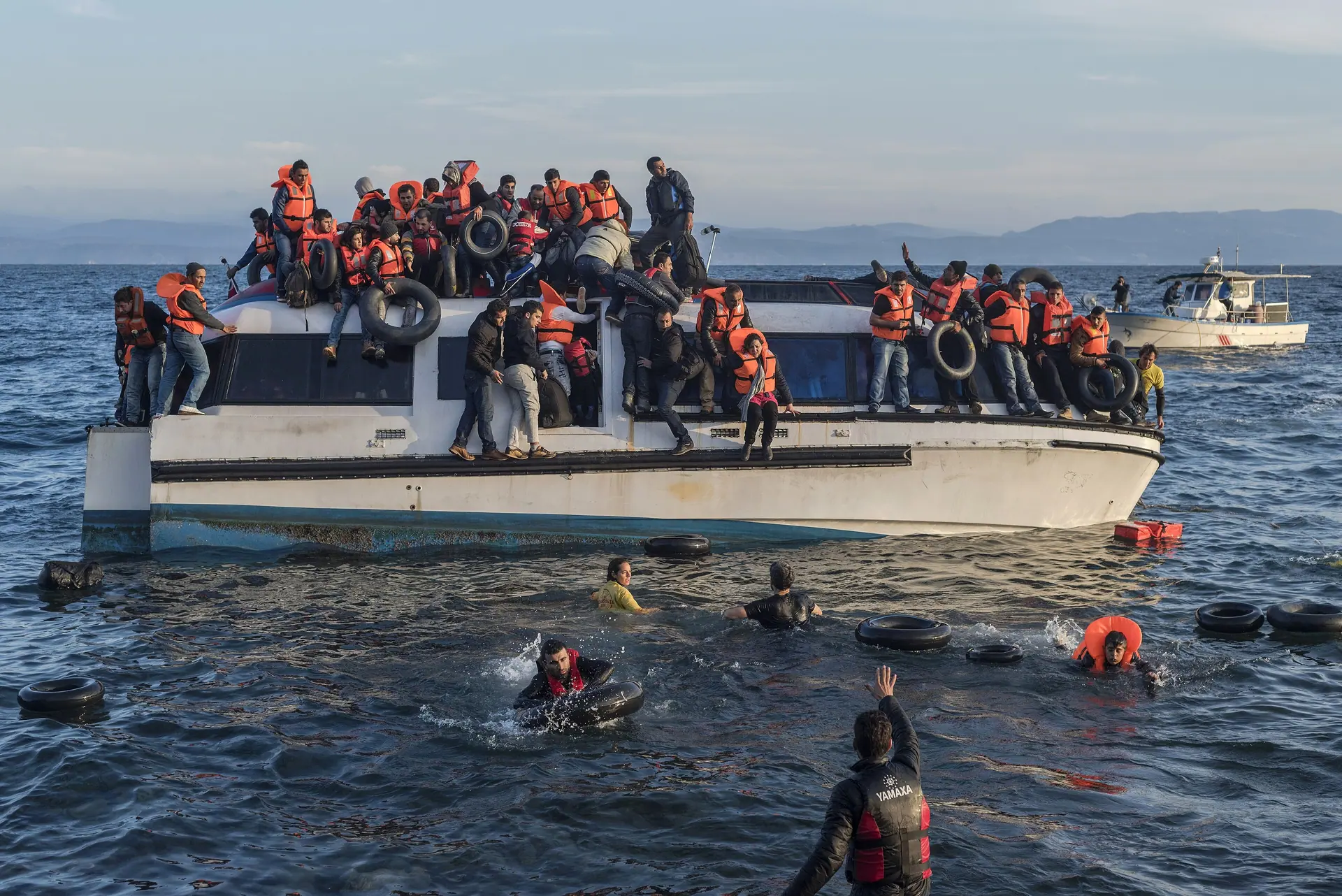
Skala Sykamias, Lesbos (Greece), 2015-10-30 – Syrian and Iraqi refugees arrive from Turkey to Skala Sykamias, Lesbos island , Greece. Volunteers (life rescue team - with yellow-red cloth
Skala Sykamias, Lesbos · Greece · 2015Ggia · CC BY-SA 4.0 · Wikimedia Commons
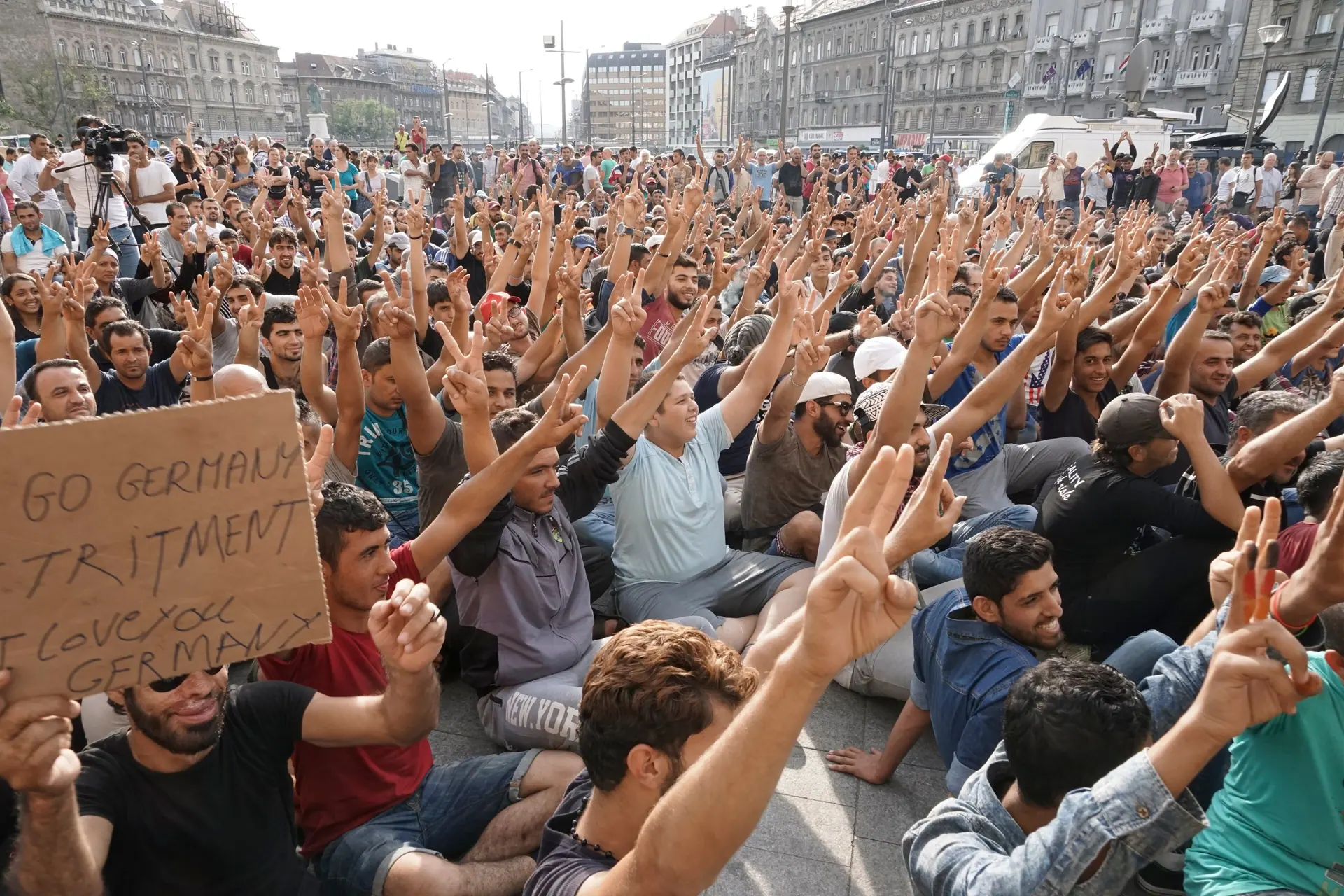
Keleti station, Budapest (Hungary), 2015-09-03 – Syrian young males refugees strike in front of Budapest Keleti railway station. Refugee crisis. Budapest, Hungary , Central Europe, 3 Septem
Keleti station, Budapest · Hungary · 2015Mstyslav Chernov · CC BY-SA 4.0 · Wikimedia Commons
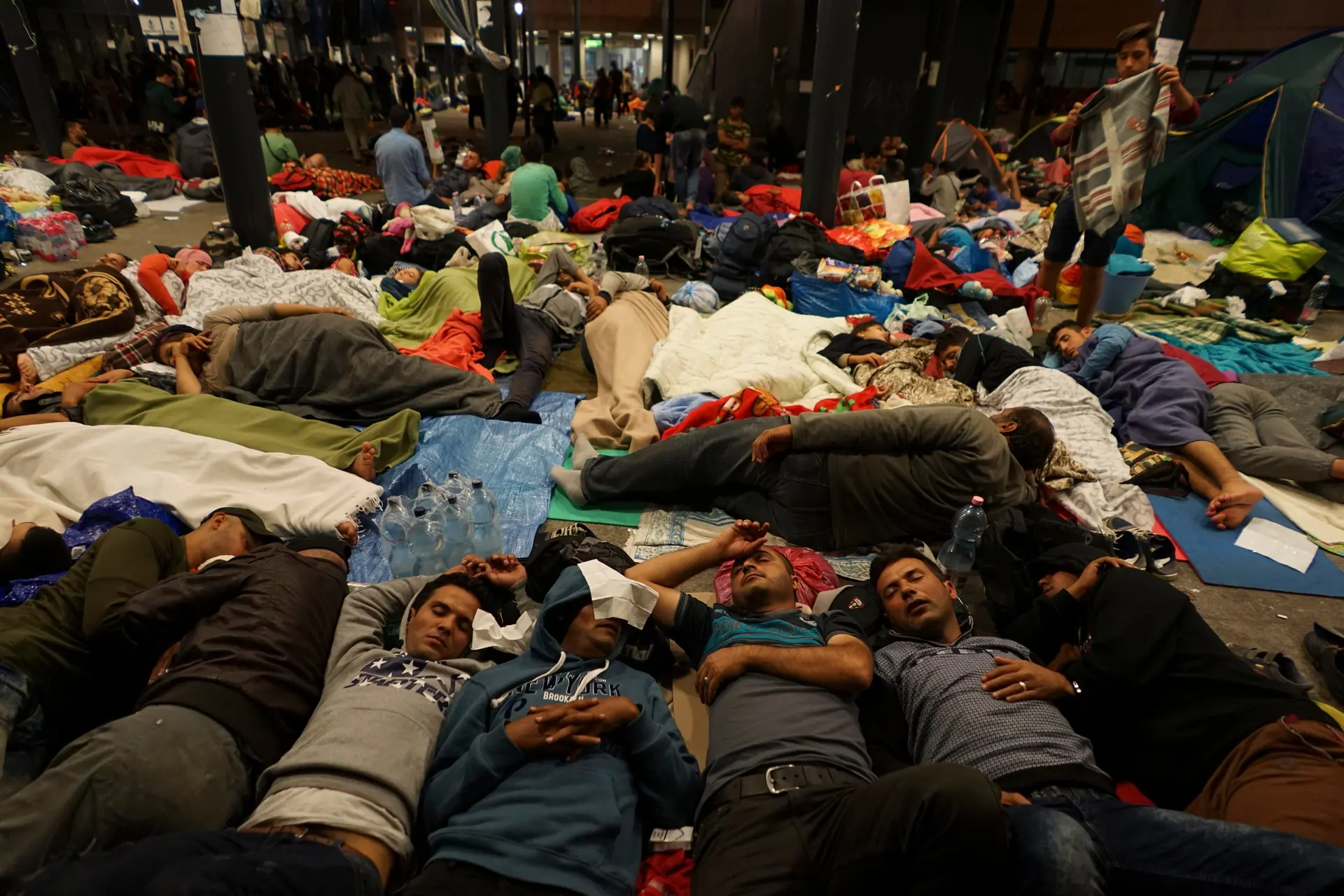
Keleti station, Budapest (Hungary), 2015-09-05 – Syrian refugees having rest at the floor of Keleti railway station. Refugee crisis. Budapest, Hungary, Central Europe, 5 September 2015.
Keleti station, Budapest · Hungary · 2015Mstyslav Chernov · CC BY-SA 4.0 · Wikimedia Commons
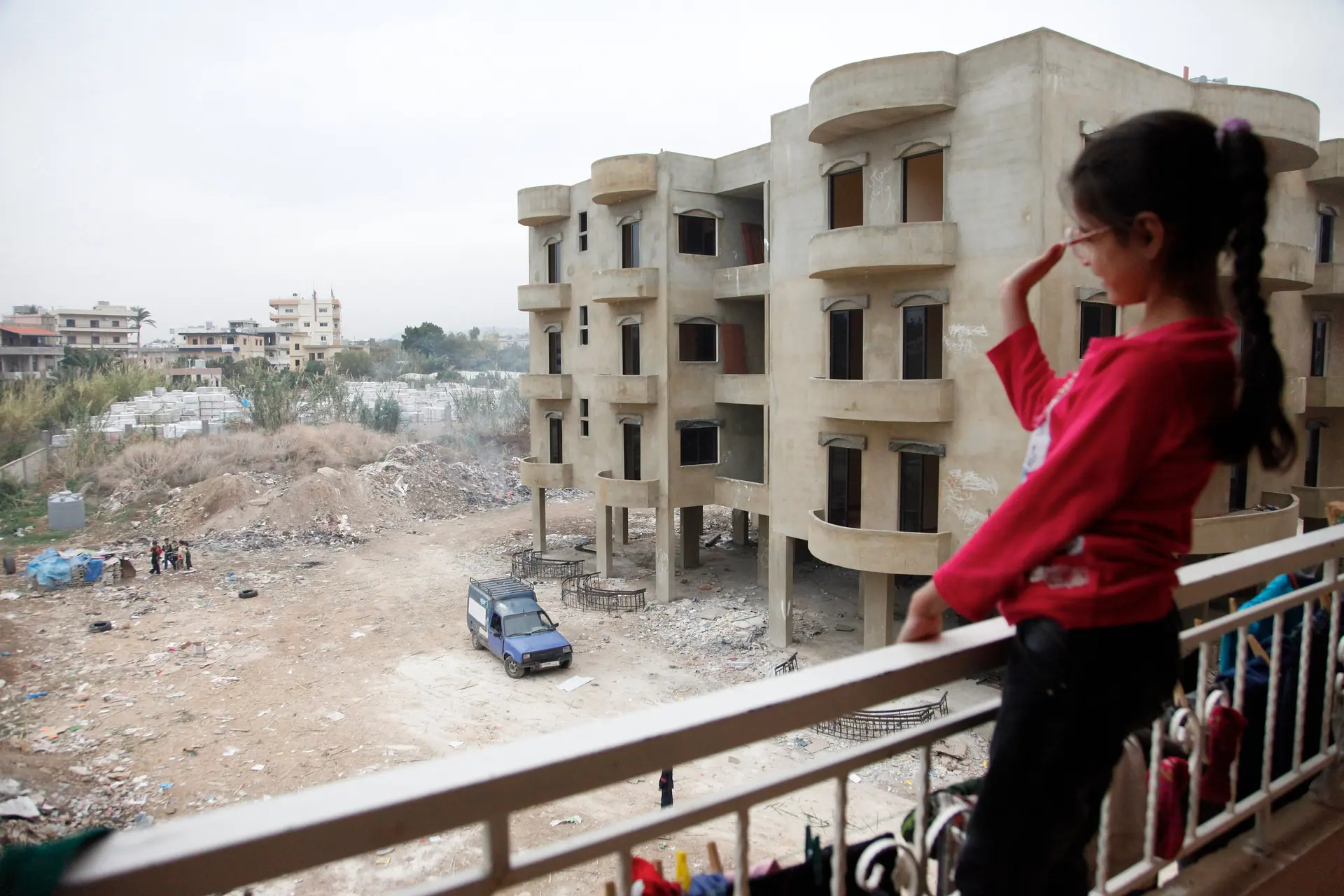
Northern Lebanon, 2013-11-07 – A Syrian girl in an unfinished apartment block in northern Lebanon, 2013
Northern Lebanon · Lebanon · 2013DFID - UK Department for International Development · CC BY 2.0 · Wikimedia Commons
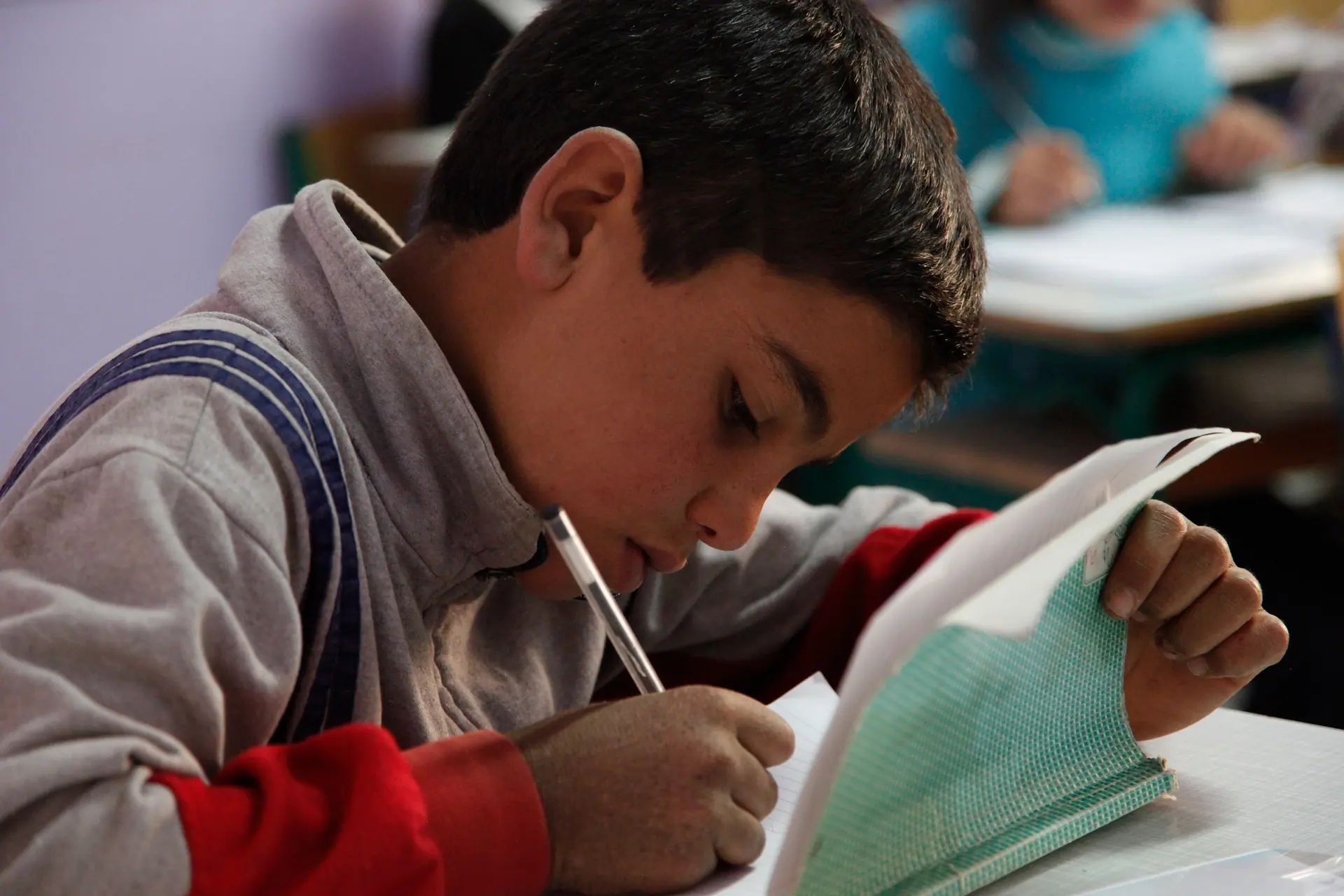
Bekaa Valley, Lebanon, 2013-11-05 – Muhanad, 11, from Syria, back at school in Lebanon's Bekaa Valley, 2013
Bekaa Valley, Lebanon · Lebanon · 2013DFID - UK Department for International Development · CC BY 2.0 · Wikimedia Commons
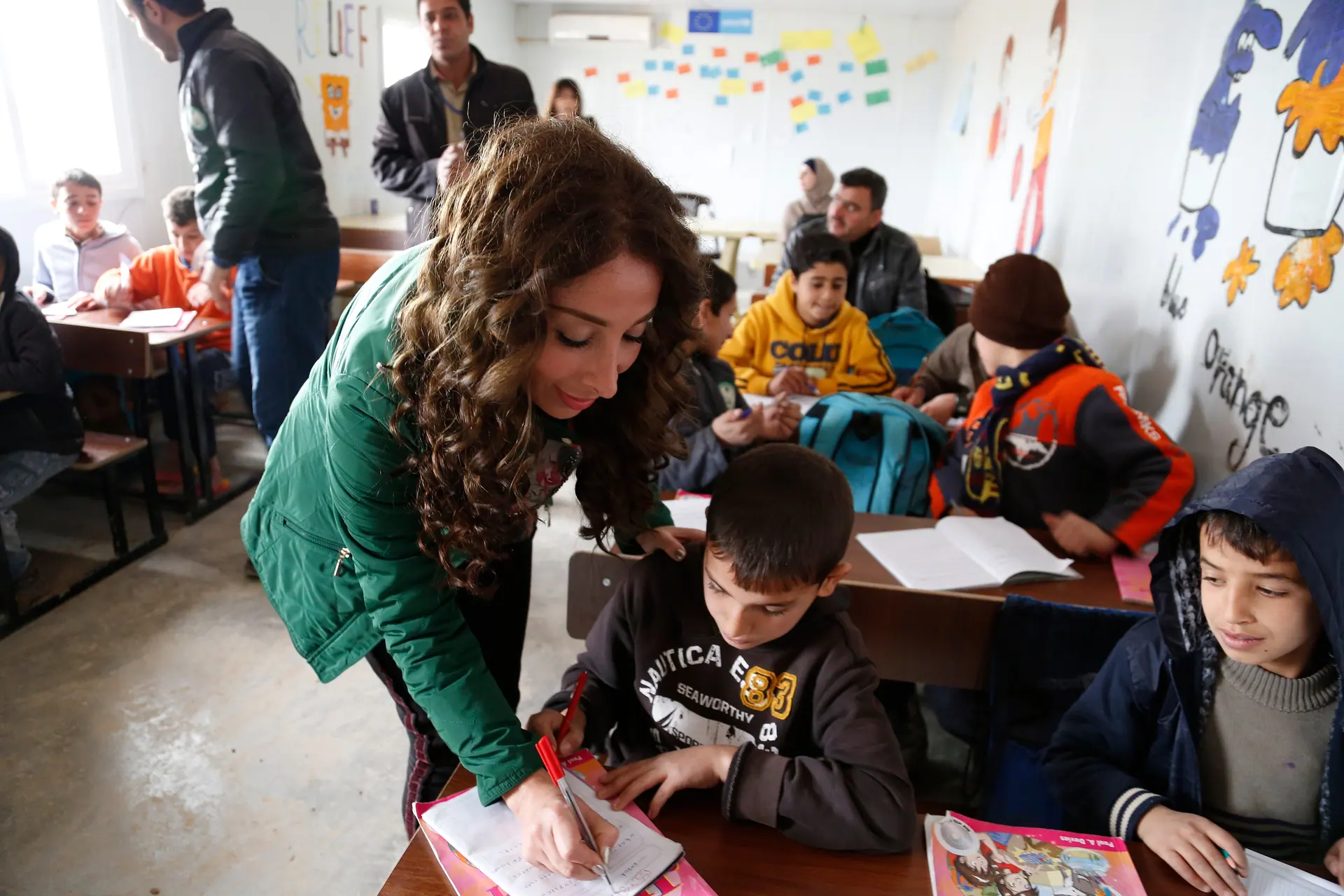
Zaatari camp, Jordan, 2015-03-12 – A teacher with Syrian pupils in a school in the Zaatari camp, Jordan, 2015
Zaatari camp, Jordan · Jordan · 2015DFID · CC BY 2.0 · Wikimedia Commons
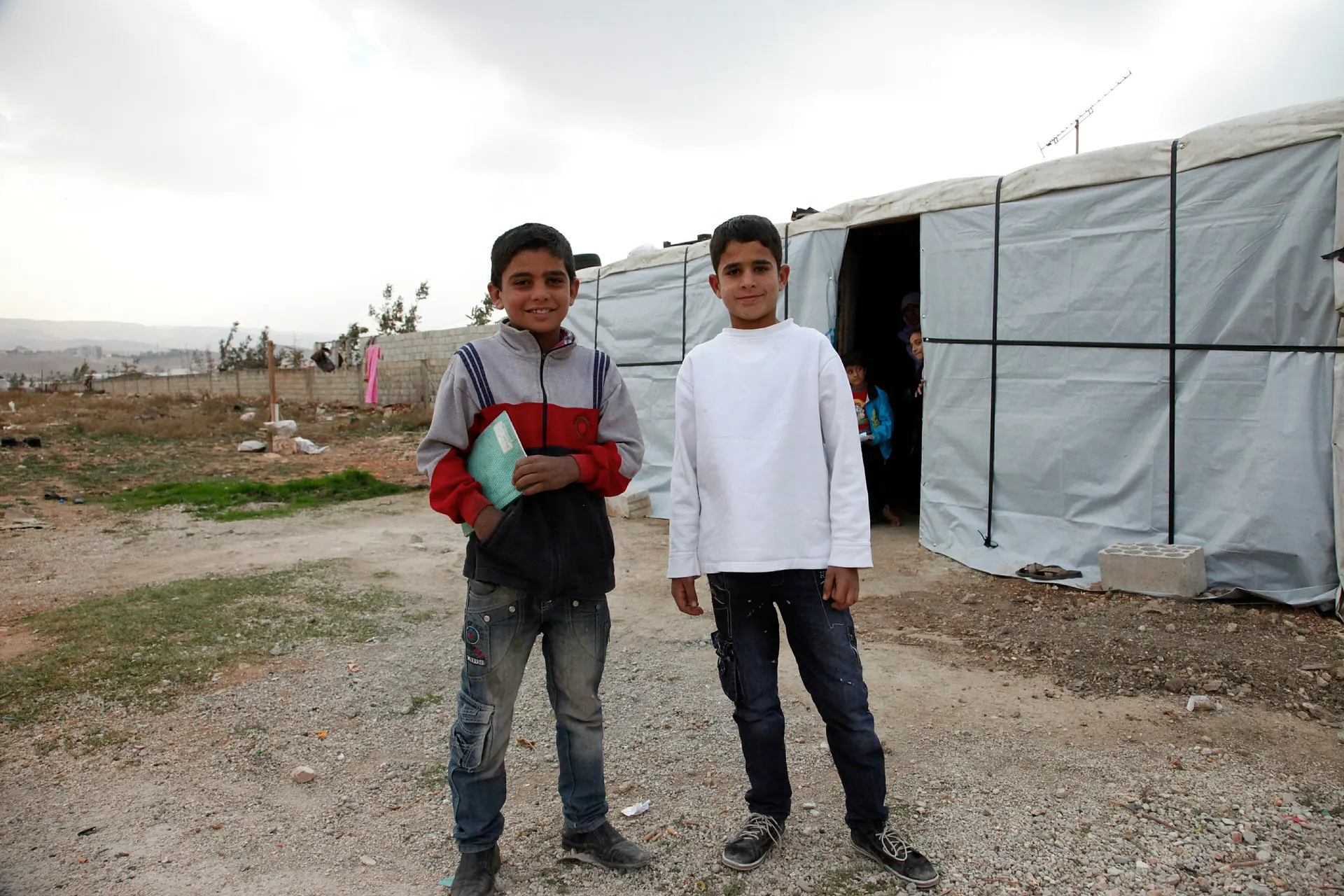
Bekaa Valley, Lebanon, 2013-11-05 – Two Syrian boys still smiling, Bekaa Valley, 2013
Bekaa Valley, Lebanon · Lebanon · 2013DFID - UK Department for International Development · CC BY 2.0 · Wikimedia Commons
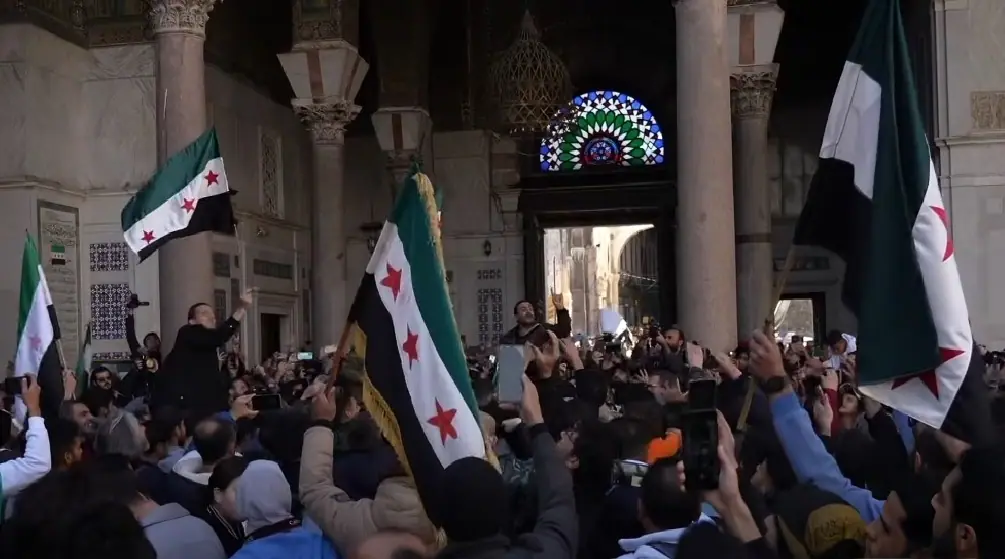
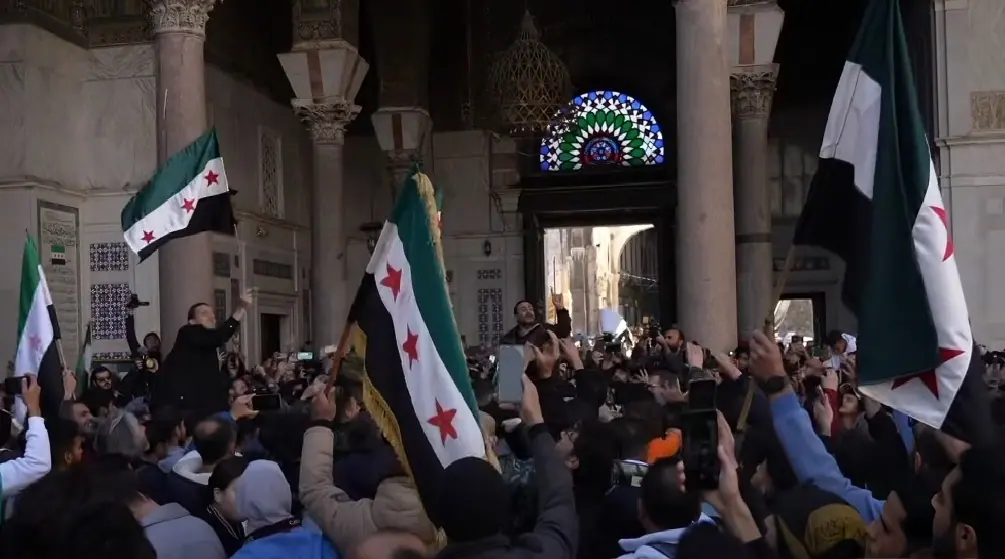
Damaskus, 2024-12-14 – Rebels celebrate the fall of the Assad Regime during the first Friday Prayers at the Umayyad mosque, 14 December 2024
Damascus · 2024Voice of America · Public domain · Wikimedia Commons
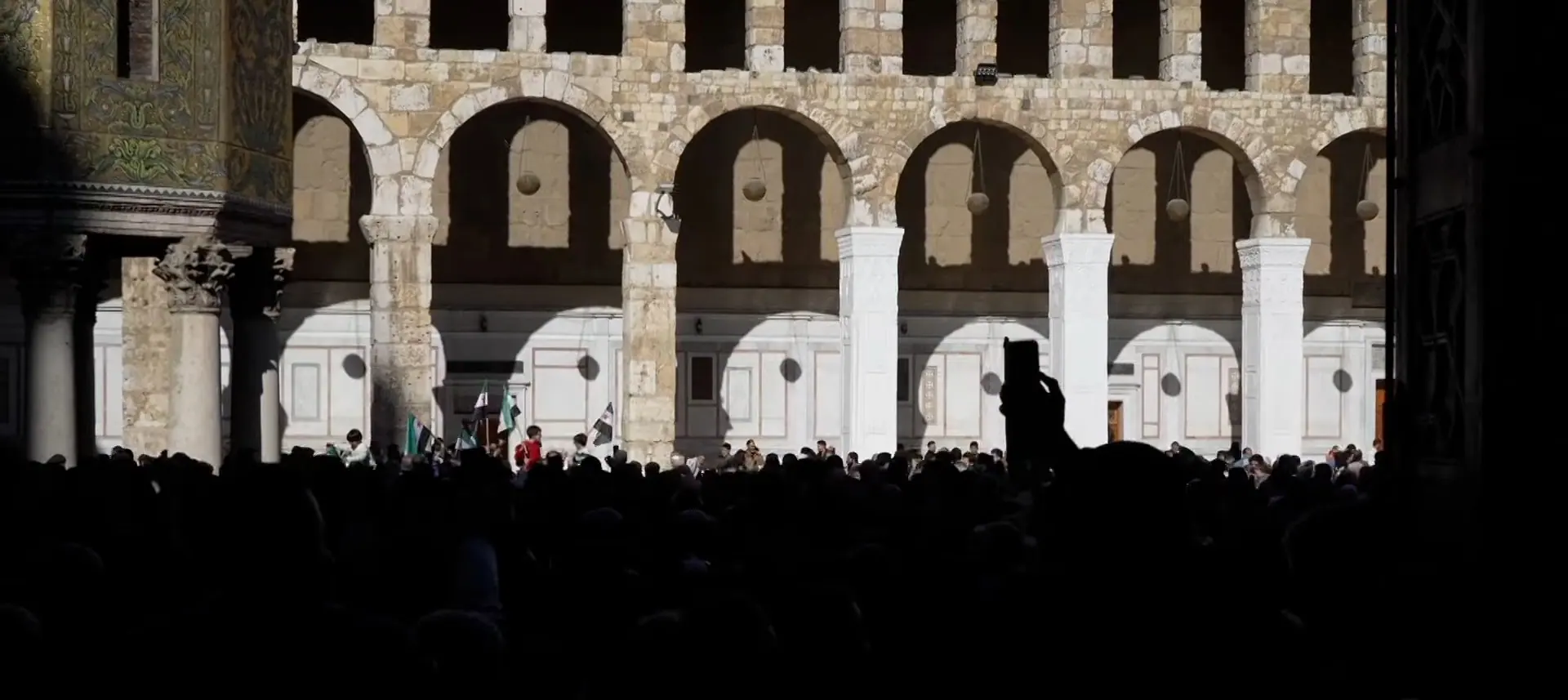
Damaskus, 2024-12-14 – Worshippers congregate at the Umayyad Mosque celebrating the Fall of the Assad regime and praying the First Friday Prayers without any gover
Damascus · 2024Voice of America · Public domain · Wikimedia Commons
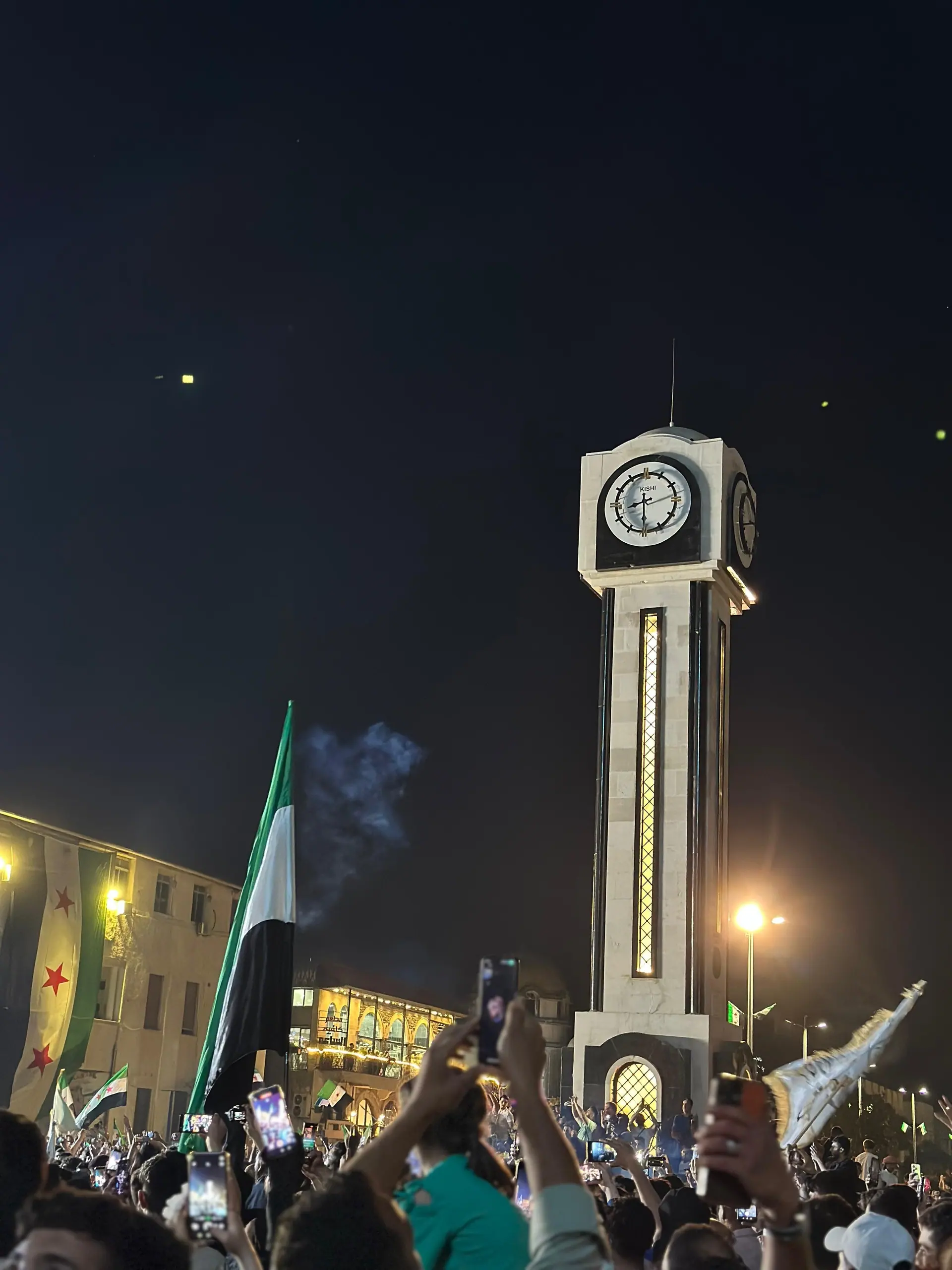
Homs, 2025-06-09 – Homs New Clock
Homs · 2025Bo yaser · CC BY 4.0 · Wikimedia Commons
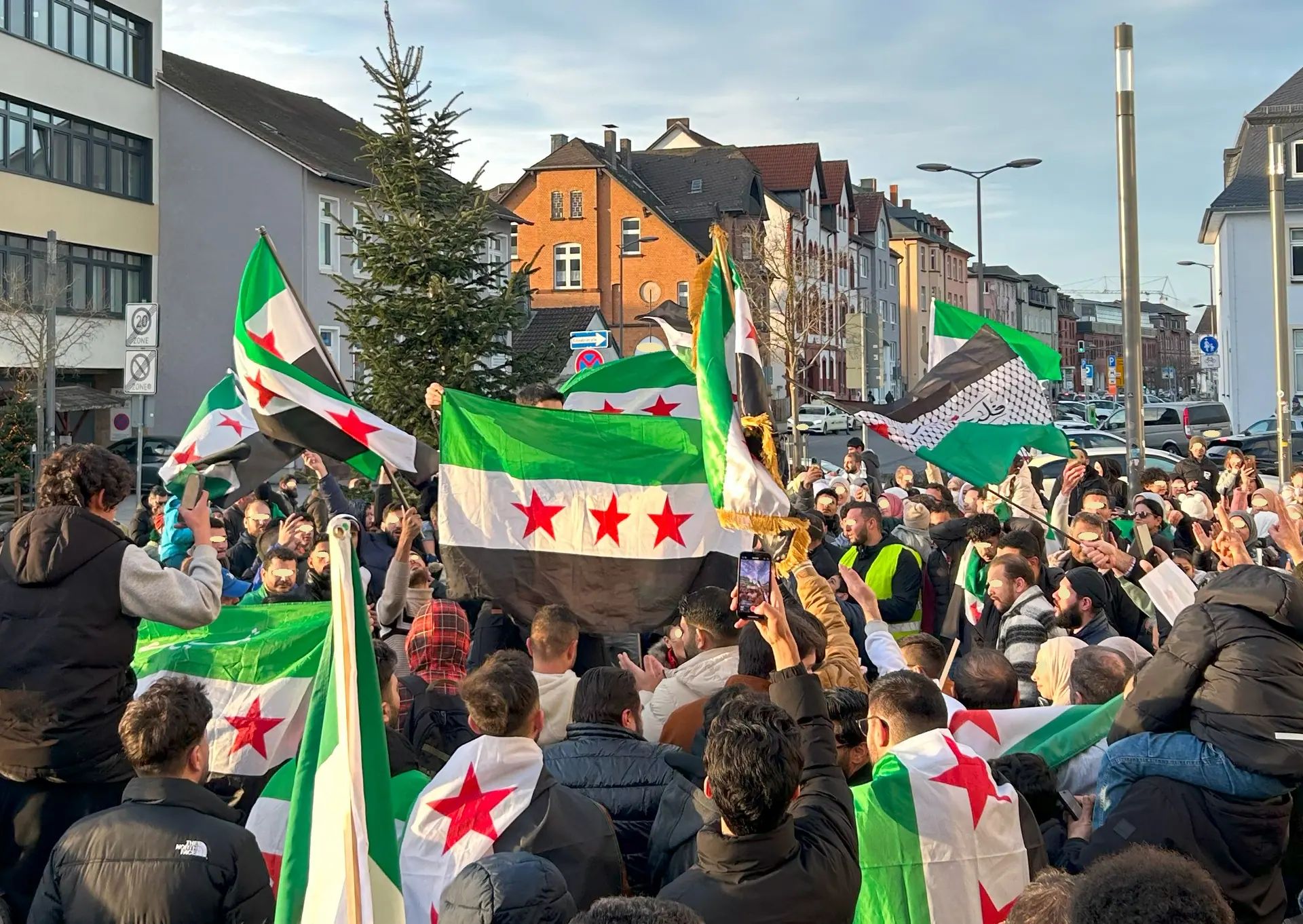
Deutschland, 2024-12-08 – Syrians in Germany celebrate Fall of Assad Regime, 8 December 2024
Germany · 2024Shark1989z · CC BY-SA 4.0 · Wikimedia Commons
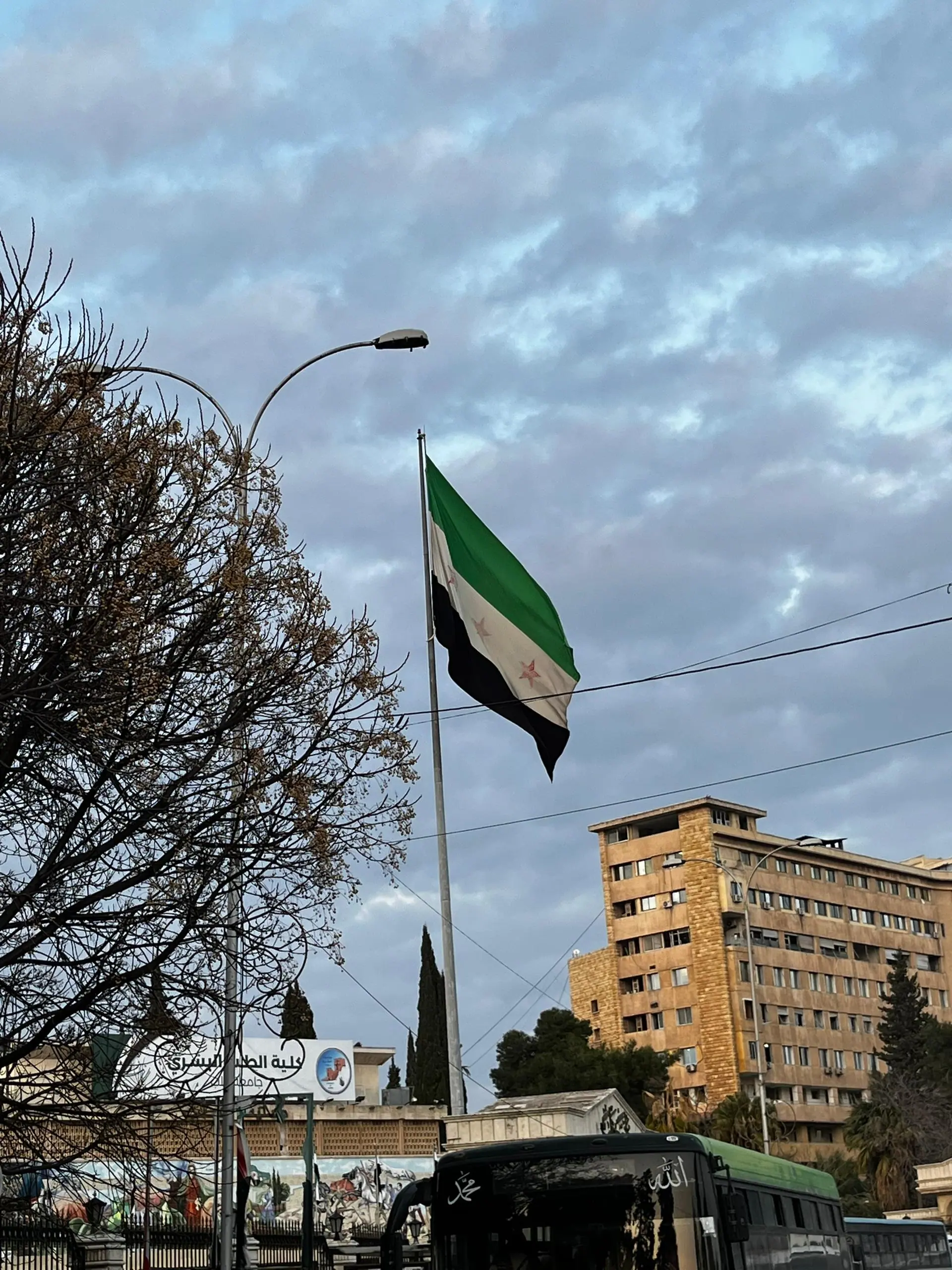
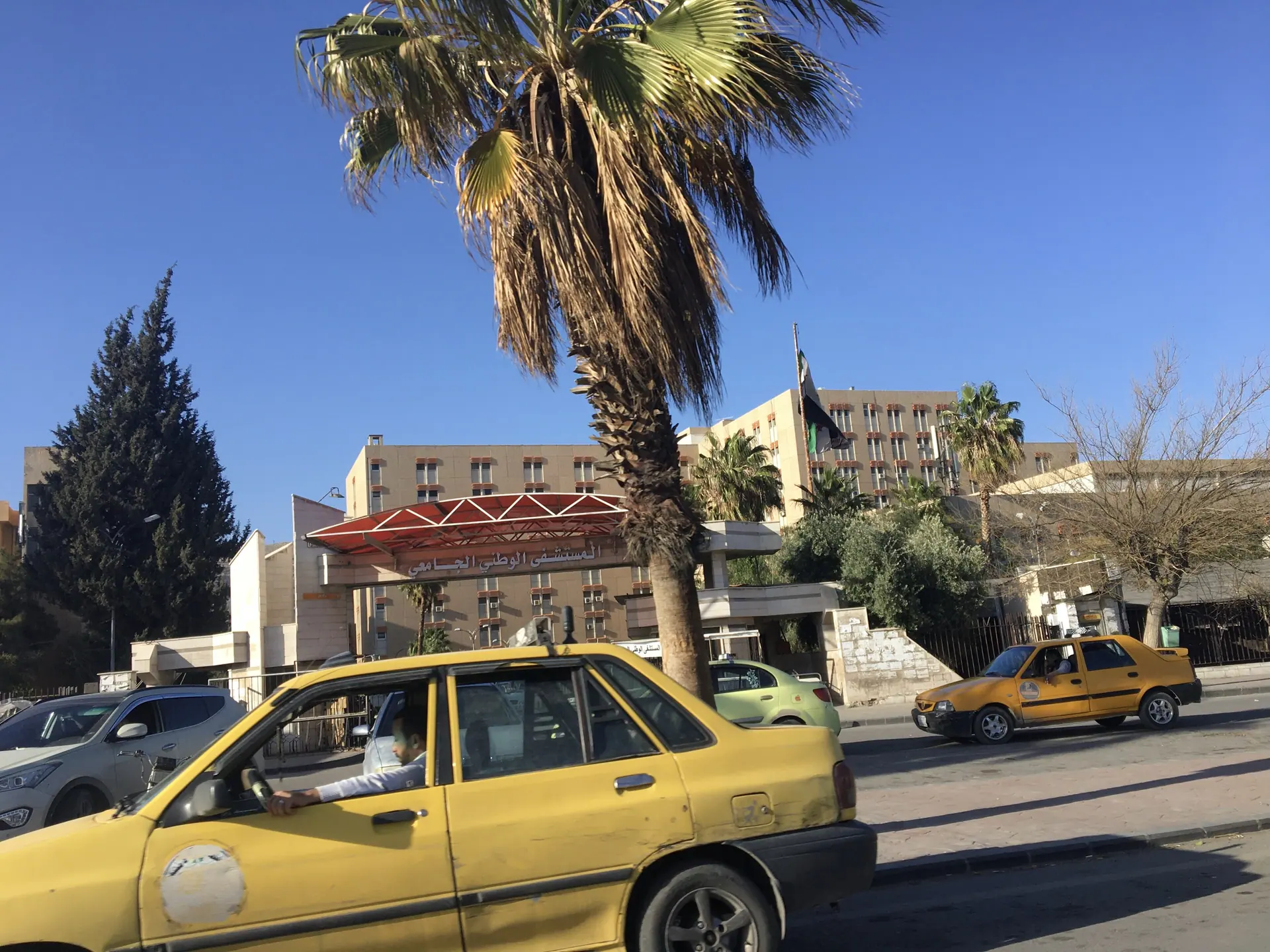
Aleppo, 2025-02-08 – University Square in Aleppo, in front of the Faculty of Medicine, with the new flag of Syria (flag of independence, flag of the Syrian Revol
Aleppo · 2025Ageo.4 · CC BY-SA 4.0 · Wikimedia Commons
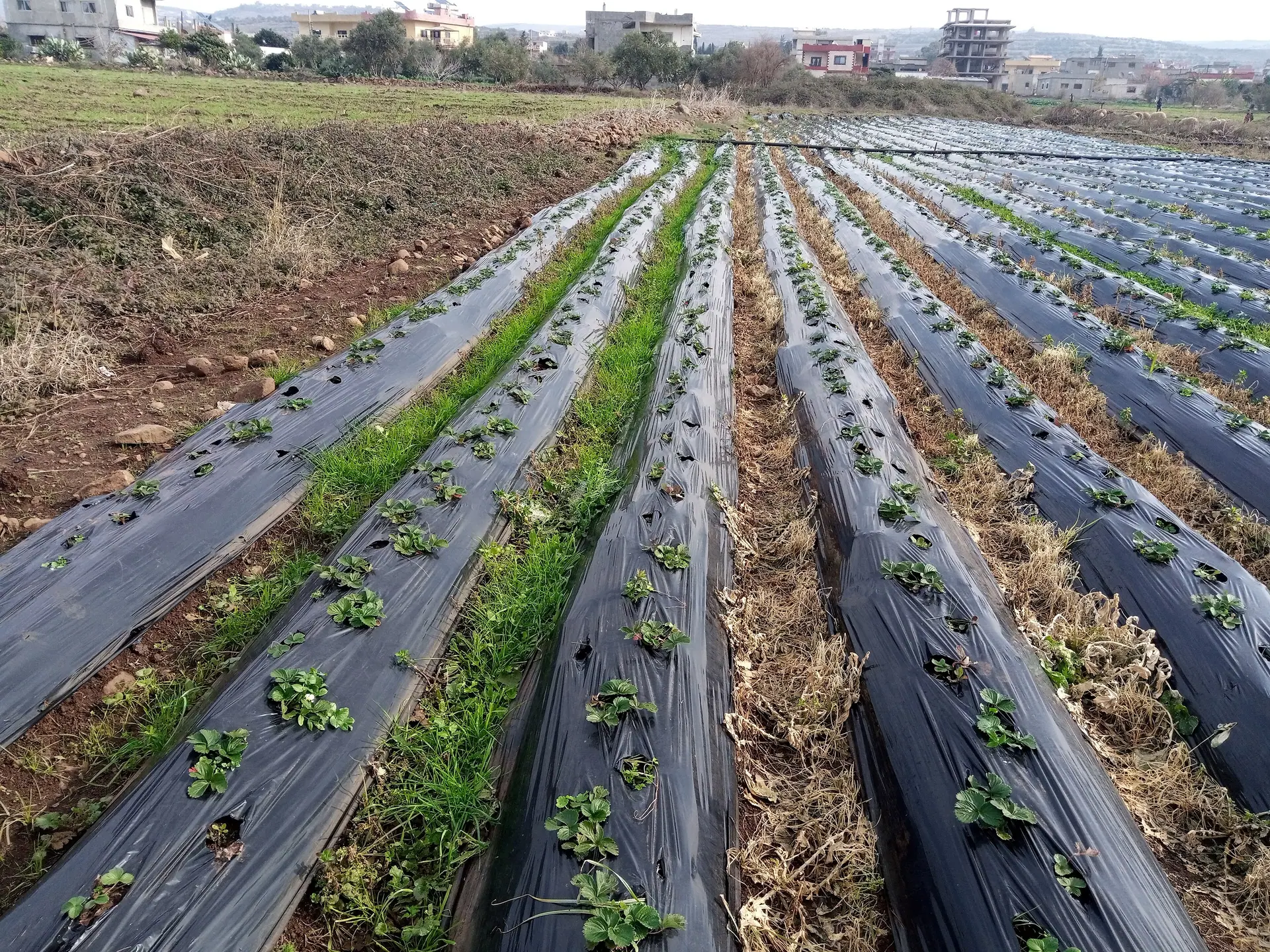
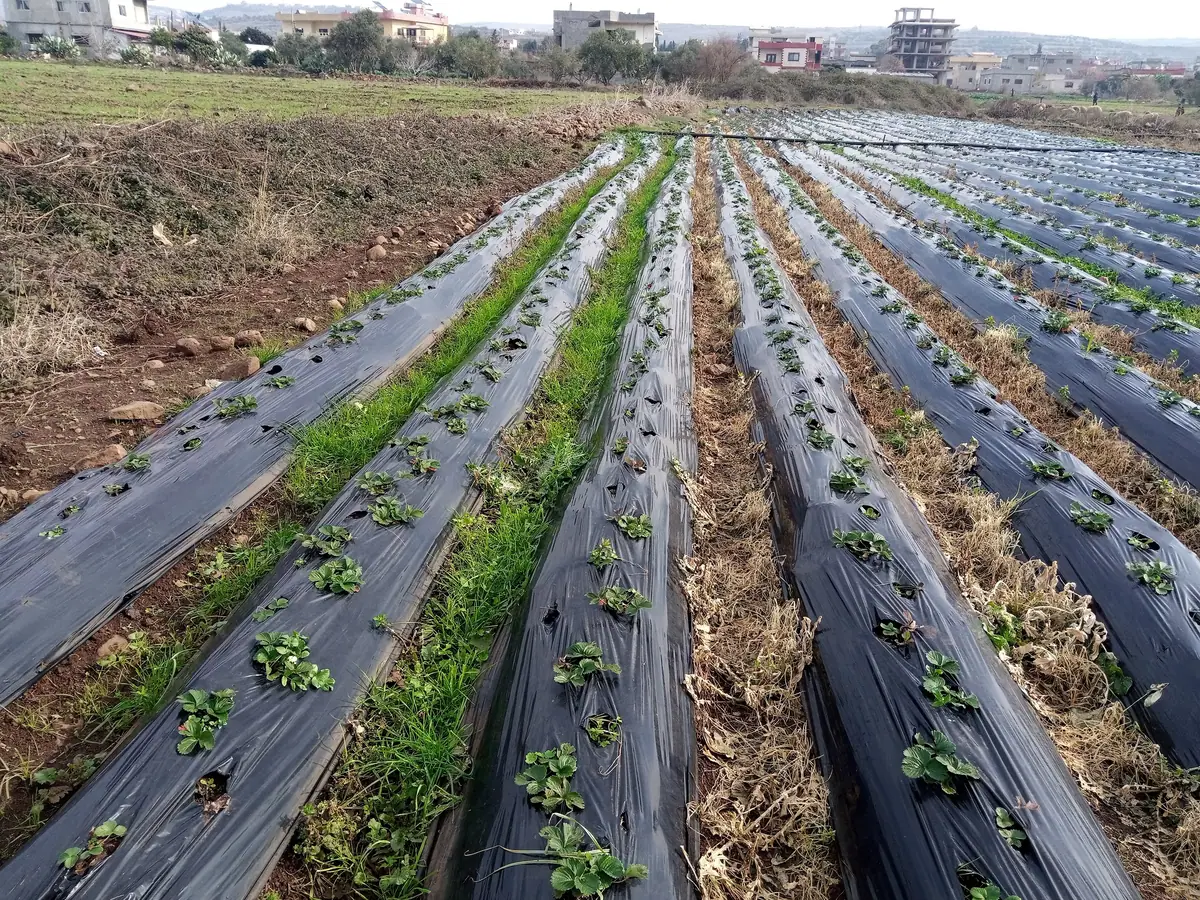
Umm Haratayn al-Gharbiyah, 2025-12-31 – An open-field strawberry plantation without greenhouses in Umm Haratayn al-Gharbiyah, western countryside of Homs, Syria. The image clearly
Umm Haratayn al-Gharbiyah · Homs · 2025Hayan Alhasan · CC BY-SA 4.0 · Wikimedia Commons
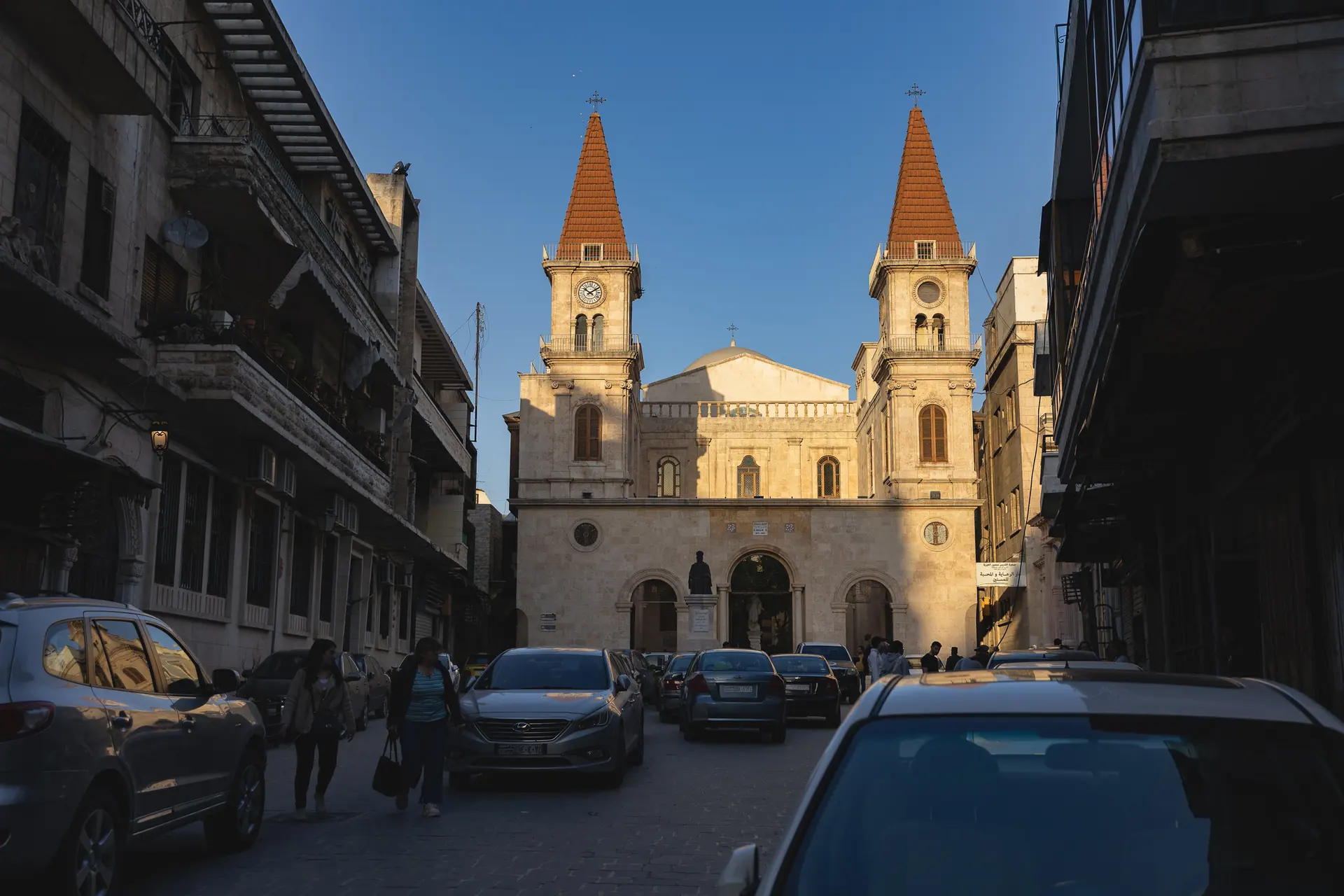
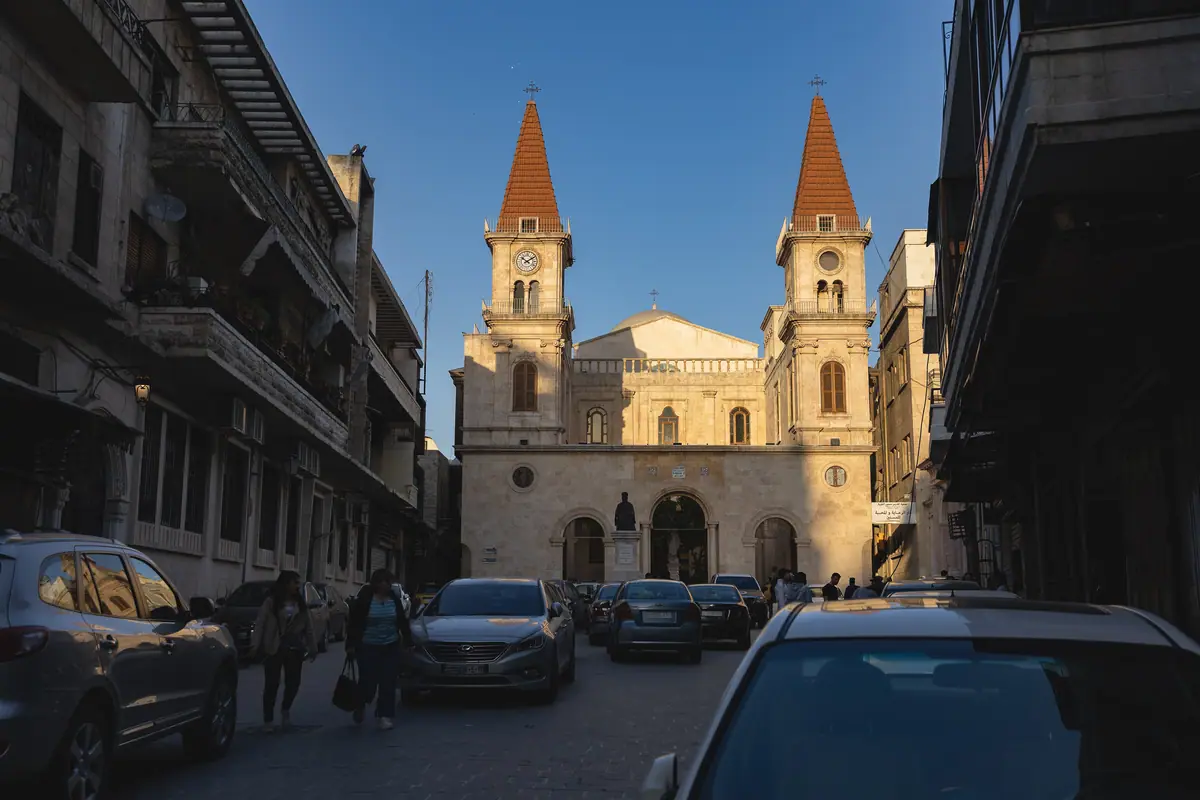
Aleppo, 2025-04-17 – Saint Elias Maronite Cathedral, al-Jdayde, Aleppo, April 2025
Aleppo · 2025By Fares Badawi · CC BY-SA 4.0 · Wikimedia Commons
Damascus, 2025-04-04 – Damascus, April 2025
Damascus · 2025Eiyad Mobarak · CC0 · Wikimedia Commons
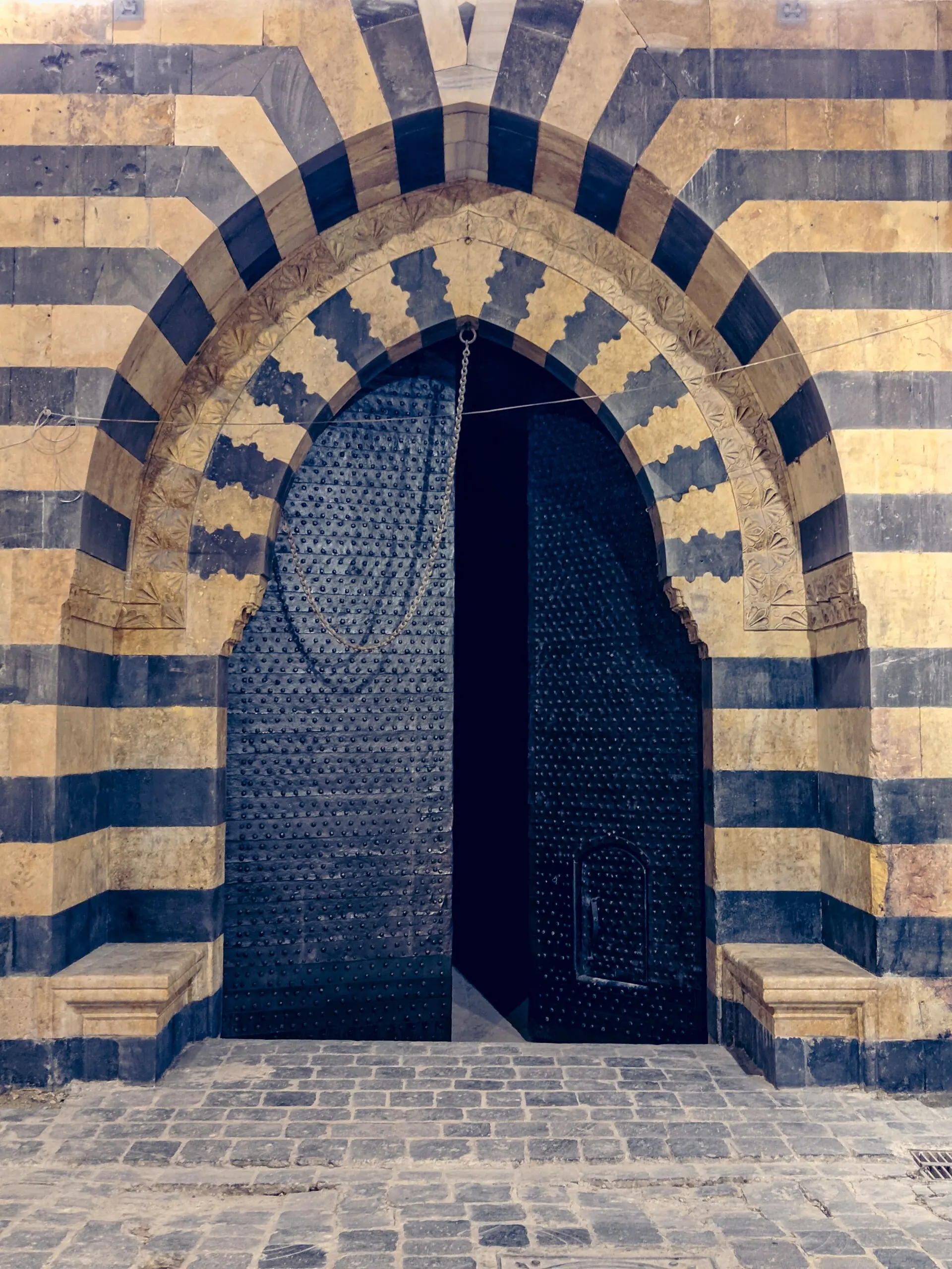
Aleppo, 2020-10-24 – بوابة خان الحرير في سوق خان الحرير في مدينة حلب القديمة بعد إعادة تأهيل وترميم السوق بعد الحرب. ويظهر البوابة الحديدية الضخمة والحجارة الصفر
Aleppo · 2020Anas Badawi · CC BY-SA 4.0 · Wikimedia Commons
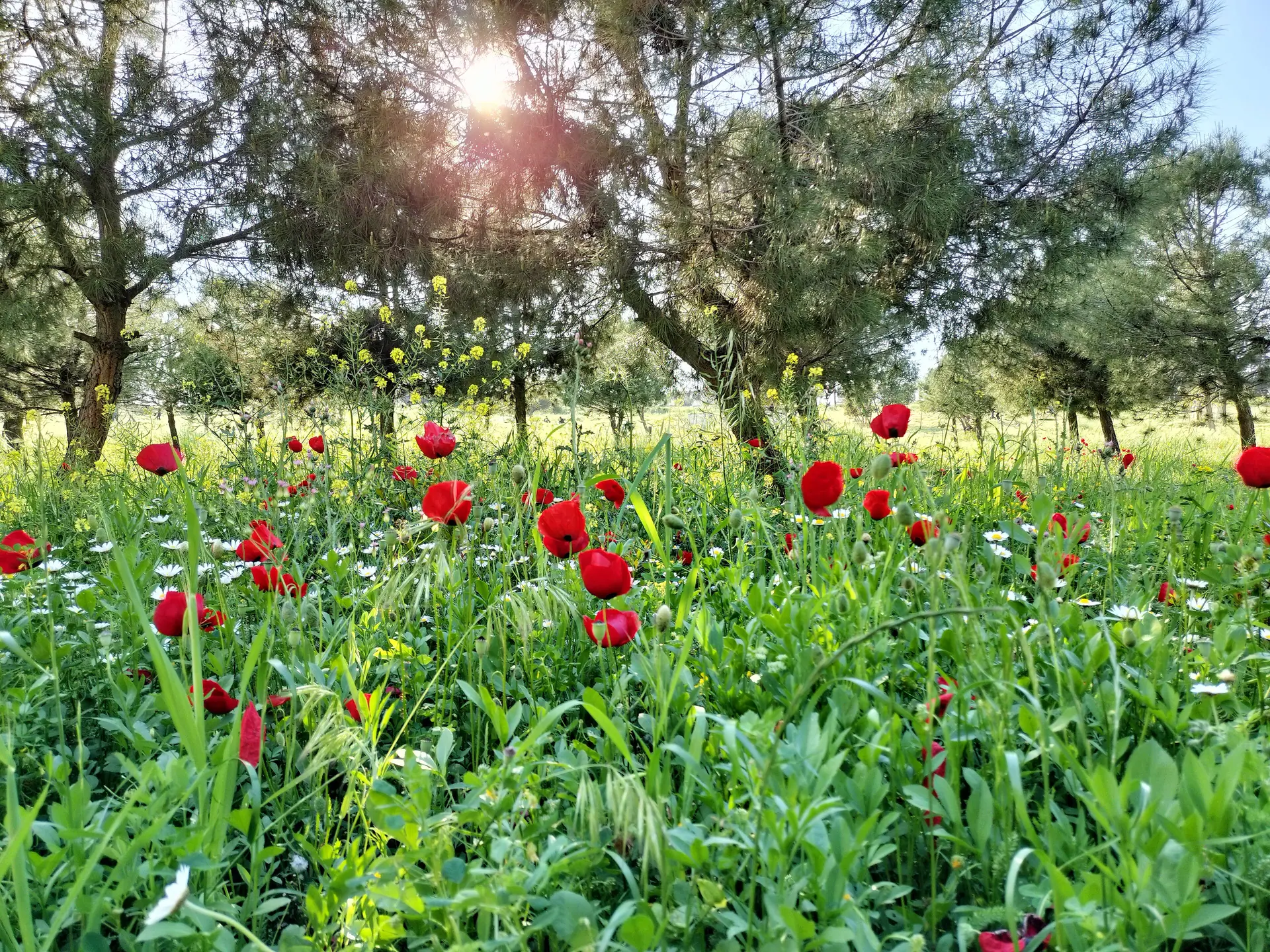
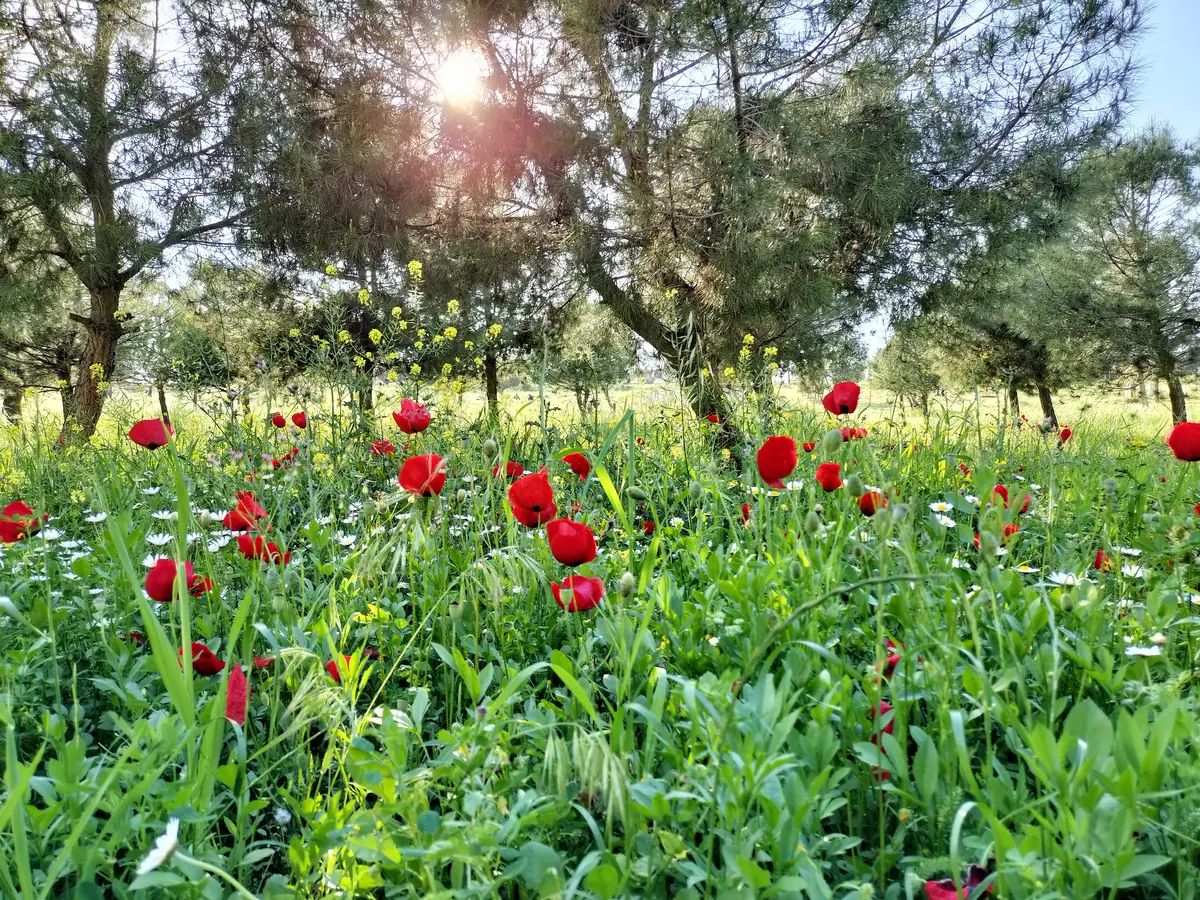
Aleppo, 2024-04-11 – Poppies in Aleppo, spring 2024
Aleppo · 2024Emir Ghazi · CC BY-SA 4.0 · Wikimedia Commons

Film · From pain to hope

Syria: from pain to hope

2 min · 78 real photos · 7 chapters

Contains real images of destruction, flight and the search for the missing. No images of the dead or injured.

About 2 minutes, 78 real, freely licensed photos in 7 chapters; on phones a shorter cut of about 2 minutes plays. Every photo is captioned with place and year and credited. Music is optional.

♪ Music: „Samaii Hijaz Kar Kurdi“ – Chahadé Saadé (oud), Odeon, c. 1926 · „Lamma Bada Yatathanna (muwashshah)“ – Shaykh Sayyid al-Safti (1875–1939) · public domain (Wikimedia Commons)

Documented timeline 20

  1. Uprising 2011

    Daraa: children detained over graffiti, protests begin

    According to Human Rights Watch, protests in Daraa broke out after security forces detained and tortured 15 children accused of painting anti-government graffiti. The protests began on 18 March 2011. HRW documented the crackdown in its report “We've Never Seen Such Horror”, based on more than 50 interviews.

    Daraa · Daraa
    Sources
  2. Detention and the missing

    The “Caesar” photographs

    A military defector code-named “Caesar” copied and smuggled out 53,275 photographs taken between May 2011 and August 2013. In its December 2015 report “If the Dead Could Speak”, Human Rights Watch found that the images show at least 6,786 detainees who died in detention or after transfer to a military hospital, most of them held by five intelligence branches in Damascus. HRW considered the photos authentic evidence of crimes against humanity. (The images are not reproduced here.)

    Damascus (government detention facilities) · Damascus
    Sources
  3. War and destruction

    Killings in Houla

    On 25 May 2012, 108 people, including 49 children, were killed in the Houla area, according to the UN. In August 2012 the UN Commission of Inquiry concluded that government forces and Shabiha fighters were responsible for the killings. The UN Human Rights Council had condemned the killings at a special session in June 2012.

    Houla (Taldou) · Homs
    Sources
  4. Damaged heritage

    Minaret of Aleppo's Great Mosque destroyed

    On 24 April 2013 the minaret of the Great Mosque at the heart of Aleppo's ancient city collapsed during clashes; UNESCO deplored the loss the same day without assigning blame. Responsibility was contested: Syrian state media blamed the Nusra Front, while opposition activists said army tank fire destroyed it.

    Aleppo, Great (Umayyad) Mosque · Aleppo
    Sources
  5. Siege, hunger and cold

    Siege of Yarmouk: starvation deaths

    Amnesty International reported in March 2014 that Syrian government forces had tightened the siege of the Yarmouk area of Damascus in July 2013. Of nearly 200 deaths recorded since then, Amnesty attributed 128 to starvation. Amnesty described the use of starvation of civilians as a war crime.

    Yarmouk (Palestinian refugee camp), Damascus · Damascus
    Sources
  6. Chemical attacks

    Sarin attack on Ghouta

    In the early hours of 21 August 2013, surface-to-surface rockets containing sarin struck opposition-held areas of the Ghouta around Damascus. The UN investigation mission led by Åke Sellström confirmed in September 2013 that chemical weapons had been used against civilians, including children, “on a relatively large scale”; identifying perpetrators was not part of its mandate. The UN Commission of Inquiry said in March 2014 that the perpetrators likely had access to the Syrian military's stockpile. SNHR counts at least 1,144 people killed; other tallies differ.

    Eastern and Western Ghouta (Zamalka, Ein Tarma, Moadamiyah) · Rif Dimashq
    Sources
  7. Siege, hunger and cold

    Siege and recapture of Eastern Ghouta

    The UN Commission of Inquiry called the five-year siege of Eastern Ghouta, which ended in April 2018, “the longest running siege in modern history”. In its June 2018 report it found that pro-government forces deliberately starved civilians, amounting to a crime against humanity, and that armed groups committed war crimes through indiscriminate shelling of Damascus. About 140,000 people were displaced after the recapture on 14 April 2018; up to 50,000 were moved to Idlib and Aleppo governorates under evacuation agreements.

    Eastern Ghouta · Rif Dimashq
    Sources
  8. Damaged heritage

    ISIL seizes Palmyra; antiquities scholar killed

    ISIL seized Palmyra from Syrian government forces in May 2015. In August 2015 UNESCO's Director-General deplored the killing of Khaled al-Asaad, aged 82, who had overseen the antiquities of Palmyra for more than 50 years and had been held for over a month. UNESCO stated he was killed because he would not betray his commitment to Palmyra.

    Palmyra (Tadmur) · Homs
    Sources
  9. Displacement and refuge

    Syrian refugees exceed four million

    On 9 July 2015 UNHCR reported more than 4,013,000 Syrian refugees in neighbouring countries, including about 1.8 million in Turkey and 1.17 million in Lebanon, and at least 7.6 million people displaced inside Syria. Guterres called it the biggest refugee population from a single conflict in a generation.

    Neighbouring countries
    Sources
  10. Siege, hunger and cold

    Battle and siege of eastern Aleppo

    The UN Commission of Inquiry found that during the battle for eastern Aleppo (July–December 2016) civilians on both sides fell victim to war crimes committed by all parties. Pro-government forces used siege tactics; daily Syrian and Russian air strikes destroyed hospitals, schools and markets, and by late December no functioning hospital remained in eastern Aleppo. Armed groups indiscriminately shelled western Aleppo and prevented civilians from leaving.

    Eastern Aleppo · Aleppo
    Sources
  11. Displacement and refuge

    Evacuation of eastern Aleppo

    Between 15 and 22 December 2016 the ICRC and the Syrian Arab Red Crescent evacuated more than 35,000 people from eastern Aleppo; in a synchronised movement 1,200 people left the besieged towns of Foah and Kefraya. The UN Commission of Inquiry later found that the evacuation agreement amounted to forced displacement, as there was no military necessity.

    Eastern Aleppo · Aleppo
    Sources
  12. Detention and the missing

    Amnesty report on Saydnaya: “Human Slaughterhouse”

    On 7 February 2017 Amnesty International published “Human slaughterhouse”, estimating that between 5,000 and 13,000 people were executed in mass hangings at Saydnaya Military Prison between September 2011 and December 2015, based on interviews with 84 people including former guards, detainees and officials. Amnesty concluded that killings, torture and extermination there amounted to crimes against humanity. The Syrian government denied killing or mistreating detainees.

    Saydnaya Military Prison · Rif Dimashq
    Sources
  13. Chemical attacks

    Sarin attack on Khan Shaykhun

    On the morning of 4 April 2017 sarin was released in Khan Shaykhun. The OPCW Fact-Finding Mission confirmed sarin exposure on 30 June 2017 without attributing responsibility. The OPCW-UN Joint Investigative Mechanism (report of 26 October 2017) and, separately, the UN Commission of Inquiry (6 September 2017) attributed the attack to the Syrian Arab Republic/Syrian forces. The COI counted at least 83 dead, about a third of them children; the JIM spoke of around 100 killed. Syria denied responsibility.

    Khan Shaykhun · Idlib
    Sources
  14. War and destruction

    Battle of Raqqa

    Between 6 June and 17 October 2017 the US-led coalition and its local partners fought to expel ISIL from Raqqa. In its June 2018 report “War of annihilation”, Amnesty International said the coalition's repeated use of explosive weapons in populated areas killed hundreds of civilians and left much of the city in ruins, and that ISIL committed war crimes including the use of civilians as human shields.

    Raqqa · Raqqa
    Sources
  15. War and destruction

    UN estimate: 306,887 civilians killed in ten years

    On 28 June 2022 the UN human rights office (OHCHR) estimated that 306,887 civilians were killed in conflict-related violence between 1 March 2011 and 31 March 2021, about 1.5 per cent of the pre-war population. 143,350 deaths were individually documented; the rest were estimated statistically. Deaths from loss of access to health care, food and water were not included.

    Syria (nationwide)
    Sources
  16. War and destruction

    Earthquakes of 6 February 2023

    In the early hours of 6 February 2023 a magnitude 7.7 earthquake centred near the Türkiye–Syria border, followed by many aftershocks, struck a country already weakened by war. As of 12 February the UN counted 5,791 people killed and 10,041 injured in Syria, 4,377 of the deaths in the north-west; 8.8 million people lived in the most affected areas, mainly in Aleppo and Idlib governorates.

    North-west and northern Syria · Aleppo
    Sources
  17. 8 December 2024

    Offensive from the north-west: Aleppo, Hama, Homs

    On 27 November 2024 armed opposition groups led by Hayat Tahrir al-Sham (HTS) launched an offensive in north-western Syria. According to AP, they entered Aleppo on 29 November, said they controlled the city on 30 November, captured Hama on 5 December and took Homs on 7 December after government forces withdrew. OCHA reported on 5 December at least 178,000 people displaced and at least 69 civilians killed, figures that remained unverified.

    Aleppo, Hama, Homs · Aleppo
    Sources
  18. 8 December 2024

    Fall of the Assad government

    On 8 December 2024 opposition forces entered Damascus with little resistance, and Syrian state television broadcast a statement that President Bashar al-Assad had been overthrown. Assad left the country; Russian state news agencies later said he and his family were in Moscow and had been granted asylum. UN Secretary-General Guterres said the future of Syria was a matter for Syrians to determine and called for an orderly political transition.

    Damascus · Damascus
    Sources
  19. 8 December 2024

    Prison doors opened, detainees freed from Saydnaya

    On 8 December 2024 the doors of dozens of prisons and detention centres, including Saydnaya, were opened, and Amnesty International reported that hundreds of people were freed, among them women and young children. Images showed emaciated detainees. SNHR later stressed that only a limited number of detainees were released alive while tens of thousands remain unaccounted for.

    Saydnaya Military Prison and other detention centres · Rif Dimashq
    Sources
  20. Return and recovery

    Returns reach 1.63 million refugees and 1.89 million IDPs

    By the end of April 2026 UNHCR counted 1,630,874 Syrians who had returned from abroad since 8 December 2024, mainly from the region, and 1,890,390 returned IDPs. UNHCR said housing and property damage, limited jobs and safety remain key factors in return decisions; 15.6 million people still required assistance as of March 2026. UNHCR's data portal listed 1,966,356 IDP returns as of 9 July 2026 and notes its figures may understate total returns.

    Syria (nationwide)
    Sources

Archive of Syrian memory 188

Real photographs with free licences, each with place, date, author, source and verification status. Where no free licence exists, we link to the source instead of copying.

Before / After

Drag to compare · Both photos show the same site, but not always from the same viewpoint.

Aleppo, 2018-09-28 – أحد أسواق حلب القديمة وقد دُمر وأُحرق بالكامل جراء الحرب
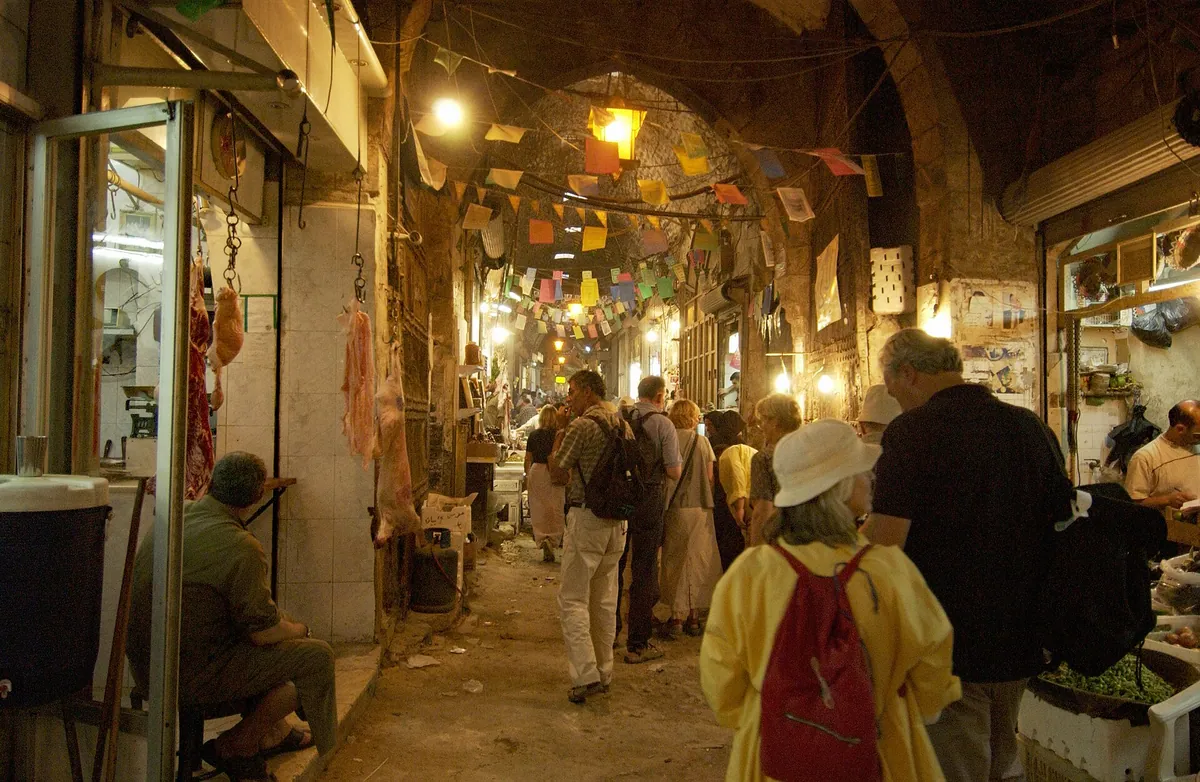
Aleppo, 2005-09-10 – Al-Madina Souq is located in Aleppo, Syria
Before 2005After 2018
Aleppo · Before: Folkertherlyn · CC BY-SA 4.0 · Wikimedia Commons · After: Hussam.shibli · CC BY-SA 4.0 · Wikimedia Commons
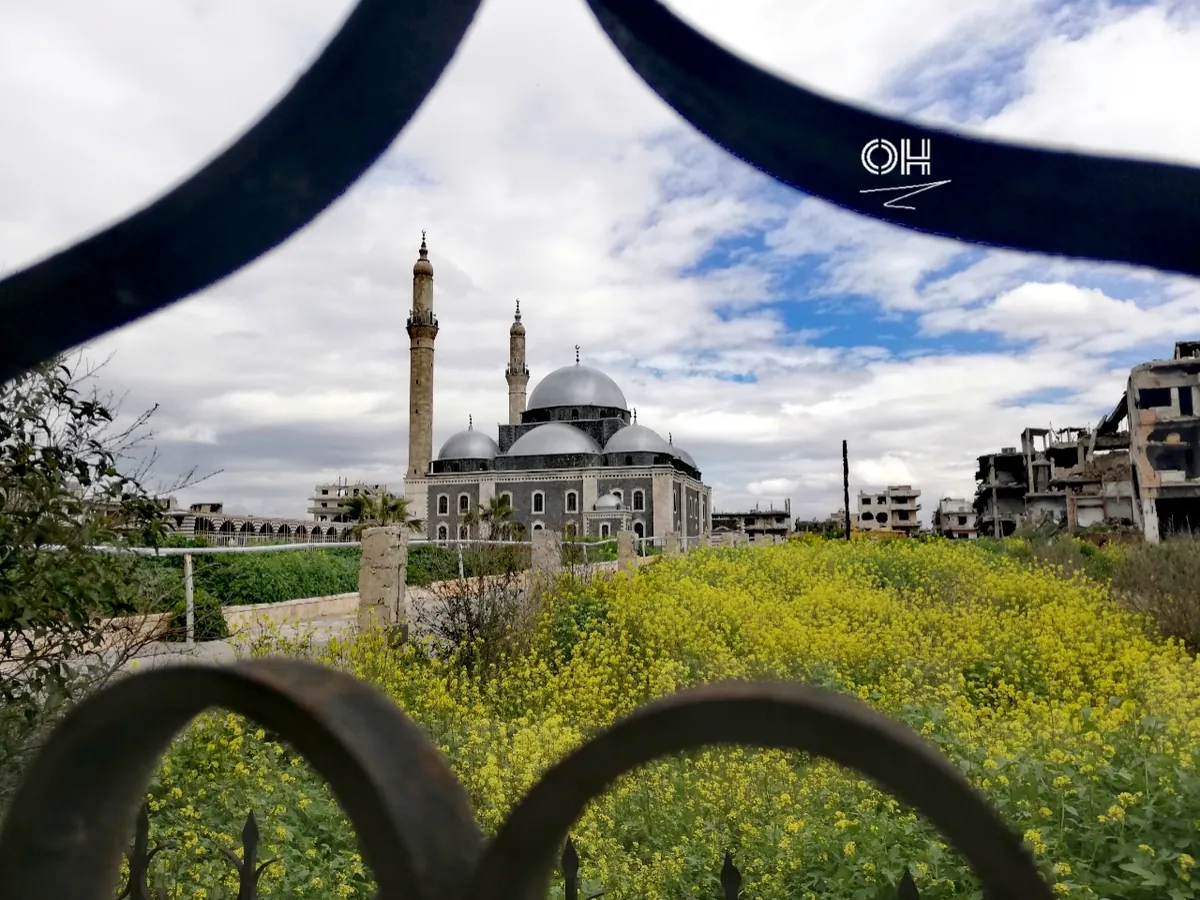
Homs, 2020-11-09 – Khalid ibn al-Walid Mosque | Homs city.
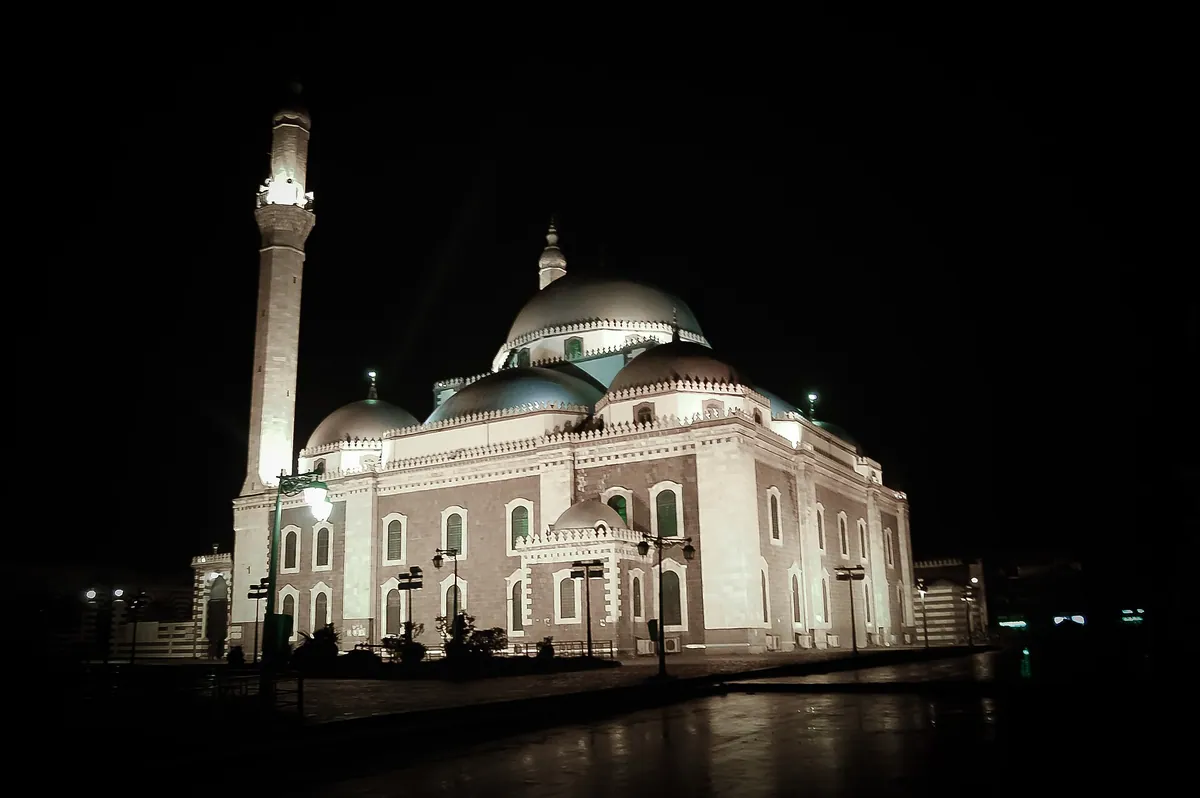
Homs, 2005-12-26 – Khalid ibn al-Walid mosque is located in the Khaldiya district of Homs , the third largest city in Syria . It is situated in a park alongsid
Before 2005After 2020
Homs · Before: Abdulhadi Najjar · CC BY-SA 3.0 · Wikimedia Commons · After: Oday Hassoun · CC BY-SA 4.0 · Wikimedia Commons
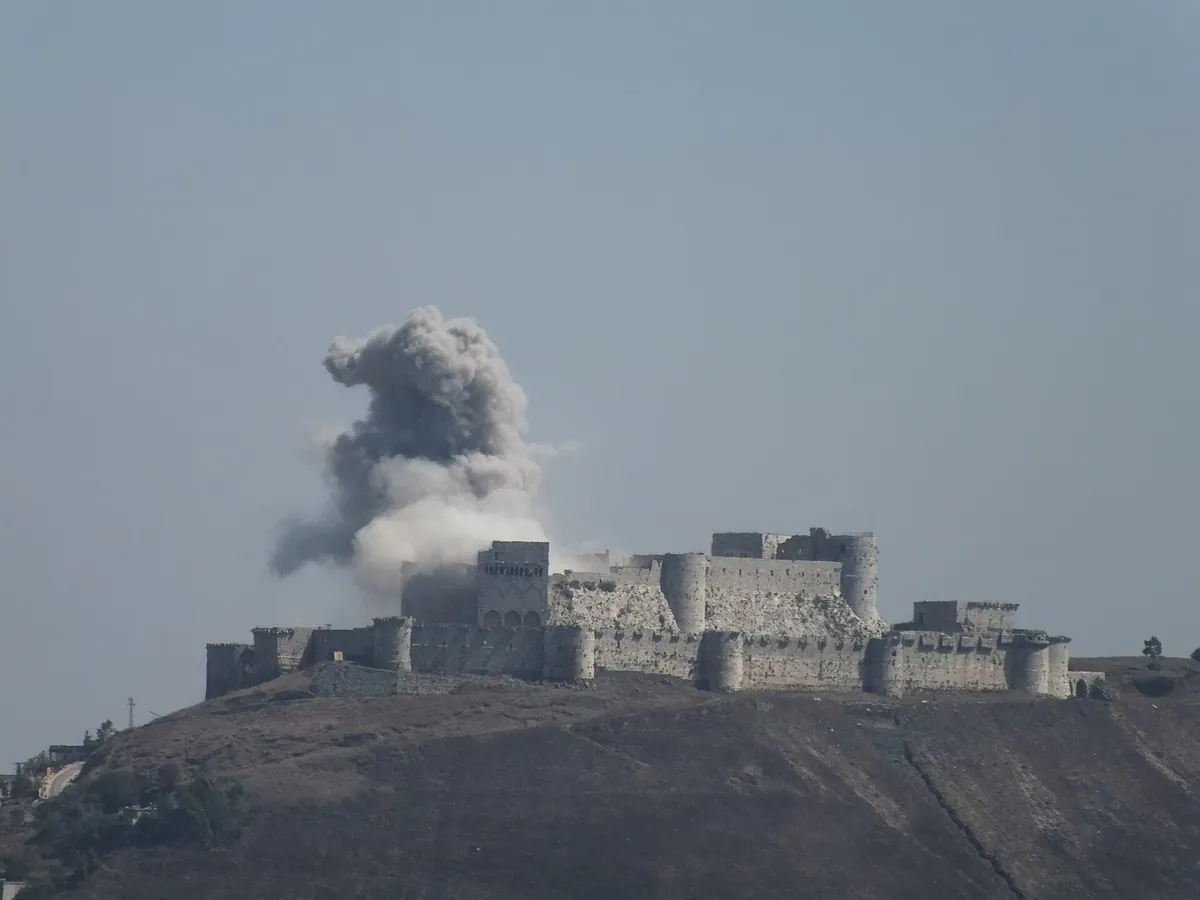
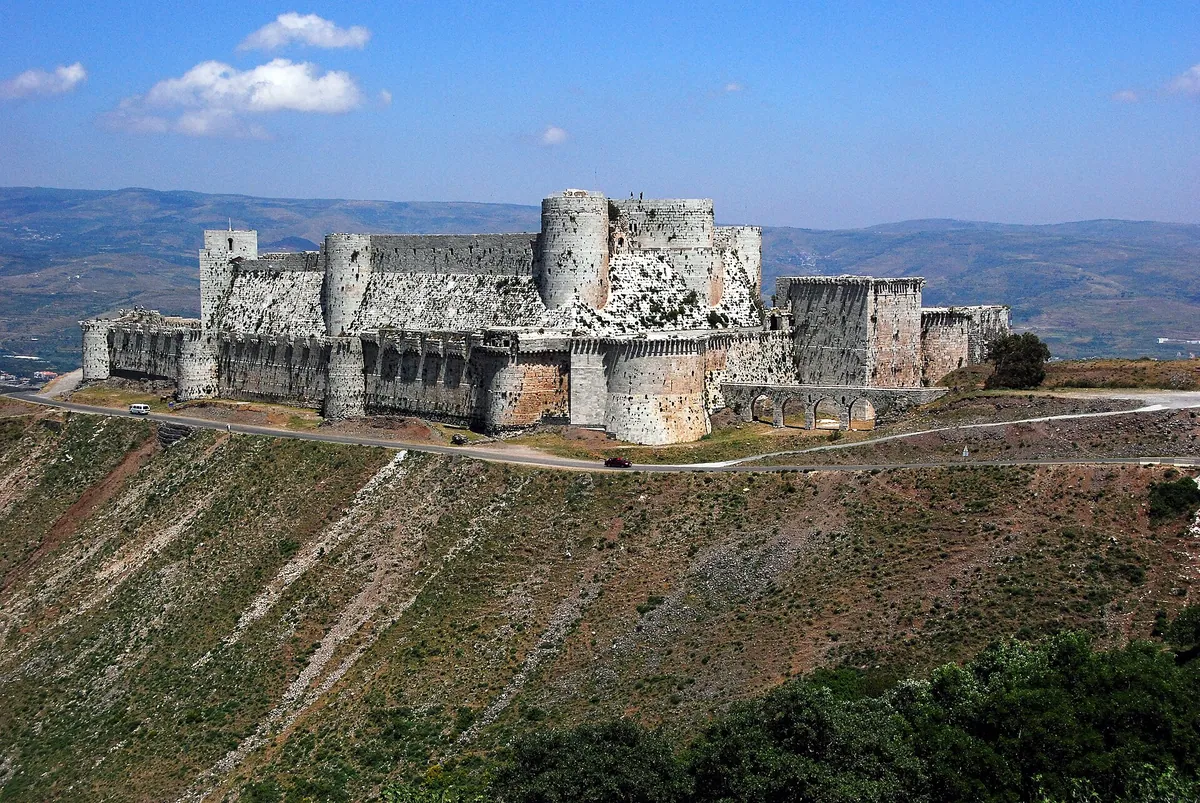
Krak des Chevaliers / al-Husn, 2013-08-18 – Smoke coming out from the castle
Krak des Chevaliers / al-Husn, 2008-05-05 – Krak des Chevaliers is a Crusader castle in Syria and one of the most important preserved medieval castles in the world. The site was first
Before 2008After 2013
Krak des Chevaliers / al-Husn · Before: James Gordon from Los Angeles, California, USA · CC BY 2.0 · Wikimedia Commons · After: Syria963 · CC BY-SA 3.0 · Wikimedia Commons
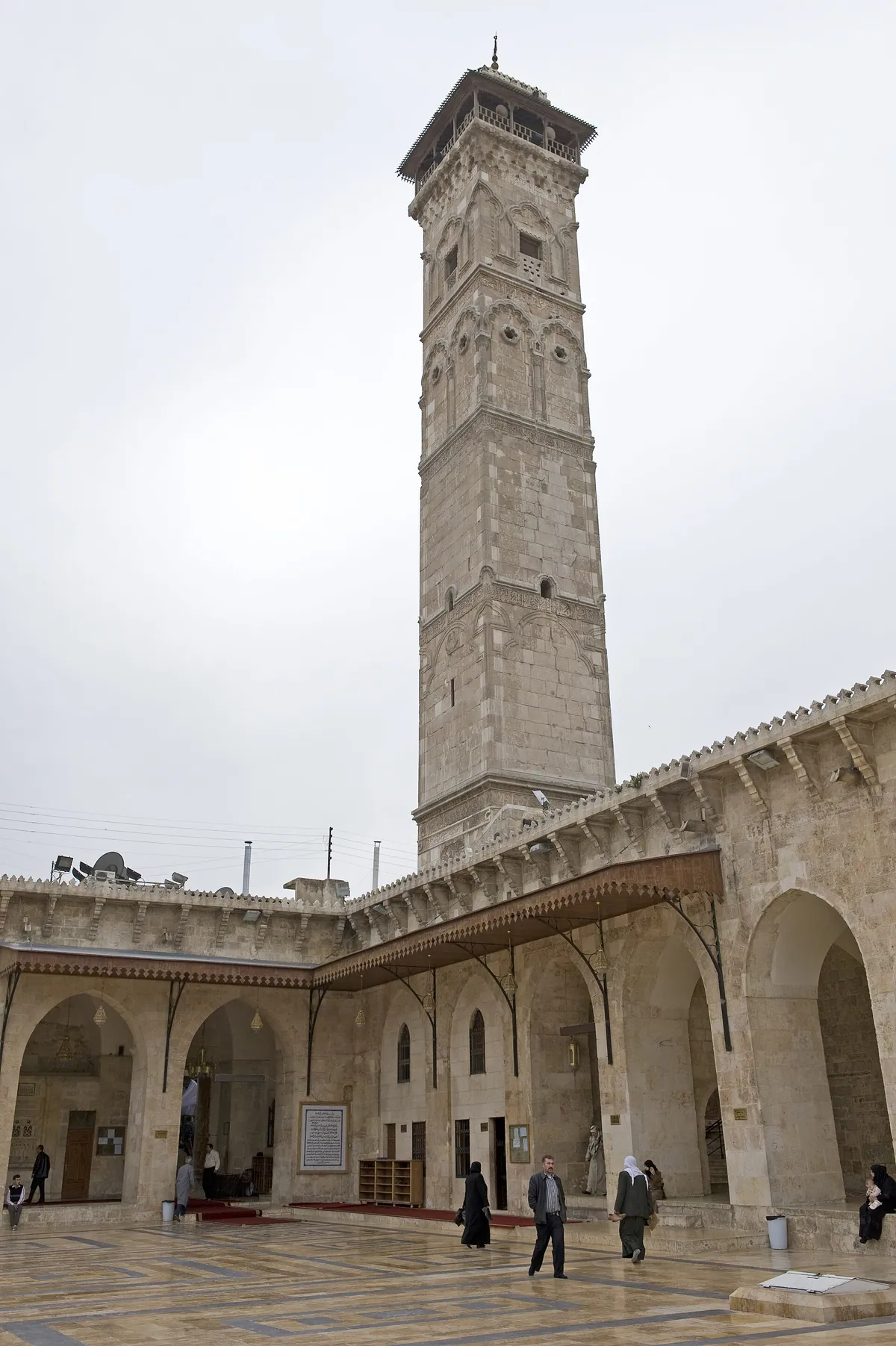
Aleppo, 2016-12-30 – Great Mosque of Aleppo in December 2016
Aleppo, 2009-04-08 – One of pictures of the minaret from several spots, the name indicates roughly from where.
Before 2009After 2016
Aleppo · Before: Dosseman · CC BY-SA 4.0 · Wikimedia Commons · After: Fathi Nezam from Tasnim News Agency · CC BY 4.0 · Wikimedia Commons

War damage and recovery on the map

Aleppo, old city souks · 44Palmyra (Tadmur) · 44Daraa · 22Houla (Taldou) · 1Yarmouk (Palestinian refugee camp), Damascus · 1Eastern and Western Ghouta (Zamalka, Ein Tarma, Moadamiyah) · 1Homs, Old City · 1Marea · 1Madaya · 1Kafr Zita (Wadi al-Aanz) · 1Ltamenah · 1Khan Shaykhun · 1Raqqa · 1Saraqib (eastern part) · 1Douma · 1Damascus · 1Saydnaya Military Prison and other detention centres · 1
  • Uprising 2011
  • War and destruction
  • Damaged heritage
  • Siege, hunger and cold
  • Chemical attacks
  • Displacement and refuge
  • 8 December 2024

Chemical attacks

Documented incidents with the findings of the UN and the OPCW. Each entry names the investigating body and its conclusion.

  • 222 chemical attacks documented 23 Dec 2012 – 8 Dec 2024; 1,514 killed; 11,080 injured; 217 attributed by SNHR to Assad-government forces, 5 to ISIL (SNHR, 2026-08-21)
  • COI (Sept 2017) held the Syrian government responsible for at least 23 other chemical attacks since March 2013 (Al Jazeera 2017-09-06 reporting COI)

Ghouta, Damascus countryside: Ein Tarma and Zamalka (Eastern Ghouta), Moadamiyah (Western Ghouta)

sarin · surface-to-surface rockets

at least 1,144 killed (1,119 civilians incl. 99 children and 194 women; 25 fighters); about 5,935 injured (SNHR, 2026-08-21)

no casualty total given; mission confirmed use against civilians including children 'on a relatively large scale' (UN Mission (final report A/68/663–S/2013/735))

SourceFindingsResponsibility attributed by
United Nations Mission to Investigate Allegations of the Use of Chemical Weapons in the Syrian Arab Republic (head: Åke Sellström)A/67/997–S/2013/553 · 2013-09-16Sarin found in impacted surface-to-surface rockets, environmental contamination and positive blood/urine samples; consistent epidemiology from >50 interviews.None – identifying perpetrators was not part of the mission's mandate.
United Nations Mission (as above)A/68/663–S/2013/735 · 2013-12-13Restates the Ghouta conclusion (paras 109–110).None (fact-finding mandate).
UN Independent International Commission of Inquiry on the Syrian Arab Republic (COI)2014-03-05Agents used in Ghouta and Khan al-Assal (19 March 2013) bore the same distinctive markers.No formal attribution; COI said the perpetrators 'likely had access to the chemical weapons stockpile of the Syrian military'.

Responsibility attributed by: No UN or OPCW body has formally attributed this attack (status per sources opened 2026-10-30). The OPCW's attribution team (IIT) has not issued a report on Ghouta.

Other published tallies (e.g. governments, medical NGOs) differ widely; they were not verified in this run and are not reproduced.
Marea

sulfur mustard · artillery shells modified to disperse a liquid payload

11 named individuals with symptoms consistent with sulfur-mustard exposure; no deaths reported (OPCW IIT 4th report)

SourceFindingsResponsibility attributed by
OPCW Investigation and Identification Team (IIT)S/2255/2024 · 2024-02-22Sulfur mustard used during attacks aimed at capturing Marea.Reasonable grounds to believe that units of ISIL were the perpetrators; ISIL's Delegated Committee likely ordered the attack.

Responsibility attributed by: ISIL (OPCW IIT, 2024).

Umm Hawsh

sulfur mustard · mortar shell (per JIM summary)

two women exposed (15 and 17 September 2016); no death toll given (UN Meetings Coverage SC/13060 (JIM))

SourceFindingsResponsibility attributed by
OPCW-UN Joint Investigative Mechanism (JIM)S/2017/904 · 2017-10-26Sulfur mustard exposure confirmed.ISIL (Da'esh) held responsible.

Responsibility attributed by: ISIL (OPCW-UN JIM, 2017). No town coordinates: Umm Hawsh not present in the OSM snapshot.

Kafr Zita (cave system in Wadi al-Aanz valley)

chlorine · yellow pressurised cylinder

35 named individuals injured, dozens more affected (OPCW IIT 5th report)

SourceFindingsResponsibility attributed by
OPCW Investigation and Identification Team (IIT)S/2478/2026 · 2026-01-22Chlorine released when the cylinder ruptured.Reasonable grounds to believe that the Syrian Arab Air Forces were the perpetrators.

Responsibility attributed by: Syrian Arab Air Forces (OPCW IIT, 2026). SNHR stresses this is not a judicial ruling.

Ltamenah

sarin · M4000 aerial bomb dropped by an Su-22 aircraft (departed Shayrat airbase)

at least 16 affected (OPCW IIT Coordinator's remarks, 2020-04-08)

SourceFindingsResponsibility attributed by
OPCW Investigation and Identification Team (IIT)S/1867/2020 · 2020-04-08Use of sarin as a chemical weapon.Reasonable grounds to believe: 50th Brigade of the 22nd Air Division, Syrian Arab Air Force.

Responsibility attributed by: 50th Brigade of the 22nd Air Division, Syrian Arab Air Force (OPCW IIT, 2020).

Ltamenah (hospital)

chlorine · cylinder dropped by a helicopter onto the Ltamenah hospital (departed Hama airbase)

at least 30 affected (OPCW IIT Coordinator's remarks, 2020-04-08)

SourceFindingsResponsibility attributed by
OPCW Investigation and Identification Team (IIT)S/1867/2020 · 2020-04-08Use of chlorine as a chemical weapon.Reasonable grounds to believe: Syrian Arab Air Force.

Responsibility attributed by: Syrian Arab Air Force (OPCW IIT, 2020).

Ltamenah

sarin · M4000 aerial bomb dropped by an Su-22 aircraft (departed Shayrat airbase)

at least 60 affected (OPCW IIT Coordinator's remarks, 2020-04-08)

SourceFindingsResponsibility attributed by
OPCW Investigation and Identification Team (IIT)S/1867/2020 · 2020-04-08Use of sarin as a chemical weapon.Reasonable grounds to believe: 50th Brigade of the 22nd Air Division, Syrian Arab Air Force.

Responsibility attributed by: 50th Brigade of the 22nd Air Division, Syrian Arab Air Force (OPCW IIT, 2020).

Khan Shaykhun

sarin · aerial bomb (COI: dropped by an Su-22, an aircraft only the Syrian air force operates)

at least 83 killed (about one third children), nearly 300 wounded (UN COI, 2017-09-06 (via Al Jazeera))

around 100 killed, about 200 affected (OPCW-UN JIM (UN Meetings Coverage SC/13060))

at least 87 killed (other sources) (Al Jazeera 2017-09-06, unnamed 'other sources')

SourceFindingsResponsibility attributed by
OPCW Fact-Finding Mission in Syria (FFM)S/1510/2017 · 2017-06-30People were exposed to sarin.None – FFM mandate excludes attribution.
UN Independent International Commission of Inquiry on the Syrian Arab Republic (COI)2017-09-06Reasonable grounds to believe Syrian forces dropped an aerial bomb dispersing sarin; no evidence for the claim that an opposition depot was hit.Syrian forces.
OPCW-UN Joint Investigative Mechanism (JIM)S/2017/904 · 2017-10-26Sarin from a precursor very likely from Syria's original stockpile; crater most likely from an aerial bomb; no evidence of staging.The Syrian Arab Republic (no individual actors identified).

Responsibility attributed by: Syrian Arab Republic (JIM 2017); Syrian forces (COI 2017). Syria denied responsibility.

Saraqib (eastern part)

chlorine · at least one cylinder dropped by a military helicopter

12 named individuals affected (OPCW IIT 2nd report)

SourceFindingsResponsibility attributed by
OPCW Investigation and Identification Team (IIT)S/1943/2021 · 2021-04-12Chlorine released from a ruptured cylinder.Reasonable grounds to believe: a helicopter of the Syrian Arab Air Force under the control of the Tiger Forces.

Responsibility attributed by: Syrian Arab Air Force / Tiger Forces (OPCW IIT, 2021).

Douma

chlorine · two yellow cylinders

43 named individuals killed, dozens more affected (OPCW IIT 3rd report)

more than 40 killed (medical workers at the time) (AP, 2019-03-01)

SourceFindingsResponsibility attributed by
OPCW Fact-Finding Mission in Syria (FFM)S/1731/2019 · 2019-03-01Reasonable grounds that a toxic chemical containing reactive chlorine (likely molecular chlorine) was used as a weapon.None – FFM mandate excludes attribution.
OPCW Investigation and Identification Team (IIT)S/2125/2023 · 2023-01-27Toxic chlorine released from two cylinders.Reasonable grounds to believe that the Syrian Arab Air Forces were the perpetrators; at least one helicopter of the Tiger Forces Elite Unit dropped the cylinders.

Responsibility attributed by: Syrian Arab Air Forces / Tiger Forces (OPCW IIT, 2023). Syria and Russia rejected responsibility.

Detention and the disappeared

This section describes torture and deaths in detention. It contains no graphic images. Continue?

Stories from Syria

Published reports in which survivors and relatives speak, with a link to the original. Personal stories are only added after verification and with consent.

Recovery is an ongoing process; for many Syrians the suffering has not ended.

Your opinion counts

Suggestions, complaints & feedback

Do you have an idea, a complaint or did you find a mistake? Write to us – your message goes straight to the person who runs this site.

What is it about?