SyrienKultur · Glaube · Geschichte

Vom Schmerz zur Hoffnung

Syrien: vom Schmerz zur Hoffnung

Die Geschichte eines Volkes, das Revolution, Krieg, Zerstörung, Hunger, Kälte, Haft und Vertreibung erlebt hat – und an Hoffnung und Leben festhielt.

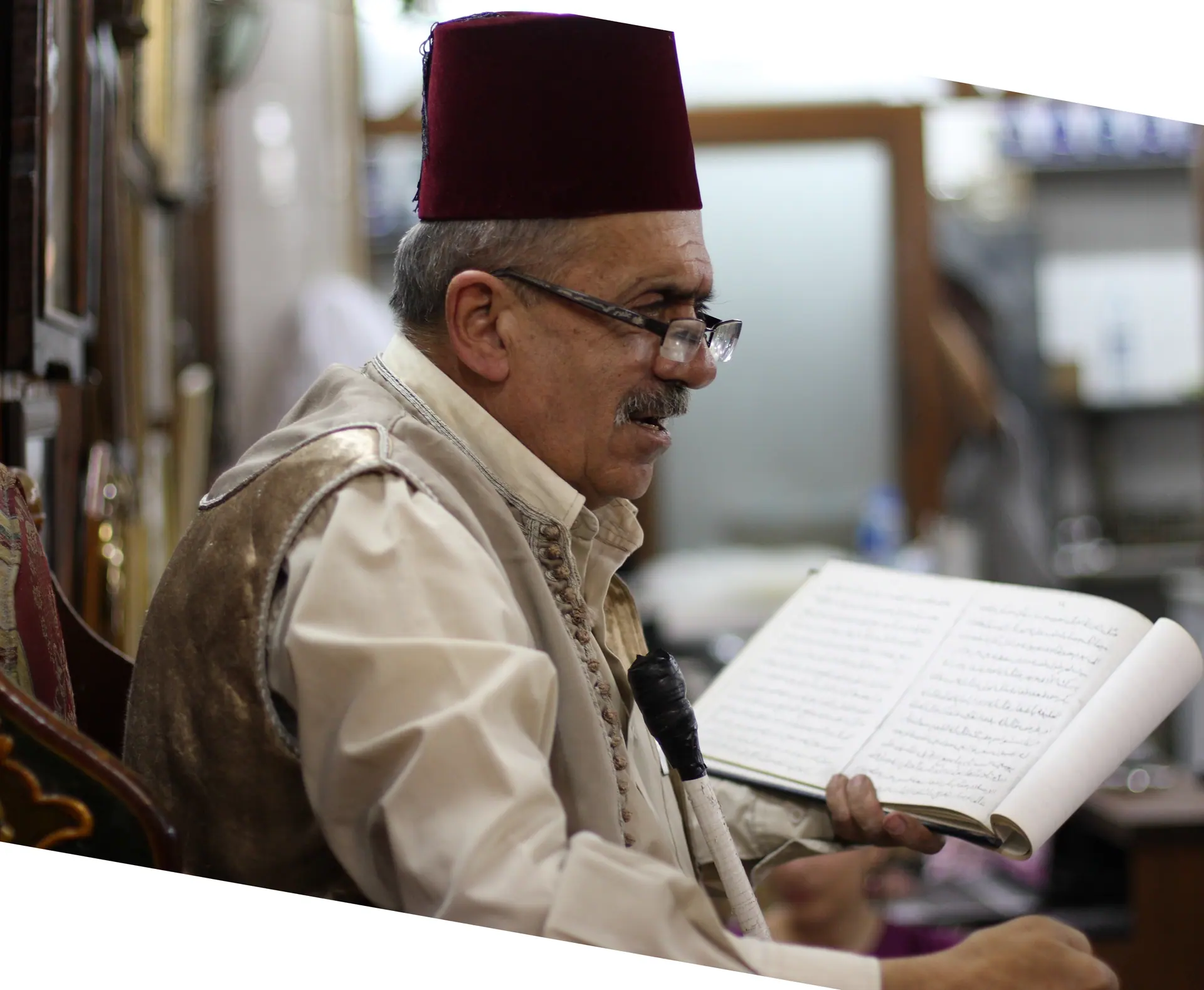
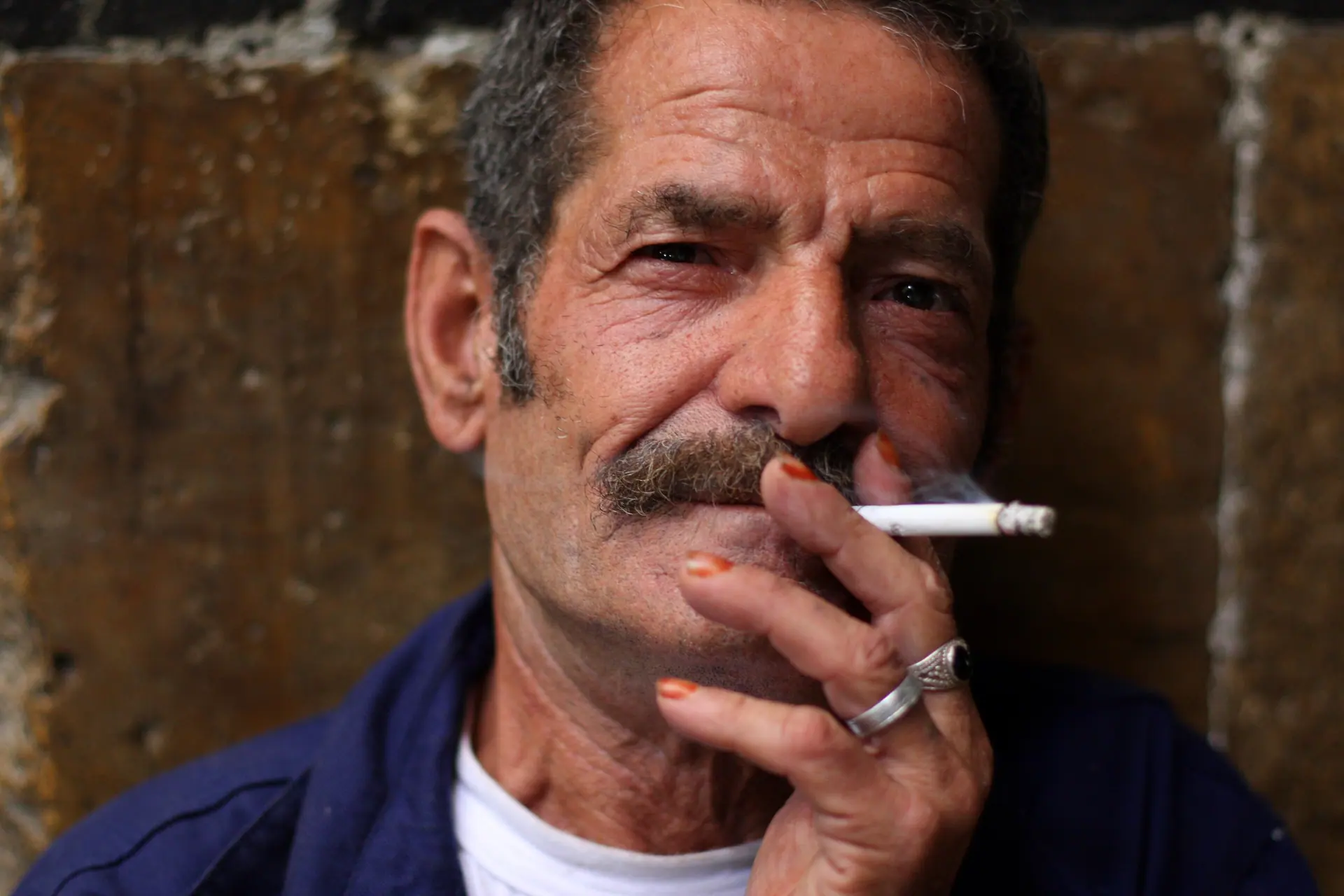
Damascus (an-Nawfara café), 2010-09-10 – Abu Shady, the last professional hakawati (storyteller) in Syria, at the an-Nawfara café, 2010
Damaskus · 2010yeowatzup · CC BY 2.0 · Wikimedia Commons
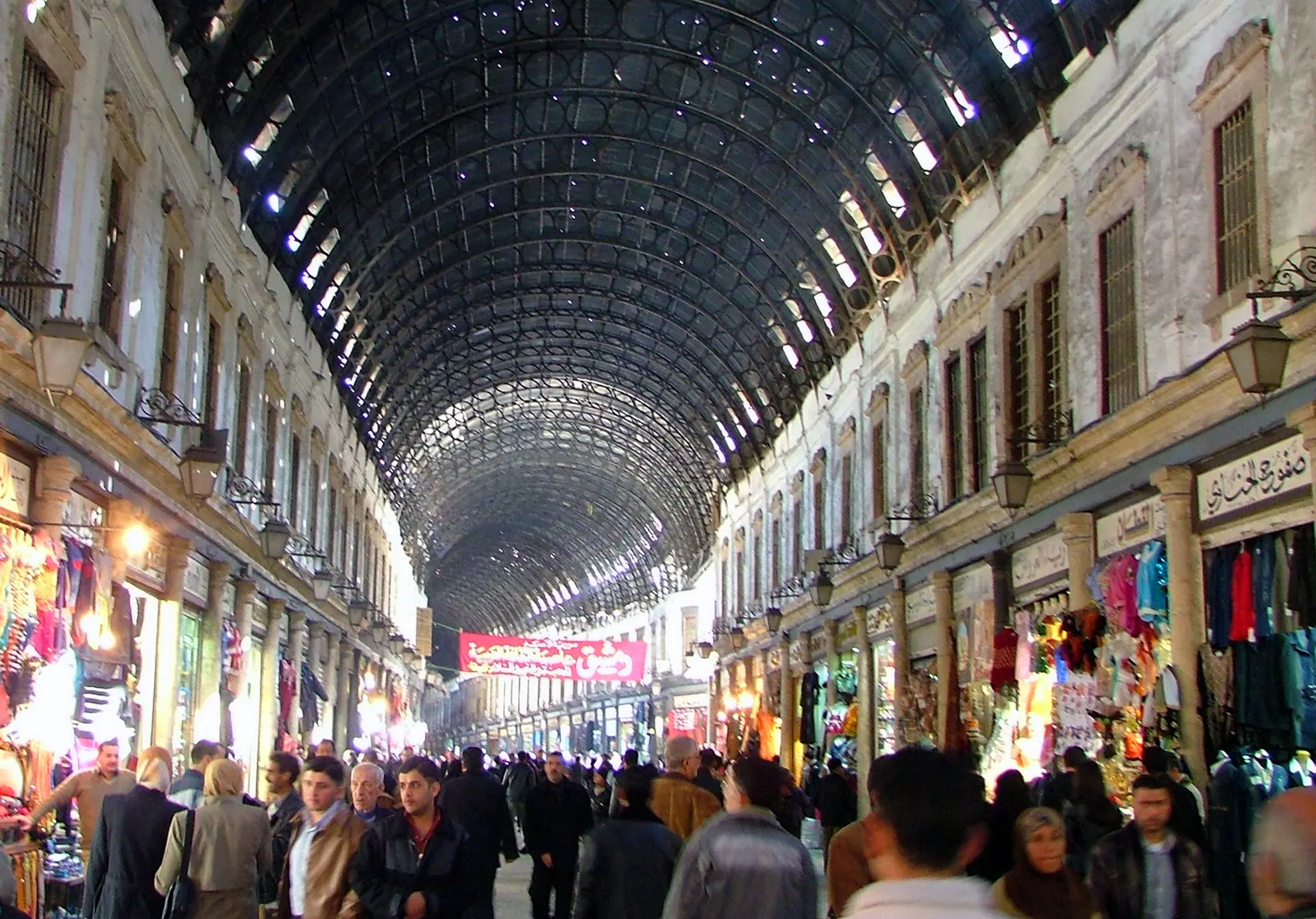
Damascus, 2008-02-07 – Al-Hamidiyah Souq is the largest and the most central souk in Damascus, Syria, located inside the old walled city next to the Citadel. The s
Damaskus · 2008James Gordon from Los Angeles, California, USA · CC BY 2.0 · Wikimedia Commons
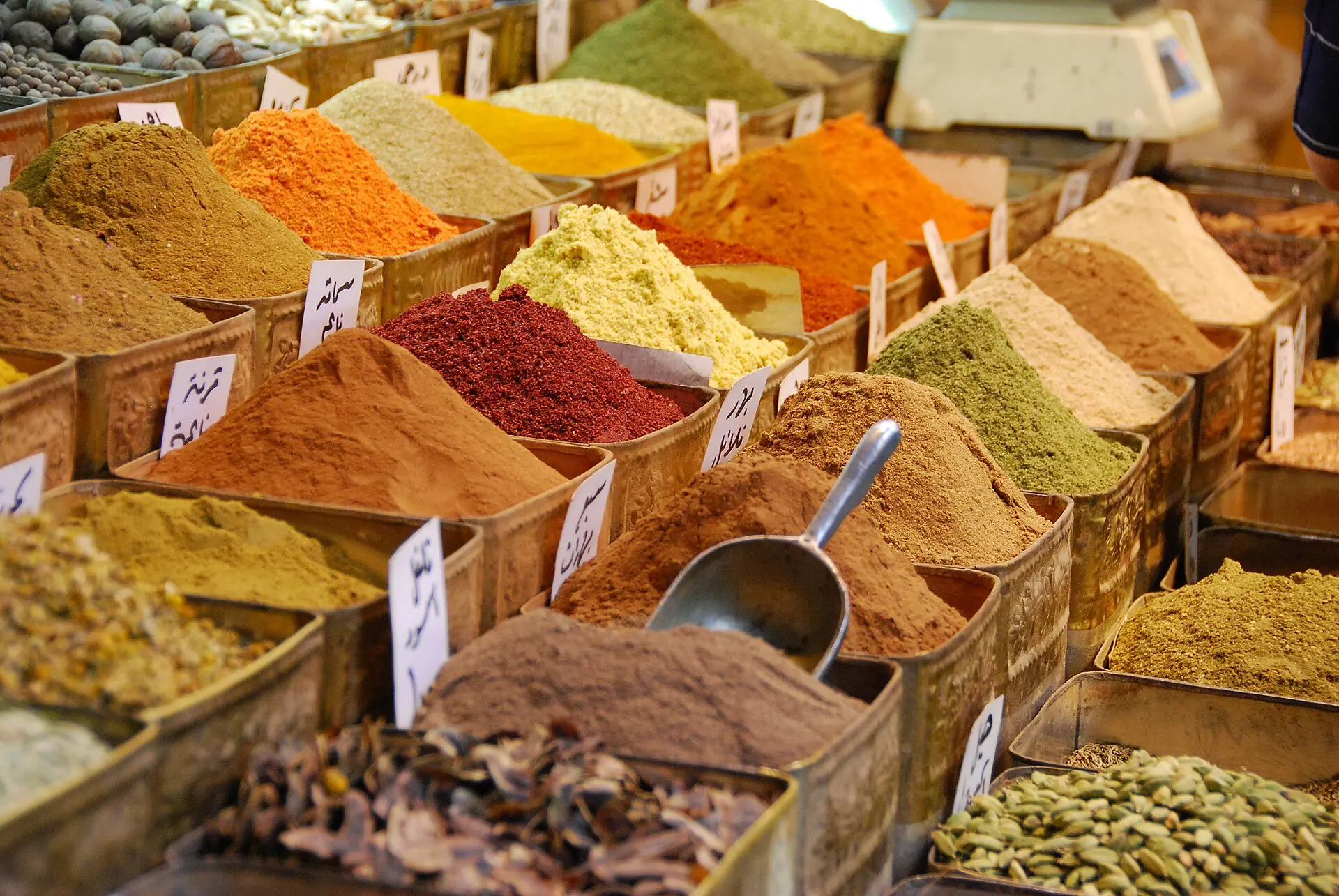
Damaskus, 2008-05-04 – Spice souq, Damascus, Syria
Damaskus · 2008James Gordon from Los Angeles, California, USA · CC BY 2.0 · Wikimedia Commons
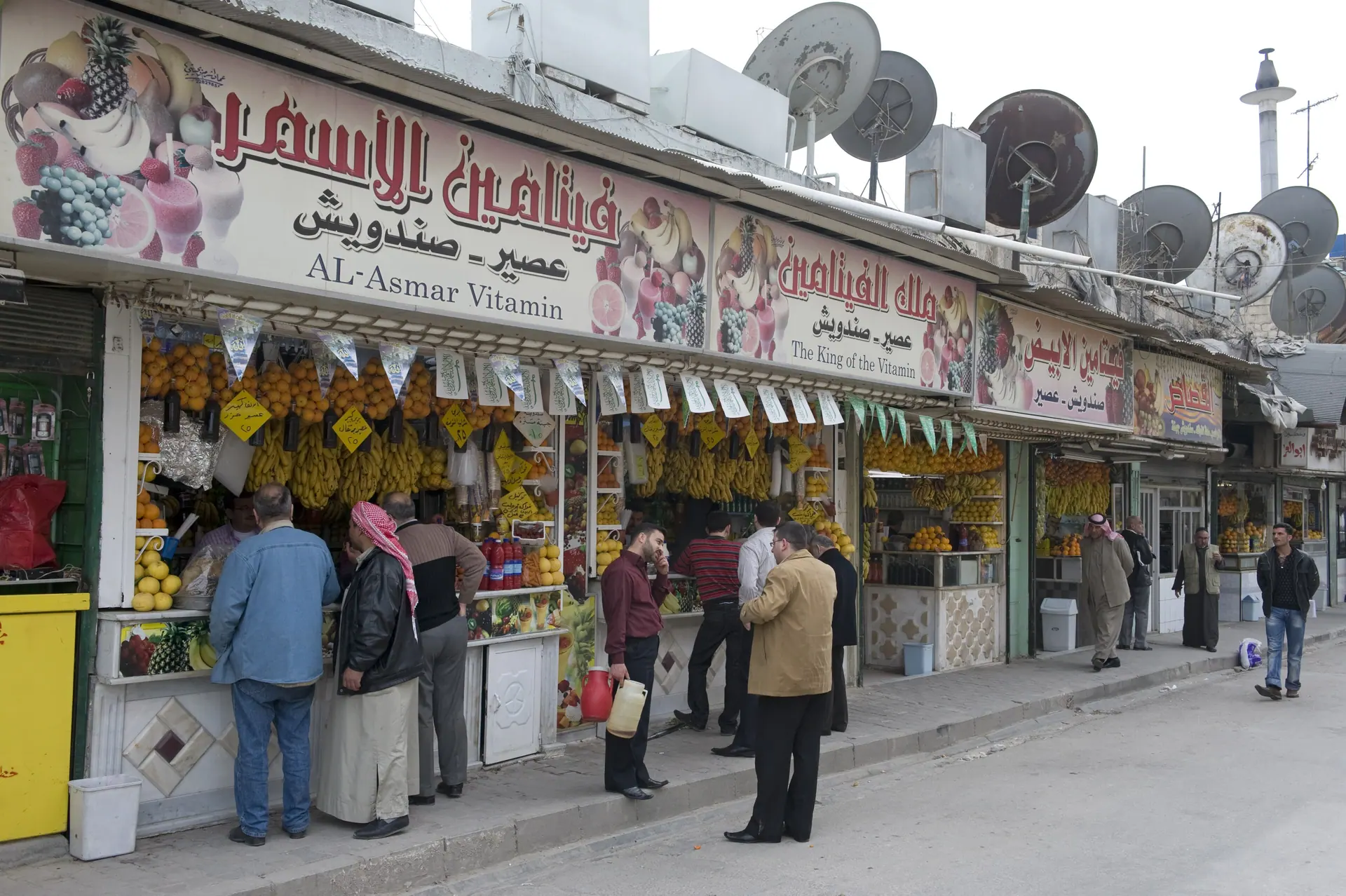
Aleppo, 2009-04-08 – Fresh fruit juice stall in Aleppo, 2009
Aleppo · 2009Dosseman · CC BY-SA 4.0 · Wikimedia Commons
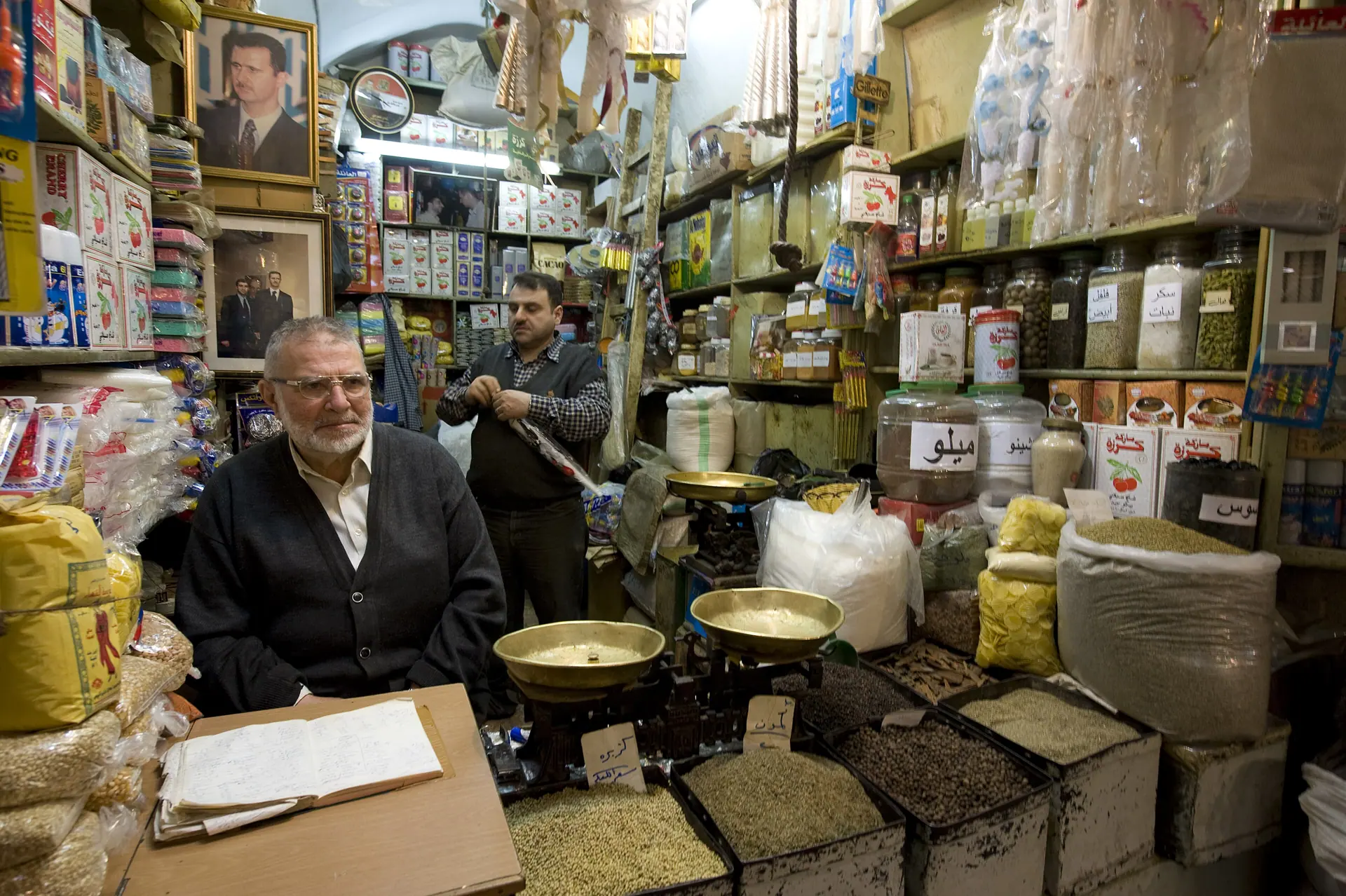
Aleppo, 2009-04-09 – Merchant in the souqs of Aleppo, 2009
Aleppo · 2009Dosseman · CC BY-SA 4.0 · Wikimedia Commons
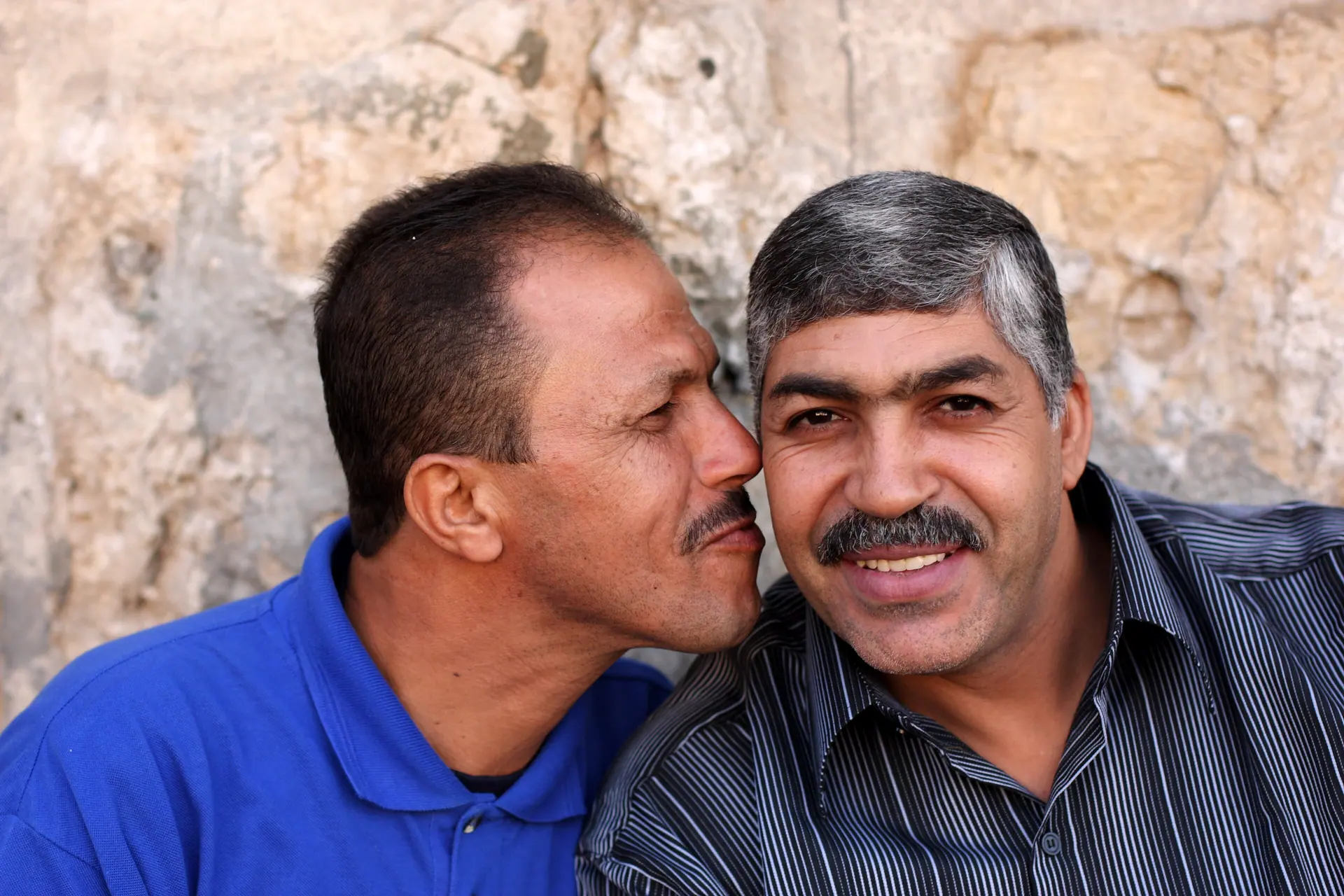
Damascus, 2010-09-11 – Friends in Damascus, 2010
Damaskus · 2010yeowatzup · CC BY 2.0 · Wikimedia Commons
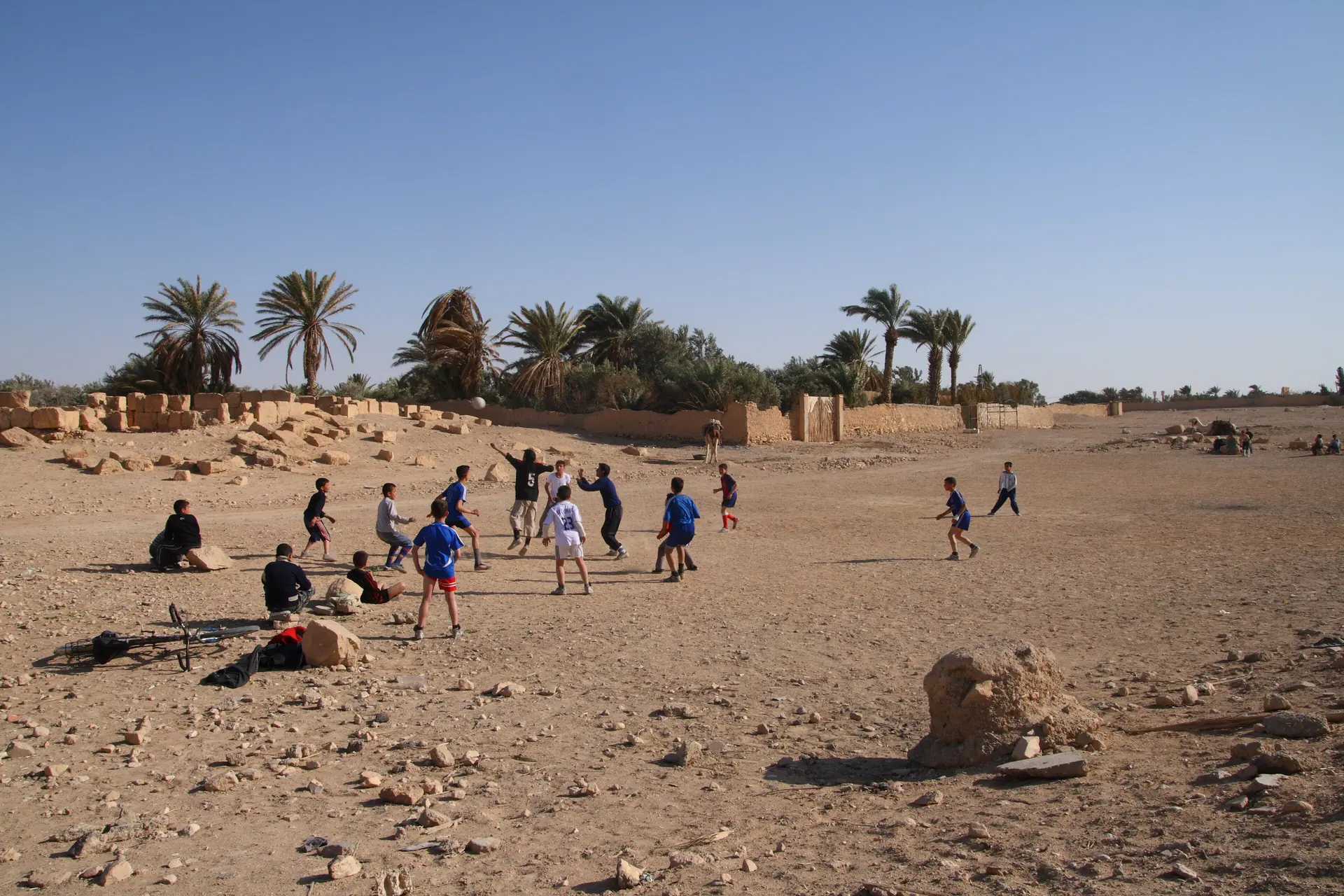
Palmyra, 2009-03-31 – Children playing football beside the ruins of Palmyra, 2009
Palmyra · Homs · 2009Ed Brambley from Cambridge, UK · CC BY-SA 2.0 · Wikimedia Commons
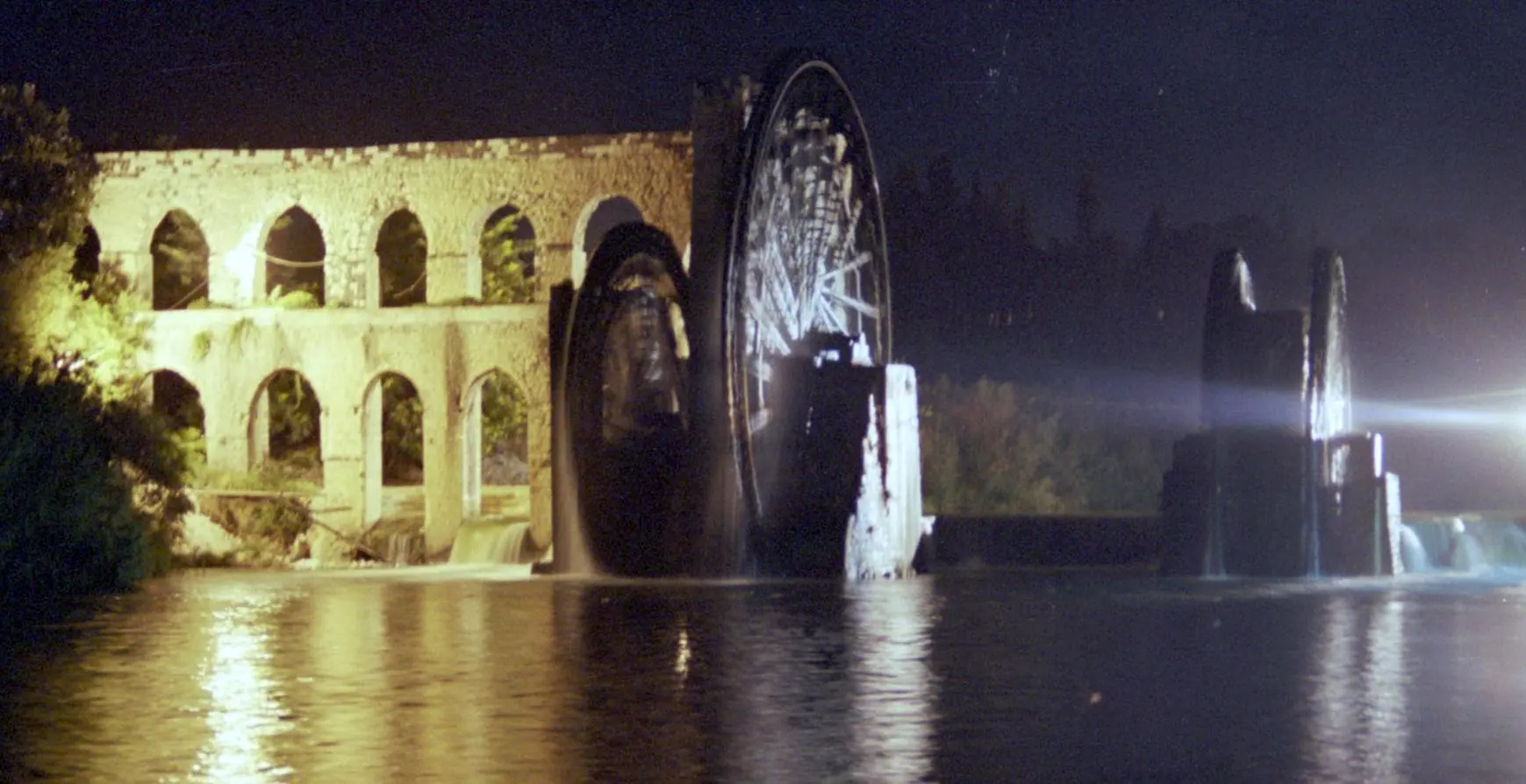
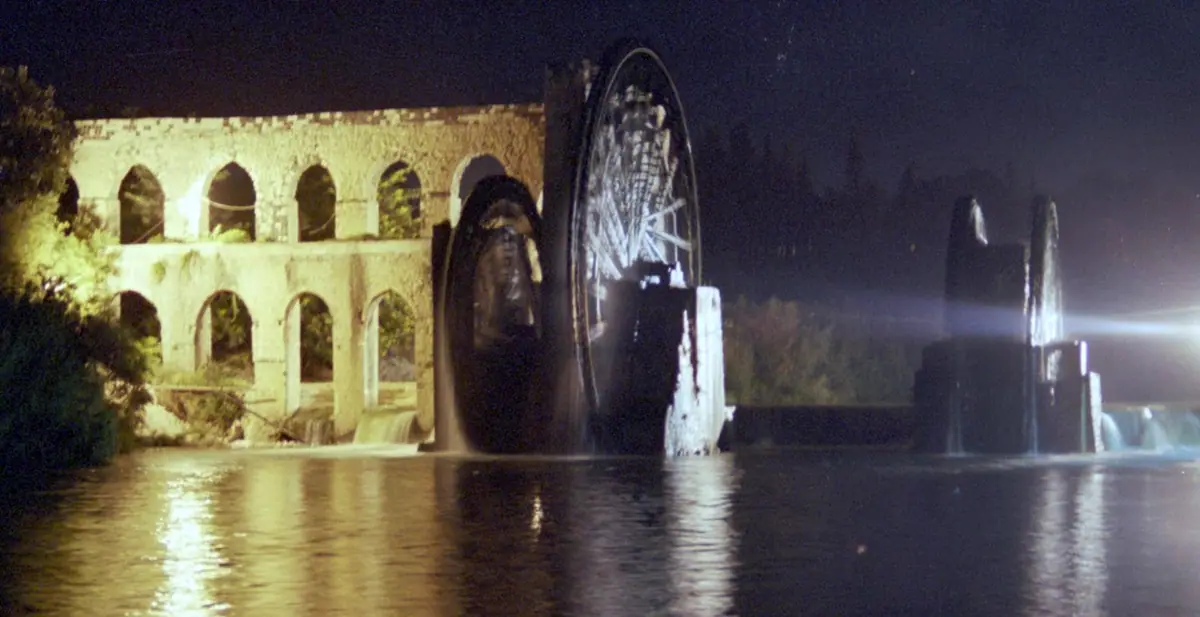
Hama, 2010-10-31 – The norias of Hama at night, 2010
Hama · 2010Fulvio's photos · CC BY-SA 2.0 · Wikimedia Commons
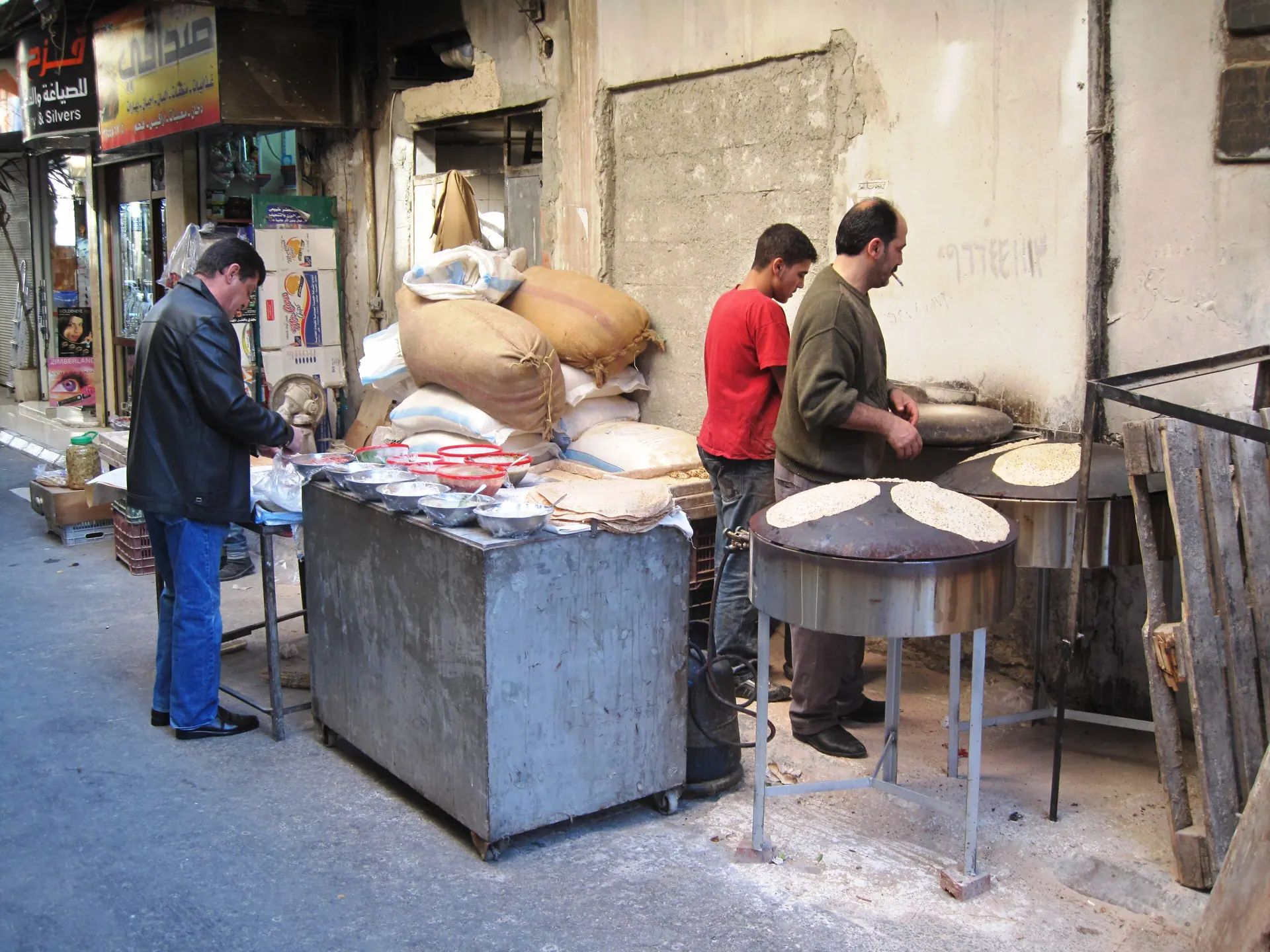
Damascus, 2010-01-01 – Bakers in Damascus, 2010
Damaskus · 2010Dickelbers · CC BY-SA 3.0 · Wikimedia Commons
Aleppo, 2010-09-16 – Souq al-Attarine, Aleppo, 2010
Aleppo · 2010yeowatzup · CC BY 2.0 · Wikimedia Commons
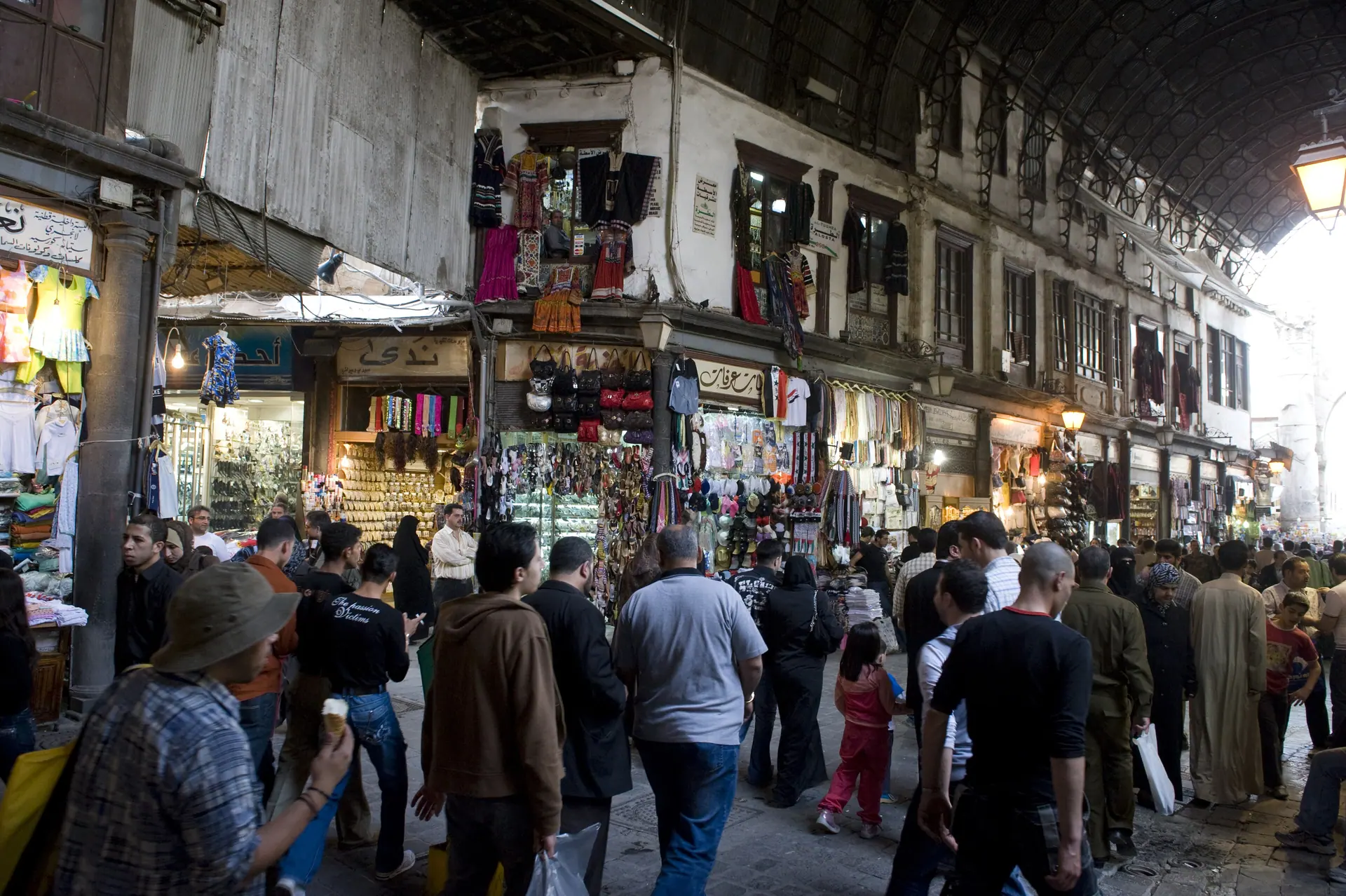
Damascus, 2009-04-14 – Al-Hamidiyah Souq, Damascus, 2009
Damaskus · 2009Dosseman · CC BY-SA 4.0 · Wikimedia Commons
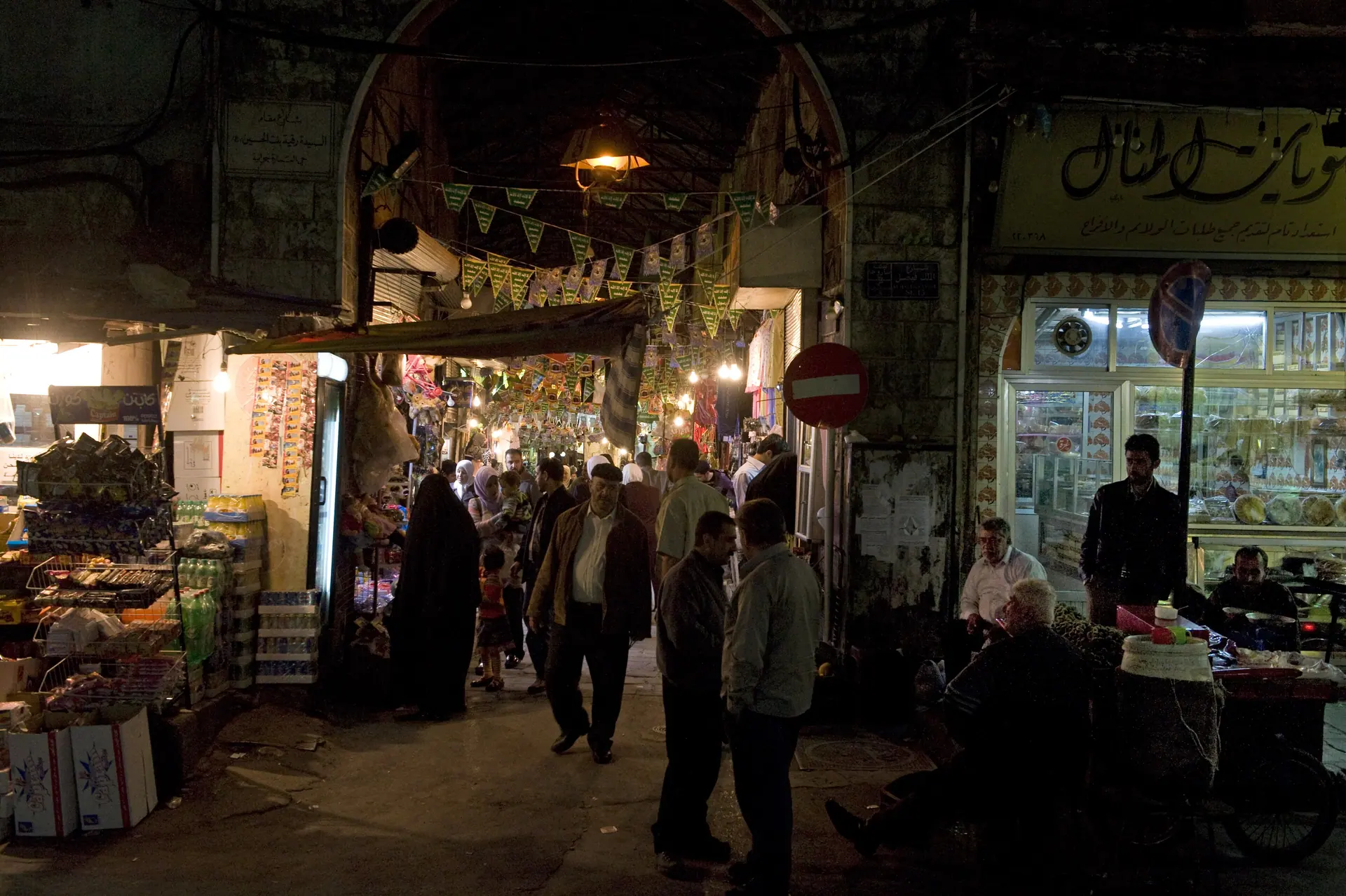
Damascus, 2009-04-15 – Evening in the old city of Damascus, 2009
Damaskus · 2009Dosseman · CC BY-SA 4.0 · Wikimedia Commons
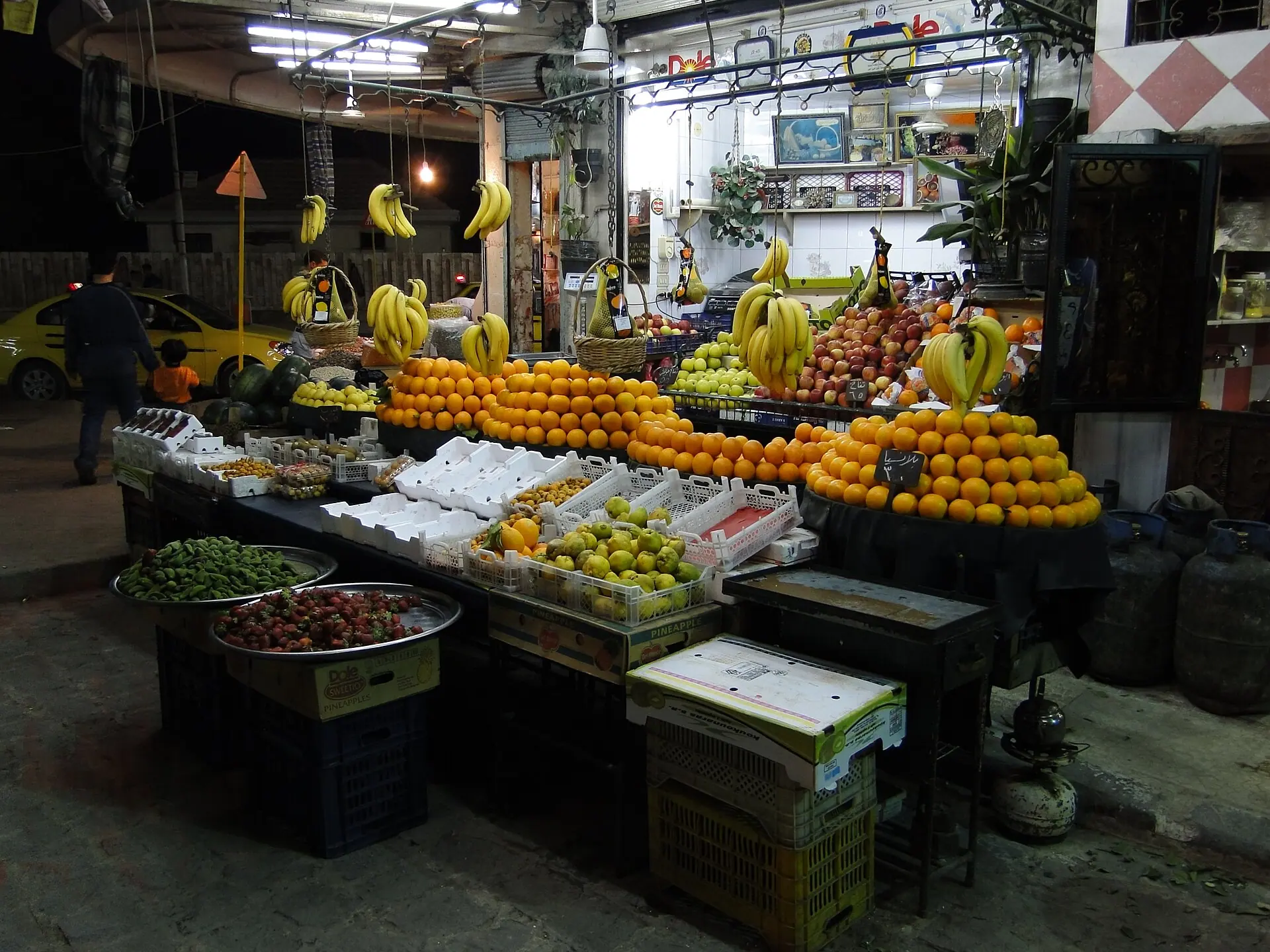
Hama, 2010-04-02 – Fruit market in Hama , Syria
Hama · 2010Bernard Gagnon · CC BY-SA 3.0 · Wikimedia Commons
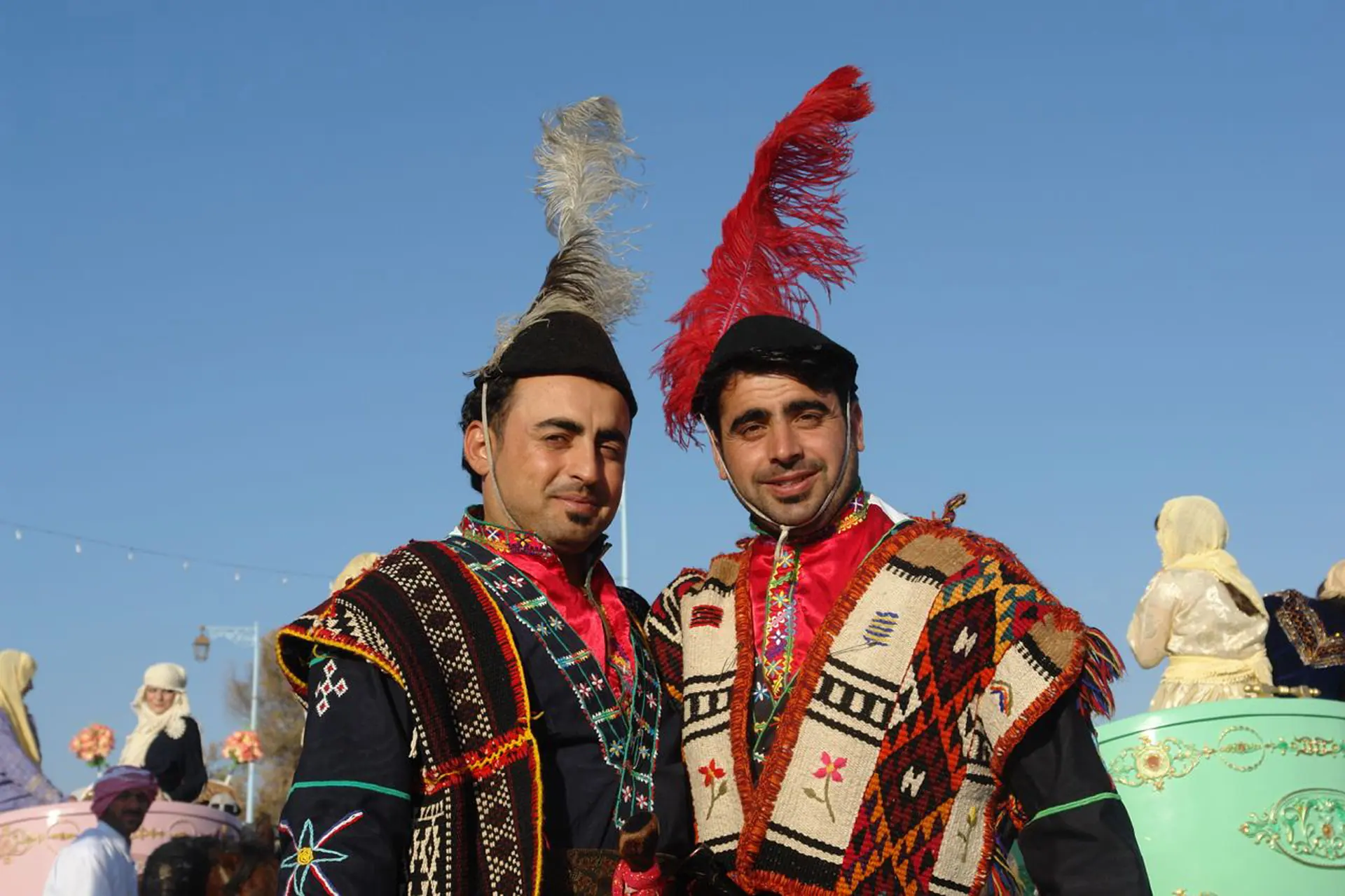
Aleppo, 2008-04-28 – Villagers in traditional dress at the Citadel of Aleppo, 2008
Aleppo · 2008James Gordon from Los Angeles, California, USA · CC BY 2.0 · Wikimedia Commons
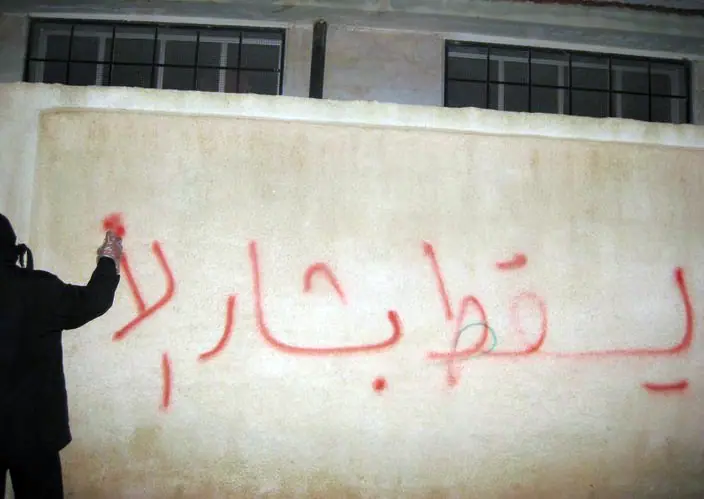
2011-04-12 – The phrase "Down with Bashar" ( yaskut Baššār ), during the Syrian Uprising 2011.
2011jan Sefti · CC BY-SA 2.0 · Wikimedia Commons
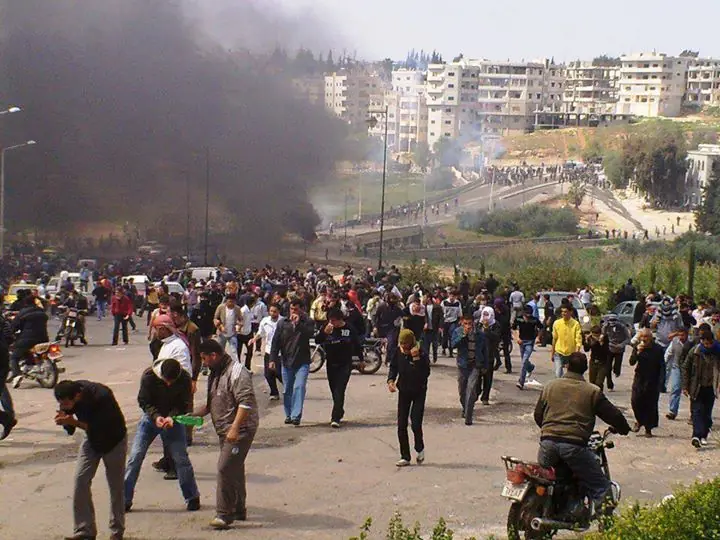
Banyas, 2011-04-29 – Said to be "A demonstration in the city of Banyas," Syria at the "Friday of rage" in 29 ِApril 2011.
Banyas · Tartus · 2011Syria-Frames-Of-Freedom (Pro-FSA information) · CC BY 2.0 · Wikimedia Commons
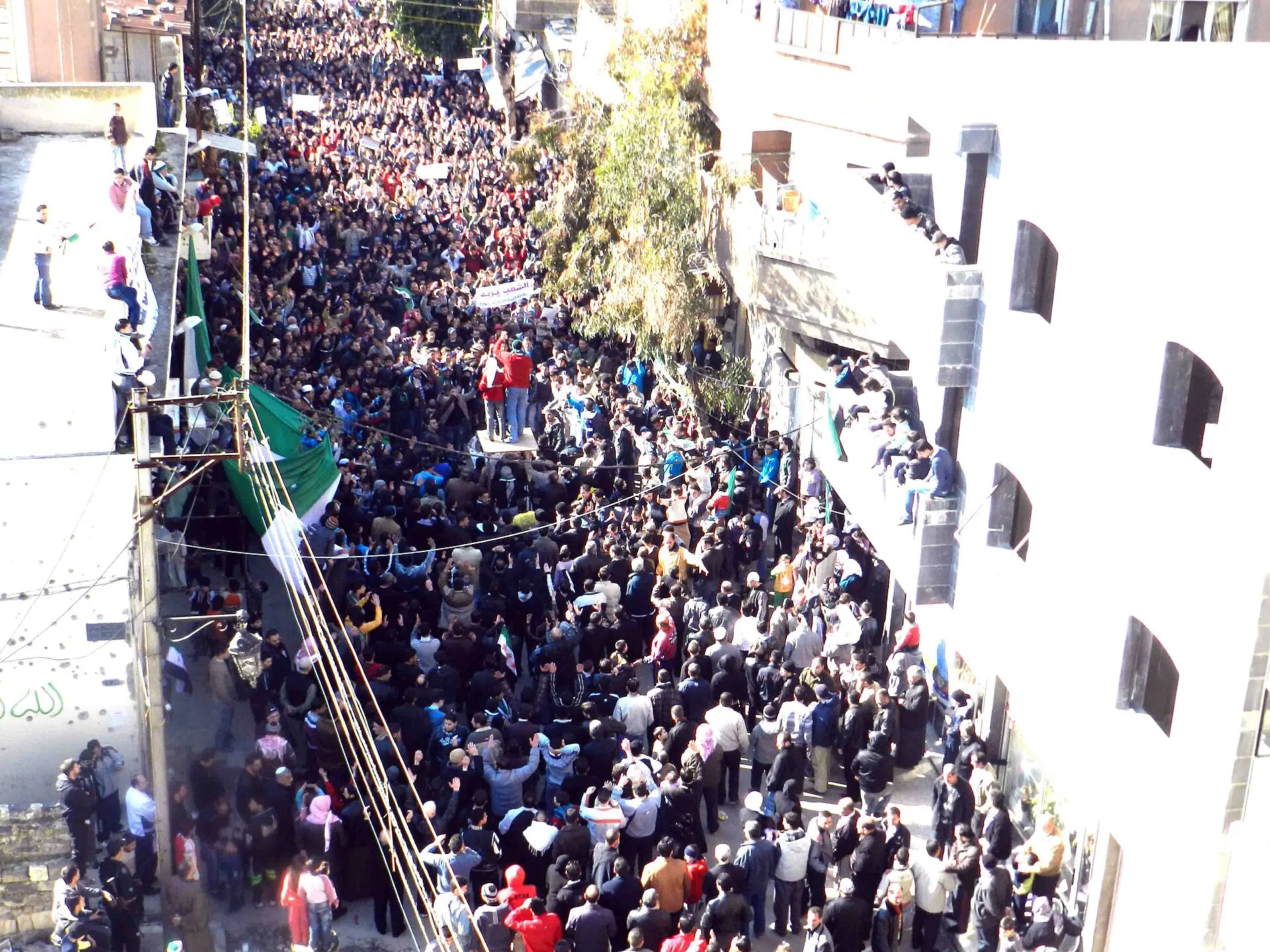
Homs, 2012-02-03 – صورة تظهر مظاهرة حاشدة في حي باب الدريب بمدينة حمص في سوريا ضمن الثورة المطالبة بإسقاط النظام هناك
Homs · 2012Bo yaser · CC BY-SA 3.0 · Wikimedia Commons
Banyas, 2011-09-16 – A demonstration in the city of Banyas, Syria at 6th may 2011.
Banyas · Tartus · 2011Syria-Frames-Of-Freedom · CC BY 2.0 · Wikimedia Commons
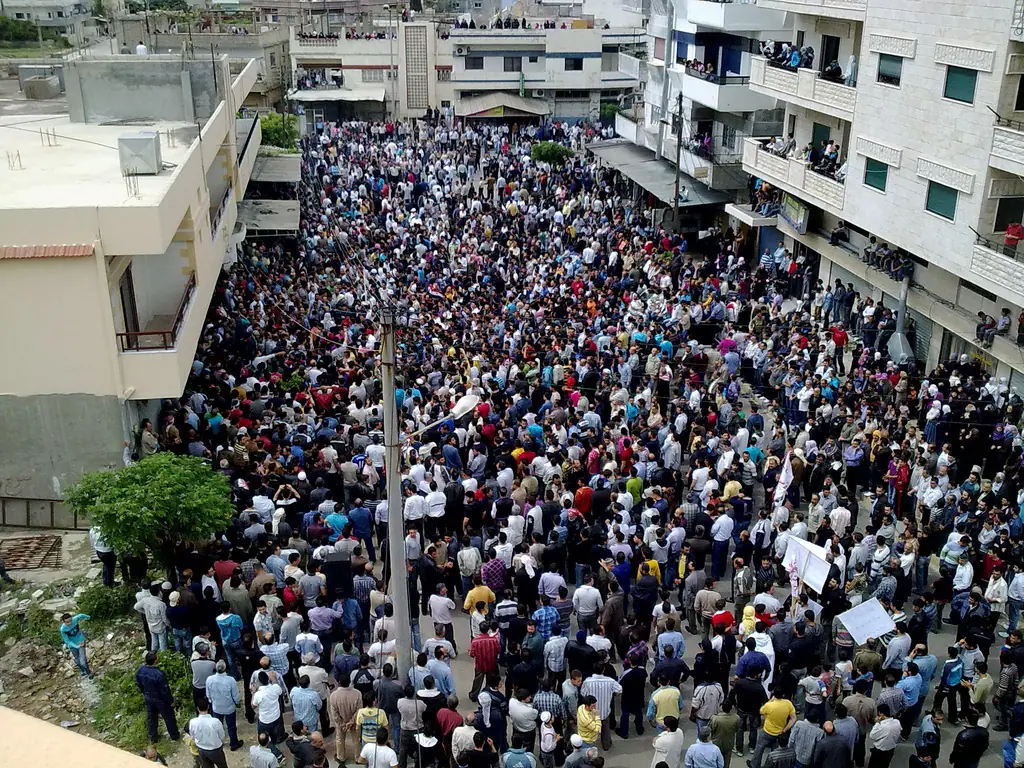
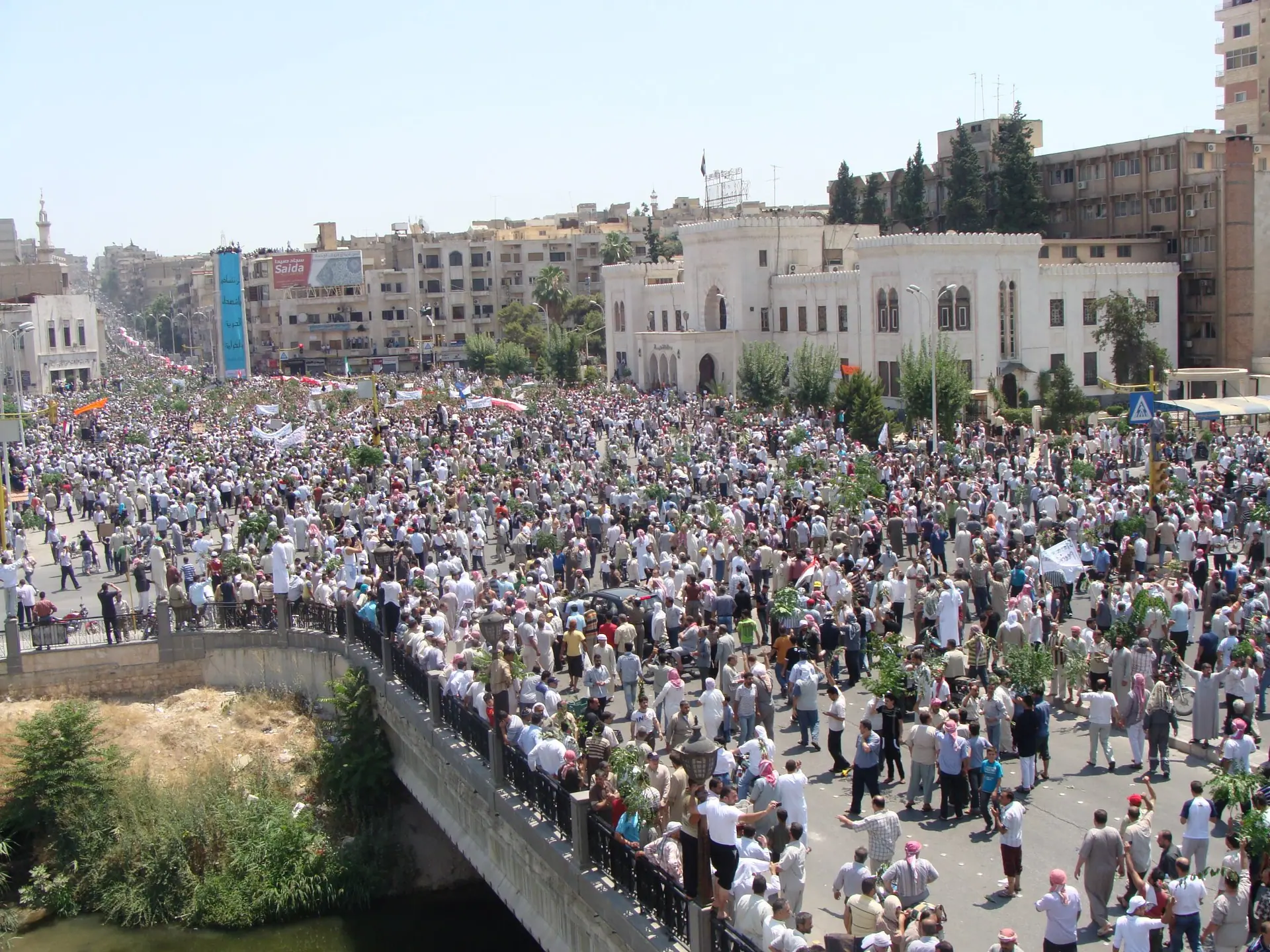
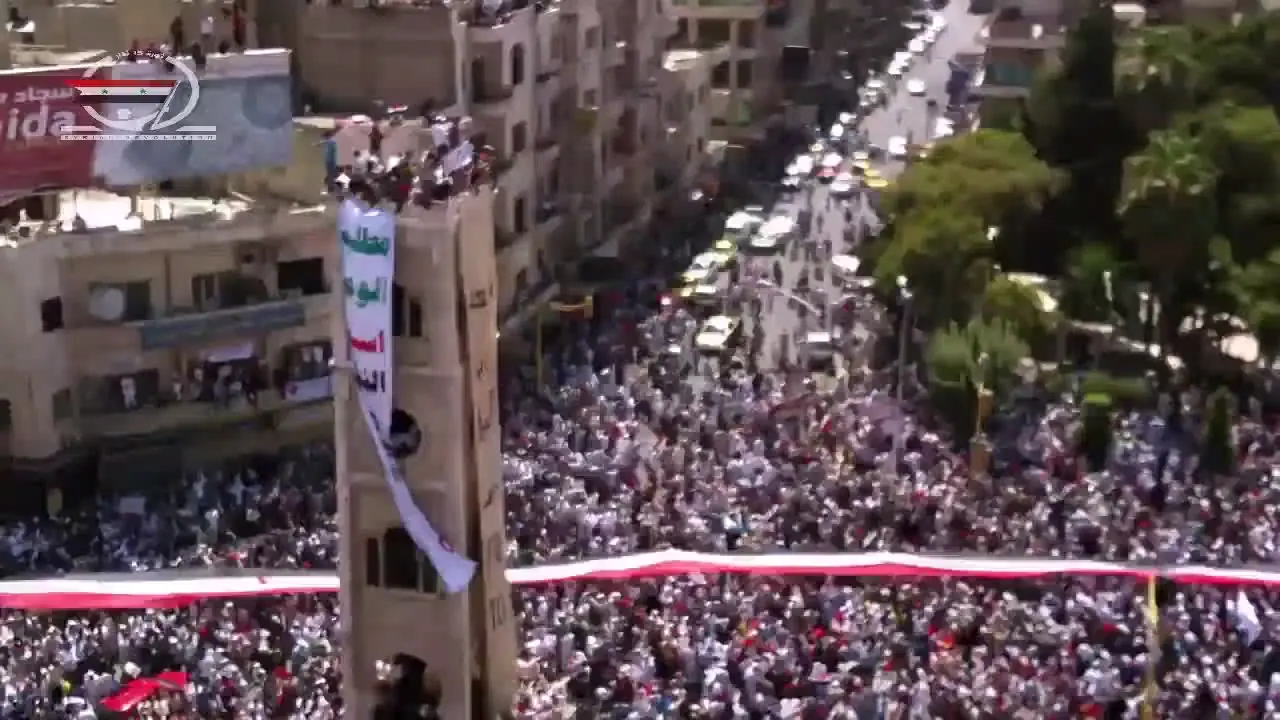
Hama, 2011-07-08 – Hundreds of thousands demonstrate in Hama, 8 July 2011
Hama · 2011The original uploader was Bo yaser at Arabic Wikipedia . · CC BY 2.5 · Wikimedia Commons
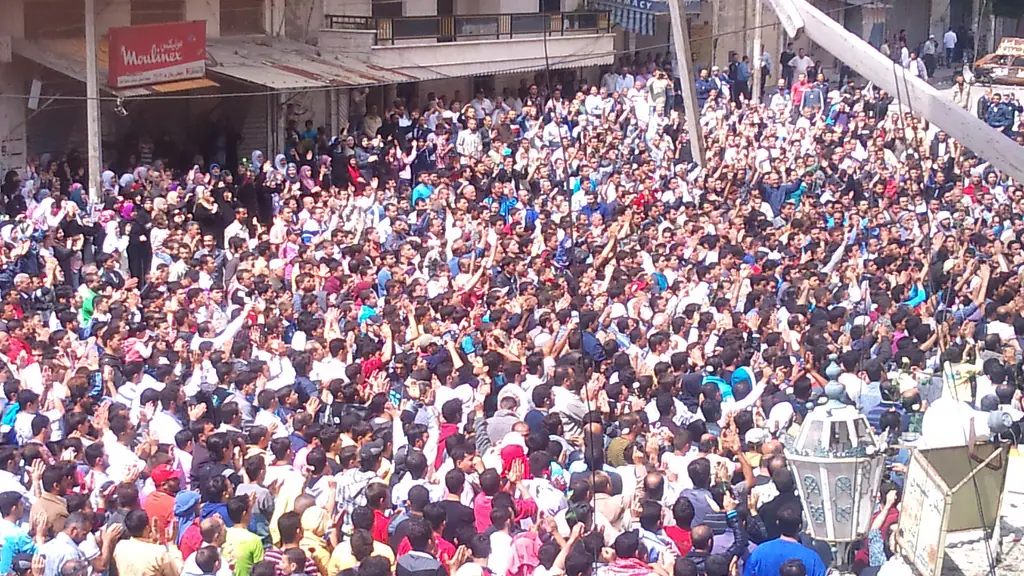
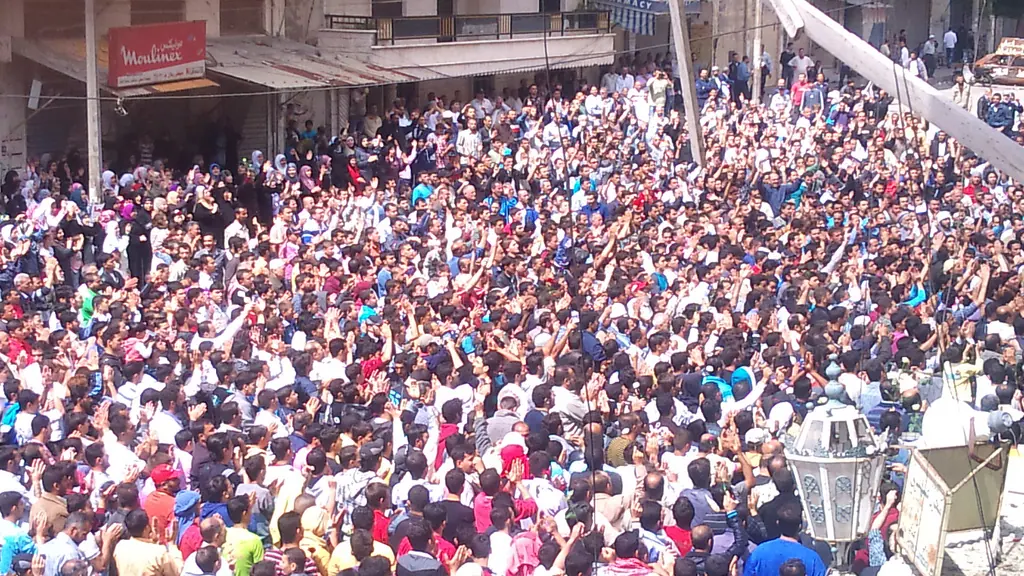
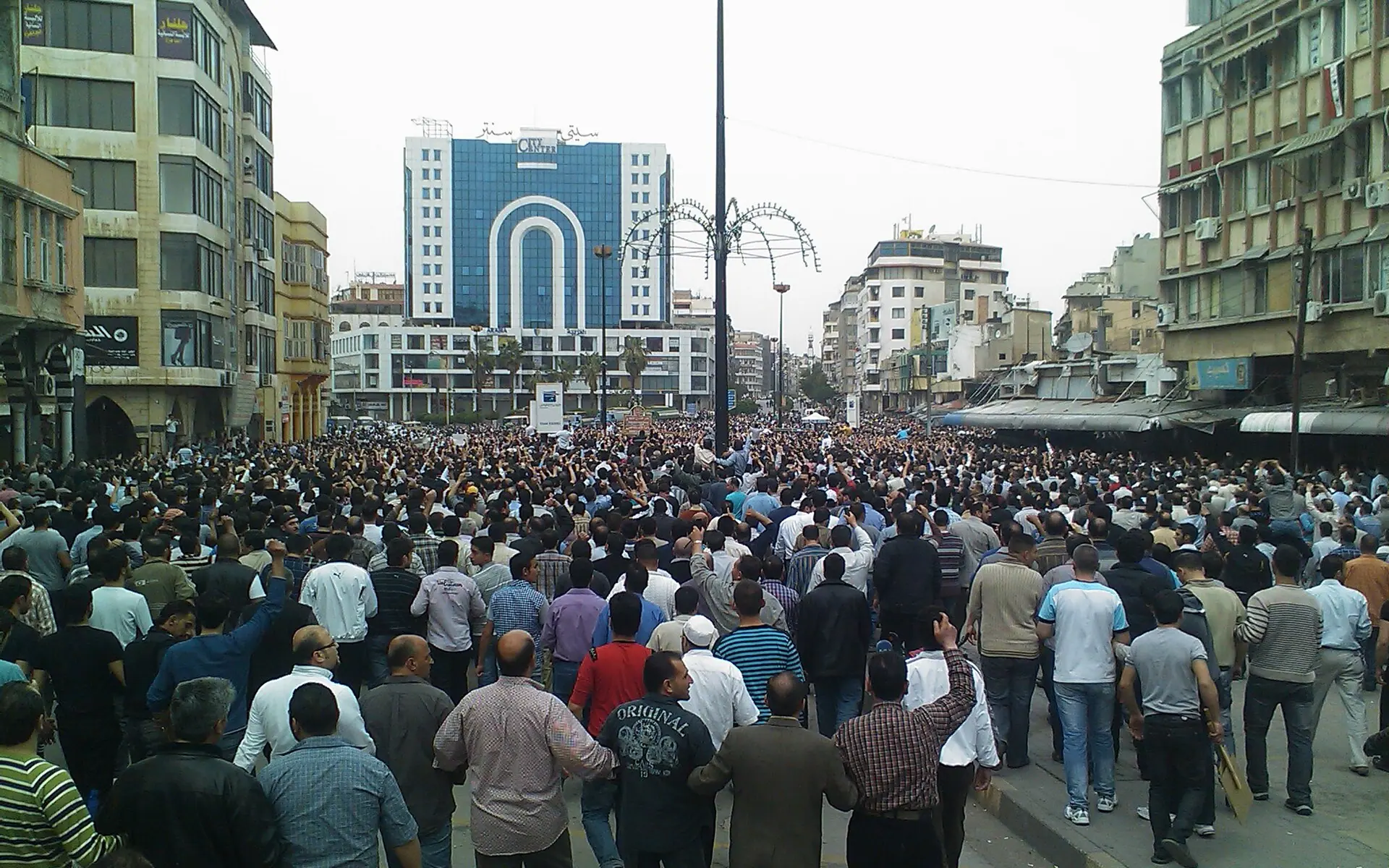
Homs, 2011-04-18 – Demonstration in Homs, Syria against Al Assad regime in the Syrian Uprising
Homs · 2011Bo yaser · CC BY-SA 3.0 · Wikimedia Commons
Daraa, 2013 – درعا البلد إحدى المظاهرات في بداية الإحتجاجات
Daraa · 2013User:Ibrahim moukdad · CC BY-SA 3.0 · Wikimedia Commons
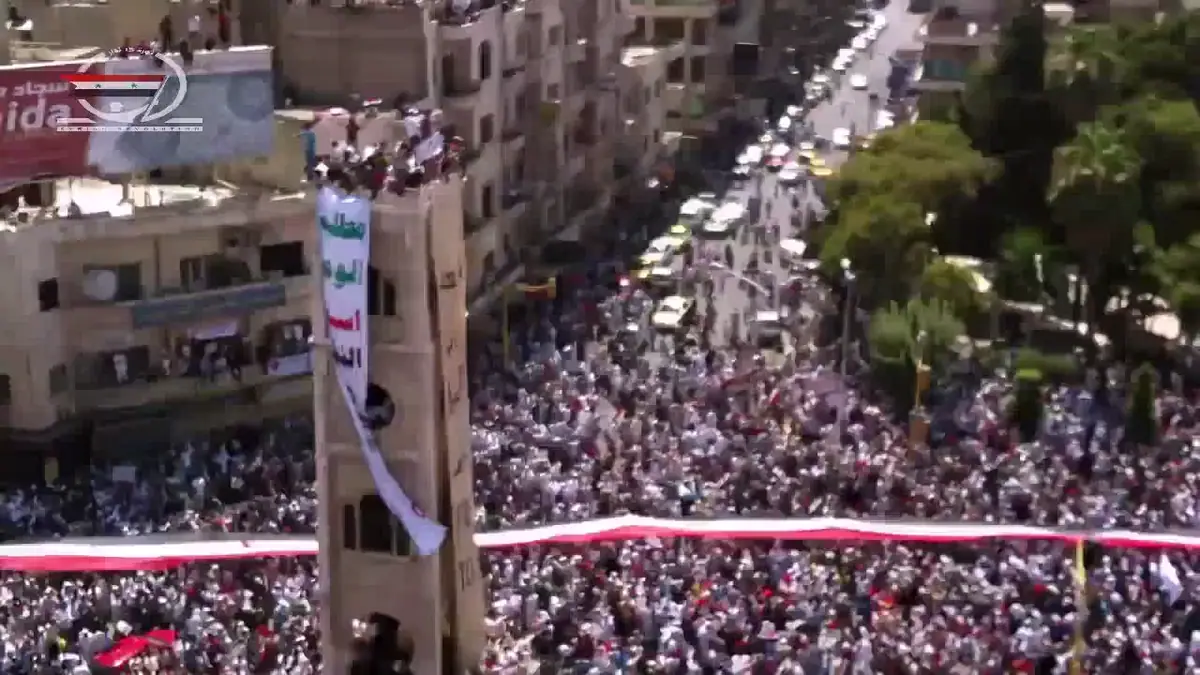
Hama, 2011-07-22 – Thousands of protesters parade the flag of Syria and shout " Ash-shab yurid isqat an-nizam " in the Assi square of Hama during the siege in
Hama · 2011Syrian Revolution Network · CC BY 3.0 · Wikimedia Commons
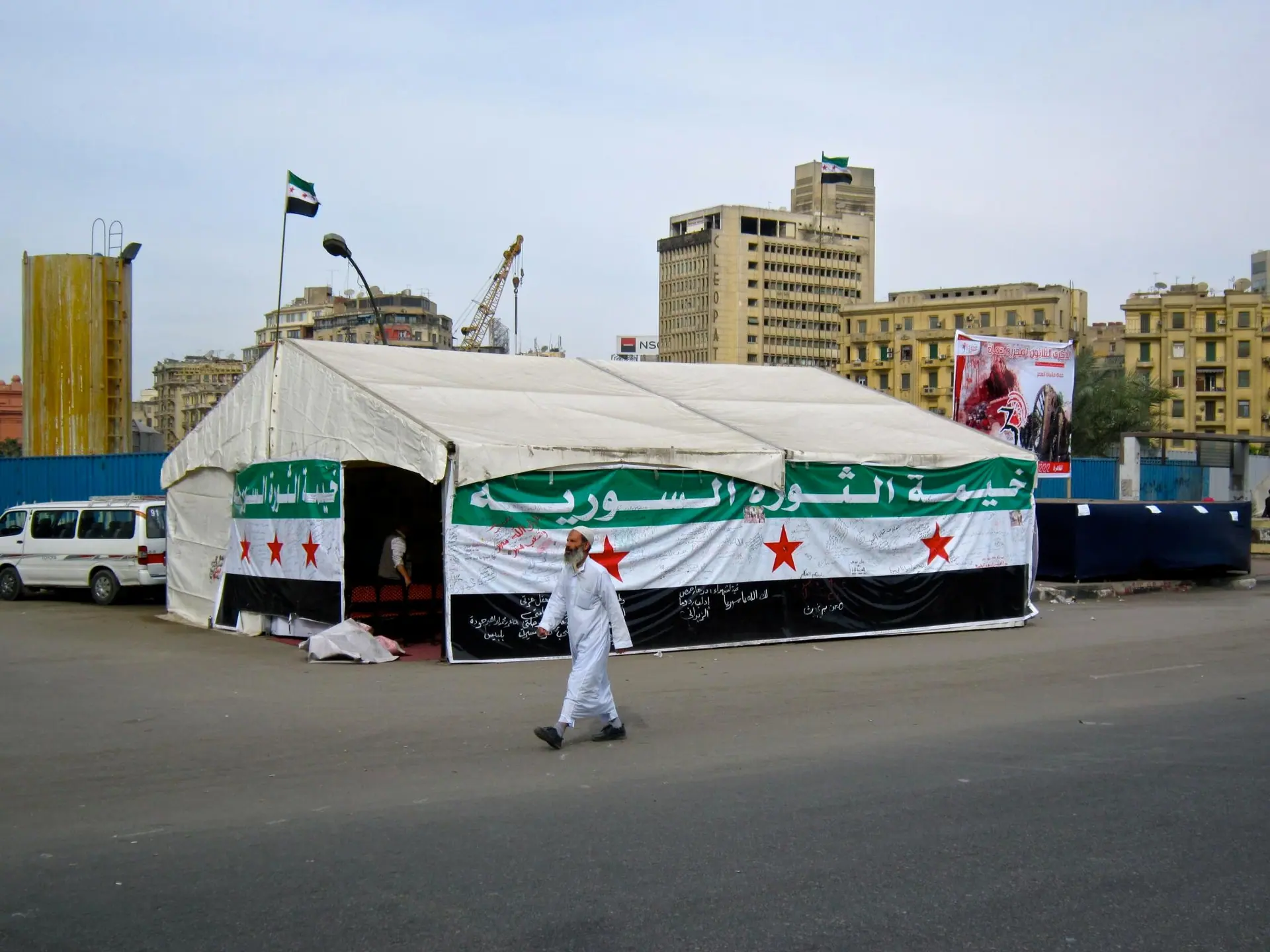
Tahrir Square, Cairo (Egypt), 2012-02-03 – The Syrian Revolution tent in Tahrir
Tahrir Square, Cairo · 2012Gigi Ibrahim from Cairo, Egypt · CC BY 2.0 · Wikimedia Commons
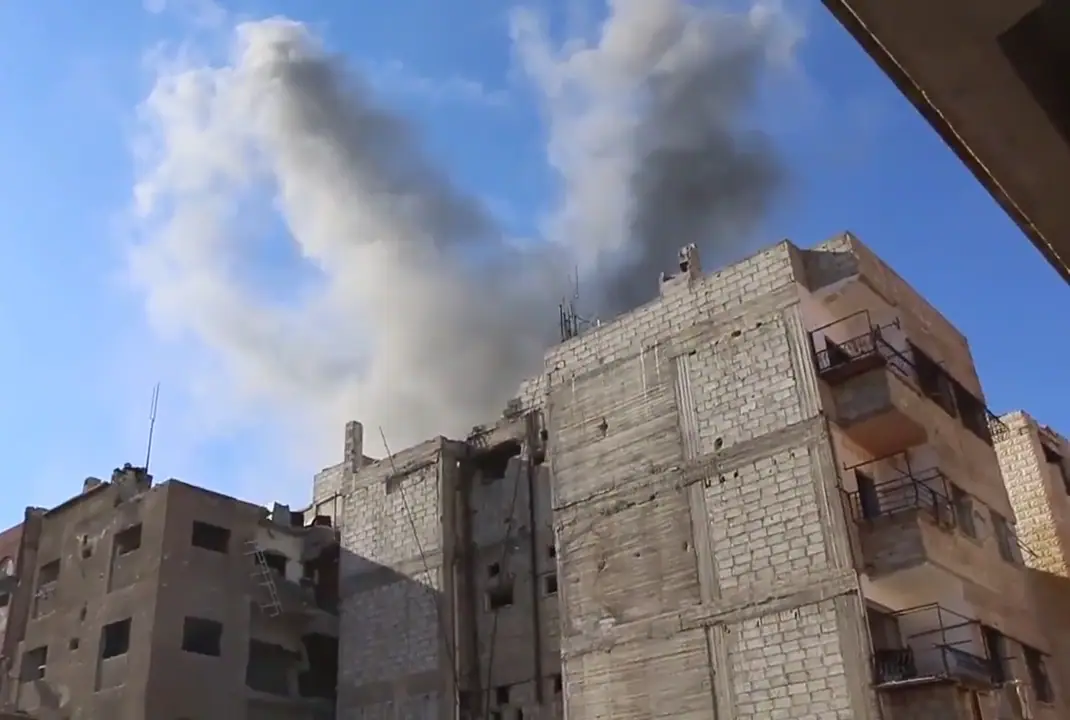
Jobar (Damaskus), 2017-03-20 – Smoke rises from a building in the Damascus suburb of Jobar after being hit by a hit by a bomb during the Qaboun offensive (February–March 2
Jobar · Damaskus · 2017Qasioun News Agency · CC BY 3.0 · Wikimedia Commons
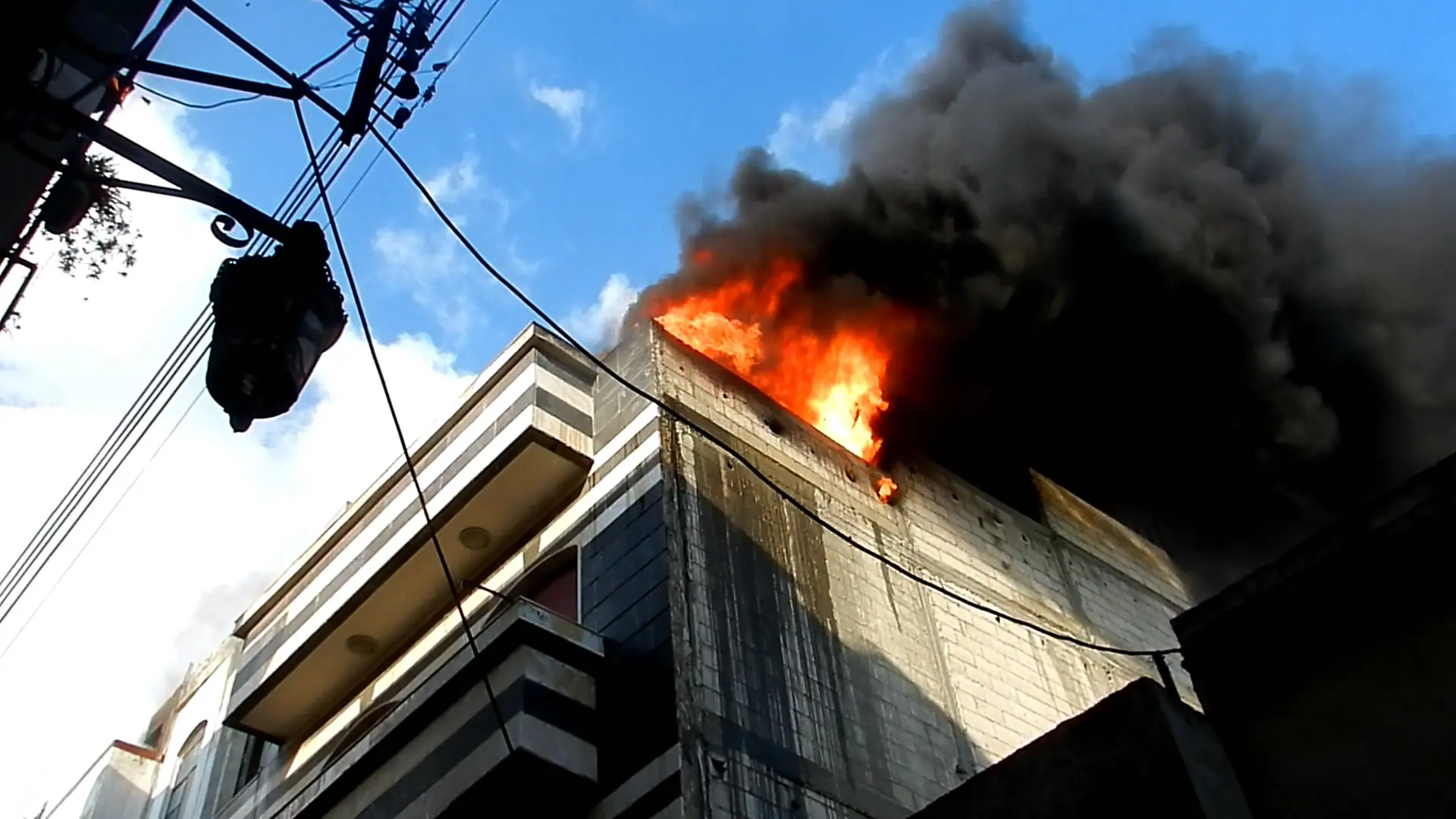
Homs, 2012-02-25 – A burning house in the neighborhood of Orchard Court in Homs Syria after bombing of the Syrian army who is trying to suppress the revolution
Homs · 2012Bo yaser · CC BY-SA 2.5 · Wikimedia Commons
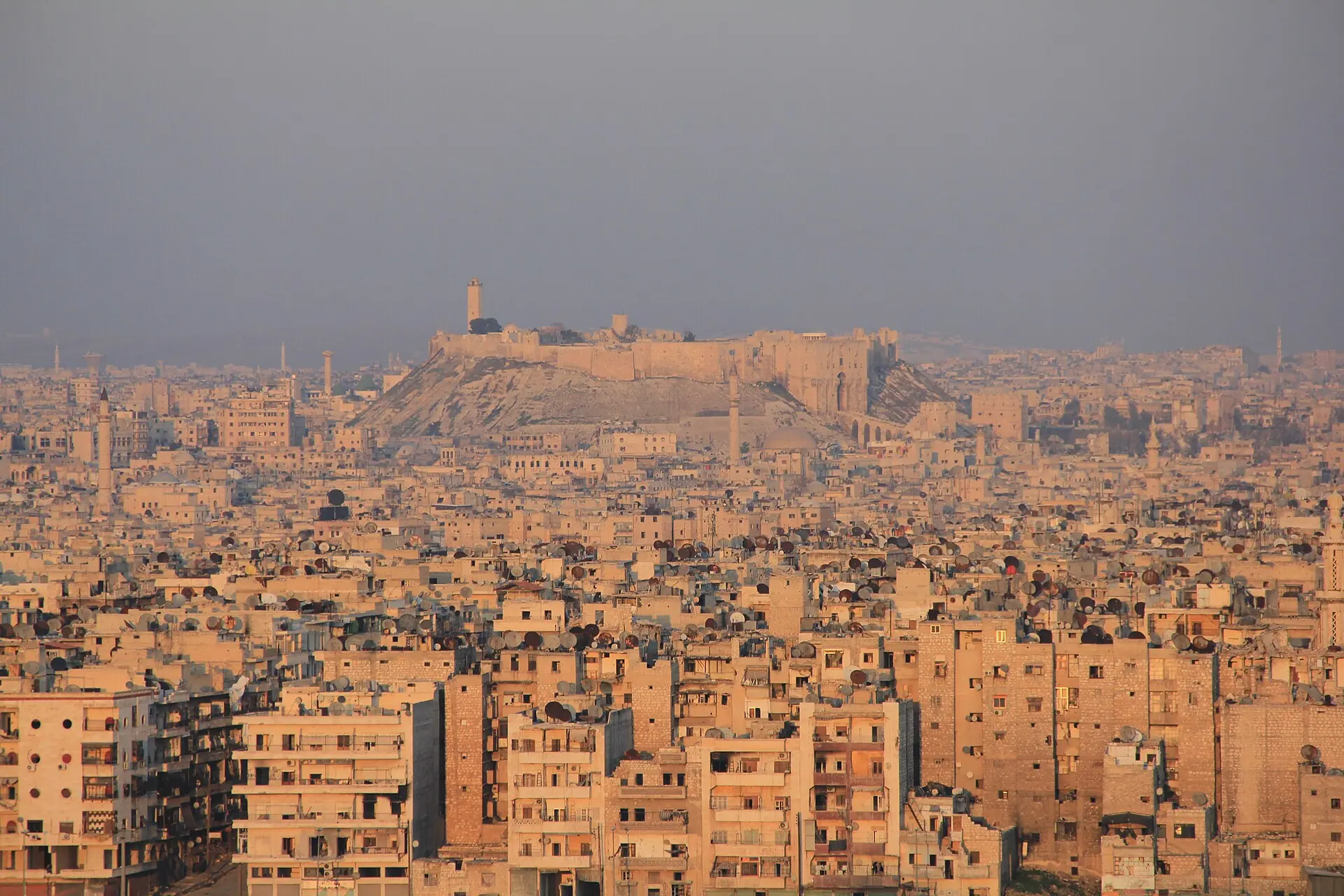
Aleppo, 2016-02-28 – Aleppo in the war
Aleppo · 2016LOUAI BARAKAT · CC BY-SA 4.0 · Wikimedia Commons
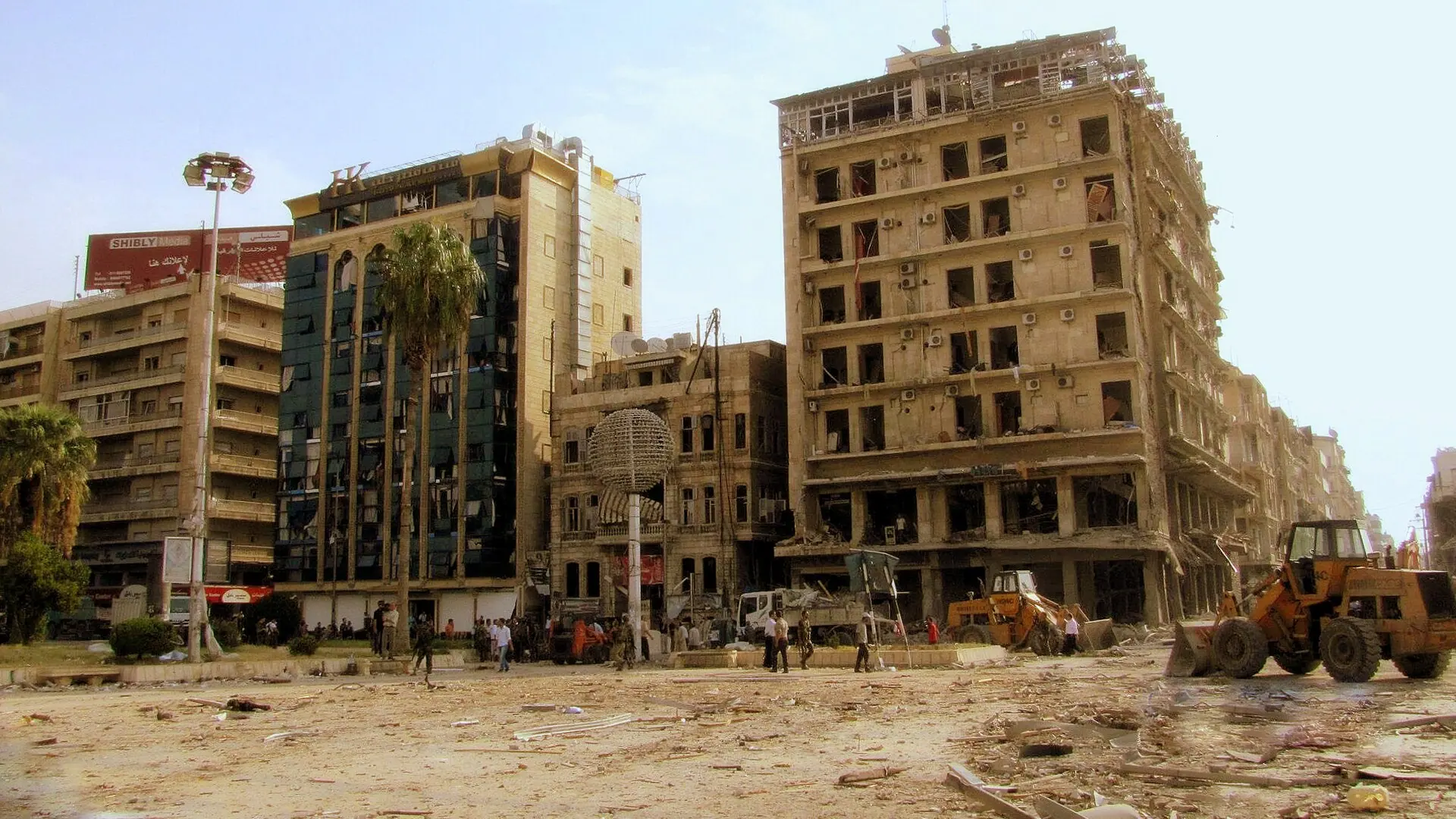
Aleppo, 2012-10-03 – 3 Car bombs hit the central Saadallah al-Jabiri square in Aleppo. [1]
Aleppo · 2012Zyzzzzzy · CC BY 2.0 · Wikimedia Commons
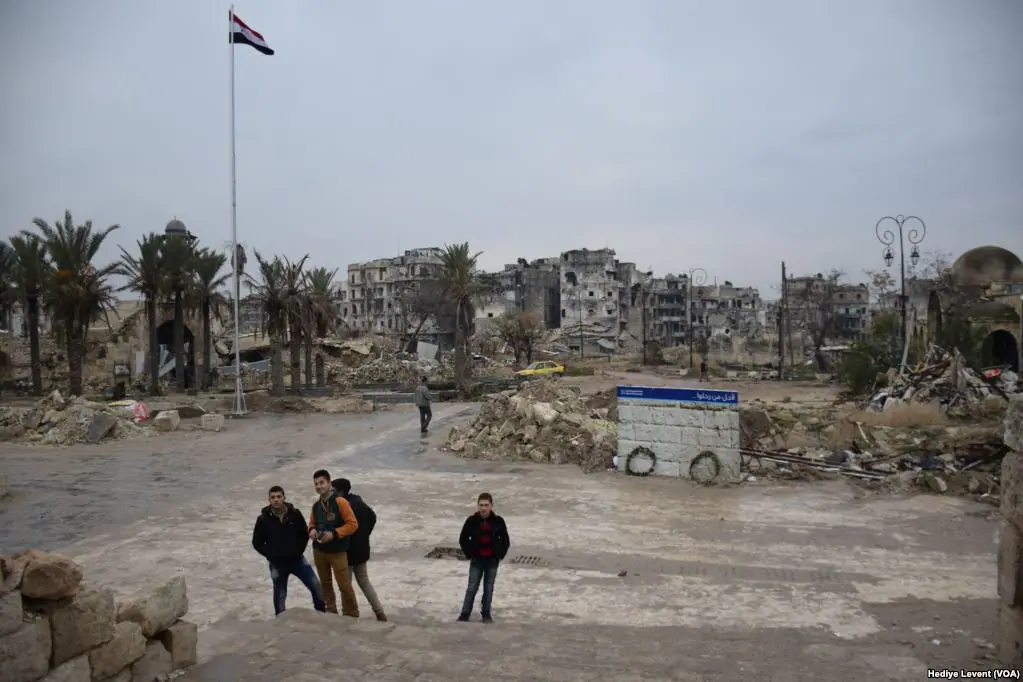
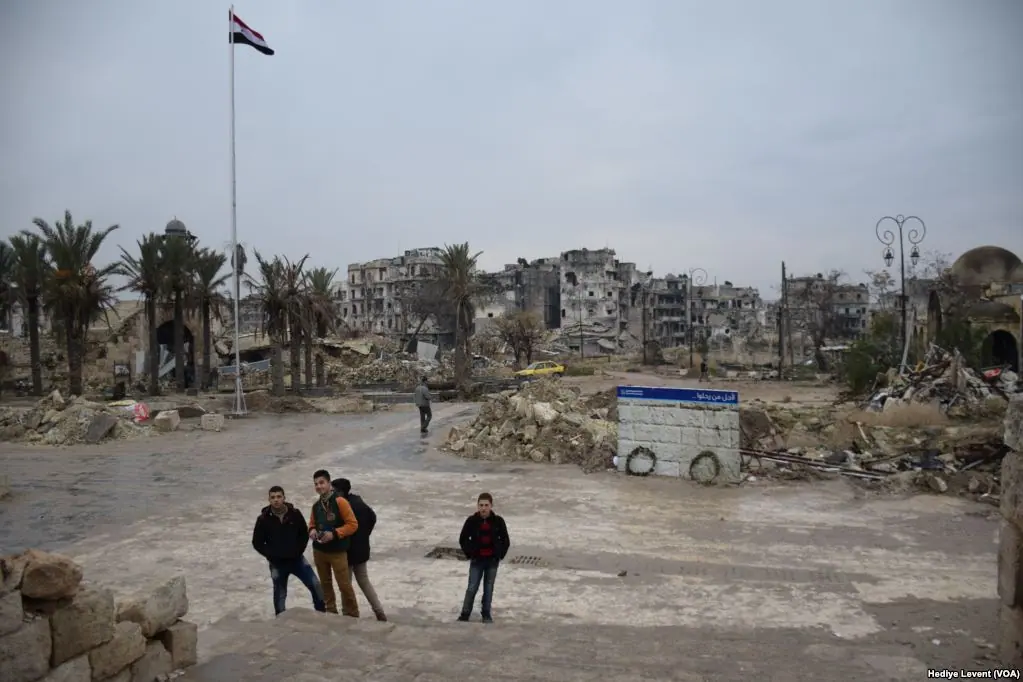
Aleppo, 2017-01-13 – Vieille ville d'Alep, le 13 janvier 2017.
Aleppo · 2017Hediye Levent (VOA) · Public domain · Wikimedia Commons
Aleppo, 2019-04-22 – Vieille ville d'Alep, le 13 janvier 2017.
Aleppo · 2019VOA · Public domain · Wikimedia Commons
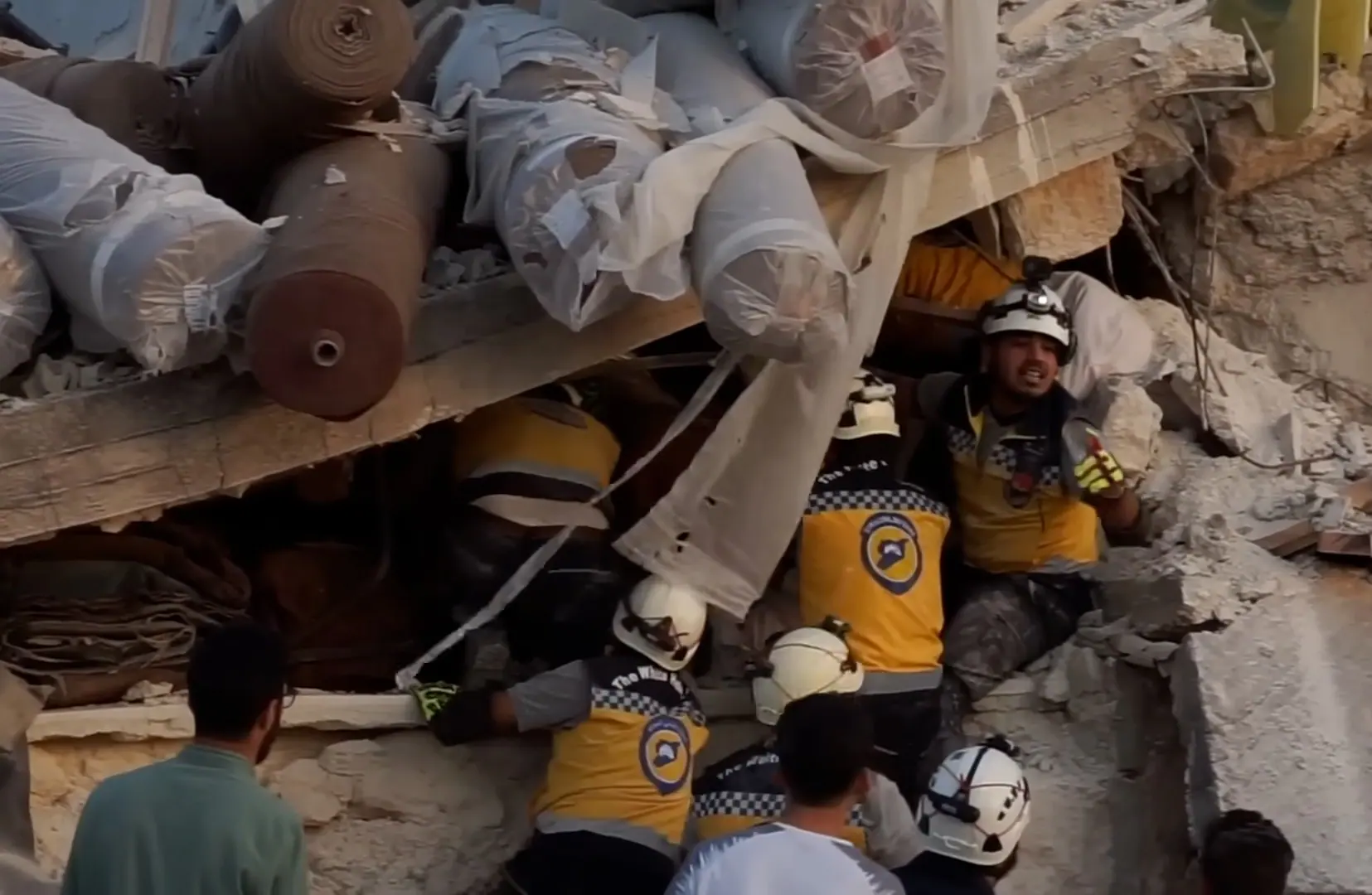
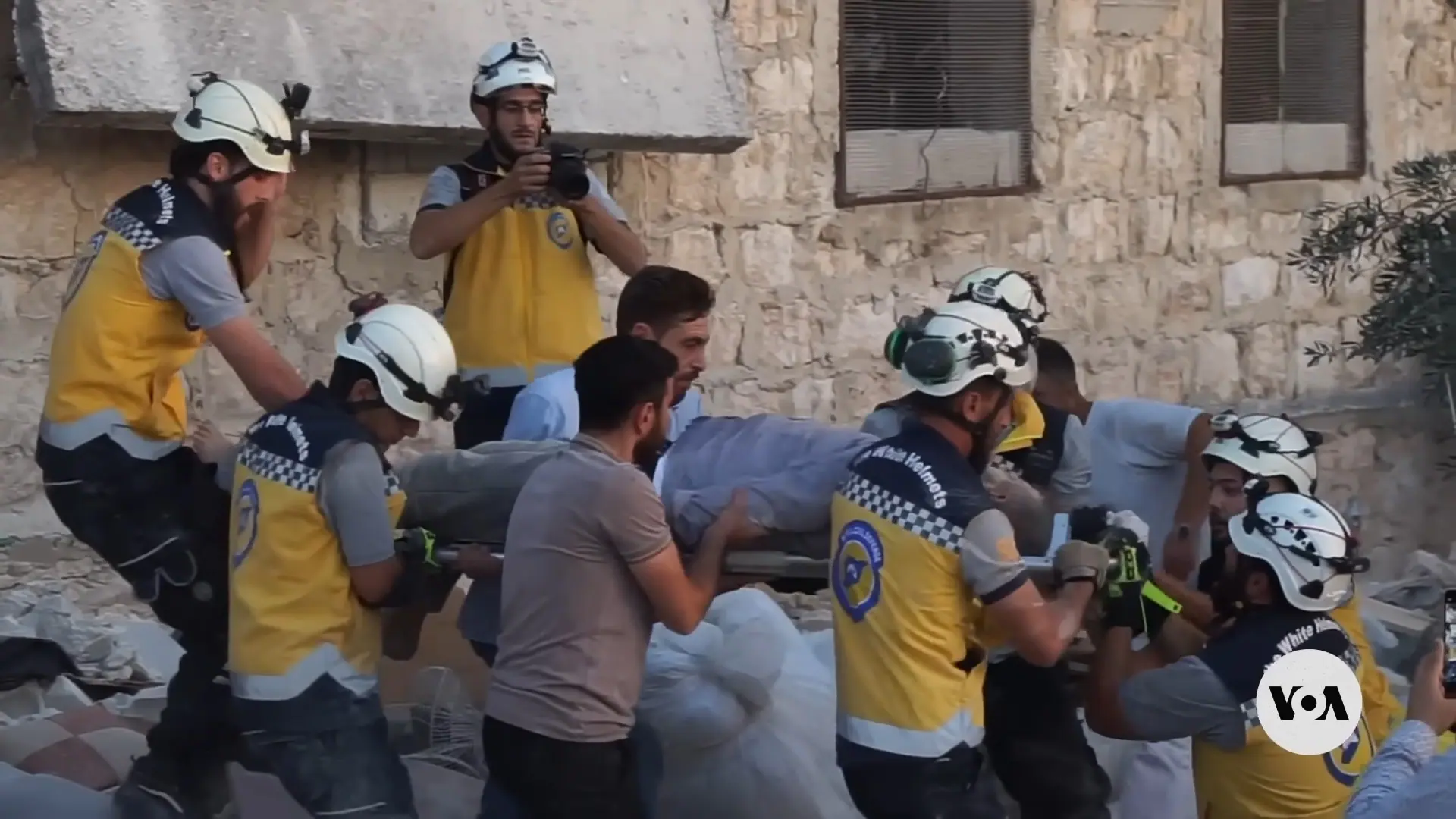
Syria, 2024-12-08 – Syrian White Helmets clears the rubble
Syria · 2024Voice of America · Public domain · Wikimedia Commons
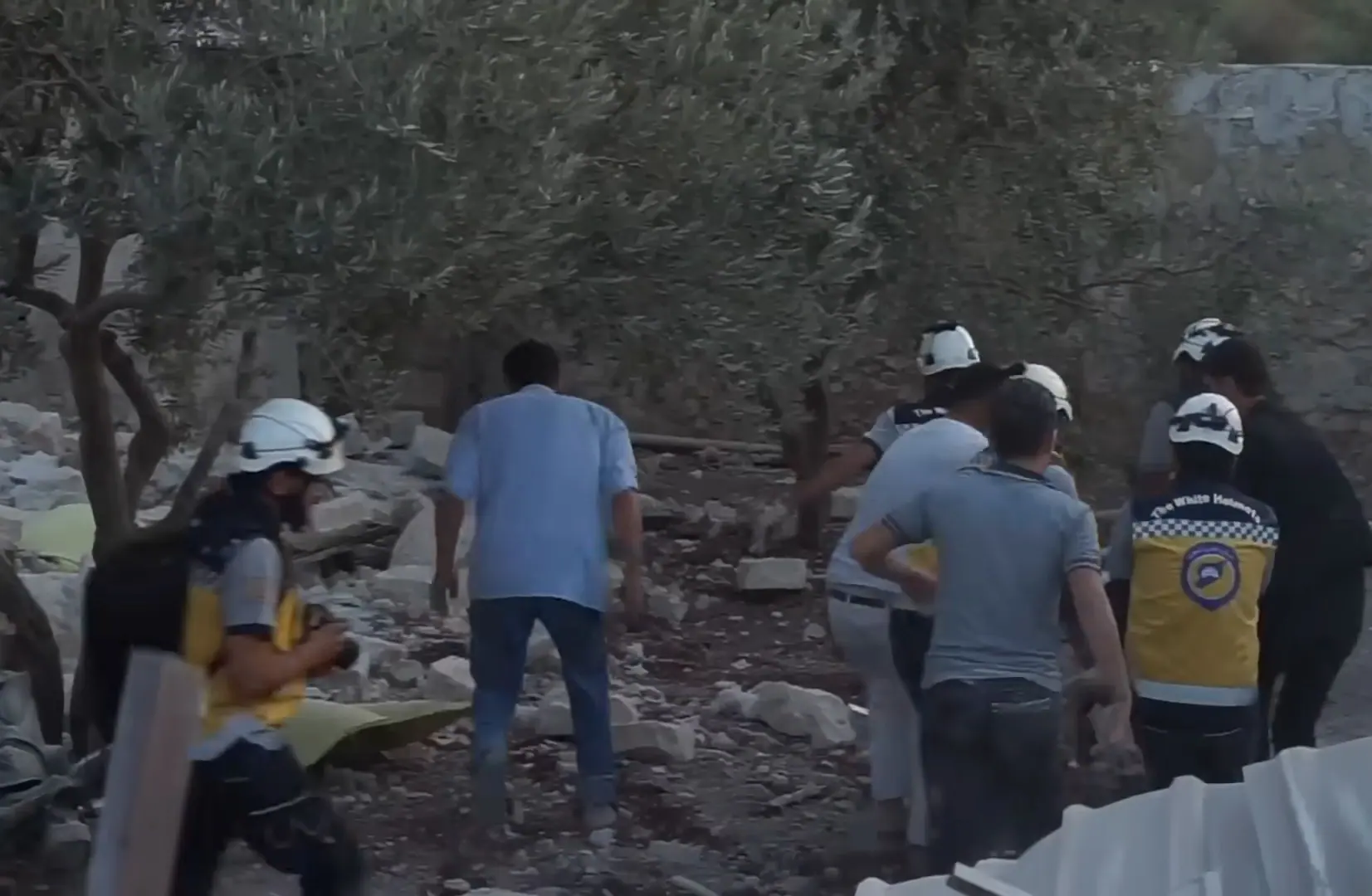
Syria, 2024-12-08 – Syrian White Helmets Extraction
Syria · 2024Voice of America · Public domain · Wikimedia Commons
Syria, 2024-12-08 – Syrian White Helmet Extract
Syria · 2024Voice of America · Public domain · Wikimedia Commons
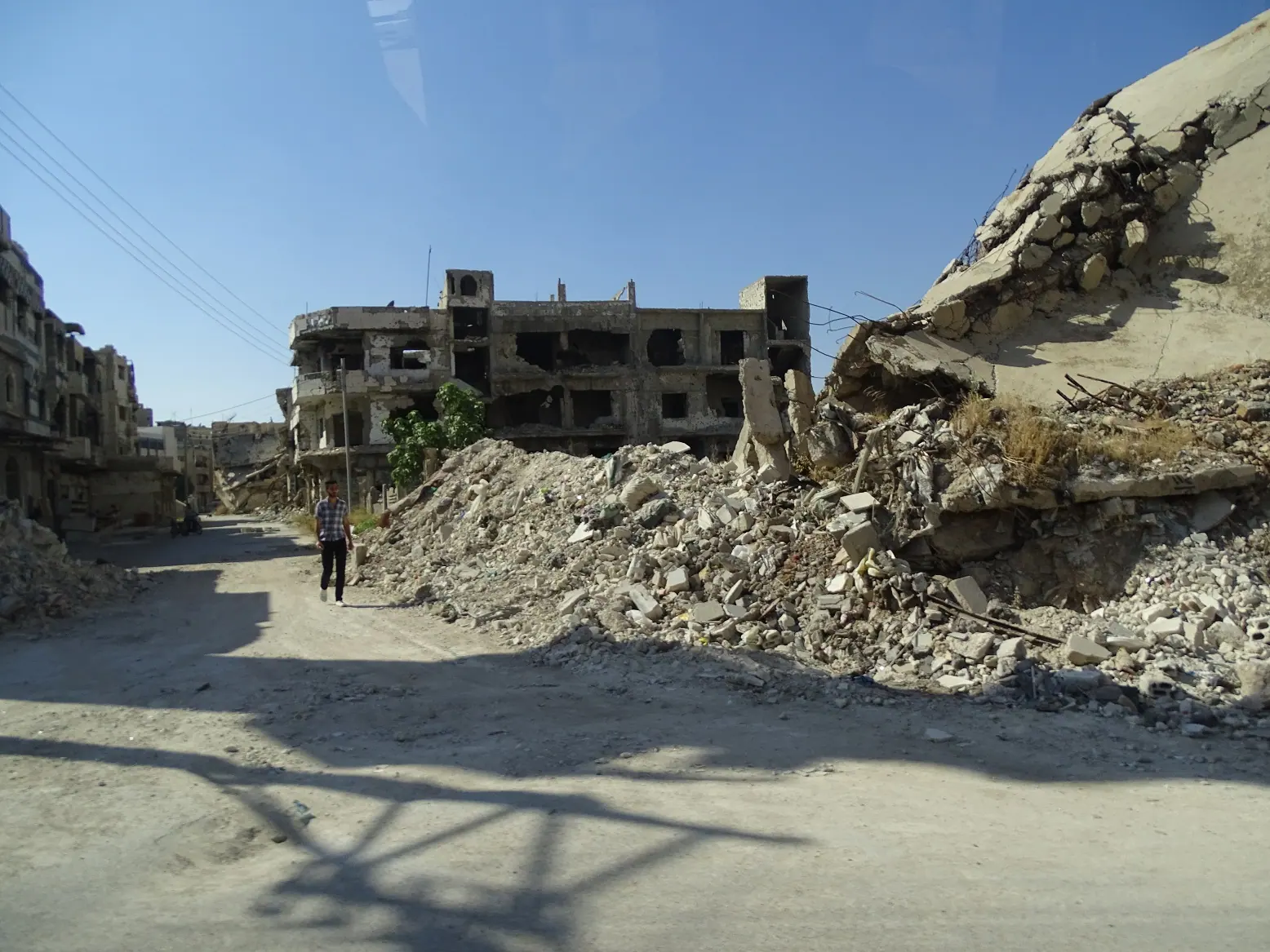
Homs, 2017-06-10 – Homsz háborús nyomai
Homs · 2017Kocsis Fülöp, Hajdúdorogi Főegyházmegye · CC BY-SA 4.0 · Wikimedia Commons
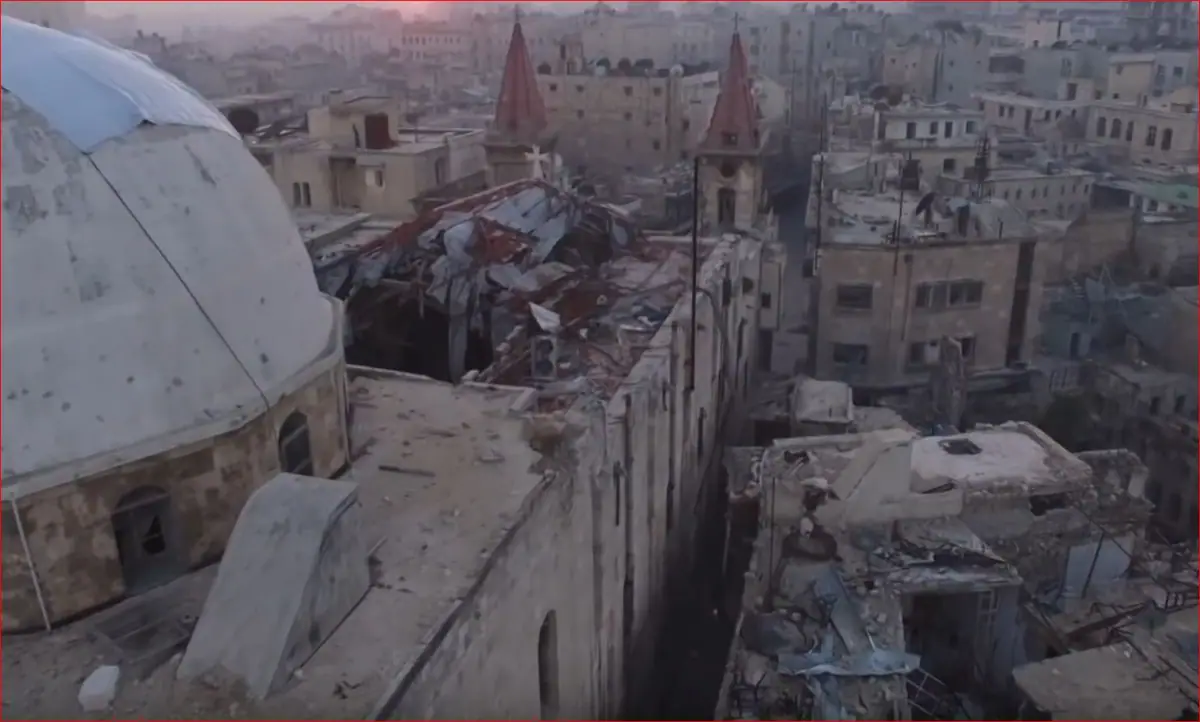
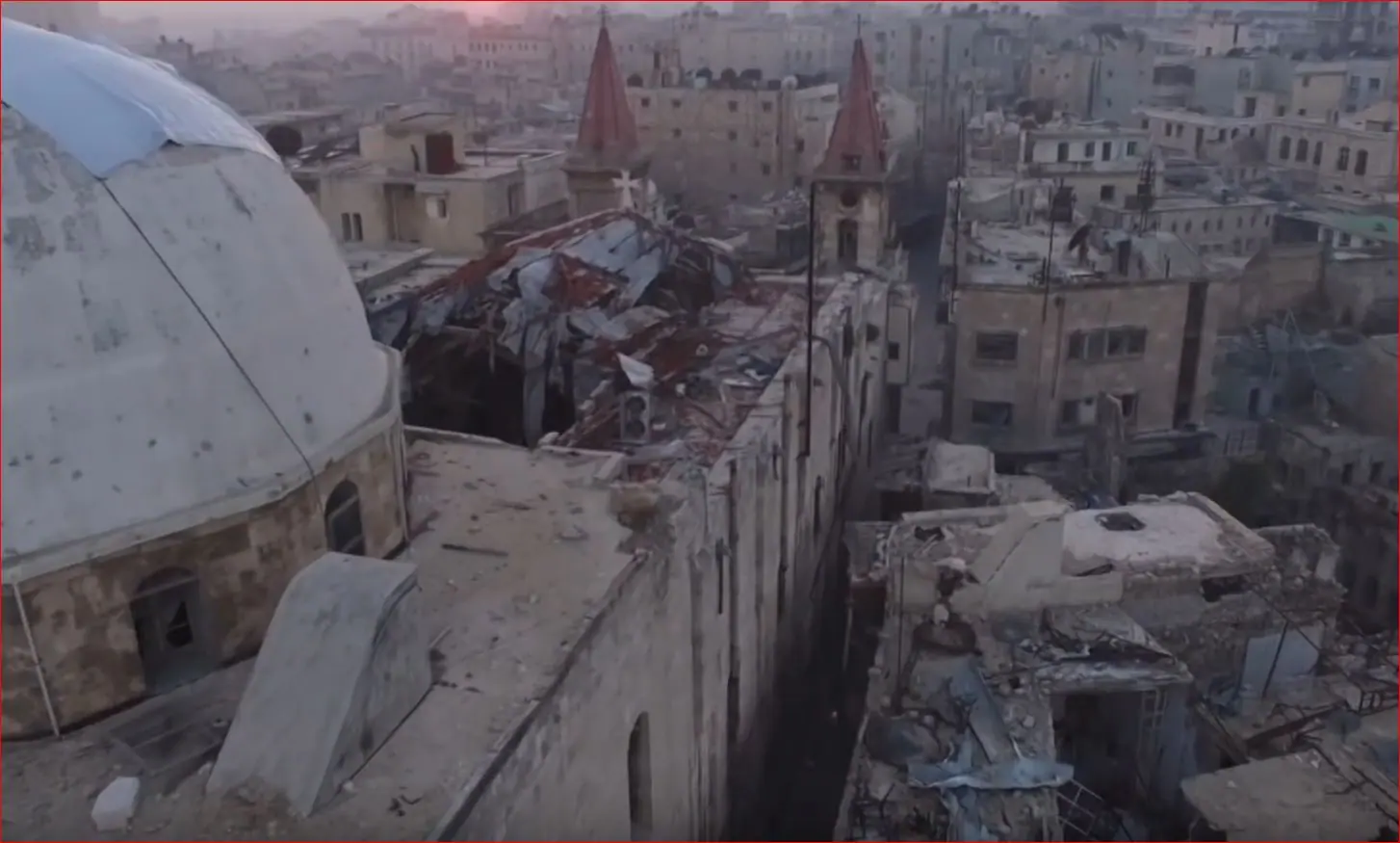
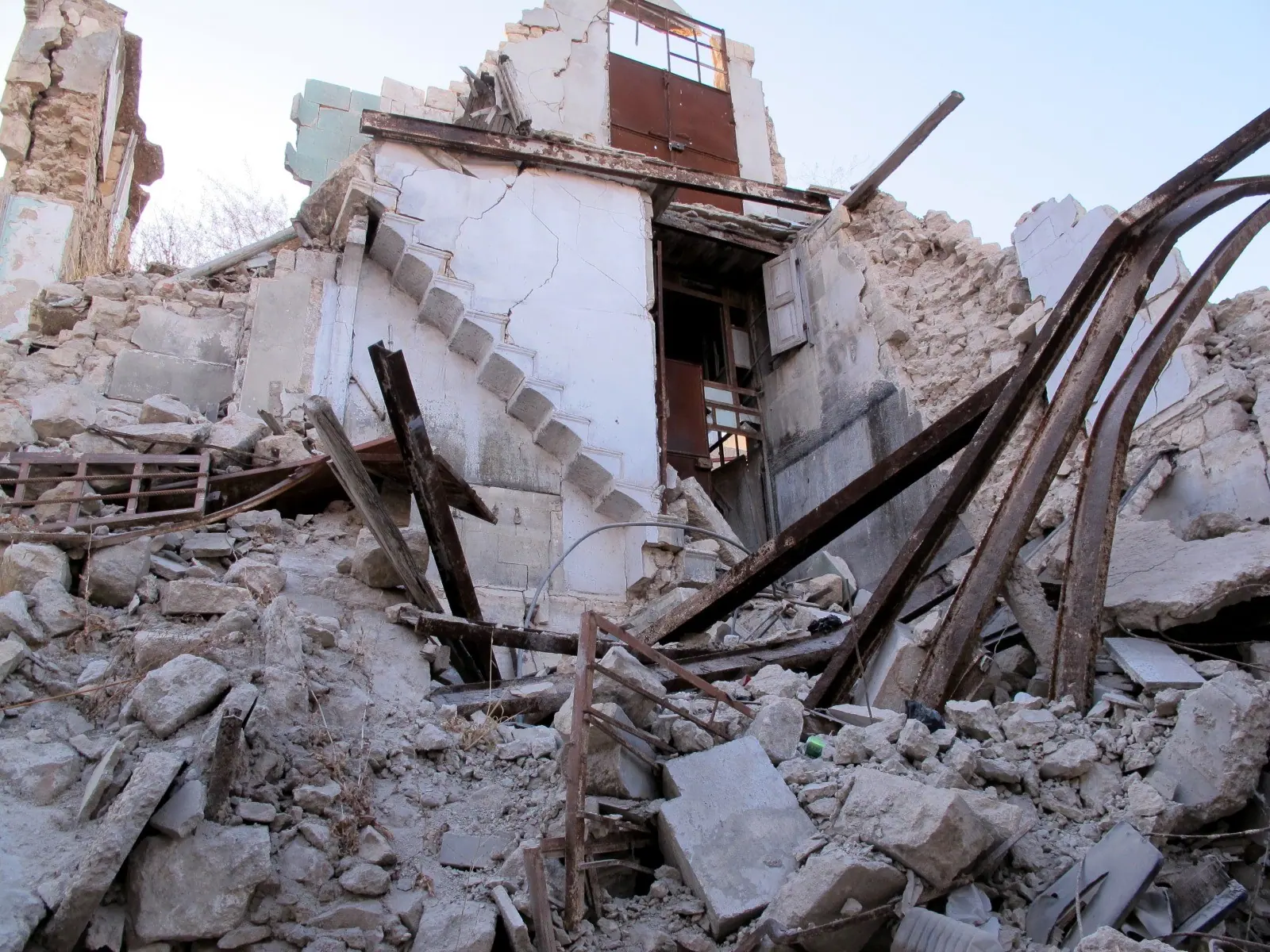
Aleppo, 2016-12-23 – The ruins of Saint Elijah Cathedral in east Aleppo, Old City, December 23st 2016.
Aleppo · 2016Ortho · CC BY-SA 4.0 · Wikimedia Commons
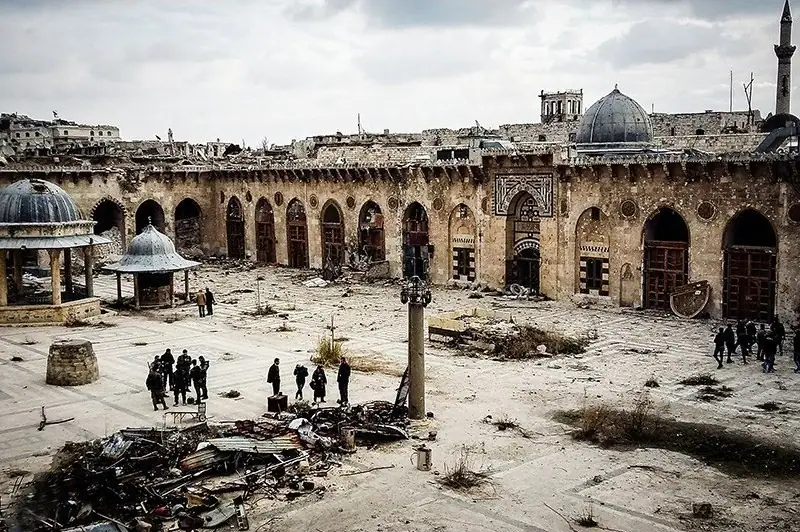
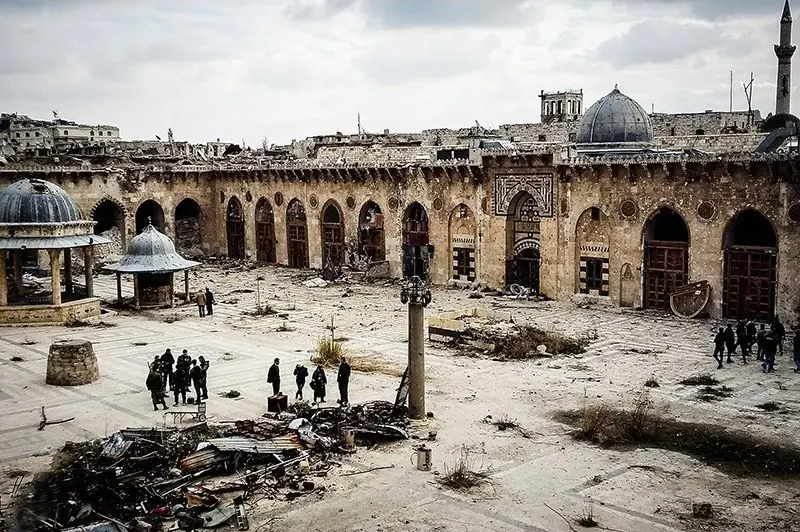
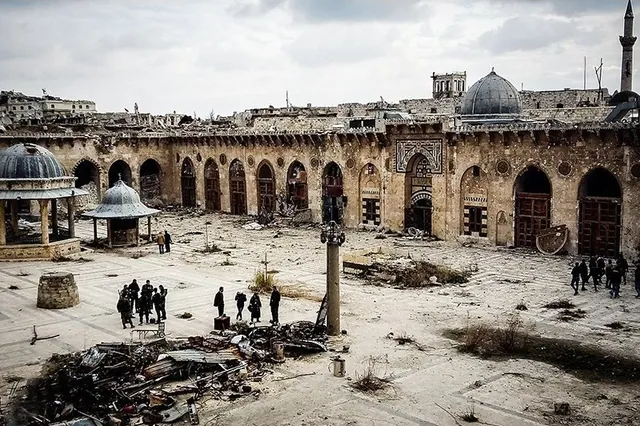
Aleppo, 2016-12-30 – Great Mosque of Aleppo in December 2016
Aleppo · 2016Fathi Nezam from Tasnim News Agency · CC BY 4.0 · Wikimedia Commons
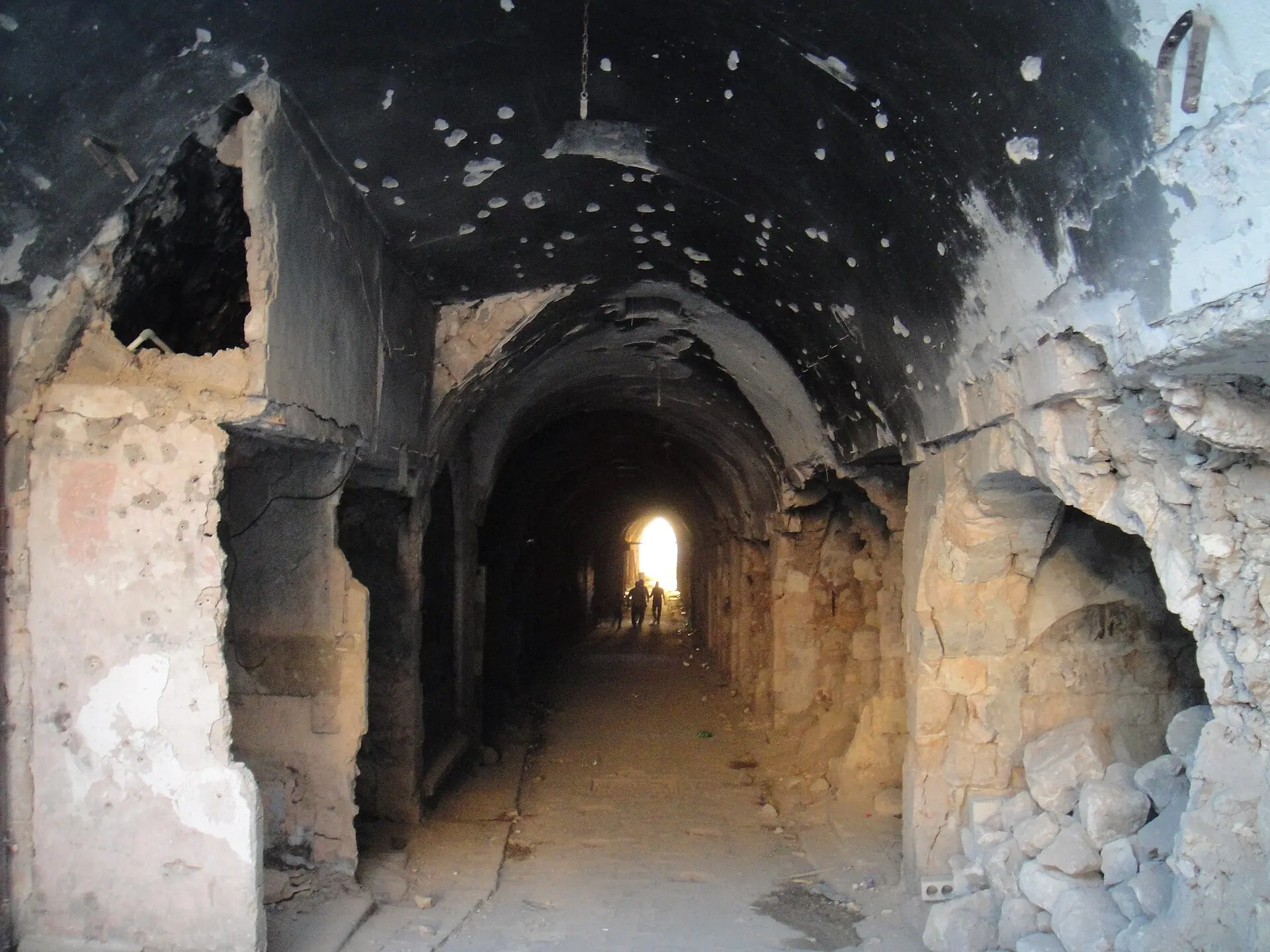
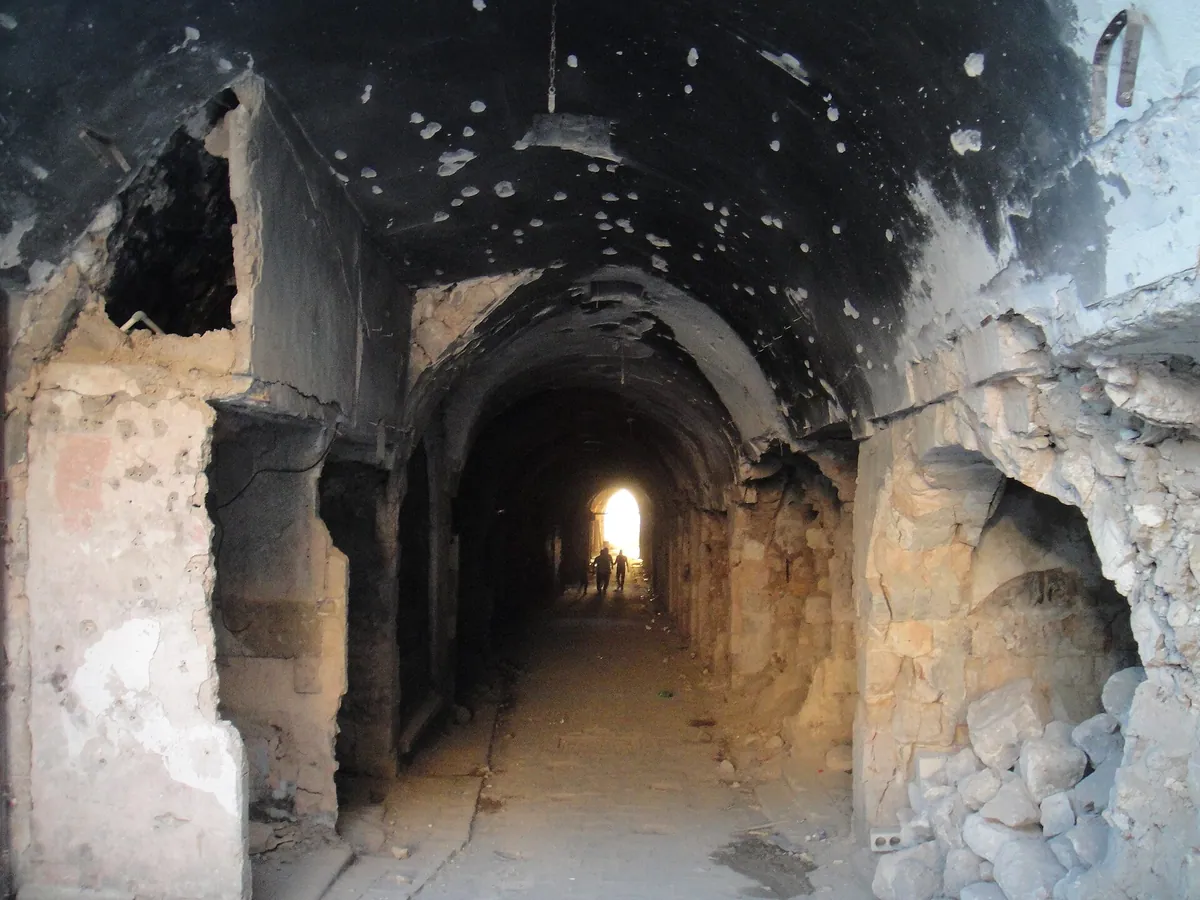
Aleppo, 2018-09-28 – أحد أسواق حلب القديمة وقد دُمر وأُحرق بالكامل جراء الحرب
Aleppo · 2018Hussam.shibli · CC BY-SA 4.0 · Wikimedia Commons
Aleppo, 2019-10-06 – Après les bombardements russes
Aleppo · 2019Cagibi54 · CC BY-SA 4.0 · Wikimedia Commons
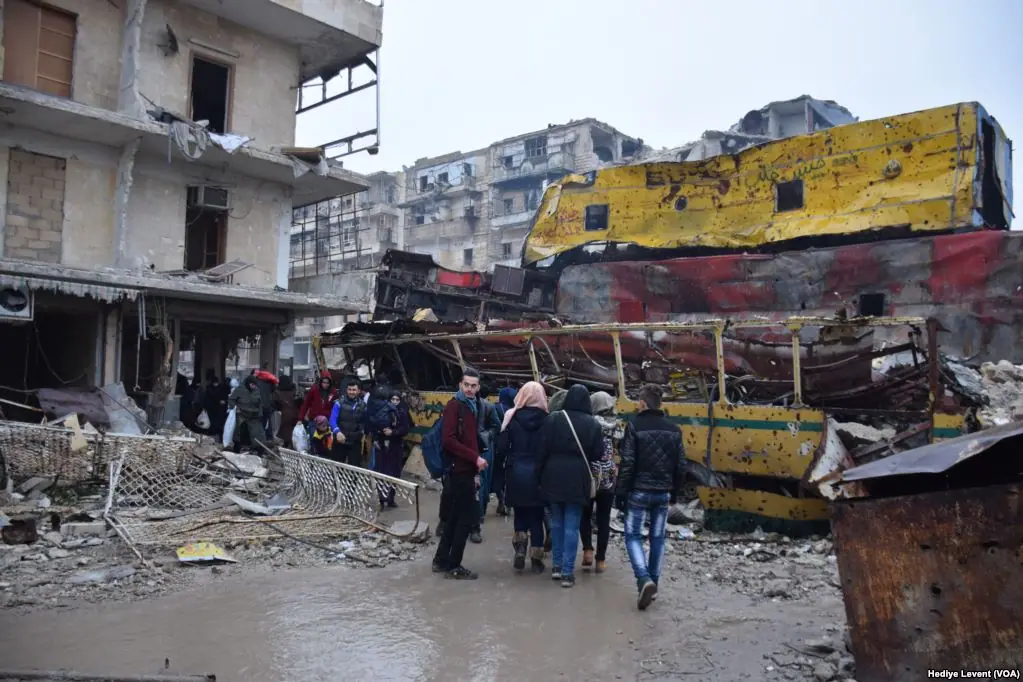
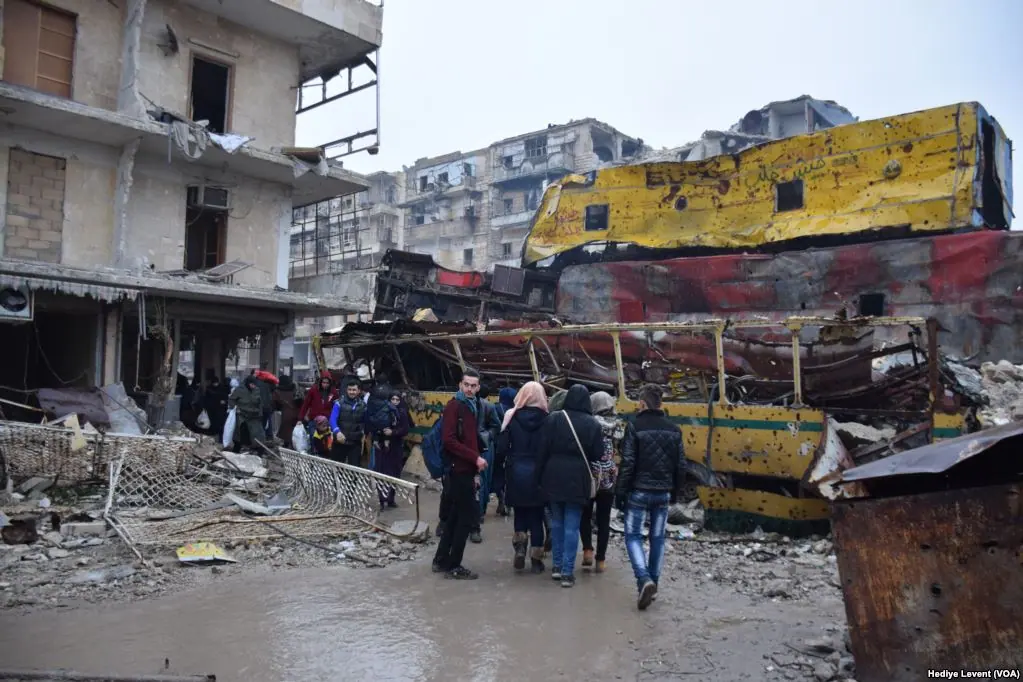
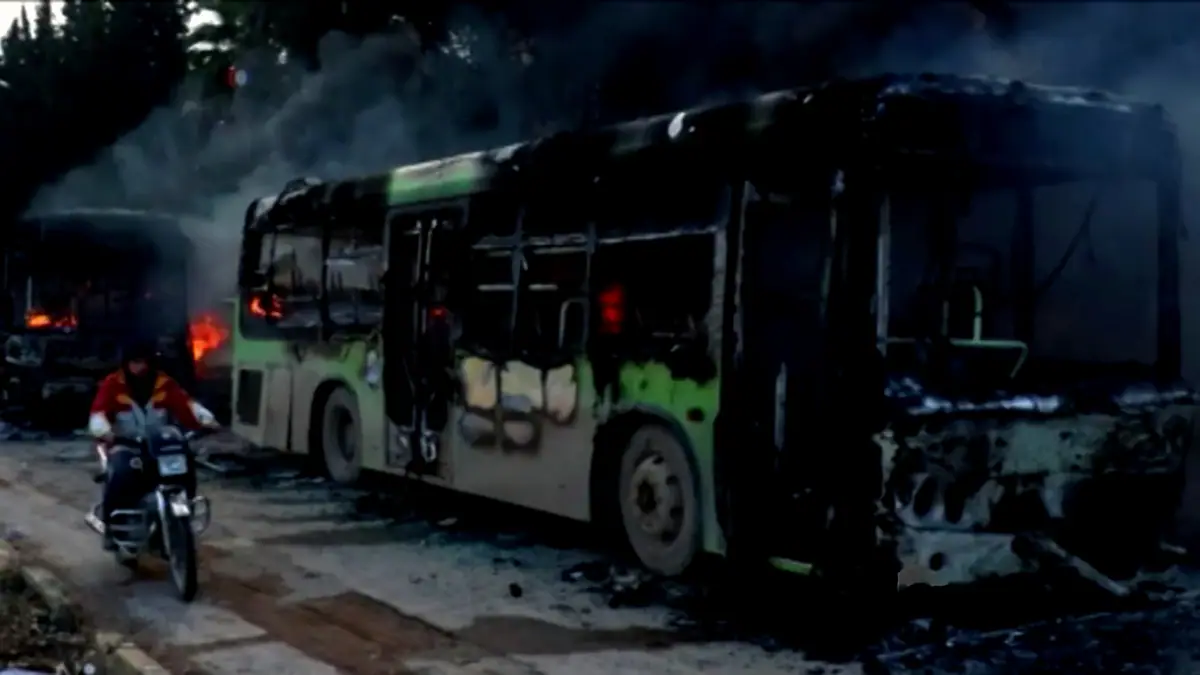
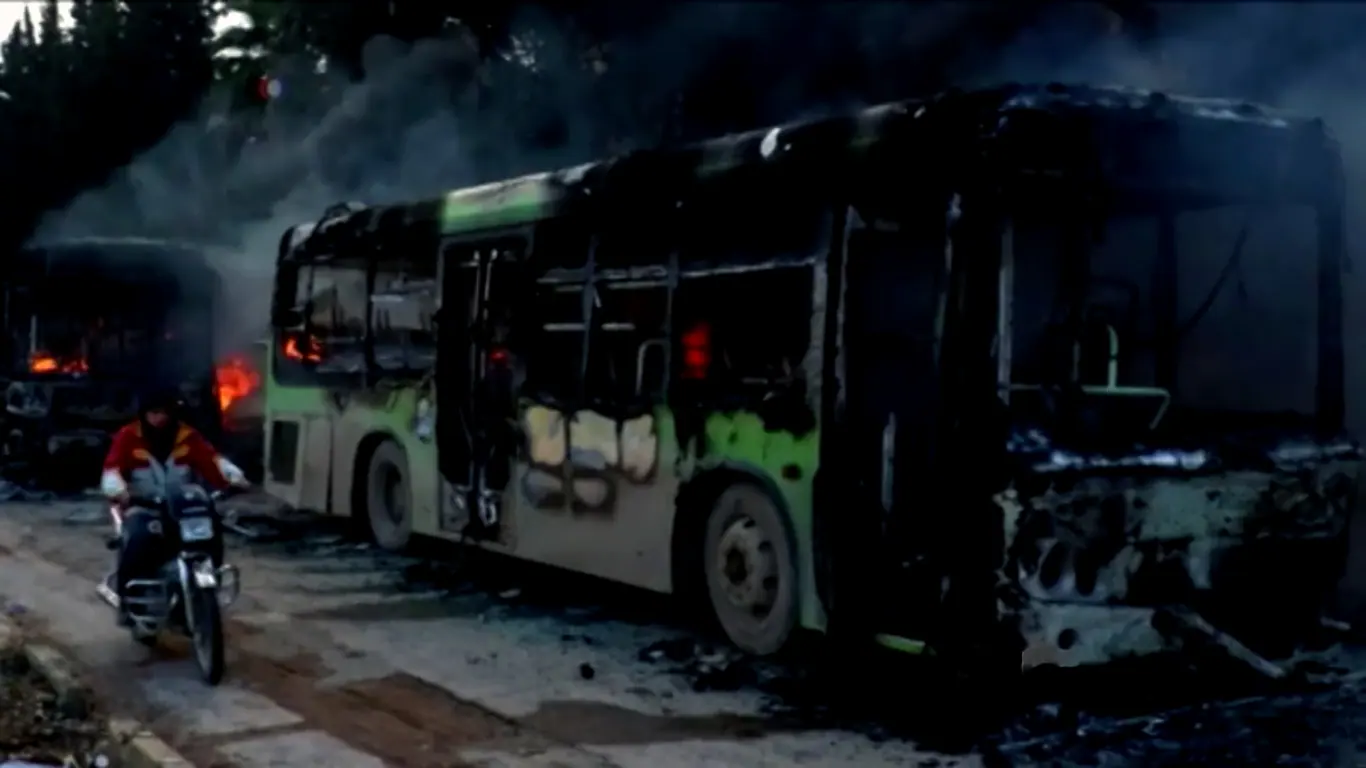
Aleppo, 2016-12-25 – During the evacuation, rebel factions burnt buses meant to evacuate sick and elderly civilians from Aleppo.
Aleppo · 2016VOA News · Public domain · Wikimedia Commons
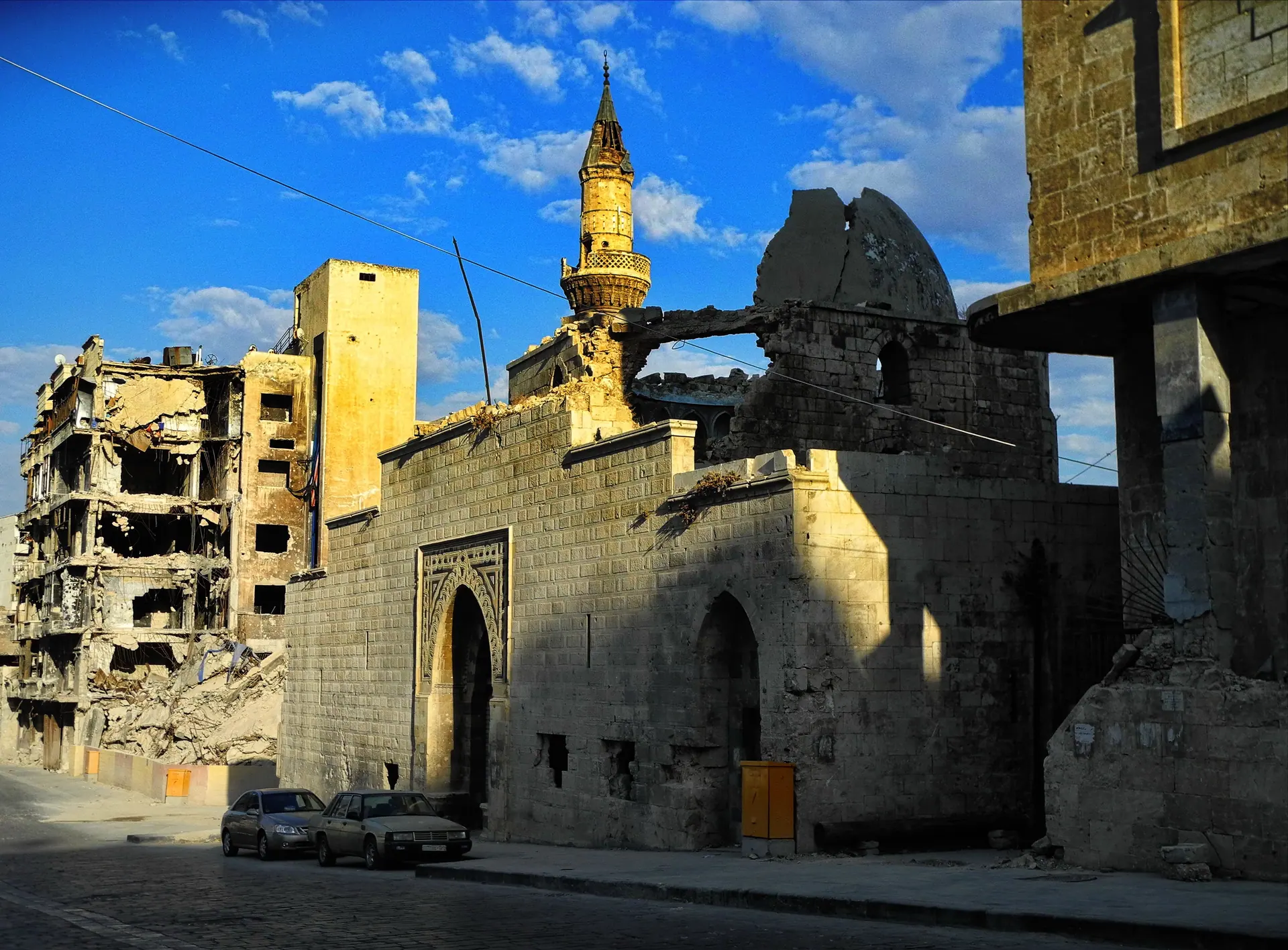
Old City of Aleppo, 2018-08-08
Old City of Aleppo · Aleppo · 2018Modar al mulla · CC BY-SA 4.0 · Wikimedia Commons
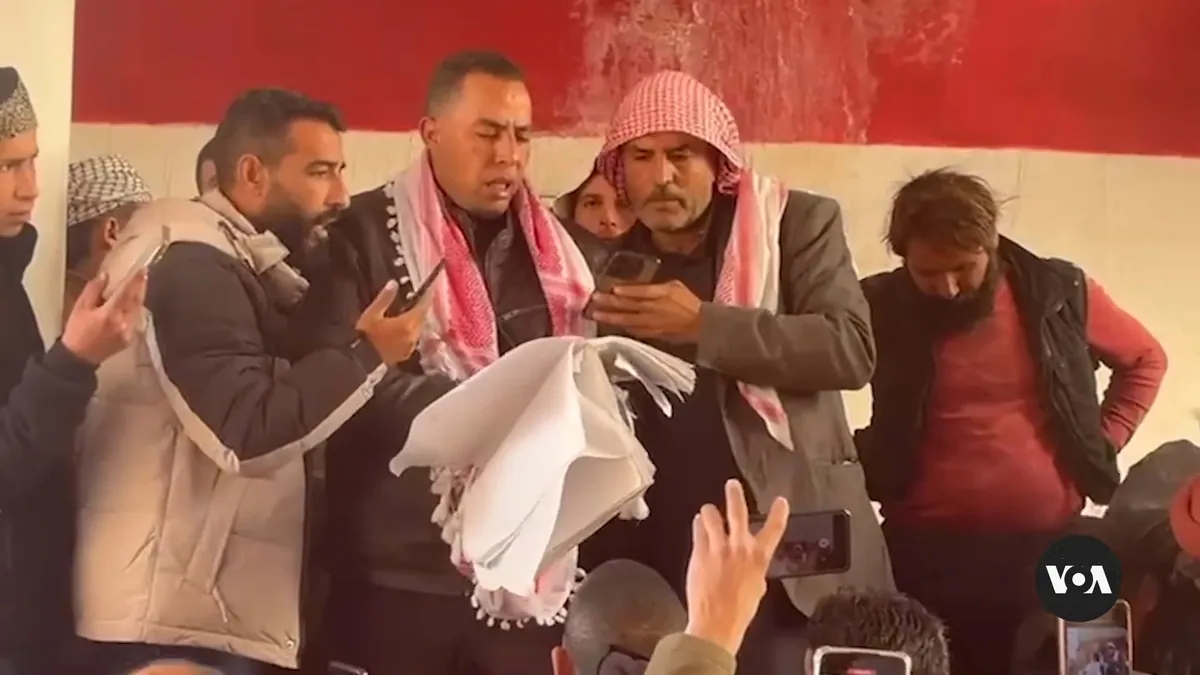
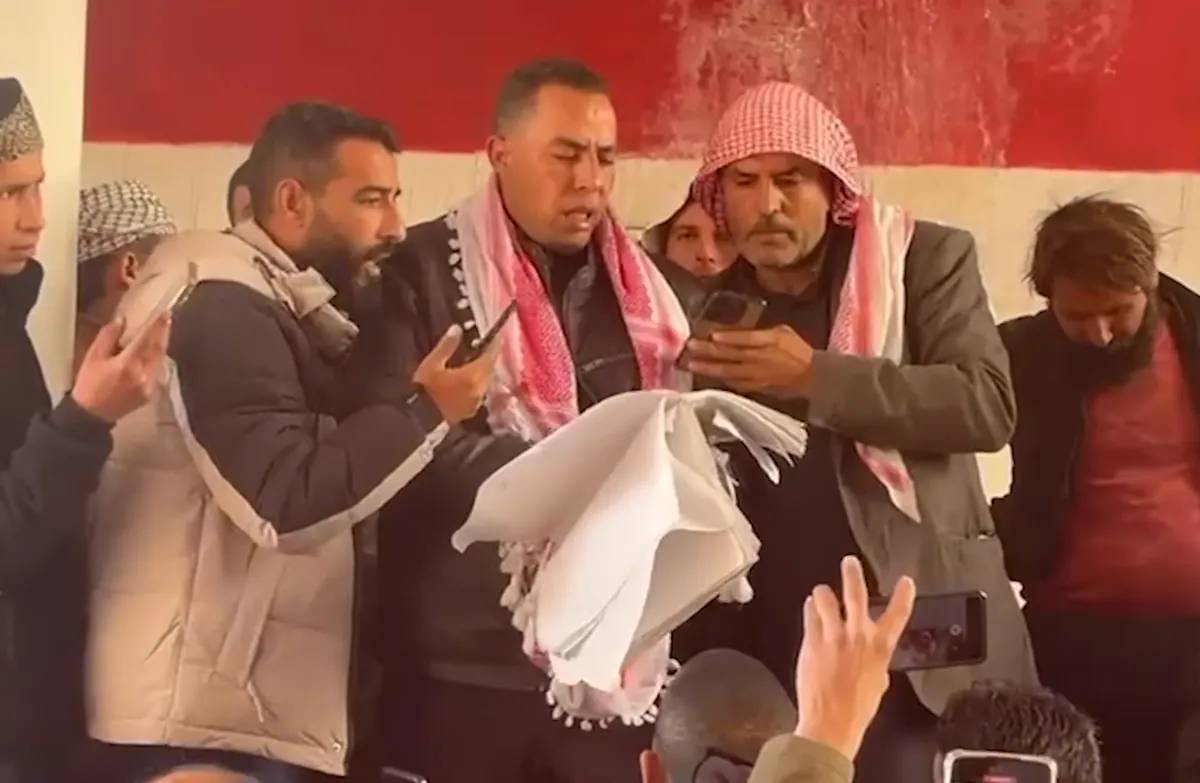
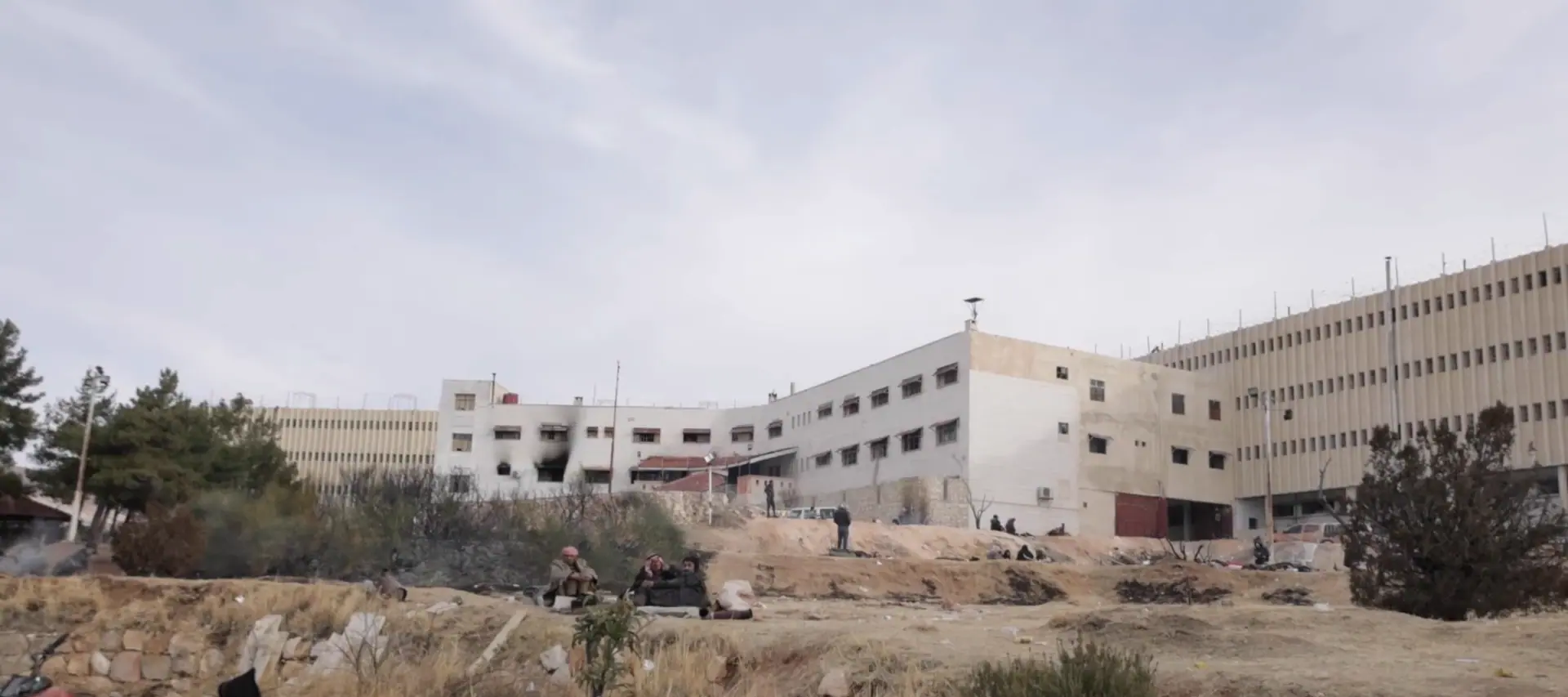
Sednaya, 18 December – Assad's Sednaya prison often last stop in Syrian families’ search
Sednaya · Rif DimaschqVoice of America · Public domain · Wikimedia Commons
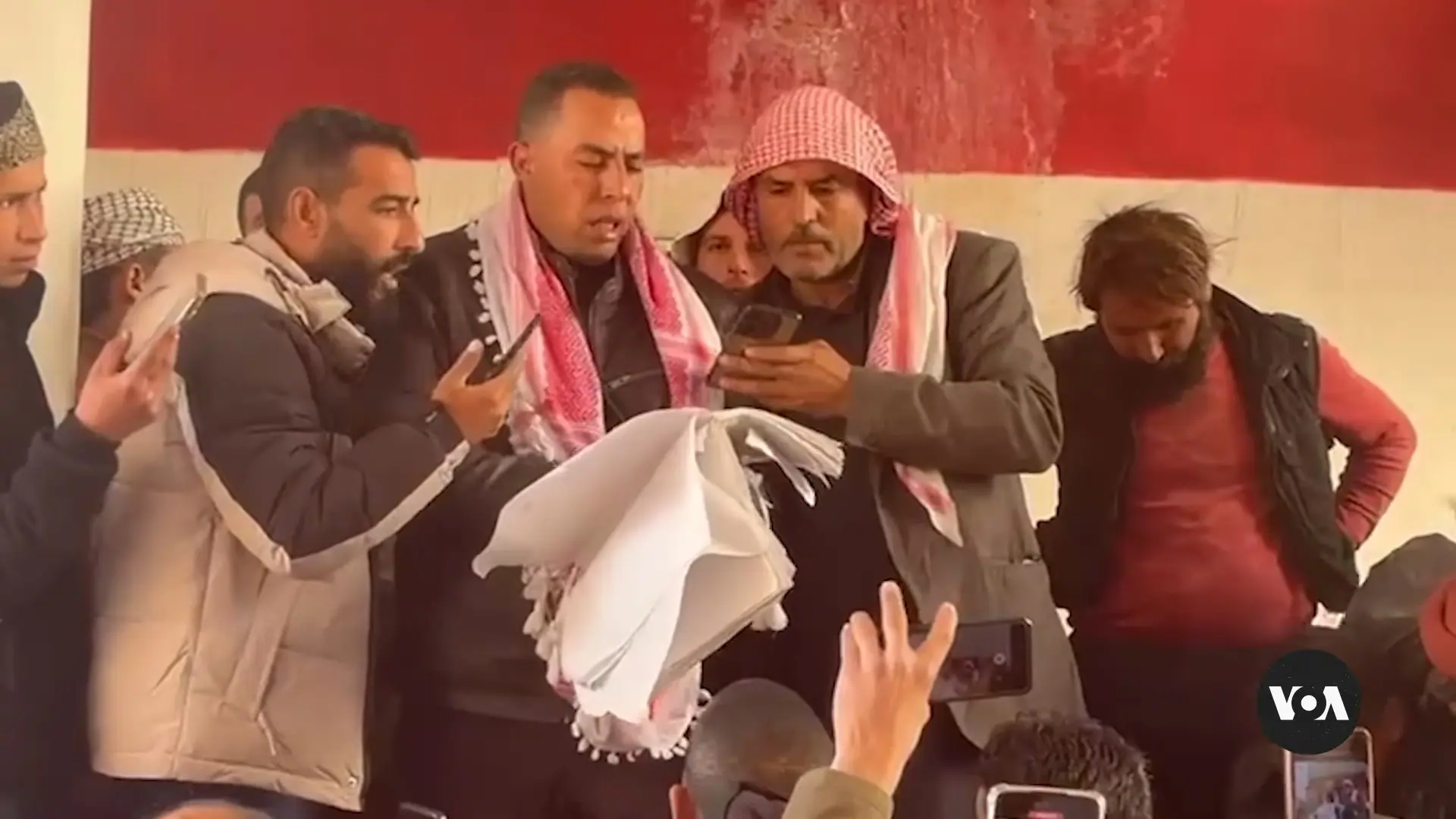
Sednaya, 2024-12-12 – A person reads Sednaya Prison records in search of missing persons, Damascus, Syria.
Sednaya · Rif Dimaschq · 2024Voice of America · Public domain · Wikimedia Commons
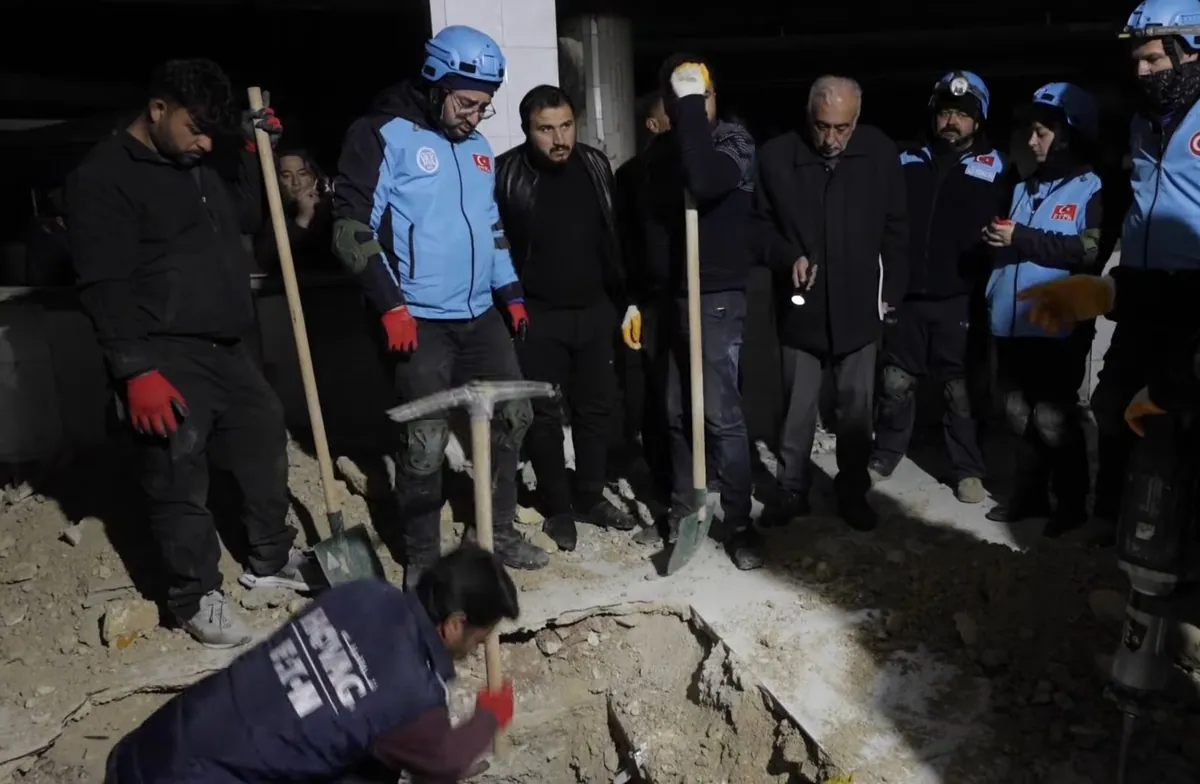
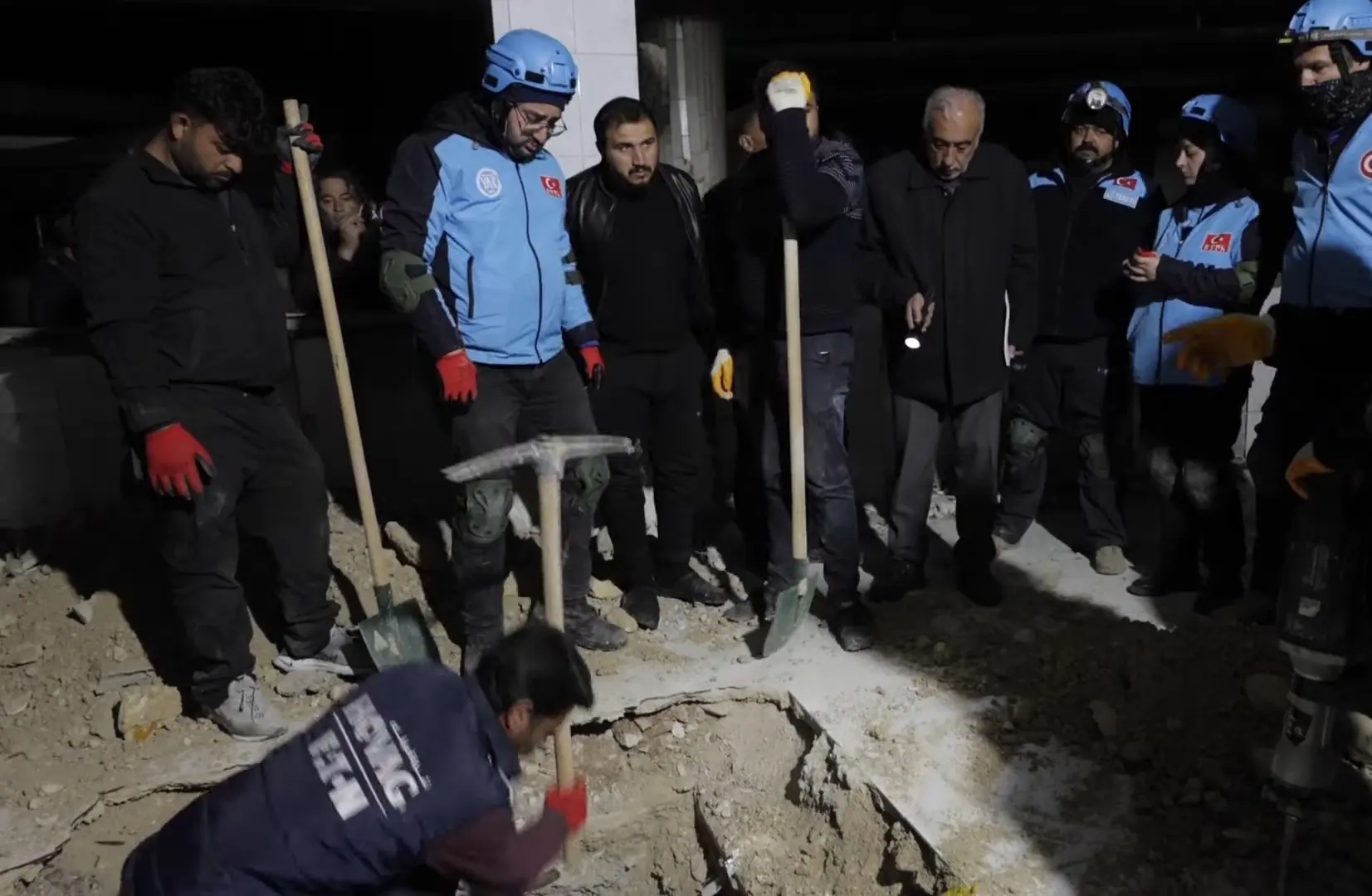
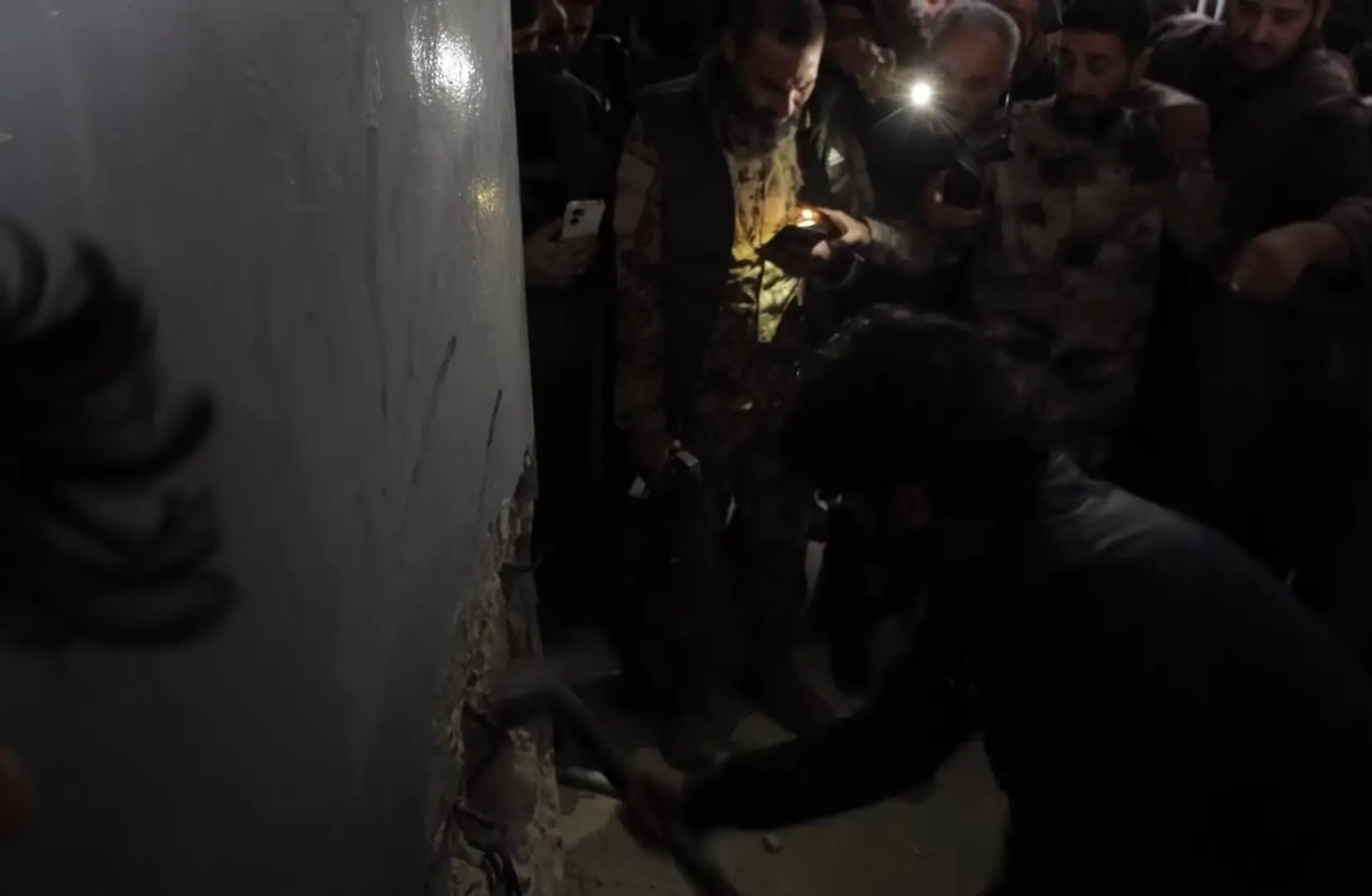
Sednaya, 2024-12-18 – Turkish rescue teams fight against time at Sednaya Prison. Digging through the concrete floors to go to the lower levels at Sednaya prison
Sednaya · Rif Dimaschq · 2024Voice of America · Public domain · Wikimedia Commons
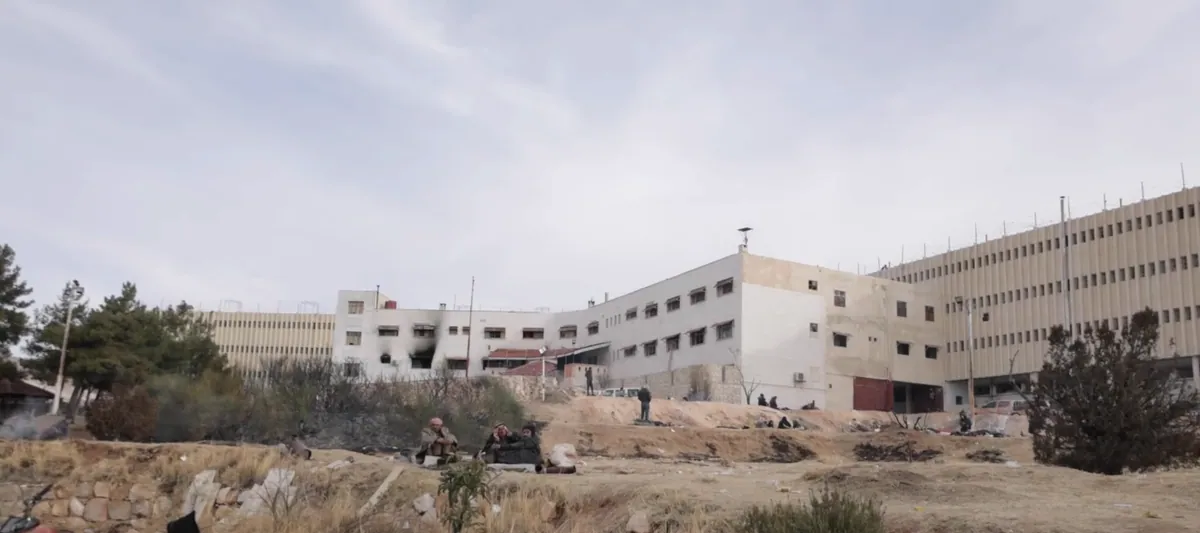
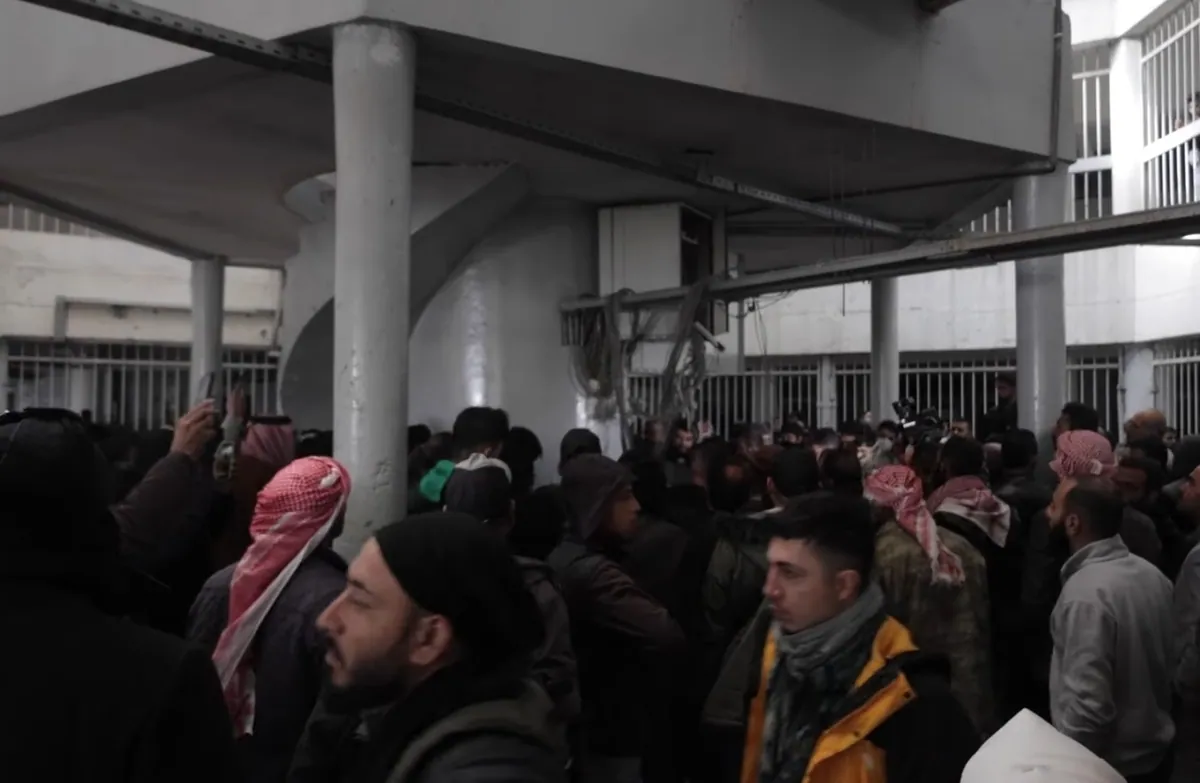
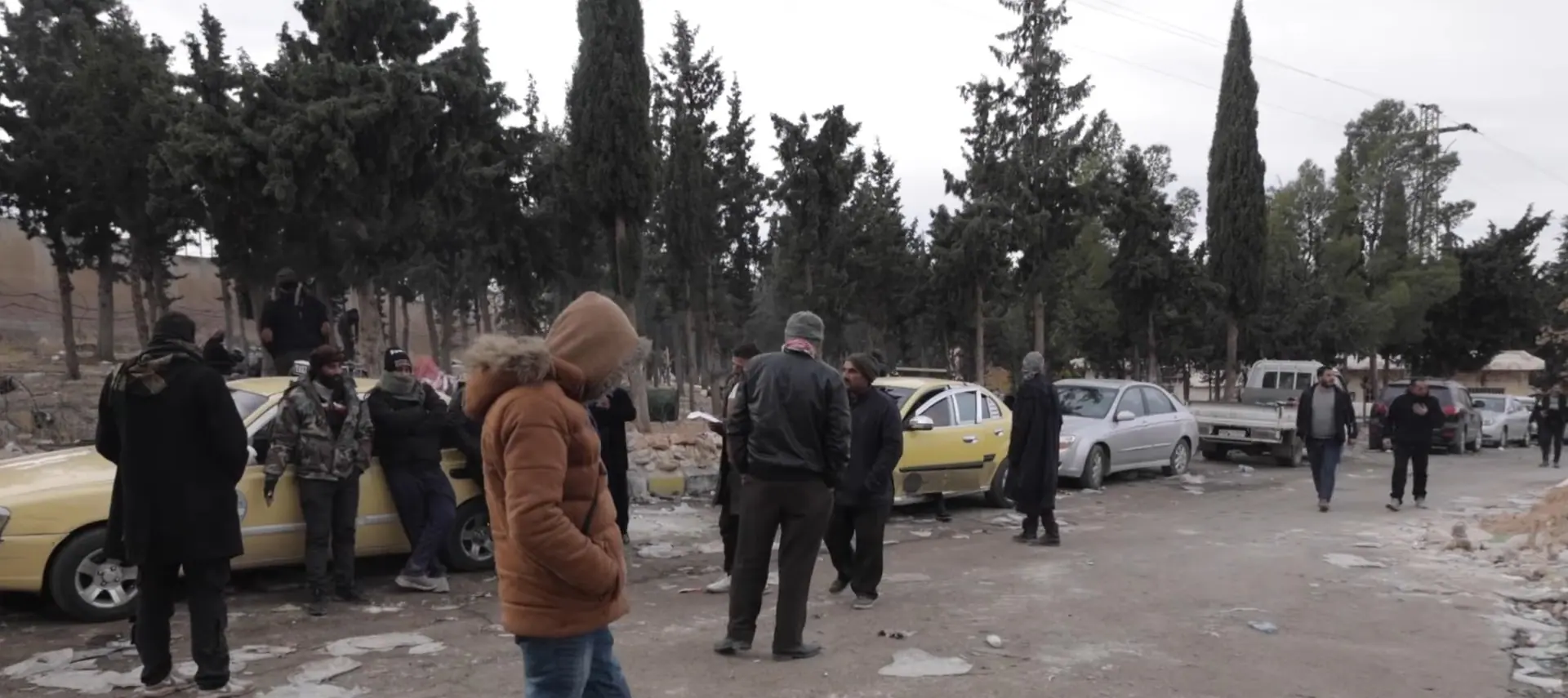
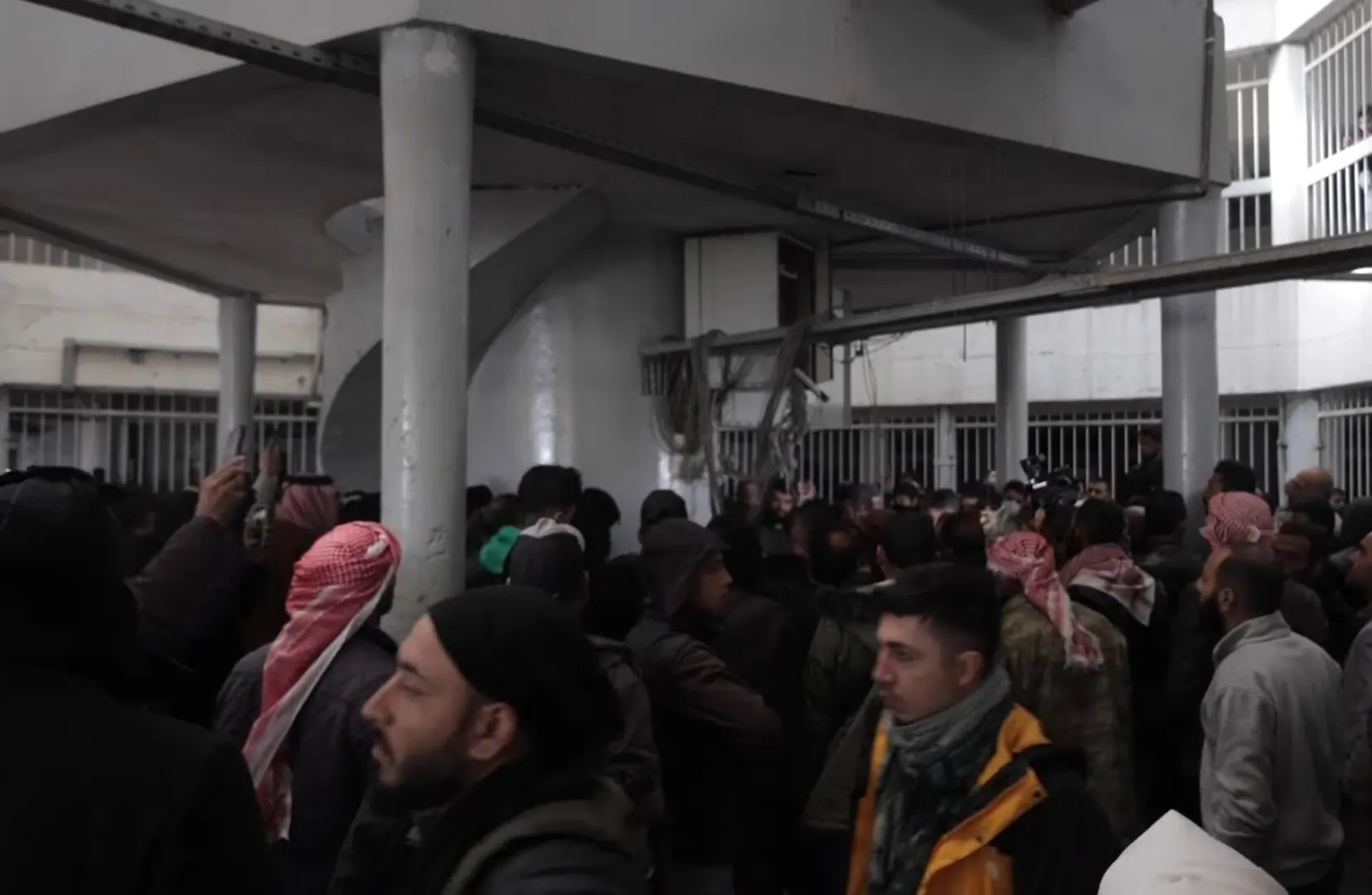
Sednaya, 2024-12-18 – Syrians citizens flock Sednaya Prison to help search effort
Sednaya · Rif Dimaschq · 2024Voice of America · Public domain · Wikimedia Commons
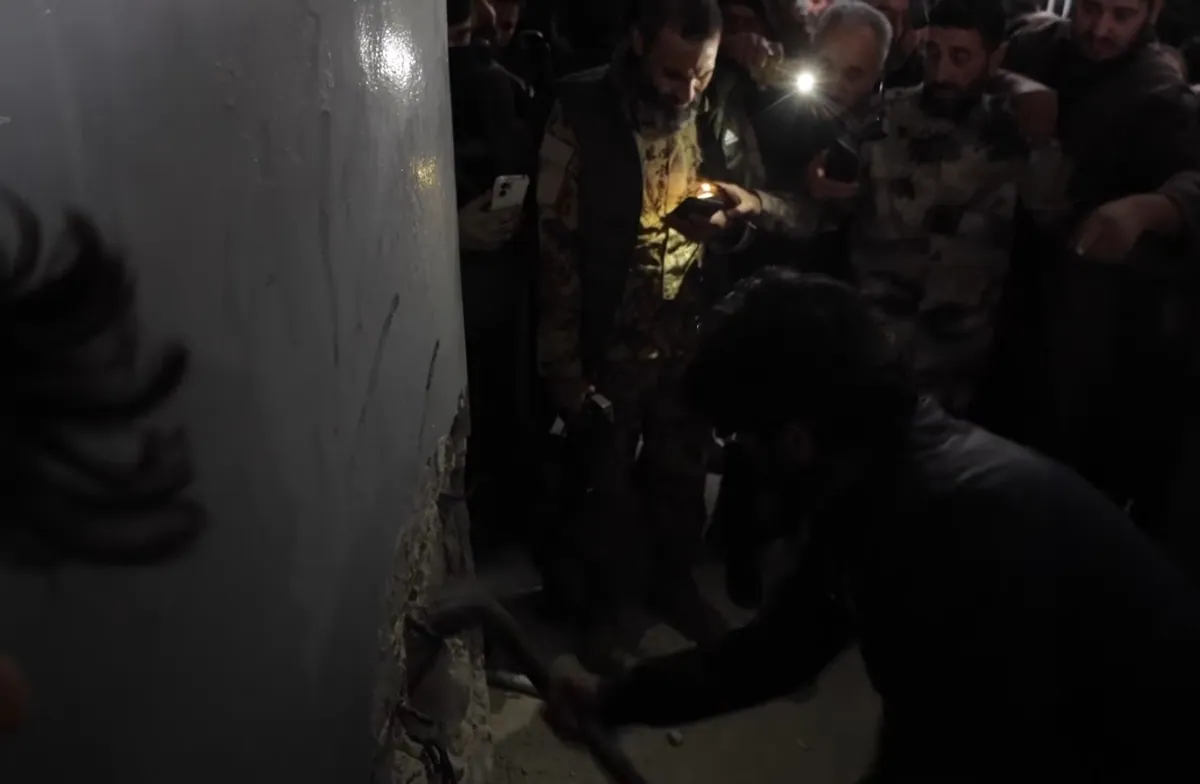
Sednaya, 2024-12-18 – Man attempts to make a hole through concrete at Sednaya Prison to find enclosed rooms
Sednaya · Rif Dimaschq · 2024Voice of America · Public domain · Wikimedia Commons
Sednaya, 2024-12-18 – Assad's Sednaya prison often last stop in Syrian families’ search
Sednaya · Rif Dimaschq · 2024Voice of America · Public domain · Wikimedia Commons
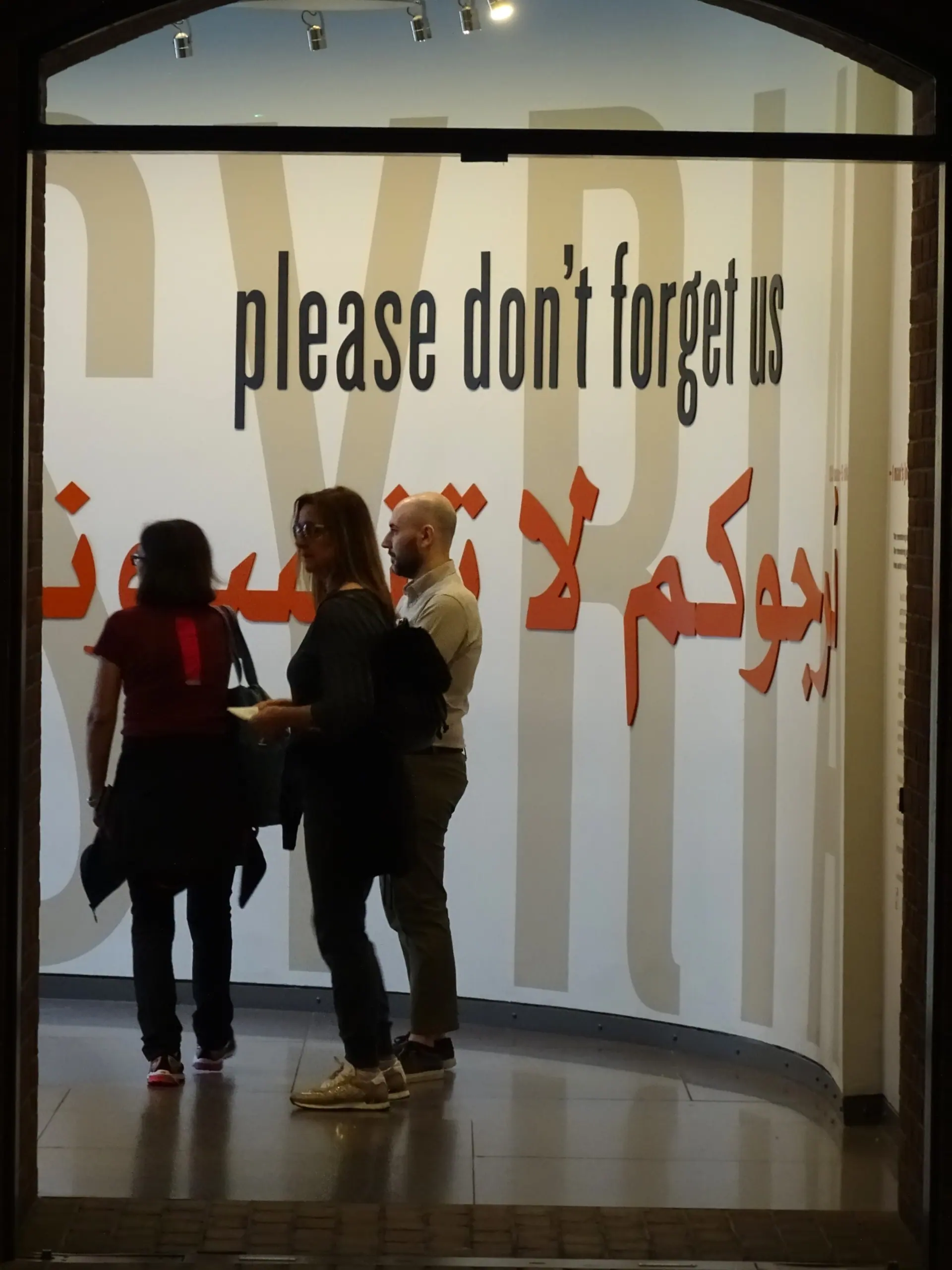
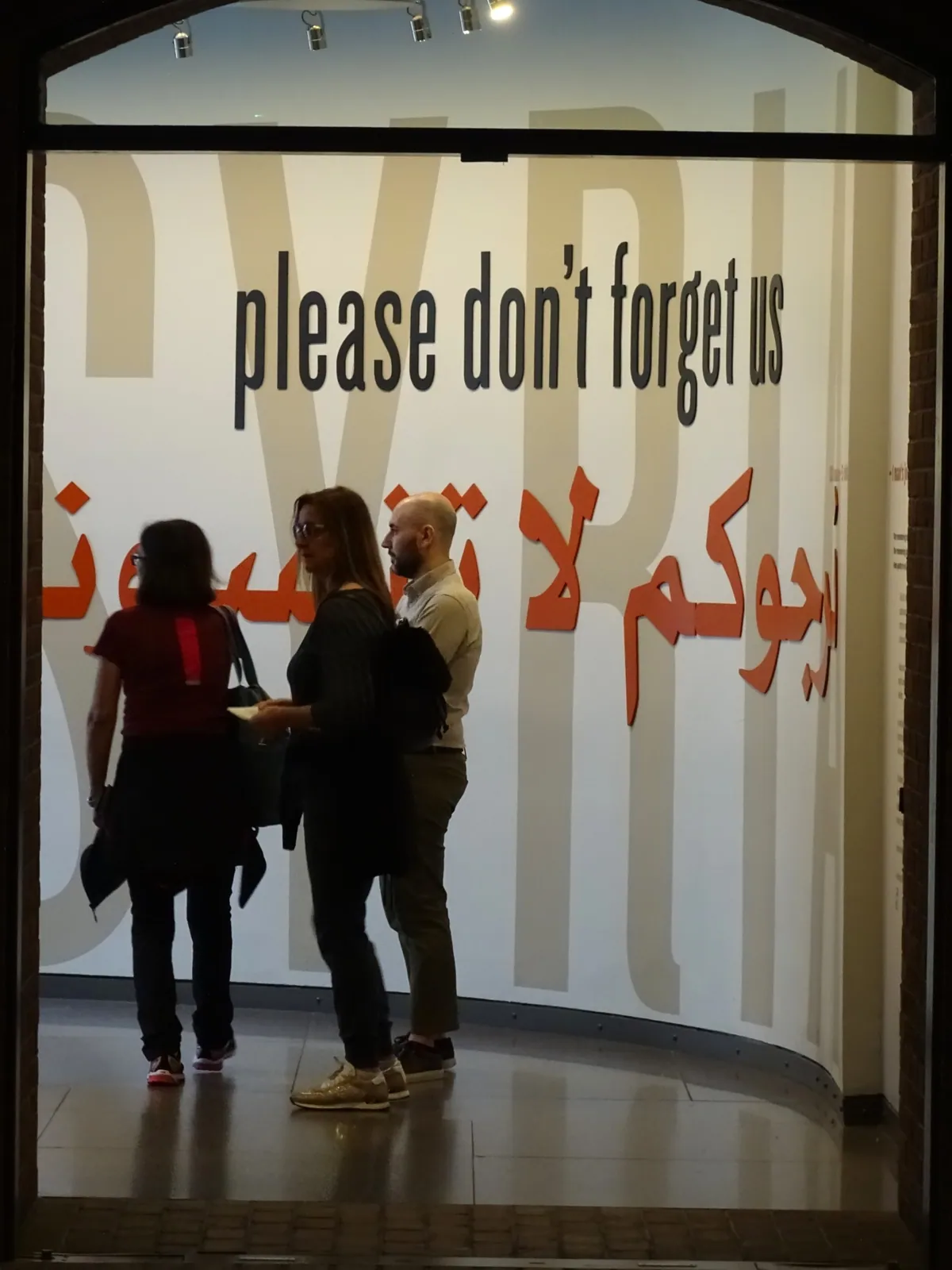
US Holocaust Memorial Museum, Washington (USA), 2019-05-04 – Please Don't Forget Us - Syria Exhibit at US Holocaust Memorial Museum - Washington - DC - USA
US Holocaust Memorial Museum, Washington · Vereinigte Staaten · 2019Adam Jones from Kelowna, BC, Canada · CC BY-SA 2.0 · Wikimedia Commons

Sarin-Angriff auf Ghuta

Quelle: UN News

Sarin-Angriff auf Chan Schaichun

Quelle: OPCW

Chlorangriff auf Duma (den syrischen Luftstreitkräften zugeschrieben)

Quelle: The Spokesman-Review / Associated Press
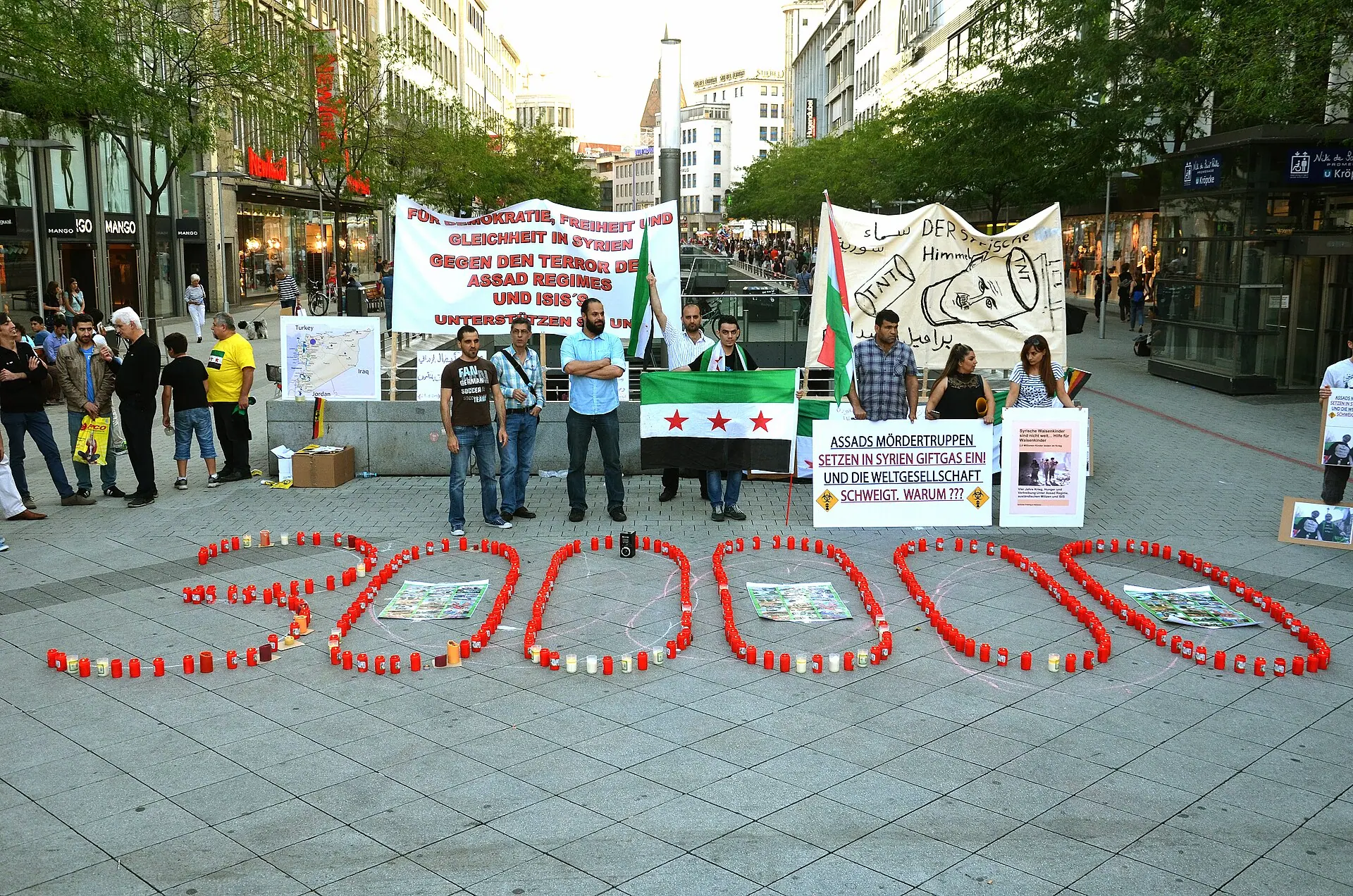
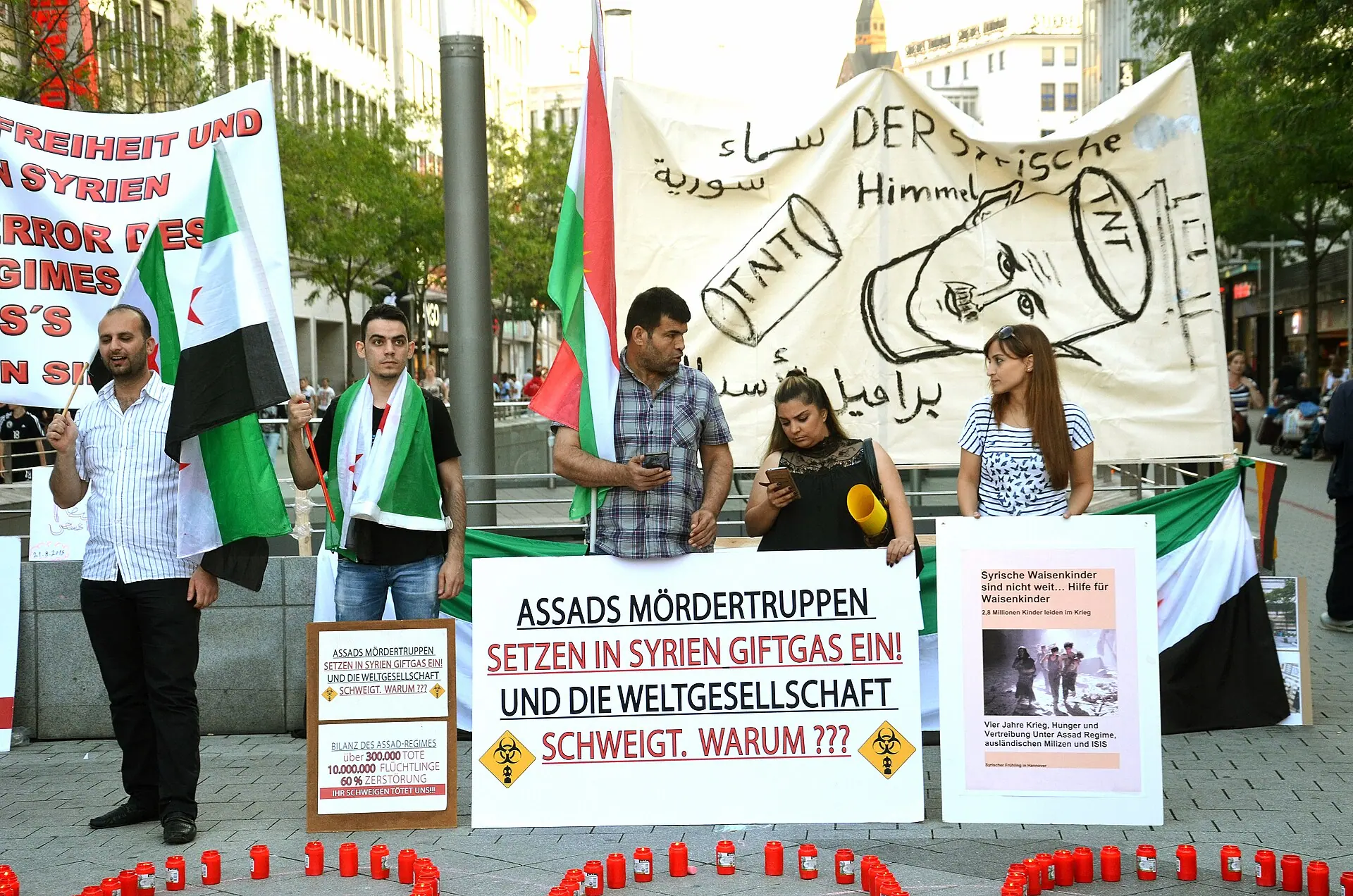
Hannover (Deutschland), 2015-08-21 – On August, 21th 2015 members of the Syrian community of Hannover remembered to the Ghouta chemical attack during the Syrian Civil War ...
Hannover · Deutschland · 2015Foto: Bernd Schwabe · CC BY-SA 4.0 · Wikimedia Commons
Hannover (Deutschland), 2015-08-21 – On August, 21th 2015 members of the Syrian community of Hannover remembered to the Ghouta chemical attack during the Syrian Civil War ...
Hannover · Deutschland · 2015Foto: Bernd Schwabe · CC BY-SA 4.0 · Wikimedia Commons
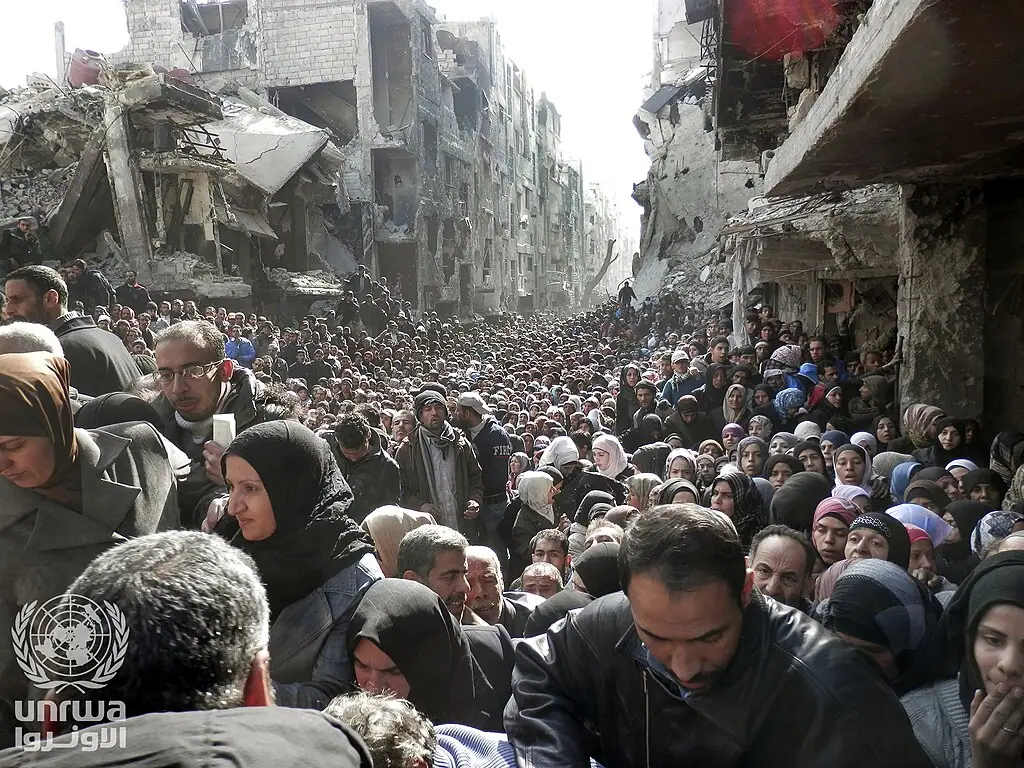
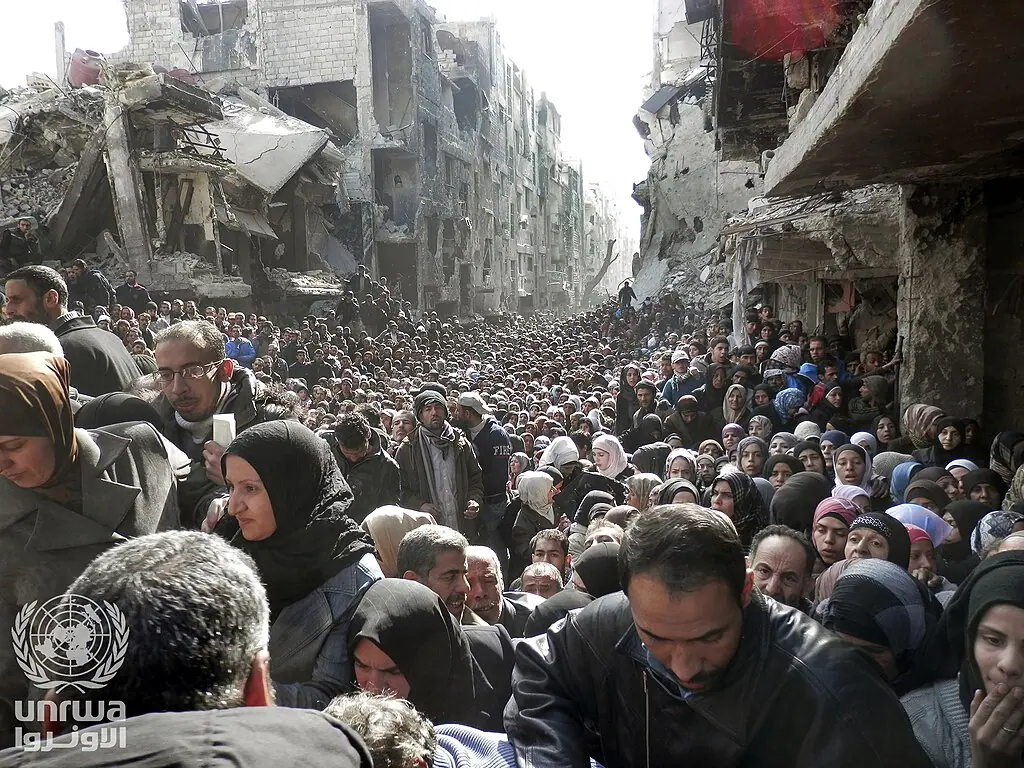
Yarmouk (Damaskus), 2014-01-31 – In January 2014, UNRWA was able to complete its first humanitarian distribution in Yarmouk, Syria, after almost six months of siege. Thousan
Yarmouk · Damaskus · 2014UNRWA Archive Photographer Unknown · CC BY-SA 3.0 igo · Wikimedia Commons
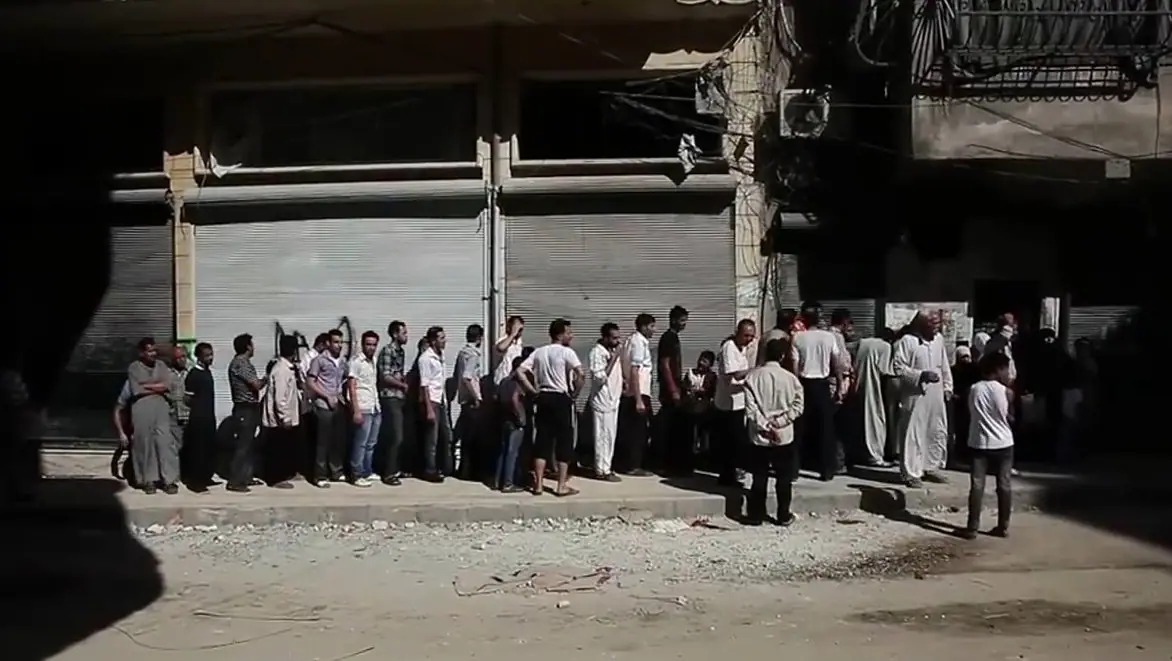
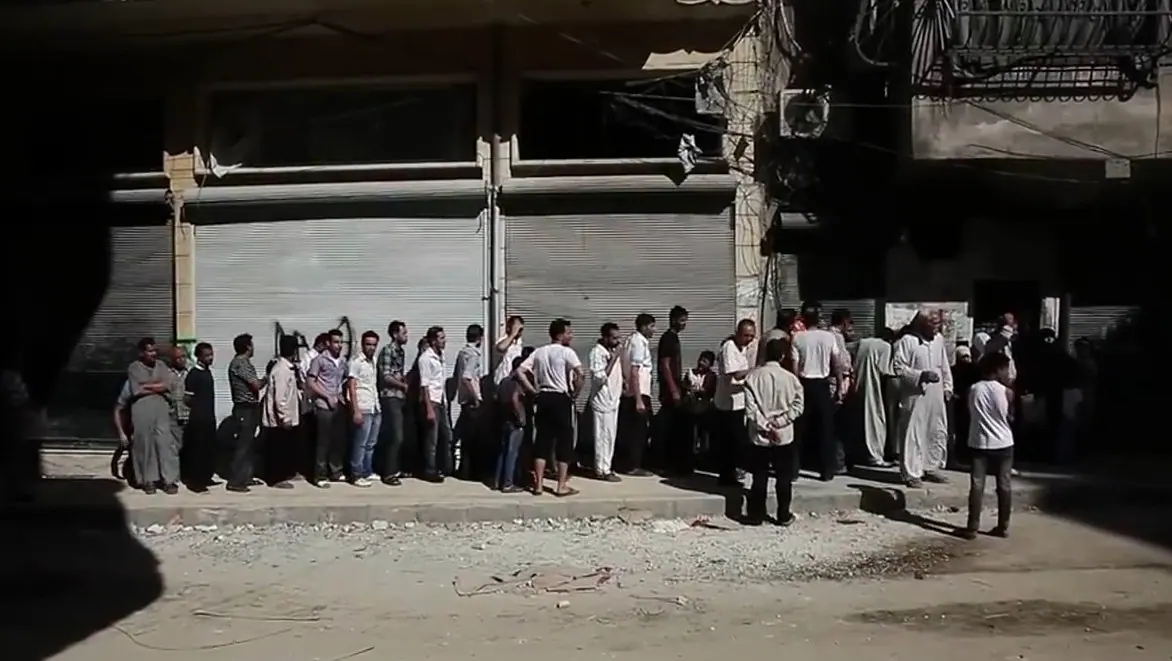
Aleppo, 2012-10-06 – Aleppians waiting in a bread line during the Syrian civil war.
Aleppo · 2012Voice of America News: Scott Bobb reports from Aleppo, Syria · Public domain · Wikimedia Commons
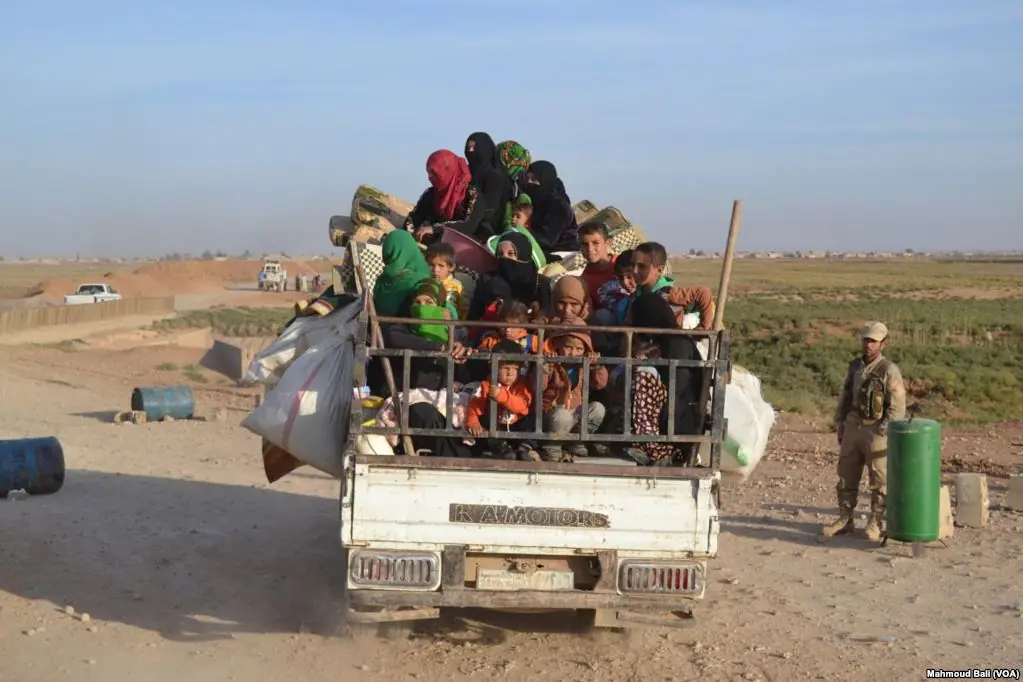
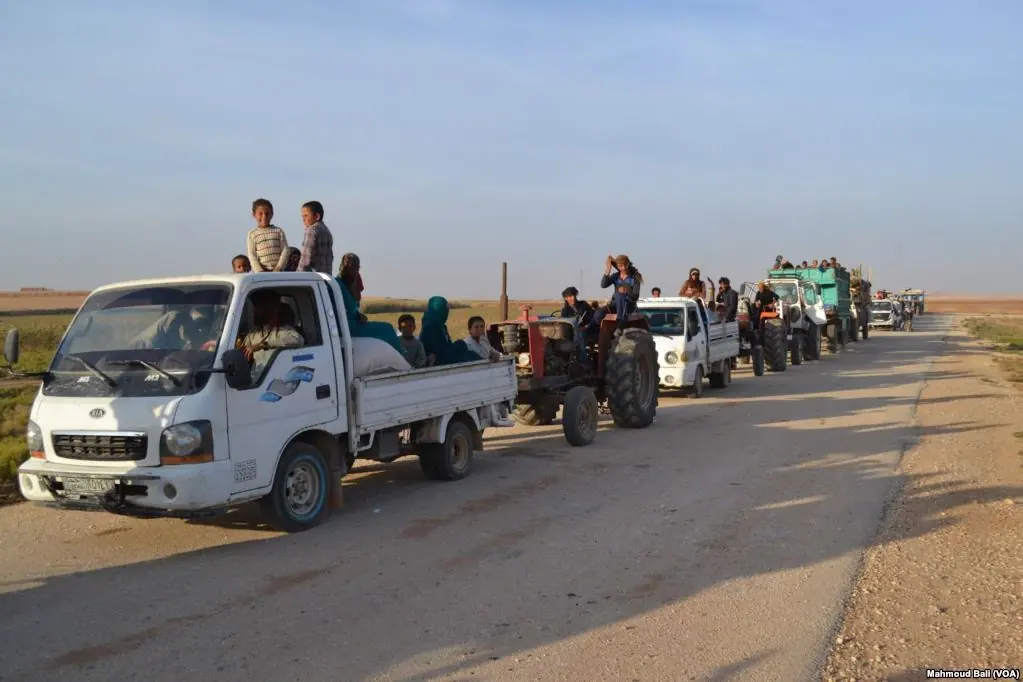
Raqqa, 2017-12-08 – Civils de Raqqa fuyant les combats, novembre 2016.
ar-Raqqa · 2017Mahmud Balî (VOA) · Public domain · Wikimedia Commons
Raqqa, 2017-12-08 – Civils de Raqqa fuyant les combats, novembre 2016.
ar-Raqqa · 2017Mahmud Balî (VOA) · Public domain · Wikimedia Commons
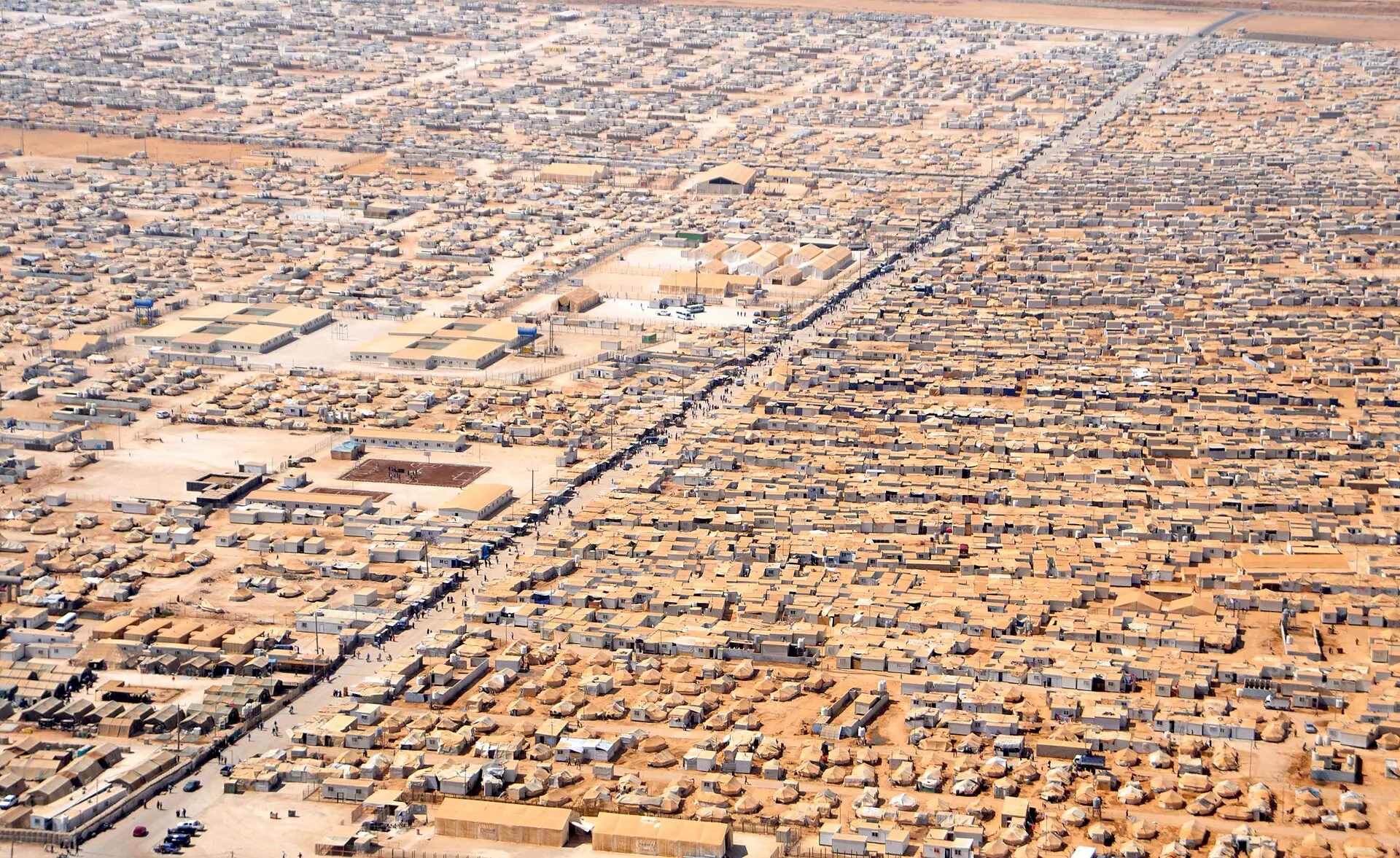
Zaatari-Lager (Jordanien), 2013-07-18 – A close-up view of the Za'atri camp in Jordan for Syrian refugees as seen on July 18, 2013, from a helicopter carrying U.S. Secretary of Sta
Zaatari-Lager · Jordanien · 2013U.S. Department of State · Public domain · Wikimedia Commons
Bekaa Valley, Lebanon, 2017-01-30 – Refugees from Idlib in a camp in Lebanon's Bekaa Valley, 2017
Bekaa Valley, Lebanon · Libanon · 2017DFID - UK Department for International Development · CC BY 2.0 · Wikimedia Commons
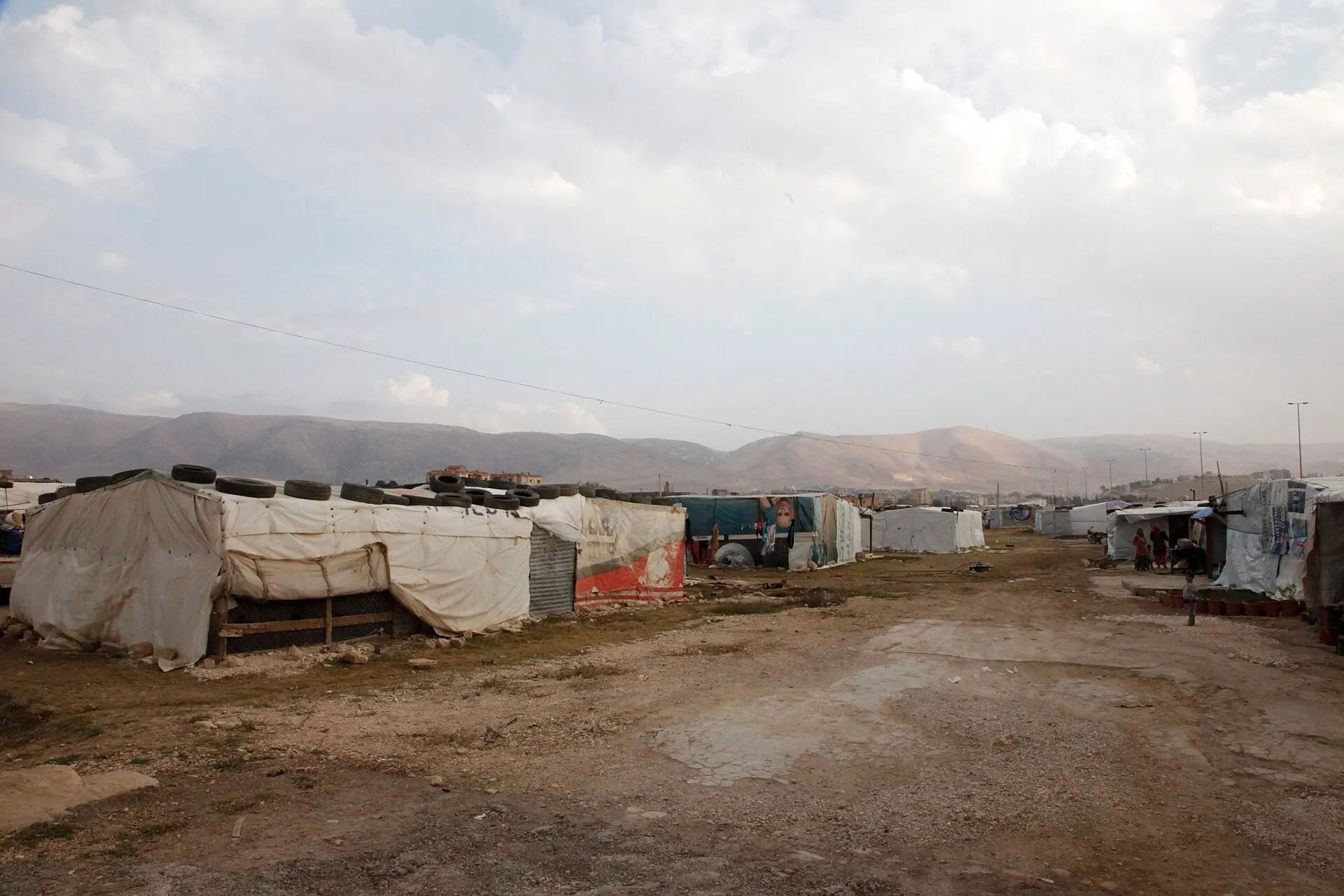
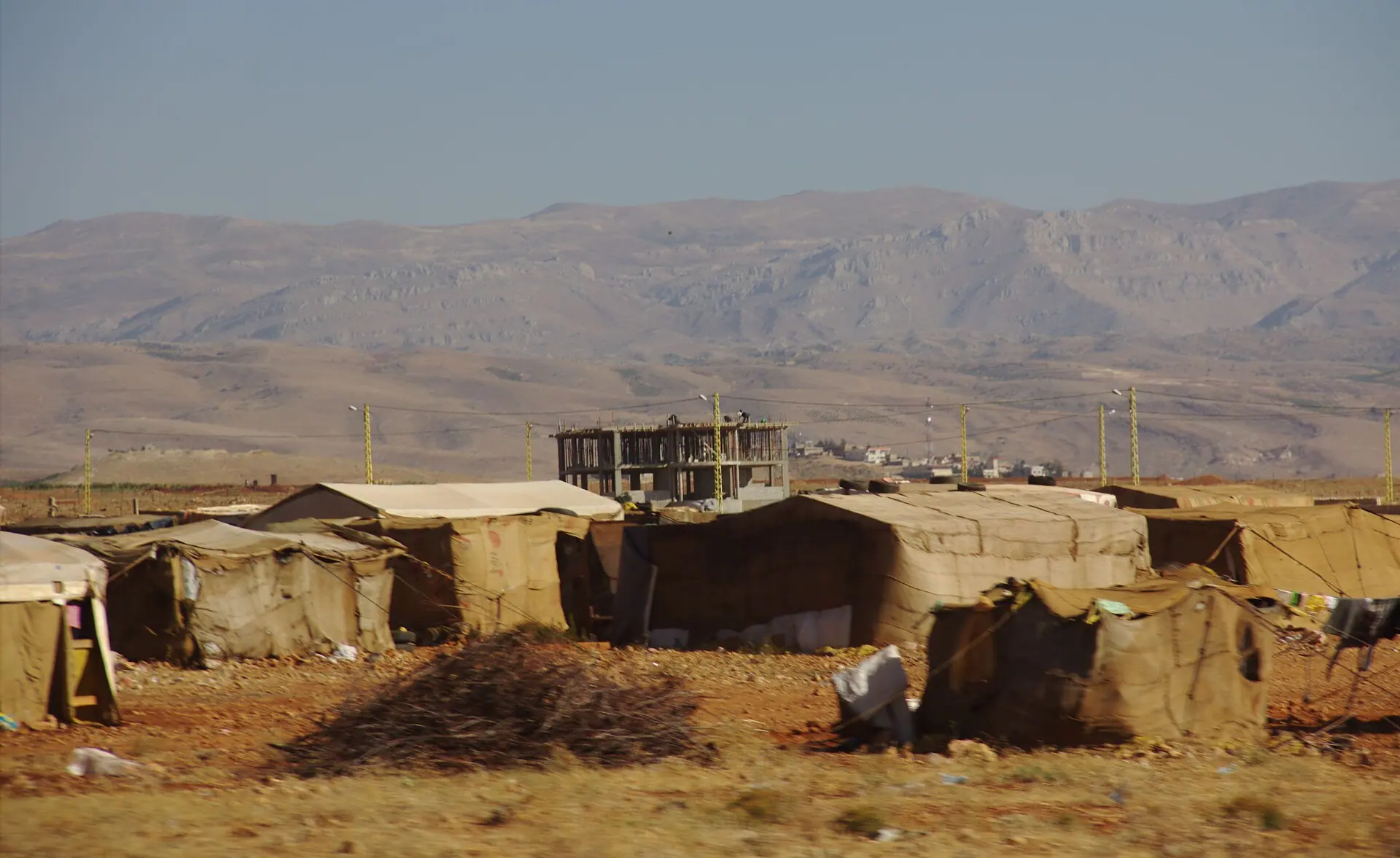
Libanon (Bekaa), 2013-11-05 – An 'informal tented settlement' in Lebanon's Bekaa valley. The mountains in the background form the border with Syria, just a few miles away
Libanon · 2013DFID - UK Department for International Development · CC BY 2.0 · Wikimedia Commons
Libanon (Bekaa), 2012-08-26 – Camp in Lebanon close to the Syrian border
Libanon · 2012Elgaard · CC BY-SA 3.0 · Wikimedia Commons
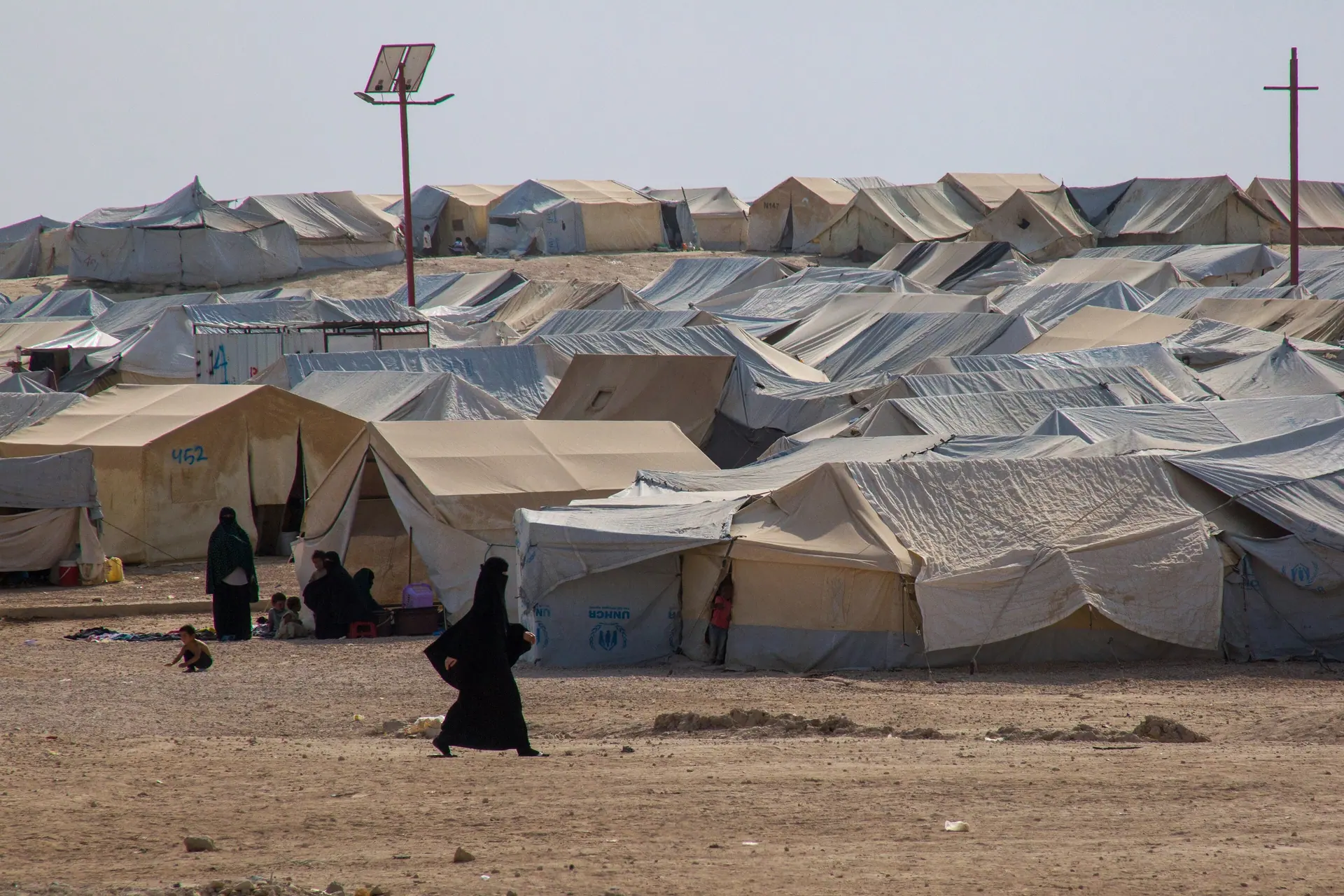
Al-Hol camp, 2019-10-17 – We are the first reporters inside the al-Hol Camp since Turkish military operations began in northeastern Syria last week. Officials say sin
Al-Hol camp · Al-Hasaka · 2019Y. Boechat (VOA) · Public domain · Wikimedia Commons
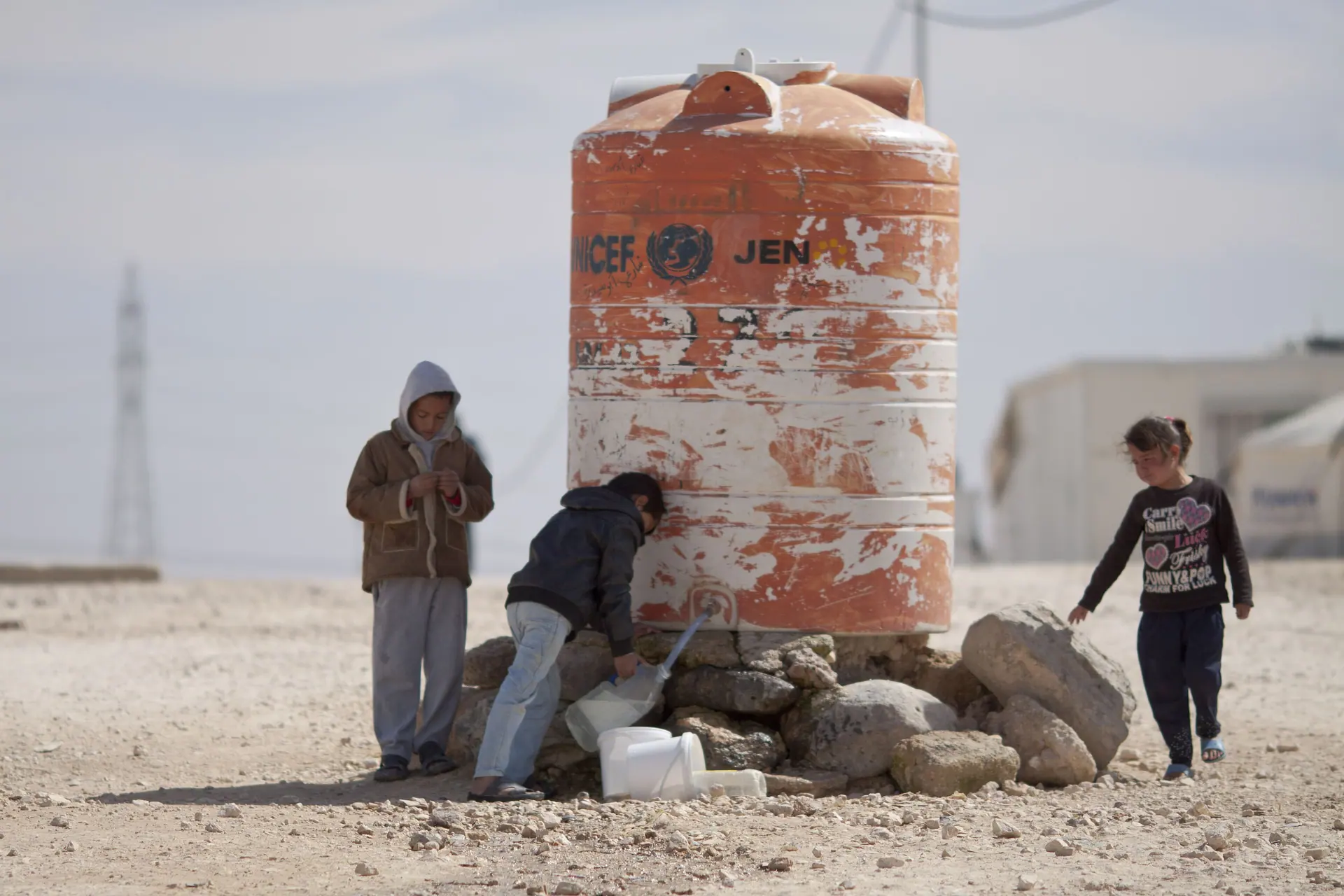
Zaatari camp, Jordan, 2015-02-27 – Syrian children fetch drinking water in the Zaatari camp, Jordan, 2015
Zaatari camp, Jordan · Jordanien · 2015Mustafa Bader · CC BY-SA 4.0 · Wikimedia Commons
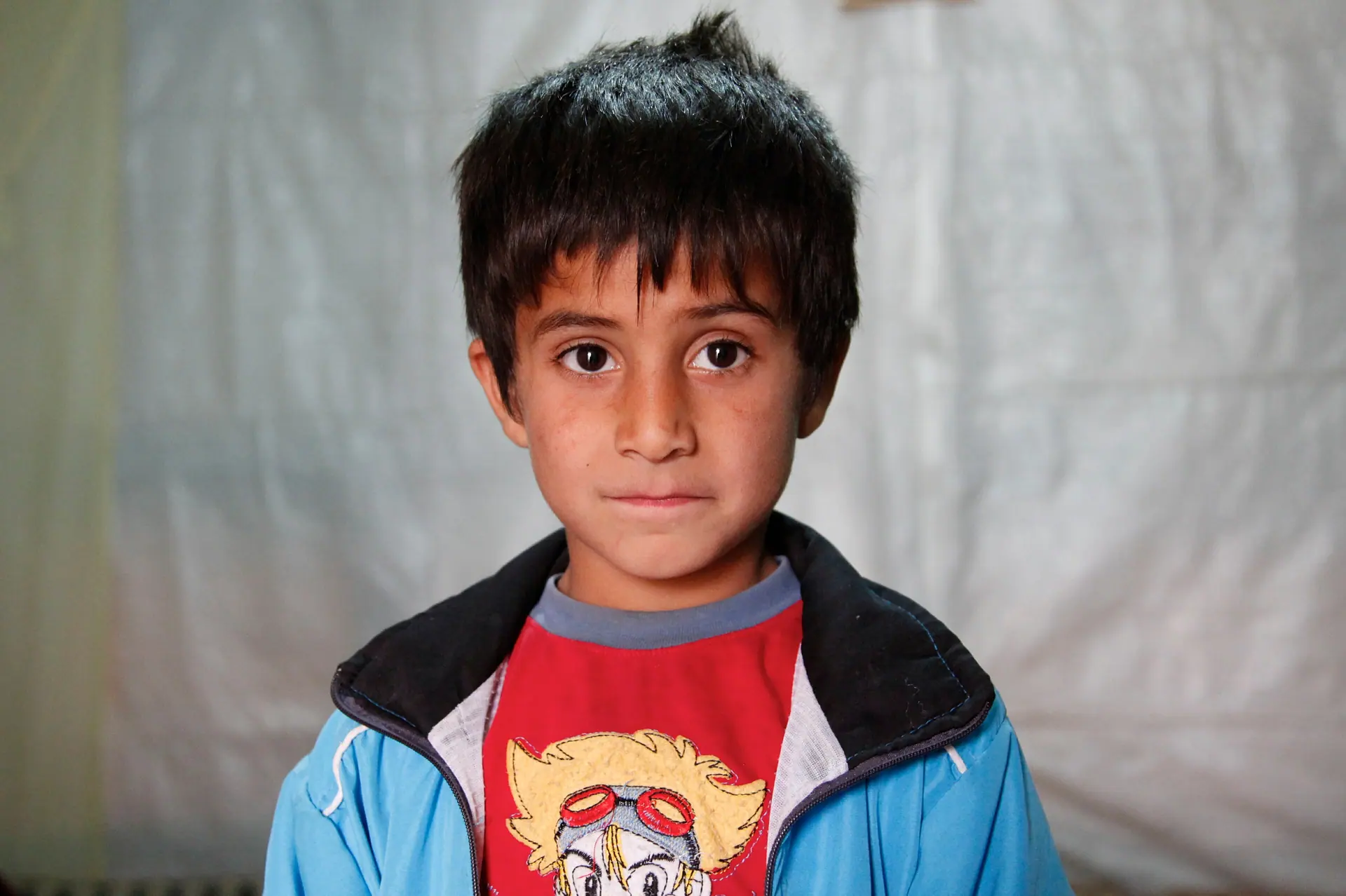
Bekaa Valley, Lebanon, 2013-11-05 – Marwan, 5, a refugee from near Aleppo, in an informal settlement in the Bekaa Valley, 2013
Bekaa Valley, Lebanon · Libanon · 2013DFID - UK Department for International Development · CC BY 2.0 · Wikimedia Commons
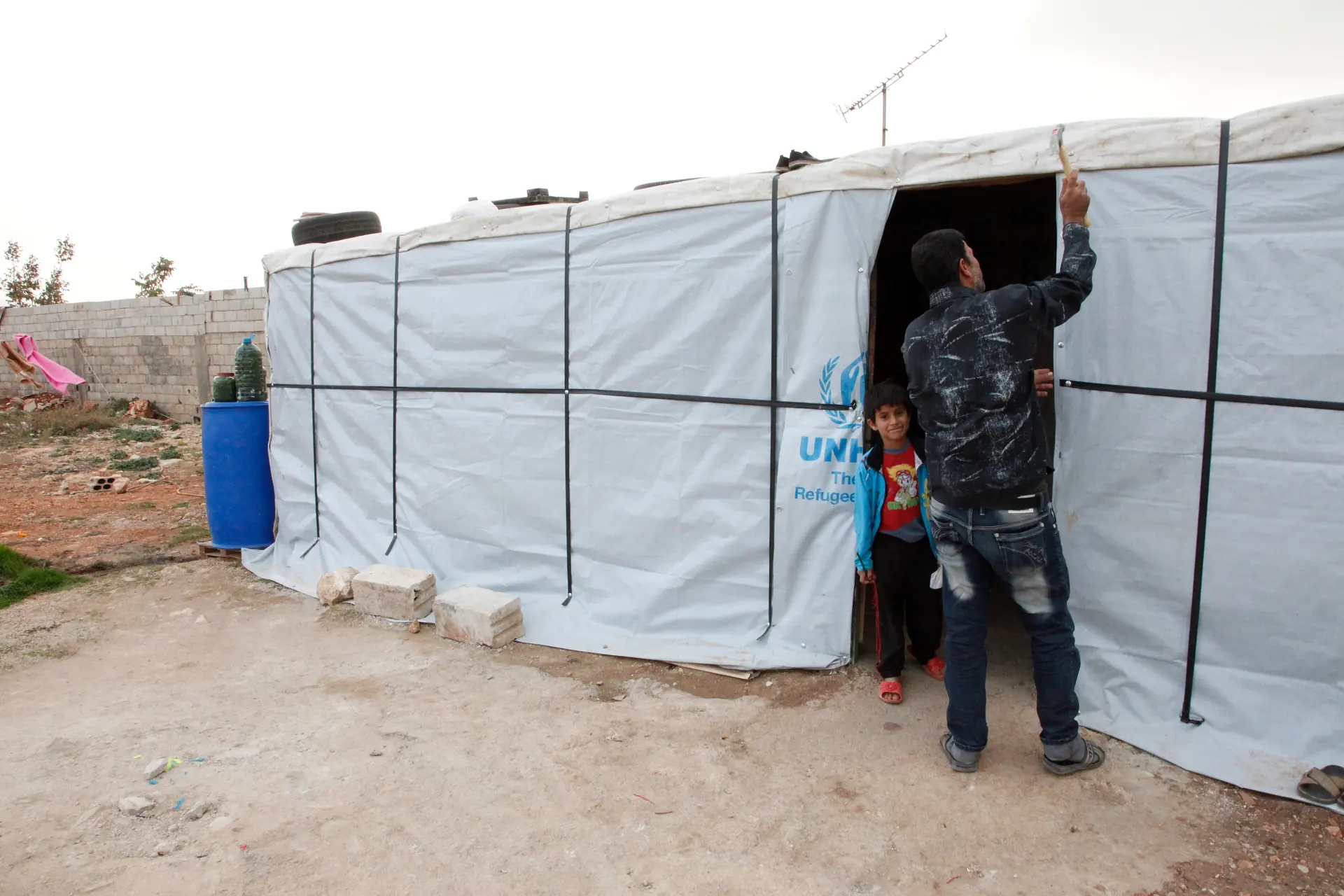
Bekaa Valley, Lebanon, 2013-11-05 – A father reinforces the family's shelter before winter, Bekaa Valley, 2013
Bekaa Valley, Lebanon · Libanon · 2013DFID - UK Department for International Development · CC BY 2.0 · Wikimedia Commons
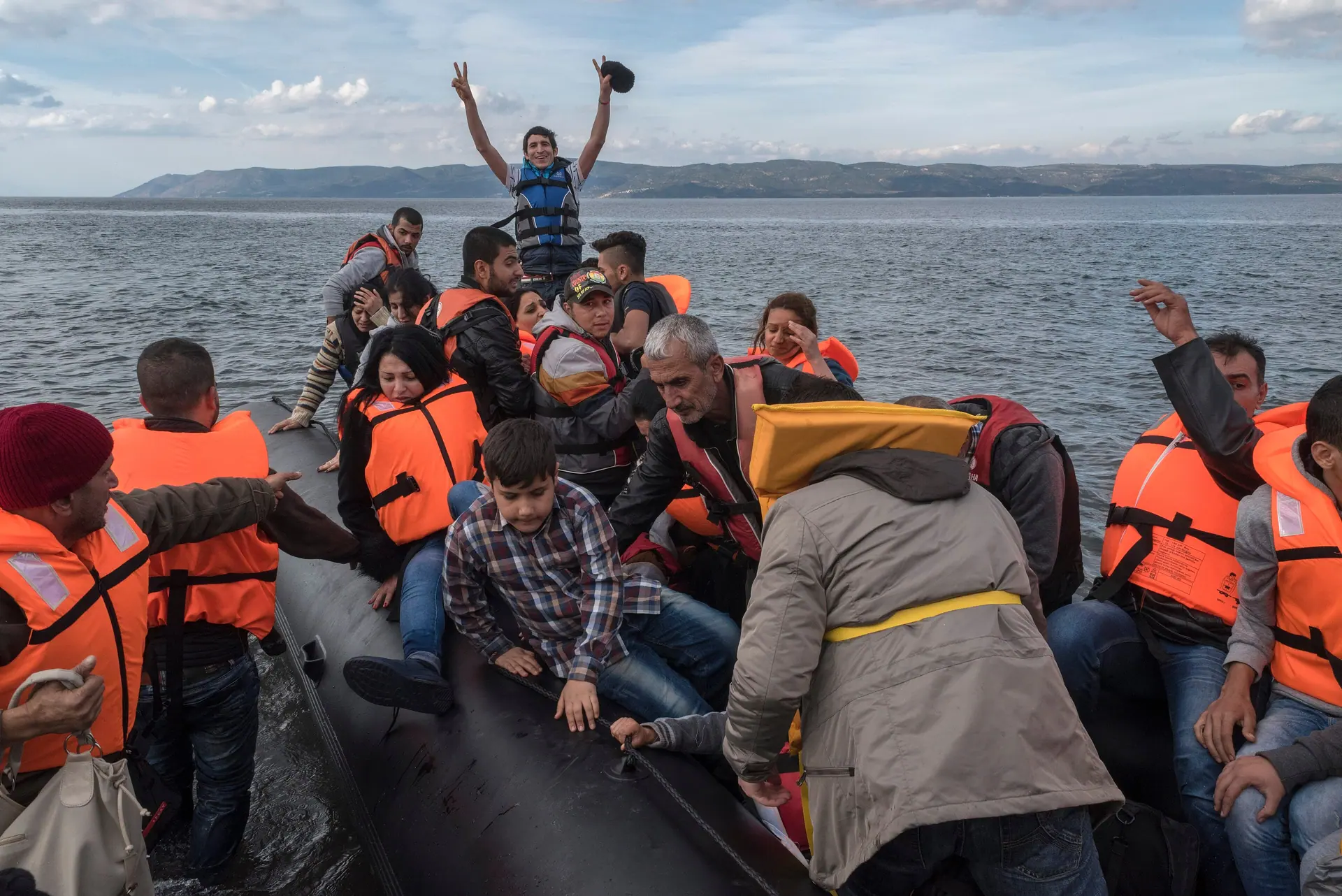
Skala Sykamias, Lesbos (Greece), 2015-10-29 – An inflatable boat with Syrian Refugees just arrived safely to Skala Sykamias, Lesvos island, Greece.
Skala Sykamias, Lesbos · Griechenland · 2015Ggia · CC BY-SA 4.0 · Wikimedia Commons
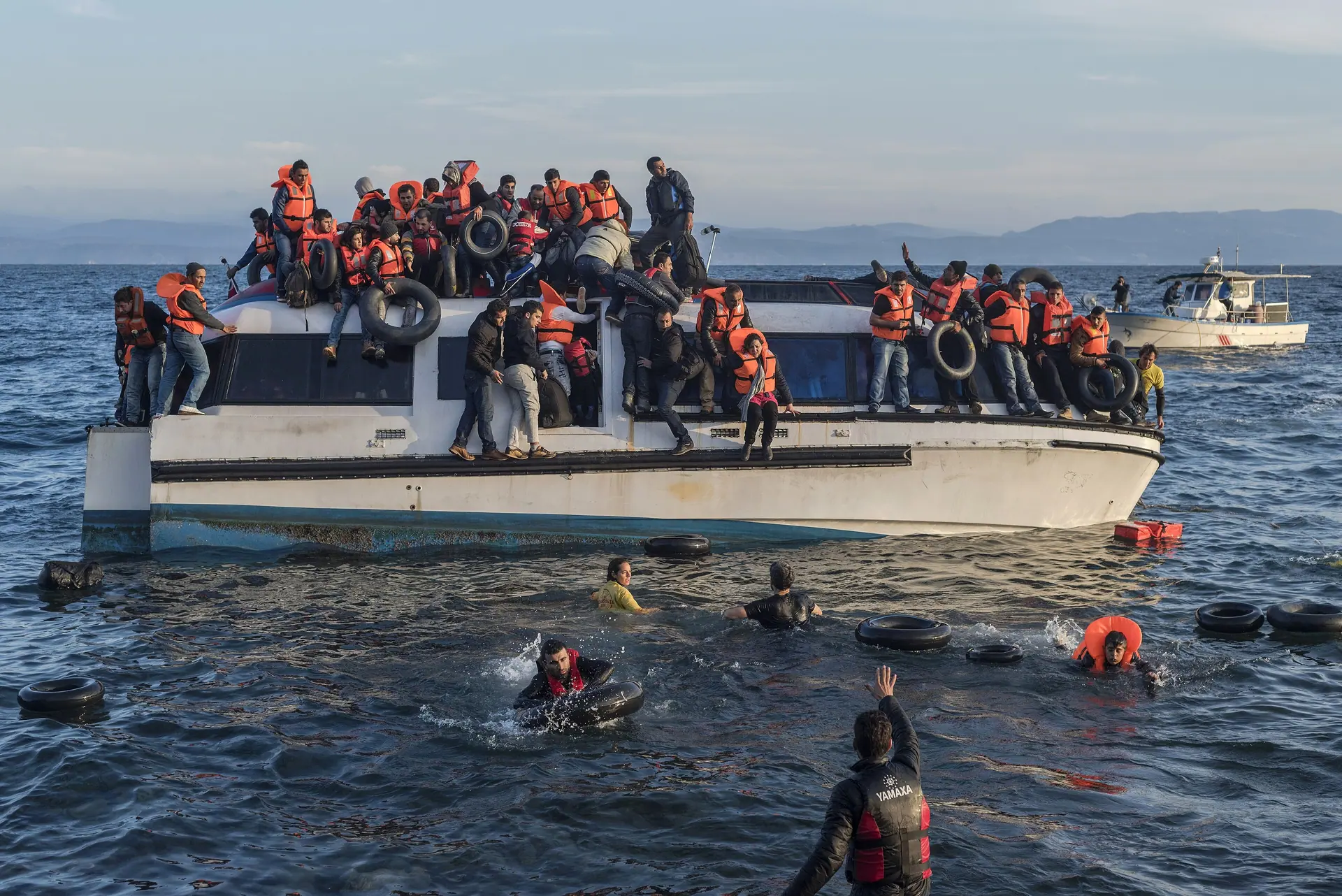
Skala Sykamias, Lesbos (Greece), 2015-10-30 – Syrian and Iraqi refugees arrive from Turkey to Skala Sykamias, Lesbos island , Greece. Volunteers (life rescue team - with yellow-red cloth
Skala Sykamias, Lesbos · Griechenland · 2015Ggia · CC BY-SA 4.0 · Wikimedia Commons
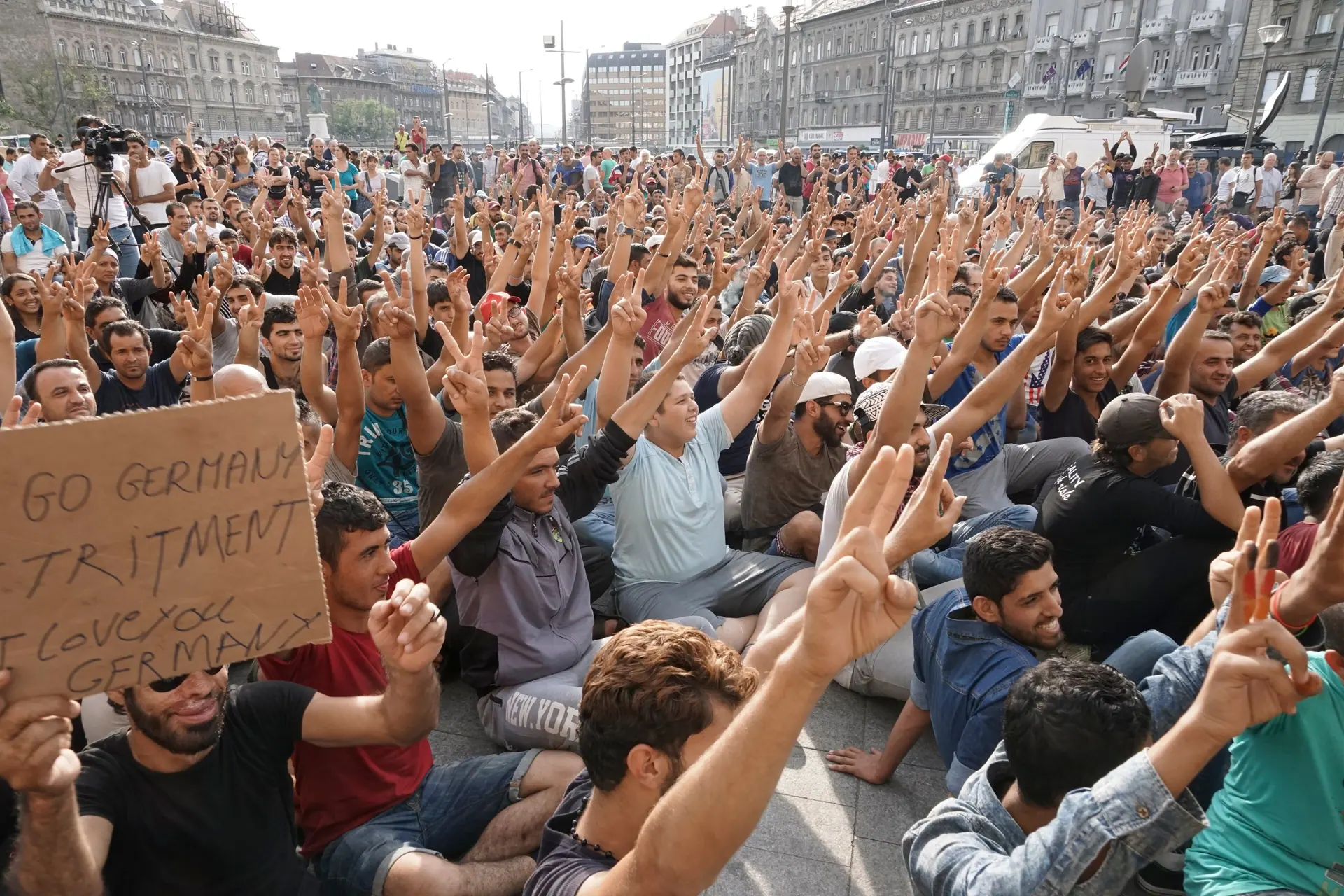
Keleti station, Budapest (Hungary), 2015-09-03 – Syrian young males refugees strike in front of Budapest Keleti railway station. Refugee crisis. Budapest, Hungary , Central Europe, 3 Septem
Keleti station, Budapest · Ungarn · 2015Mstyslav Chernov · CC BY-SA 4.0 · Wikimedia Commons
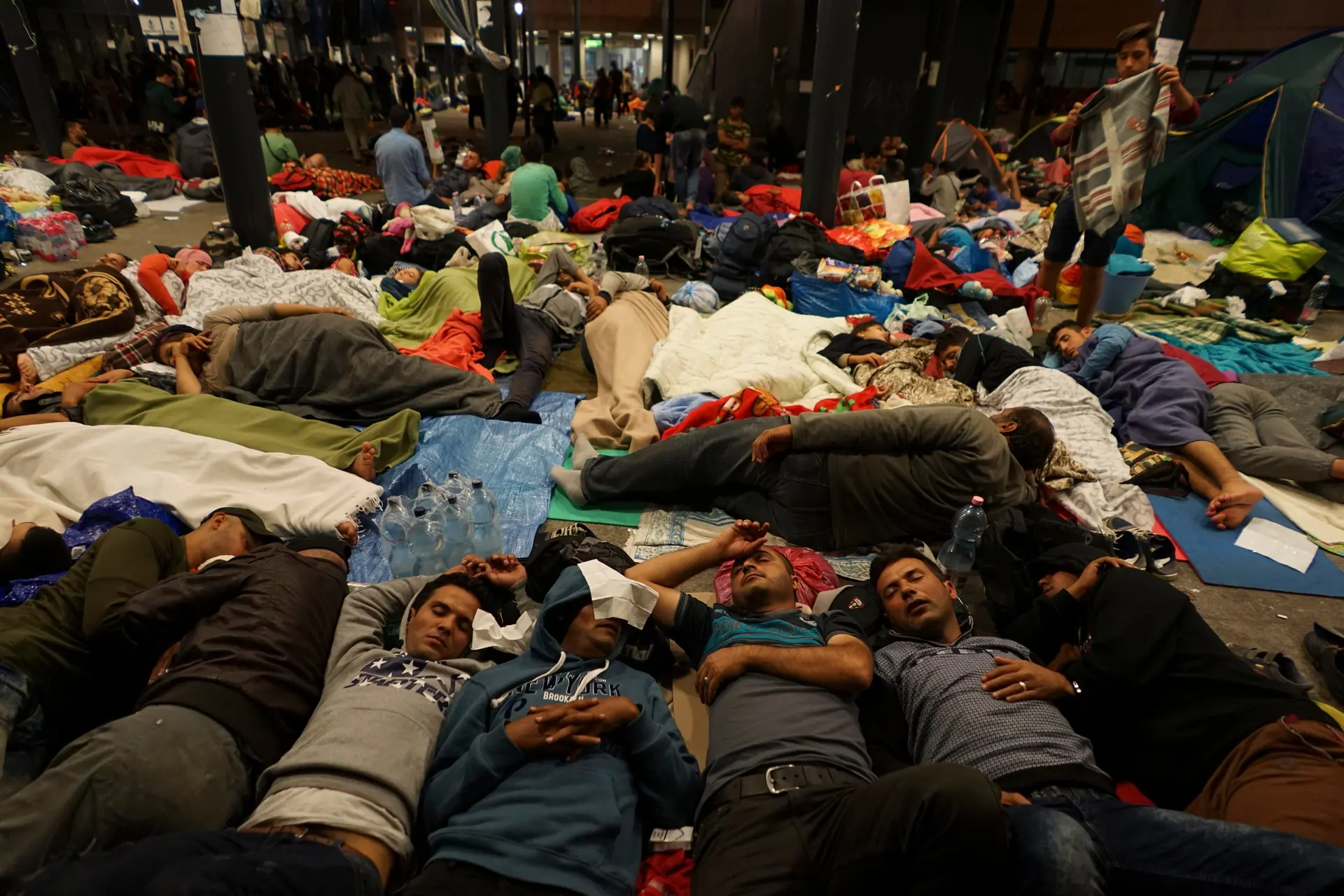
Keleti station, Budapest (Hungary), 2015-09-05 – Syrian refugees having rest at the floor of Keleti railway station. Refugee crisis. Budapest, Hungary, Central Europe, 5 September 2015.
Keleti station, Budapest · Ungarn · 2015Mstyslav Chernov · CC BY-SA 4.0 · Wikimedia Commons
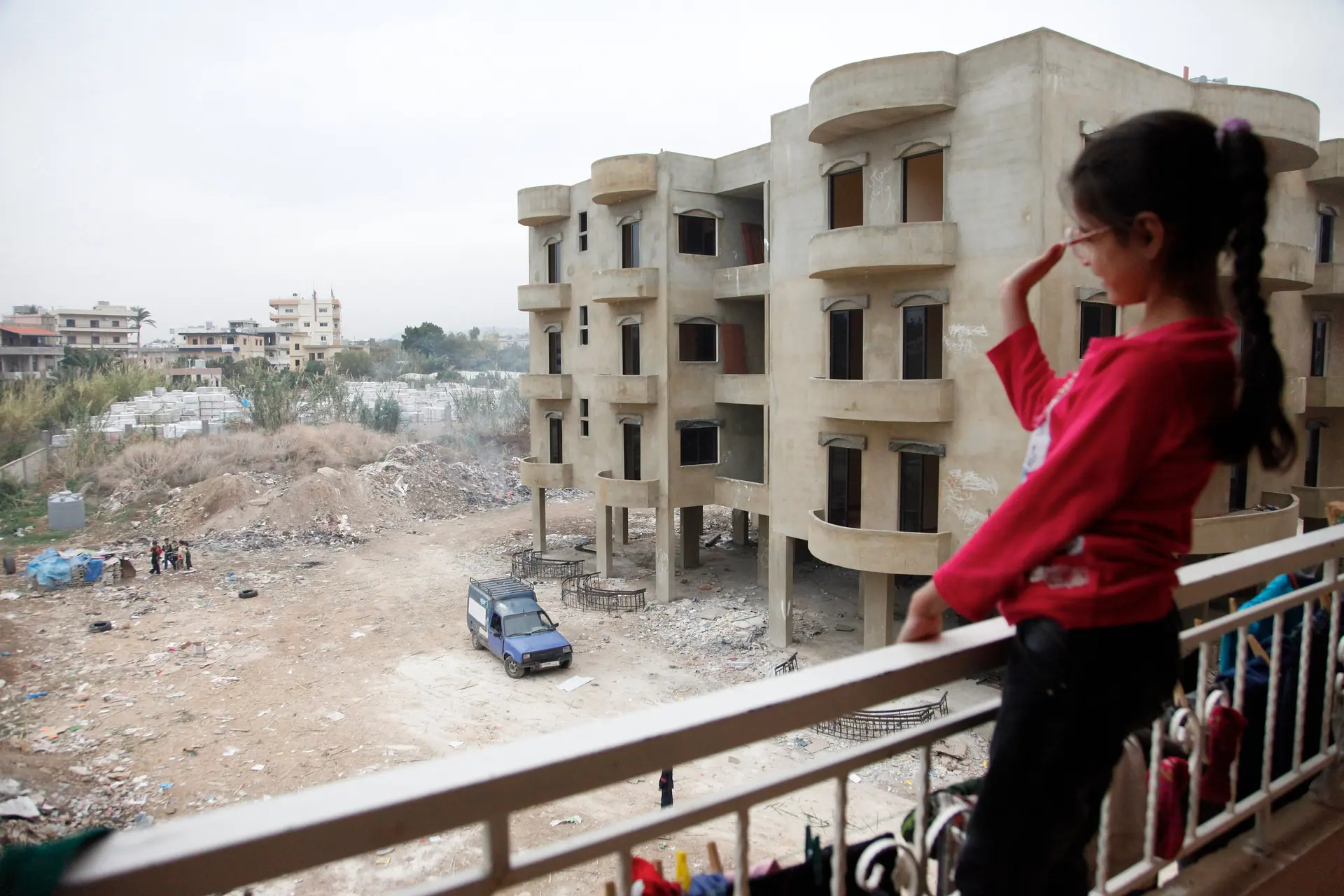
Northern Lebanon, 2013-11-07 – A Syrian girl in an unfinished apartment block in northern Lebanon, 2013
Northern Lebanon · Libanon · 2013DFID - UK Department for International Development · CC BY 2.0 · Wikimedia Commons
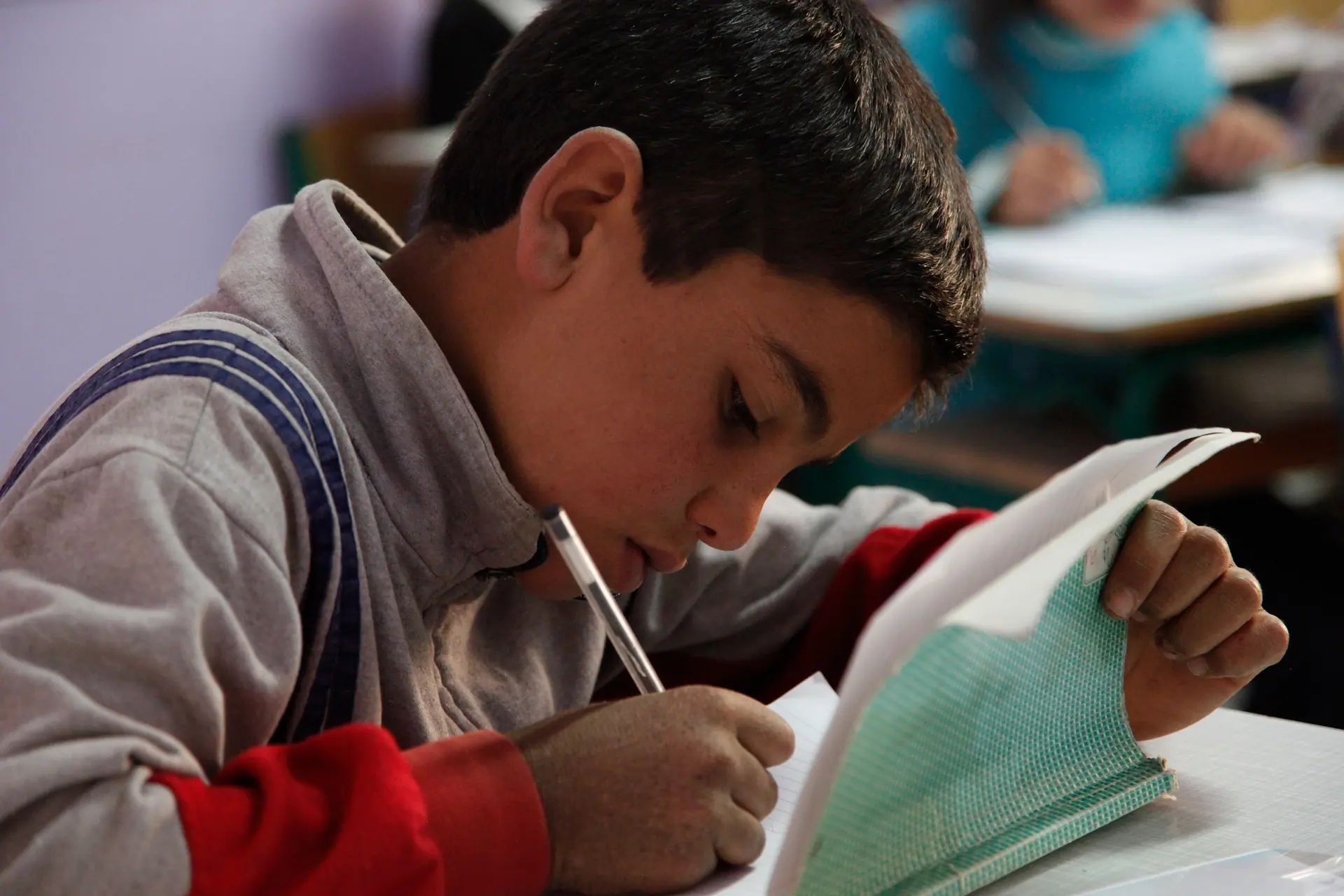
Bekaa Valley, Lebanon, 2013-11-05 – Muhanad, 11, from Syria, back at school in Lebanon's Bekaa Valley, 2013
Bekaa Valley, Lebanon · Libanon · 2013DFID - UK Department for International Development · CC BY 2.0 · Wikimedia Commons
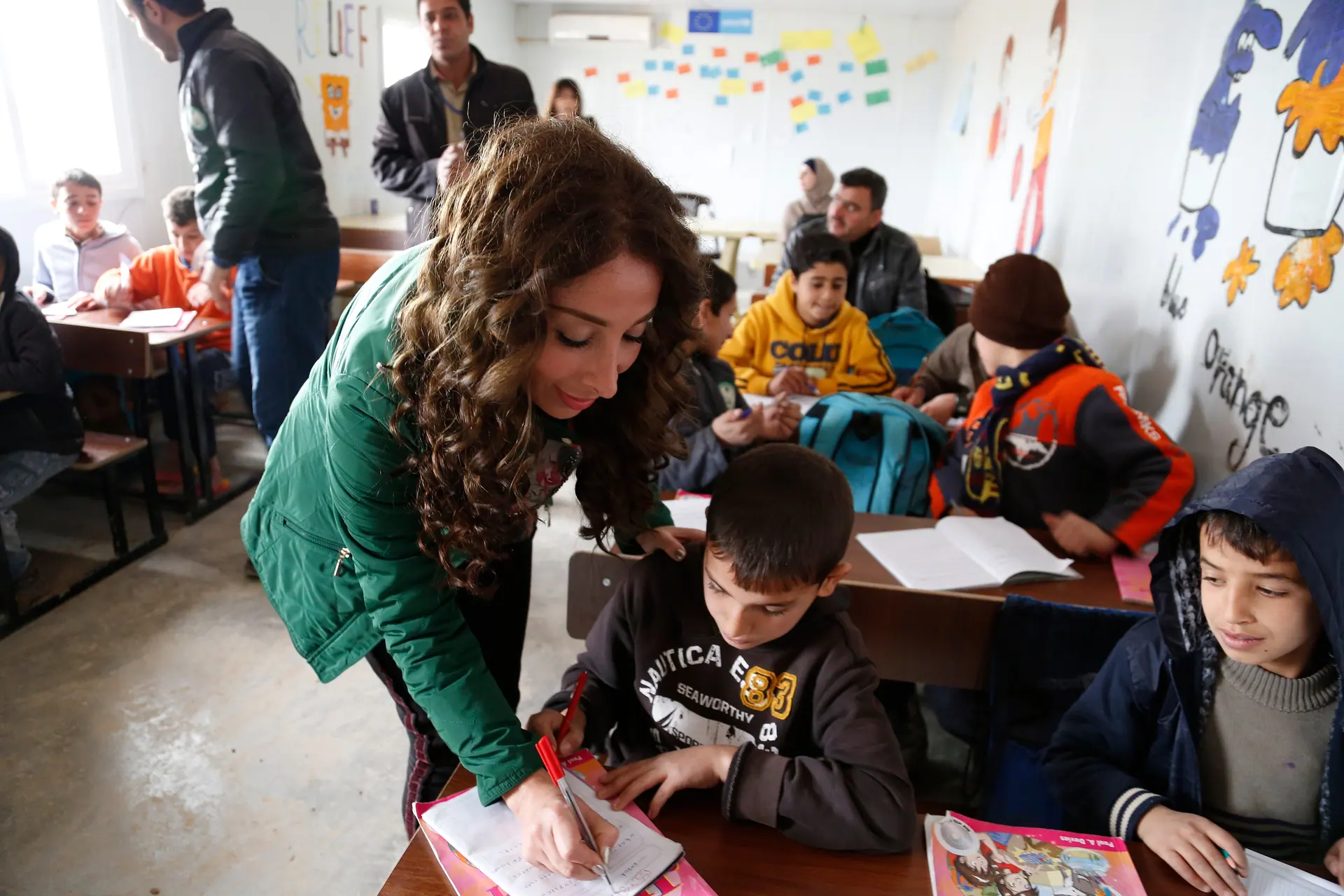
Zaatari camp, Jordan, 2015-03-12 – A teacher with Syrian pupils in a school in the Zaatari camp, Jordan, 2015
Zaatari camp, Jordan · Jordanien · 2015DFID · CC BY 2.0 · Wikimedia Commons
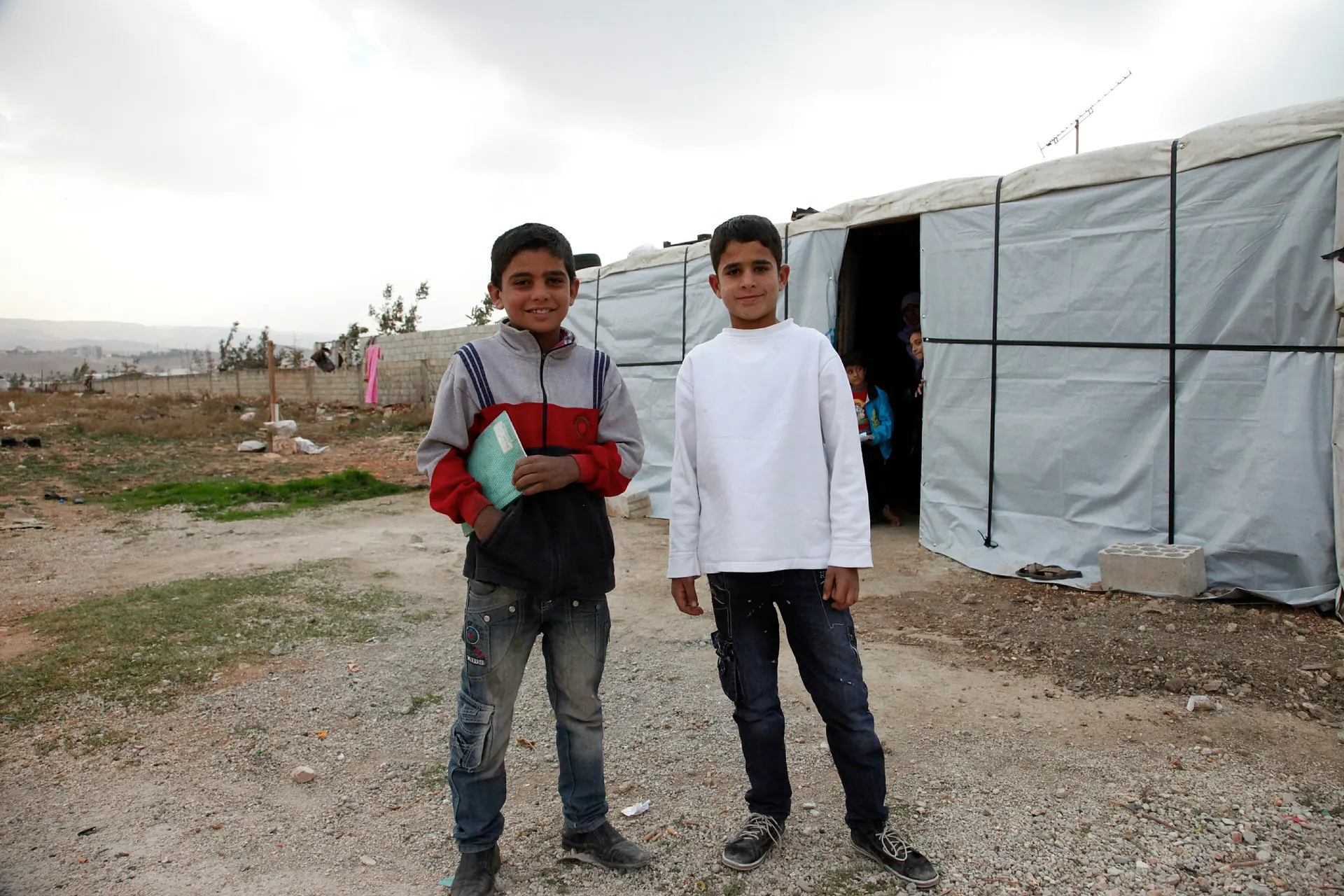
Bekaa Valley, Lebanon, 2013-11-05 – Two Syrian boys still smiling, Bekaa Valley, 2013
Bekaa Valley, Lebanon · Libanon · 2013DFID - UK Department for International Development · CC BY 2.0 · Wikimedia Commons
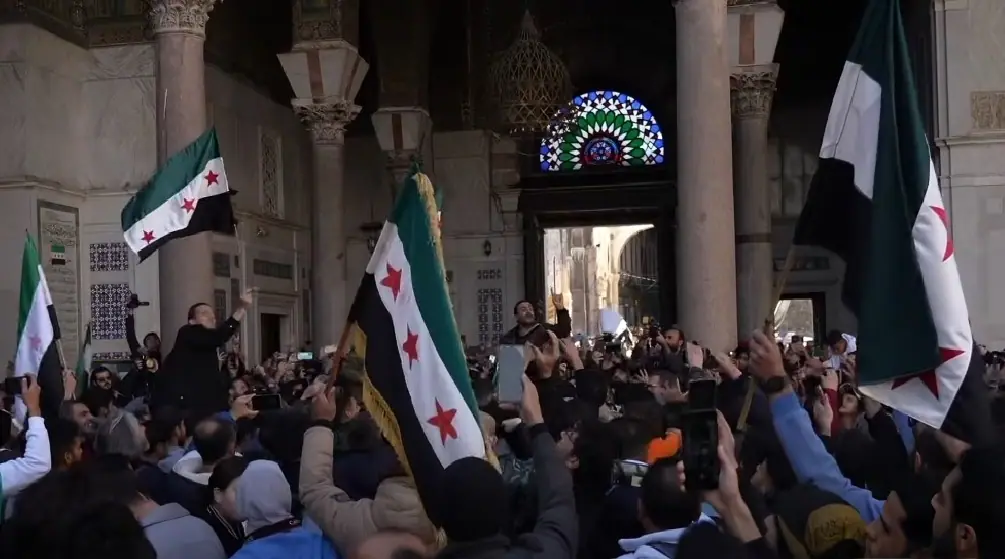
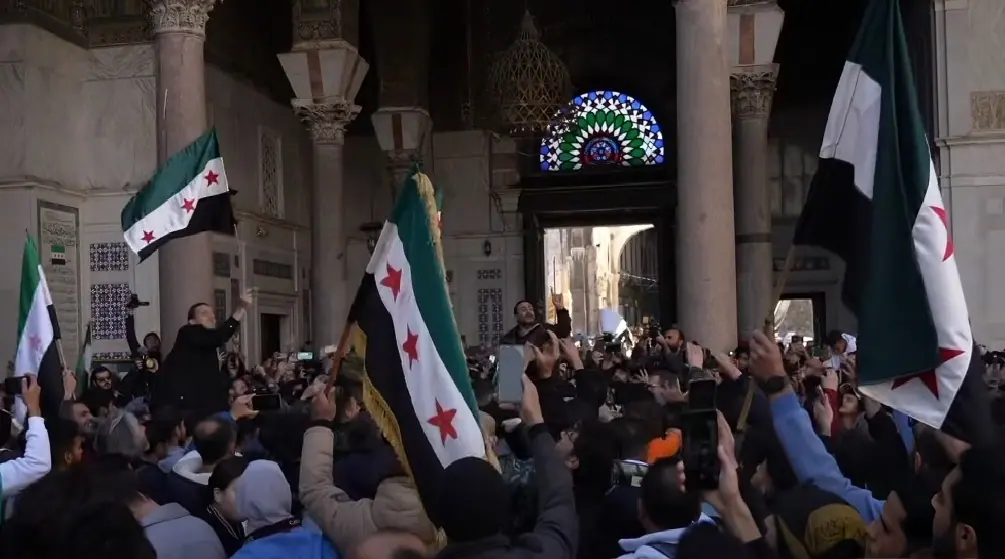
Damaskus, 2024-12-14 – Rebels celebrate the fall of the Assad Regime during the first Friday Prayers at the Umayyad mosque, 14 December 2024
Damaskus · 2024Voice of America · Public domain · Wikimedia Commons
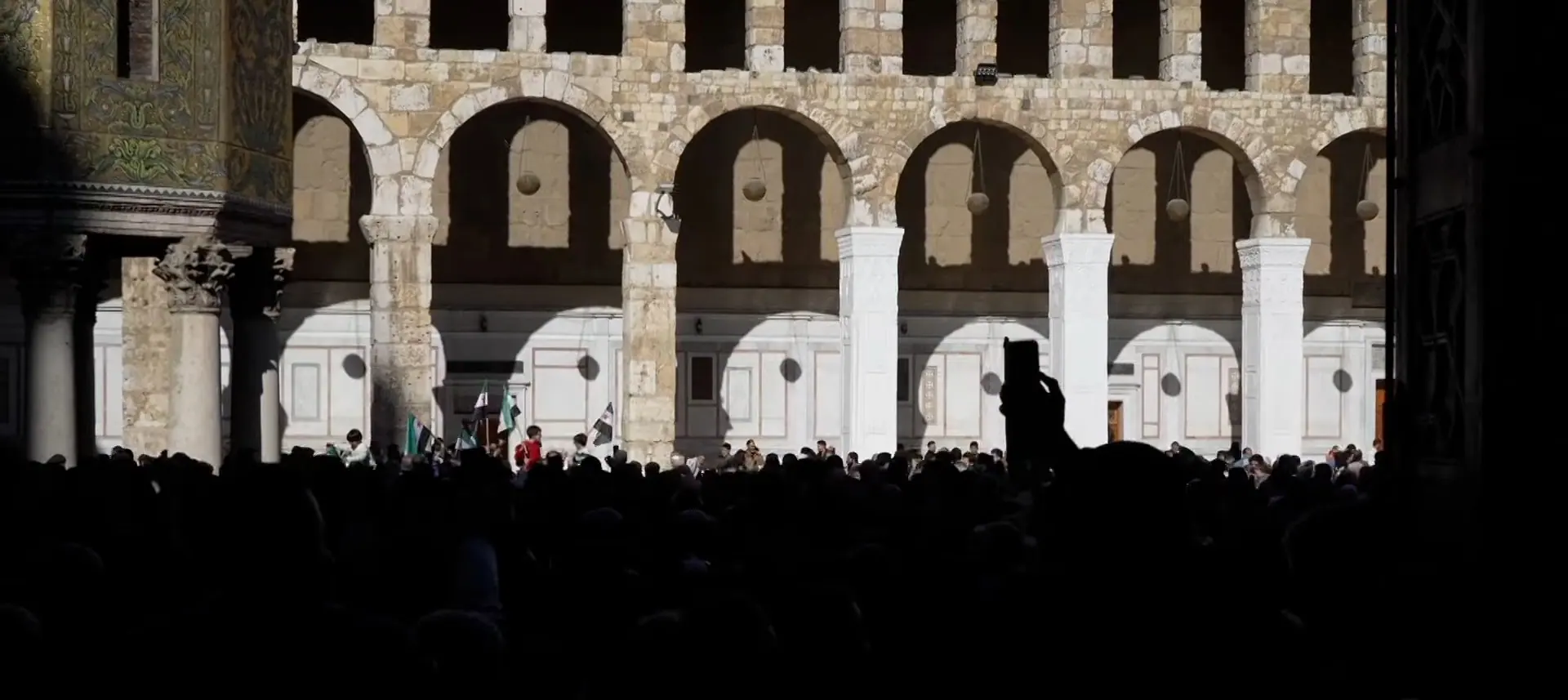
Damaskus, 2024-12-14 – Worshippers congregate at the Umayyad Mosque celebrating the Fall of the Assad regime and praying the First Friday Prayers without any gover
Damaskus · 2024Voice of America · Public domain · Wikimedia Commons
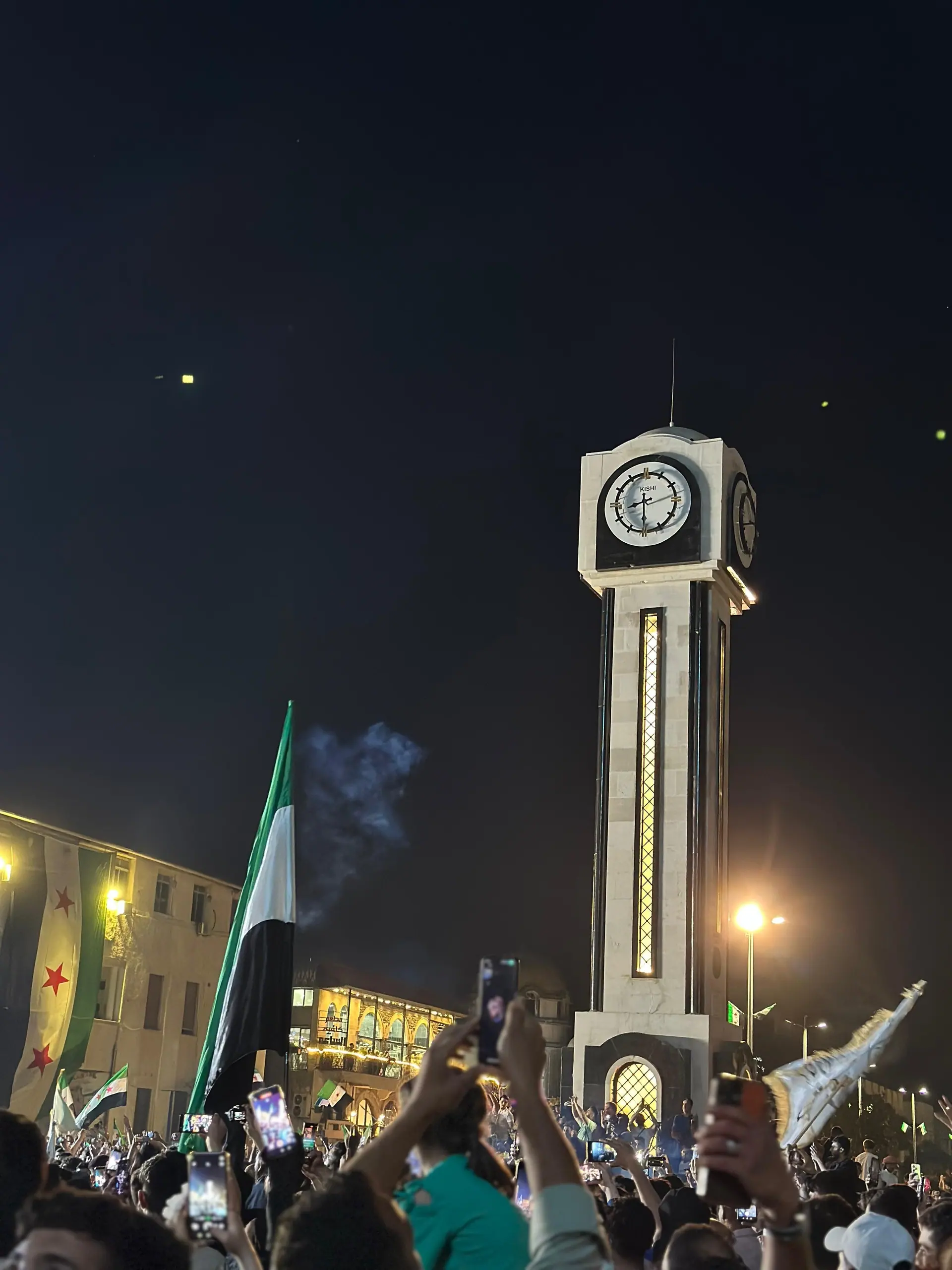
Homs, 2025-06-09 – Homs New Clock
Homs · 2025Bo yaser · CC BY 4.0 · Wikimedia Commons
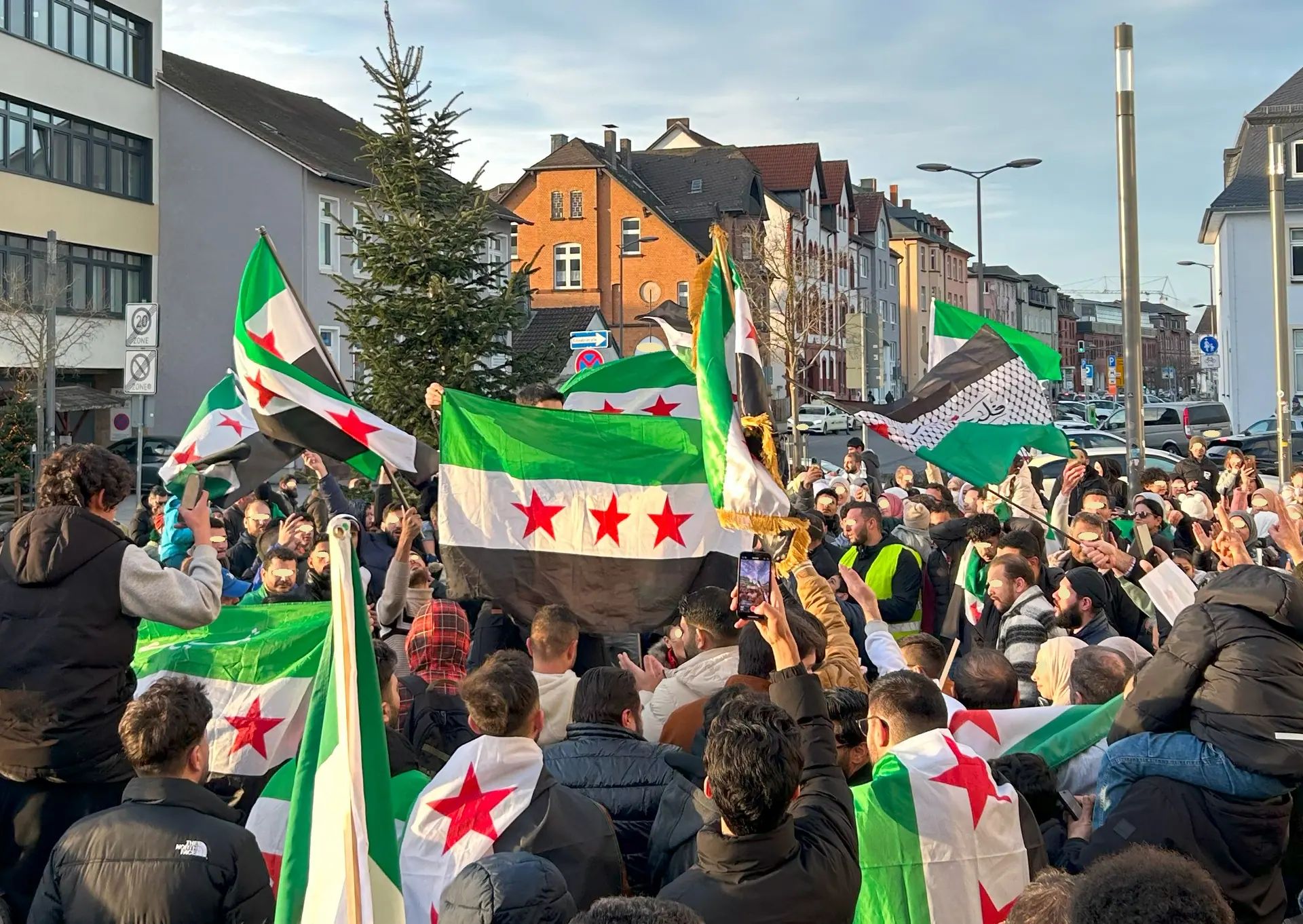
Deutschland, 2024-12-08 – Syrians in Germany celebrate Fall of Assad Regime, 8 December 2024
Deutschland · 2024Shark1989z · CC BY-SA 4.0 · Wikimedia Commons
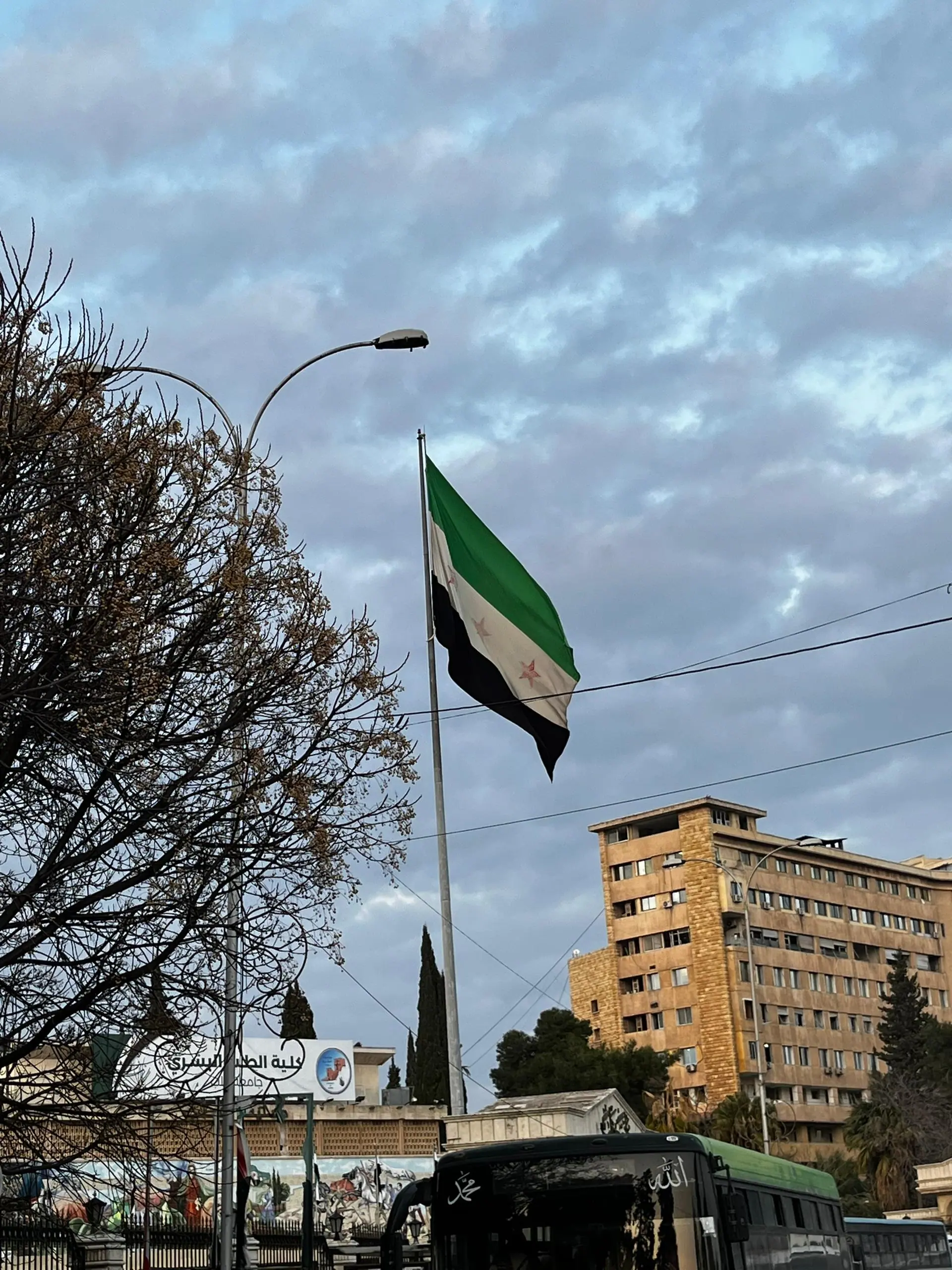
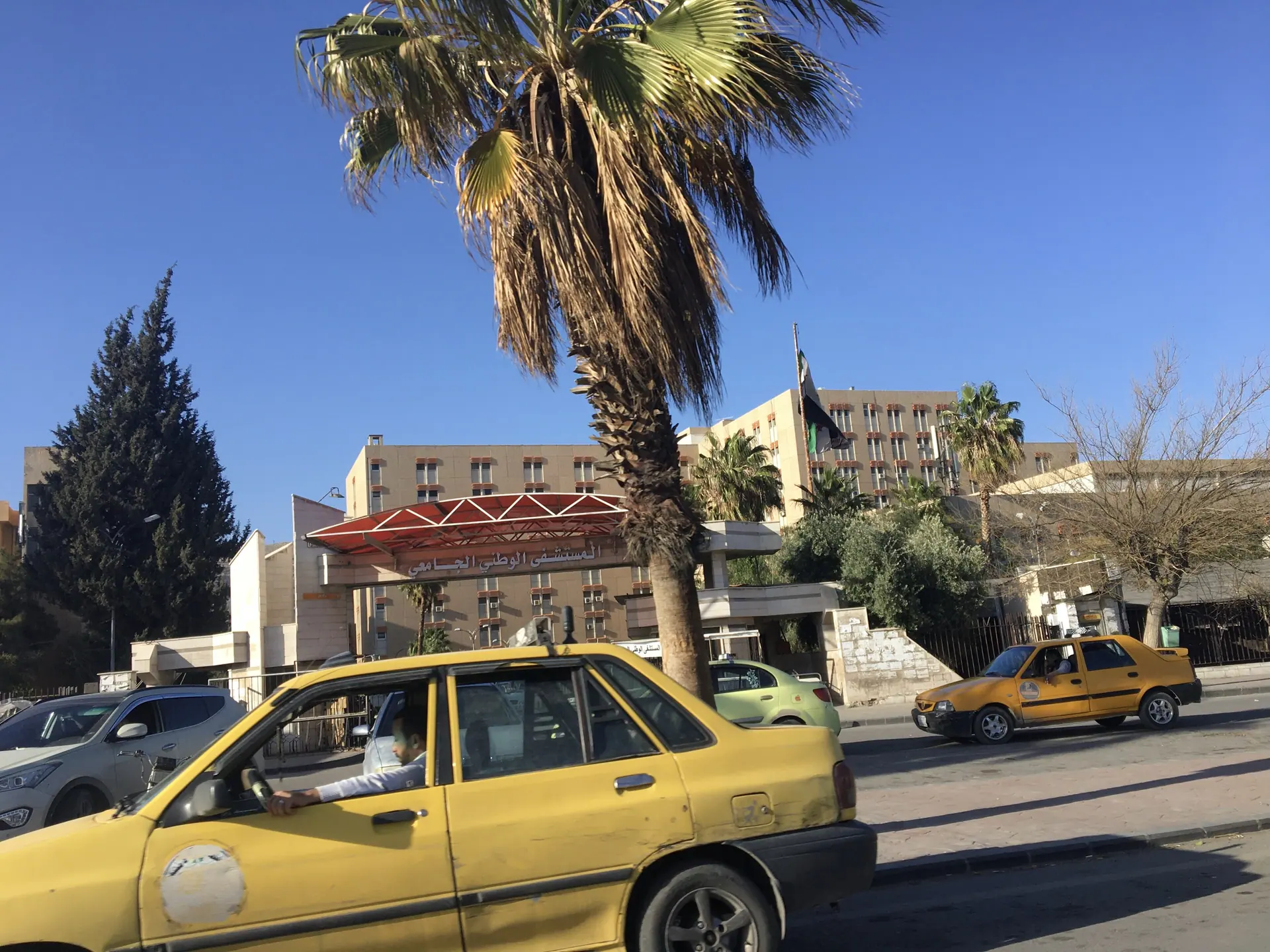
Aleppo, 2025-02-08 – University Square in Aleppo, in front of the Faculty of Medicine, with the new flag of Syria (flag of independence, flag of the Syrian Revol
Aleppo · 2025Ageo.4 · CC BY-SA 4.0 · Wikimedia Commons
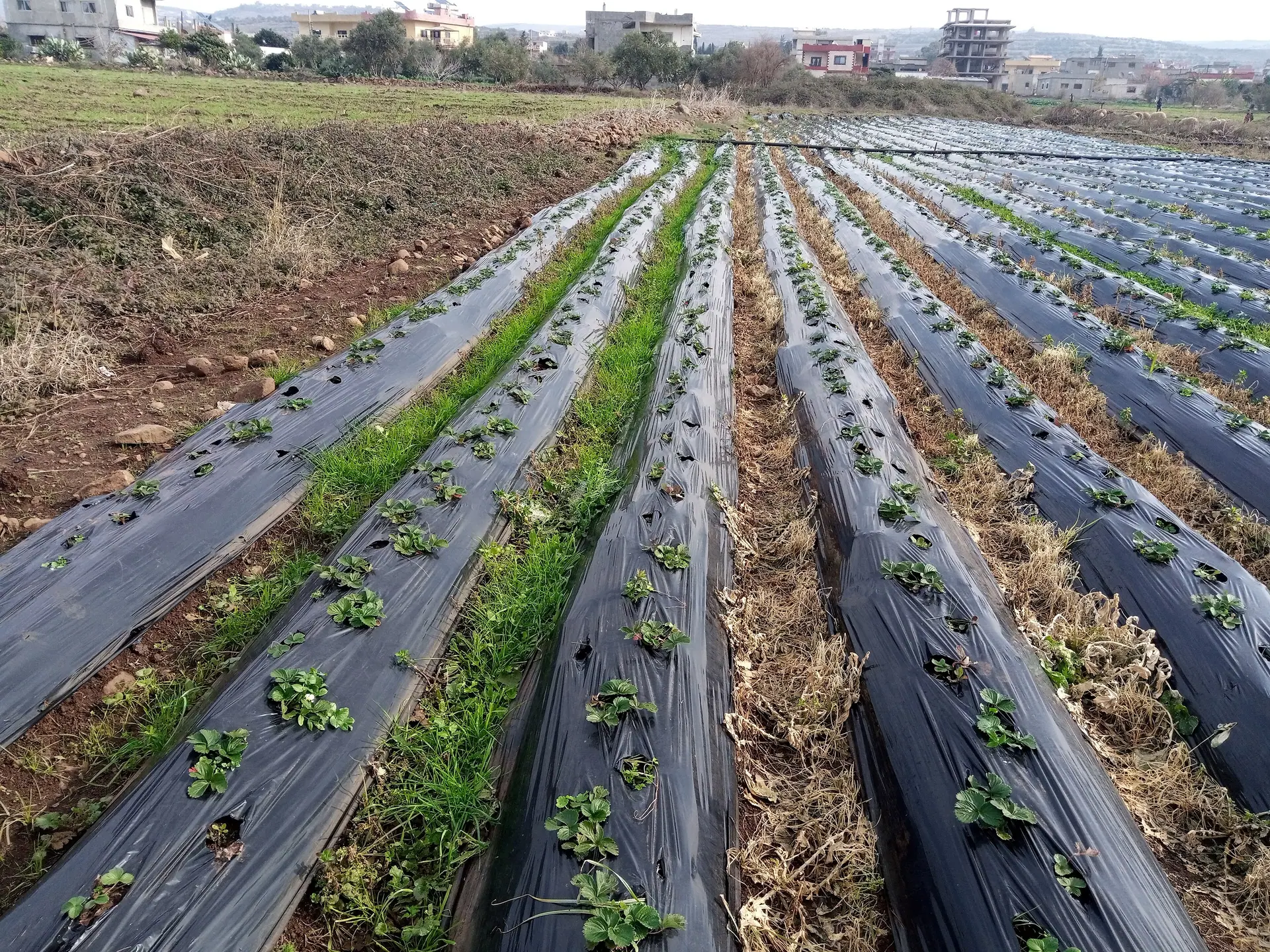
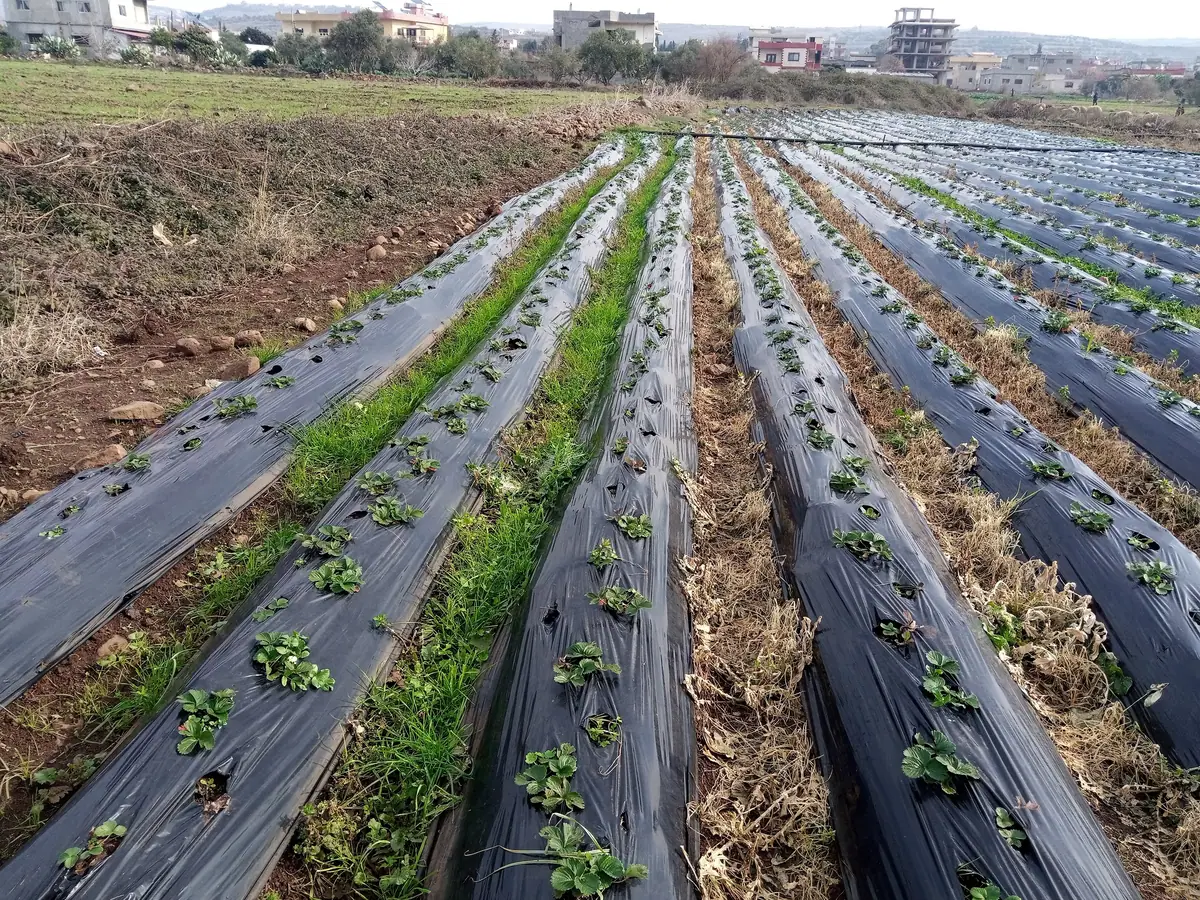
Umm Haratayn al-Gharbiyah, 2025-12-31 – An open-field strawberry plantation without greenhouses in Umm Haratayn al-Gharbiyah, western countryside of Homs, Syria. The image clearly
Umm Haratayn al-Gharbiyah · Homs · 2025Hayan Alhasan · CC BY-SA 4.0 · Wikimedia Commons
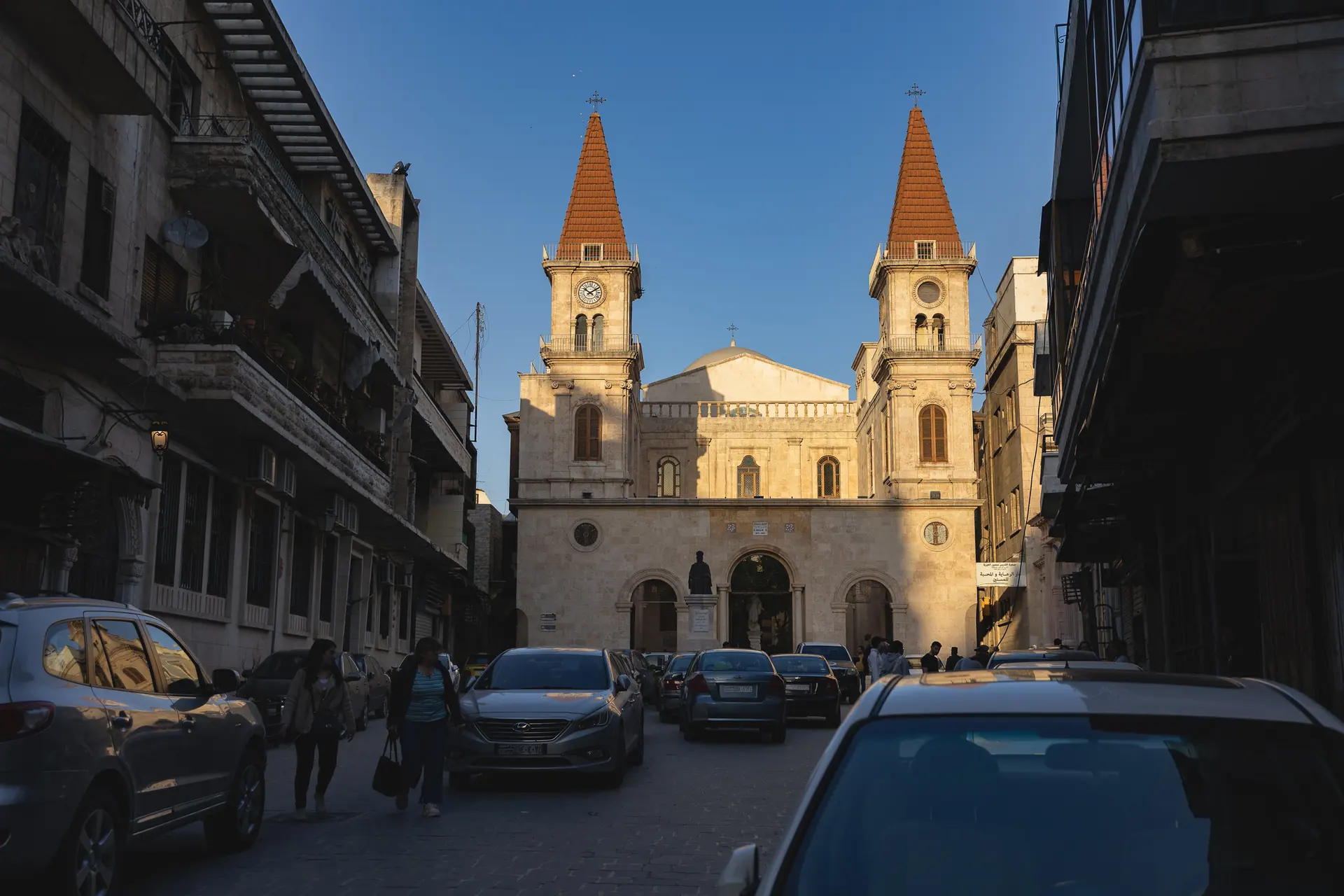
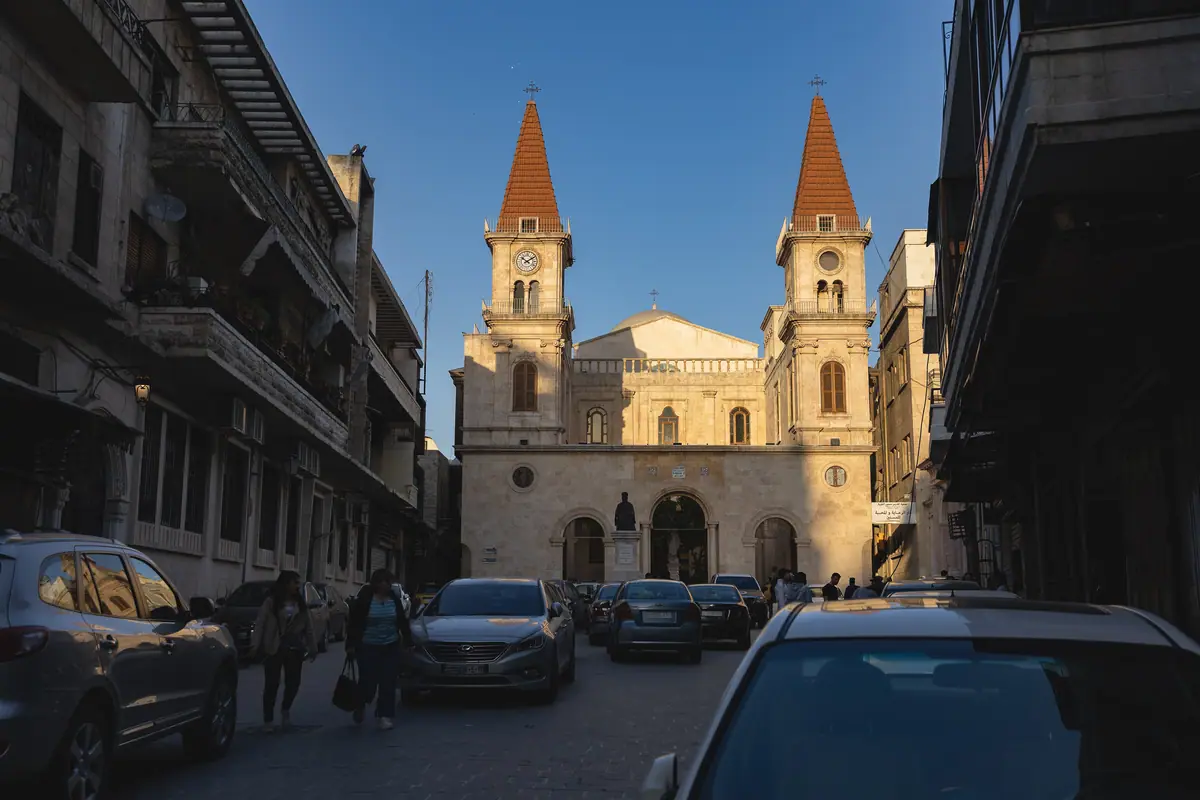
Aleppo, 2025-04-17 – Saint Elias Maronite Cathedral, al-Jdayde, Aleppo, April 2025
Aleppo · 2025By Fares Badawi · CC BY-SA 4.0 · Wikimedia Commons
Damascus, 2025-04-04 – Damascus, April 2025
Damaskus · 2025Eiyad Mobarak · CC0 · Wikimedia Commons
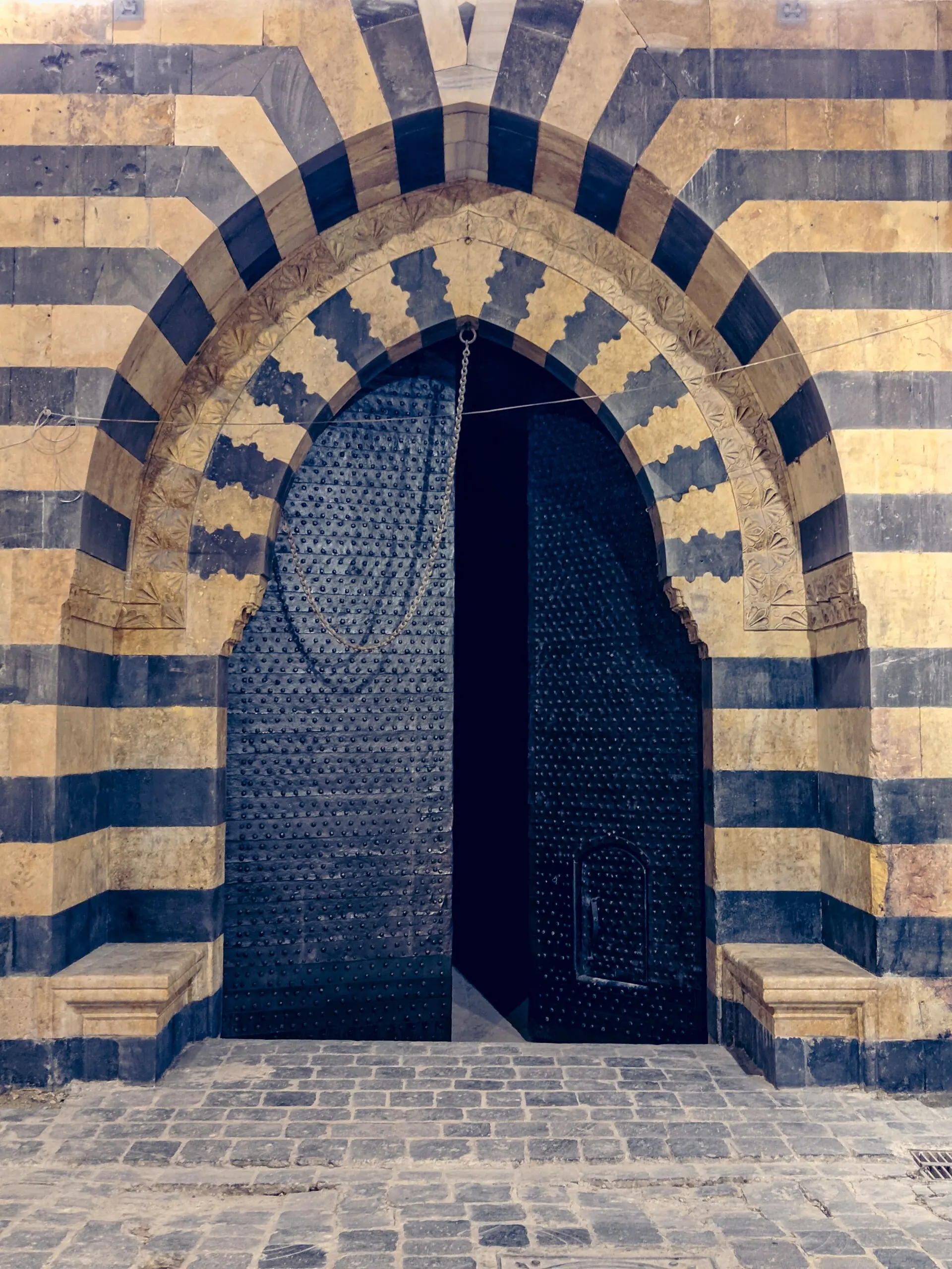
Aleppo, 2020-10-24 – بوابة خان الحرير في سوق خان الحرير في مدينة حلب القديمة بعد إعادة تأهيل وترميم السوق بعد الحرب. ويظهر البوابة الحديدية الضخمة والحجارة الصفر
Aleppo · 2020Anas Badawi · CC BY-SA 4.0 · Wikimedia Commons
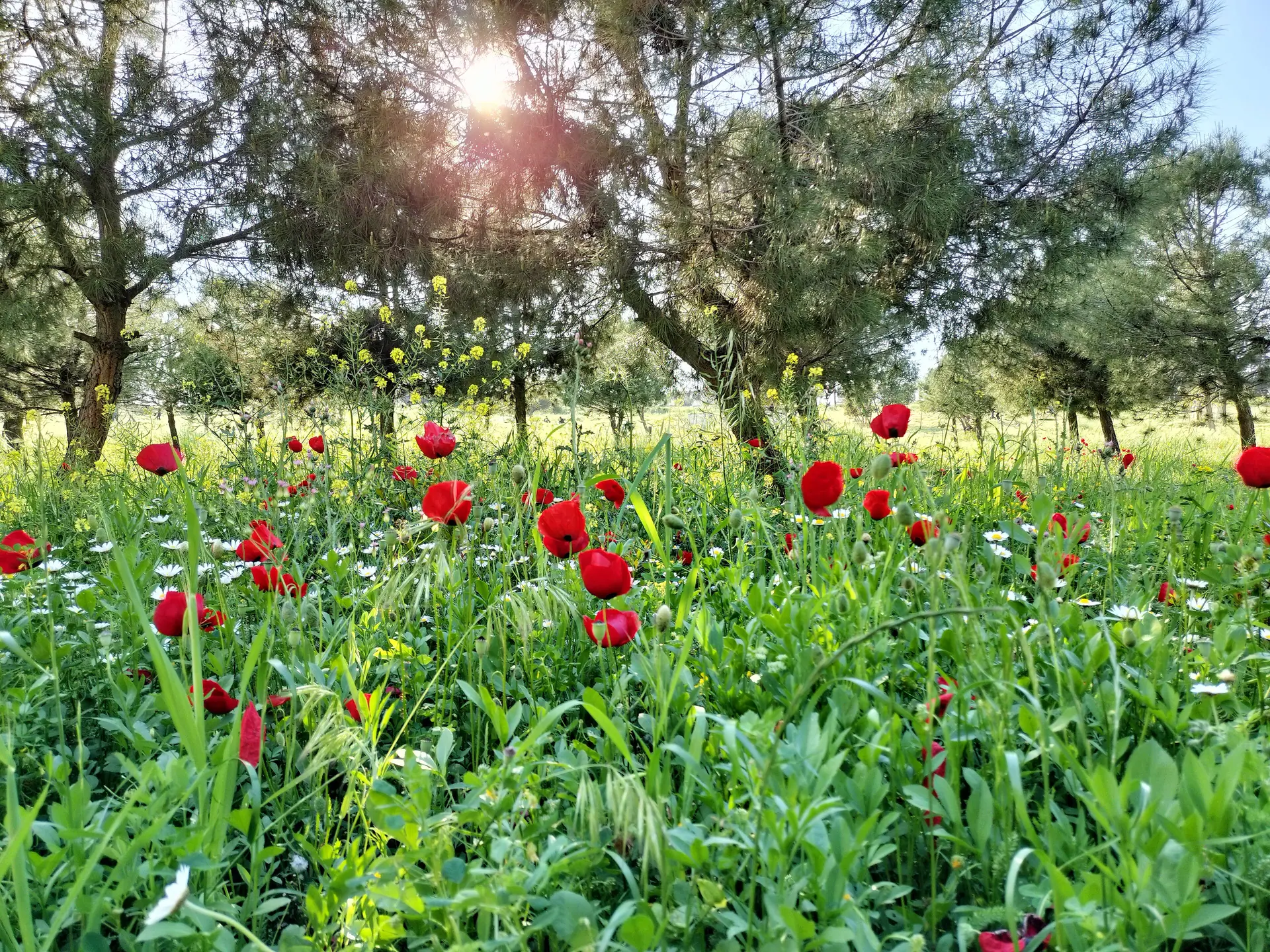
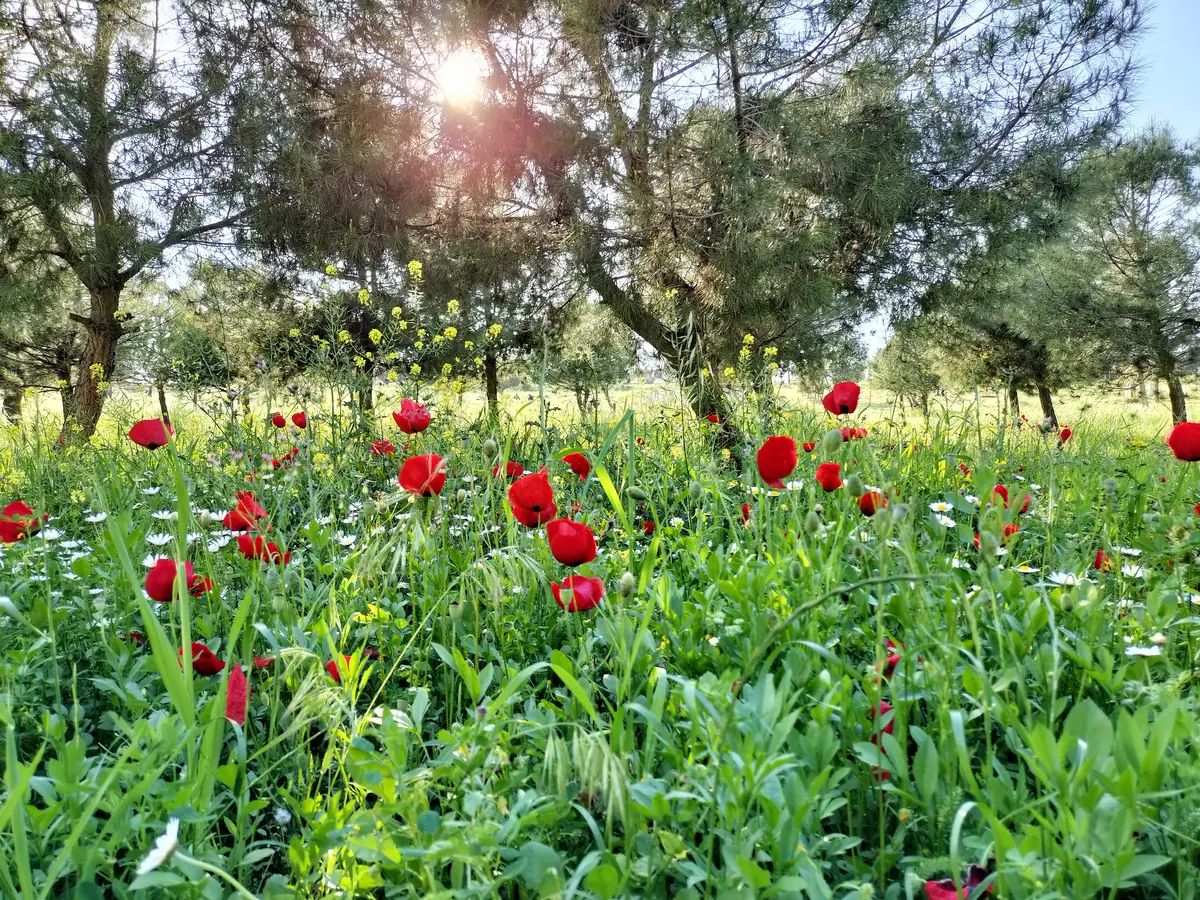
Aleppo, 2024-04-11 – Poppies in Aleppo, spring 2024
Aleppo · 2024Emir Ghazi · CC BY-SA 4.0 · Wikimedia Commons

Film · Vom Schmerz zur Hoffnung

Syrien: vom Schmerz zur Hoffnung

2 Min. · 78 echte Fotos · 7 Kapitel

Enthält echte Bilder von Zerstörung, Flucht und der Suche nach Vermissten. Keine Bilder von Toten oder Verletzten.

Rund 2 Minuten, 78 echte, frei lizenzierte Fotos in 7 Kapiteln; auf dem Handy läuft eine kürzere Fassung von etwa 2 Minuten. Jedes Foto trägt Ort und Jahr und ist mit Urheber angegeben. Musik ist optional.

♪ Musik: „Samaii Hijaz Kar Kurdi“ – Chahadé Saadé (Oud), Odeon, ca. 1926 · „Lamma Bada Yatathanna (muwashshah)“ – Shaykh Sayyid al-Safti (1875–1939) · gemeinfrei (Wikimedia Commons)

Belegte Zeitleiste 20

  1. Aufstand 2011

    Daraa: Kinder wegen Graffiti festgenommen, Proteste beginnen

    Laut Human Rights Watch brachen die Proteste in Daraa aus, nachdem Sicherheitskräfte 15 Kinder festgenommen und gefoltert hatten, denen regierungskritische Graffiti vorgeworfen wurden. Die Proteste begannen am 18. März 2011. HRW dokumentierte die Niederschlagung im Bericht „We've Never Seen Such Horror“ auf Grundlage von mehr als 50 Interviews.

    Daraa · Daraa
    Quellen
  2. Haft und Vermisste

    Die „Caesar“-Fotos

    Ein Militärdeserteur mit dem Decknamen „Caesar“ kopierte und schmuggelte 53.275 Fotos, aufgenommen zwischen Mai 2011 und August 2013. Human Rights Watch stellte im Bericht „If the Dead Could Speak“ (Dezember 2015) fest, dass die Bilder mindestens 6.786 Häftlinge zeigen, die in Haft oder nach Verlegung in ein Militärkrankenhaus starben, die meisten festgehalten von fünf Geheimdienstabteilungen in Damaskus. HRW wertete die Fotos als authentische Beweise für Verbrechen gegen die Menschlichkeit. (Die Bilder werden hier nicht gezeigt.)

    Damascus (government detention facilities) · Damaskus
    Quellen
  3. Krieg und Zerstörung

    Tötungen in Hula

    Am 25. Mai 2012 wurden nach UN-Angaben im Gebiet Hula 108 Menschen getötet, darunter 49 Kinder. Im August 2012 kam die UN-Untersuchungskommission zu dem Schluss, dass Regierungskräfte und Schabiha-Milizionäre für die Tötungen verantwortlich waren. Der UN-Menschenrechtsrat hatte die Tötungen im Juni 2012 auf einer Sondersitzung verurteilt.

    Houla (Taldou) · Homs
    Quellen
  4. Beschädigtes Kulturerbe

    Minarett der Großen Moschee von Aleppo zerstört

    Am 24. April 2013 stürzte das Minarett der Großen Moschee im Herzen der Altstadt von Aleppo während Gefechten ein; die UNESCO beklagte den Verlust am selben Tag, ohne Verantwortliche zu benennen. Die Verantwortung blieb umstritten: Syrische Staatsmedien beschuldigten die Nusra-Front, Oppositionsaktivisten machten Panzerbeschuss der Armee verantwortlich.

    Aleppo, Great (Umayyad) Mosque · Aleppo
    Quellen
  5. Belagerung, Hunger und Kälte

    Belagerung von Jarmuk: Hungertote

    Amnesty International berichtete im März 2014, dass syrische Regierungskräfte die Belagerung des Damaszener Viertels Jarmuk im Juli 2013 verschärft hatten. Von fast 200 seither erfassten Todesfällen führte Amnesty 128 auf Hunger zurück. Amnesty bewertete das Aushungern von Zivilisten als Kriegsverbrechen.

    Yarmouk (Palestinian refugee camp), Damascus · Damaskus
    Quellen
  6. Chemiewaffenangriffe

    Sarin-Angriff auf Ghuta

    In den frühen Morgenstunden des 21. August 2013 schlugen Boden-Boden-Raketen mit Sarin in oppositionell kontrollierten Gebieten der Ghuta bei Damaskus ein. Die UN-Untersuchungsmission unter Åke Sellström bestätigte im September 2013 den Einsatz chemischer Waffen gegen Zivilisten, auch Kinder, „in relativ großem Umfang“; die Benennung von Tätern gehörte nicht zu ihrem Mandat. Die UN-Untersuchungskommission erklärte im März 2014, die Täter hätten wahrscheinlich Zugang zu den Beständen des syrischen Militärs gehabt. Das SNHR zählt mindestens 1.144 Tote; andere Zählungen weichen ab.

    Eastern and Western Ghouta (Zamalka, Ein Tarma, Moadamiyah) · Rif Dimaschq
    Quellen
  7. Belagerung, Hunger und Kälte

    Belagerung und Rückeroberung Ost-Ghutas

    Die UN-Untersuchungskommission nannte die fünfjährige Belagerung Ost-Ghutas, die im April 2018 endete, „die längste Belagerung der modernen Geschichte“. In ihrem Bericht vom Juni 2018 stellte sie fest, dass regierungstreue Kräfte Zivilisten gezielt aushungerten, was ein Verbrechen gegen die Menschlichkeit darstelle, und dass bewaffnete Gruppen durch wahllosen Beschuss von Damaskus Kriegsverbrechen begingen. Nach der Rückeroberung am 14. April 2018 wurden rund 140.000 Menschen vertrieben; bis zu 50.000 wurden im Rahmen von Evakuierungsabkommen in die Gouvernements Idlib und Aleppo gebracht.

    Eastern Ghouta · Rif Dimaschq
    Quellen
  8. Beschädigtes Kulturerbe

    IS erobert Palmyra; Altertumswissenschaftler getötet

    Der IS nahm Palmyra im Mai 2015 den syrischen Regierungstruppen ab. Im August 2015 beklagte die UNESCO-Generaldirektorin die Tötung des 82-jährigen Khaled al-Asaad, der über 50 Jahre die Altertümer Palmyras betreut hatte und über einen Monat festgehalten worden war. Laut UNESCO wurde er getötet, weil er seinem Einsatz für Palmyra nicht untreu werden wollte.

    Palmyra (Tadmur) · Homs
    Quellen
  9. Vertreibung und Flucht

    Mehr als vier Millionen syrische Flüchtlinge

    Am 9. Juli 2015 meldete der UNHCR mehr als 4.013.000 syrische Flüchtlinge in den Nachbarländern, darunter rund 1,8 Millionen in der Türkei und 1,17 Millionen im Libanon, sowie mindestens 7,6 Millionen Binnenvertriebene in Syrien. Guterres sprach von der größten Flüchtlingsbevölkerung aus einem einzigen Konflikt seit einer Generation.

    Nachbarländer
    Quellen
  10. Belagerung, Hunger und Kälte

    Schlacht um Ost-Aleppo und Belagerung

    Die UN-Untersuchungskommission stellte fest, dass während der Schlacht um Ost-Aleppo (Juli–Dezember 2016) Zivilisten auf beiden Seiten Opfer von Kriegsverbrechen aller Parteien wurden. Regierungstreue Kräfte setzten Belagerungstaktiken ein; tägliche syrische und russische Luftangriffe zerstörten Krankenhäuser, Schulen und Märkte, und Ende Dezember gab es in Ost-Aleppo kein funktionierendes Krankenhaus mehr. Bewaffnete Gruppen beschossen West-Aleppo wahllos und hinderten Zivilisten an der Flucht.

    Eastern Aleppo · Aleppo
    Quellen
  11. Vertreibung und Flucht

    Evakuierung von Ost-Aleppo

    Zwischen dem 15. und 22. Dezember 2016 evakuierten das IKRK und der Syrisch-Arabische Rote Halbmond mehr als 35.000 Menschen aus Ost-Aleppo; zeitgleich verließen 1.200 Menschen die belagerten Orte Fua und Kafraja. Die UN-Untersuchungskommission bewertete das Evakuierungsabkommen später als erzwungene Vertreibung, da keine militärische Notwendigkeit bestand.

    Eastern Aleppo · Aleppo
    Quellen
  12. Haft und Vermisste

    Amnesty-Bericht zu Saidnaya: „Menschliches Schlachthaus“

    Am 7. Februar 2017 veröffentlichte Amnesty International den Bericht „Human slaughterhouse“. Darin schätzte die Organisation, dass zwischen September 2011 und Dezember 2015 im Militärgefängnis Saidnaya 5.000 bis 13.000 Menschen bei Massenhinrichtungen durch Erhängen getötet wurden; Grundlage waren Interviews mit 84 Personen, darunter frühere Wärter, Häftlinge und Beamte. Amnesty wertete Tötungen, Folter und Ausrottung dort als Verbrechen gegen die Menschlichkeit. Die syrische Regierung bestritt, Häftlinge getötet oder misshandelt zu haben.

    Saydnaya Military Prison · Rif Dimaschq
    Quellen
  13. Chemiewaffenangriffe

    Sarin-Angriff auf Chan Schaichun

    Am Morgen des 4. April 2017 wurde in Chan Schaichun Sarin freigesetzt. Die Fact-Finding-Mission der OVCW bestätigte am 30. Juni 2017 eine Sarin-Exposition, ohne Verantwortliche zu benennen. Der Gemeinsame Untersuchungsmechanismus von OVCW und UN (Bericht vom 26. Oktober 2017) und unabhängig davon die UN-Untersuchungskommission (6. September 2017) schrieben den Angriff der Syrischen Arabischen Republik bzw. syrischen Streitkräften zu. Die Kommission zählte mindestens 83 Tote, etwa ein Drittel Kinder; der JIM sprach von rund 100 Getöteten. Syrien bestritt die Verantwortung.

    Khan Shaykhun · Idlib
    Quellen
  14. Krieg und Zerstörung

    Schlacht um Rakka

    Zwischen dem 6. Juni und dem 17. Oktober 2017 kämpften die US-geführte Koalition und ihre lokalen Partner um die Vertreibung des IS aus Rakka. Amnesty International erklärte im Bericht „War of annihilation“ (Juni 2018), der wiederholte Einsatz explosiver Waffen in bewohnten Gebieten durch die Koalition habe Hunderte Zivilisten getötet und große Teile der Stadt zerstört; der IS habe Kriegsverbrechen begangen, etwa den Einsatz von Zivilisten als menschliche Schutzschilde.

    Raqqa · ar-Raqqa
    Quellen
  15. Krieg und Zerstörung

    UN-Schätzung: 306.887 getötete Zivilisten in zehn Jahren

    Am 28. Juni 2022 schätzte das UN-Menschenrechtsbüro (OHCHR), dass zwischen dem 1. März 2011 und dem 31. März 2021 306.887 Zivilisten durch konfliktbedingte Gewalt getötet wurden, rund 1,5 Prozent der Bevölkerung. 143.350 Todesfälle waren einzeln dokumentiert, die übrigen statistisch geschätzt. Todesfälle durch fehlenden Zugang zu Gesundheitsversorgung, Nahrung und Wasser sind nicht enthalten.

    Syrien (landesweit)
    Quellen
  16. Krieg und Zerstörung

    Erdbeben vom 6. Februar 2023

    In den frühen Morgenstunden des 6. Februar 2023 traf ein Erdbeben der Stärke 7,7 nahe der türkisch-syrischen Grenze, gefolgt von zahlreichen Nachbeben, ein vom Krieg bereits geschwächtes Land. Bis zum 12. Februar zählten die UN in Syrien 5.791 Tote und 10.041 Verletzte, davon 4.377 Tote im Nordwesten; 8,8 Millionen Menschen lebten in den am stärksten betroffenen Gebieten, vor allem in den Gouvernements Aleppo und Idlib.

    North-west and northern Syria · Aleppo
    Quellen
  17. 8. Dezember 2024

    Offensive aus dem Nordwesten: Aleppo, Hama, Homs

    Am 27. November 2024 begannen bewaffnete Oppositionsgruppen unter Führung von Hayat Tahrir al-Scham (HTS) eine Offensive im Nordwesten Syriens. Laut AP drangen sie am 29. November in Aleppo ein, erklärten am 30. November die Kontrolle über die Stadt, nahmen am 5. Dezember Hama und am 7. Dezember Homs ein, nachdem Regierungstruppen abgezogen waren. OCHA meldete am 5. Dezember mindestens 178.000 Vertriebene und mindestens 69 getötete Zivilisten; die Zahlen waren nicht verifiziert.

    Aleppo, Hama, Homs · Aleppo
    Quellen
  18. 8. Dezember 2024

    Sturz der Assad-Regierung

    Am 8. Dezember 2024 rückten Oppositionskräfte nahezu ohne Widerstand in Damaskus ein, und das syrische Staatsfernsehen verlas eine Erklärung, wonach Präsident Baschar al-Assad gestürzt sei. Assad verließ das Land; russische Staatsagenturen meldeten später, er und seine Familie seien in Moskau und hätten Asyl erhalten. UN-Generalsekretär Guterres erklärte, über die Zukunft Syriens hätten die Syrer zu entscheiden, und rief zu einem geordneten politischen Übergang auf.

    Damascus · Damaskus
    Quellen
  19. 8. Dezember 2024

    Gefängnistore geöffnet, Häftlinge aus Saidnaya befreit

    Am 8. Dezember 2024 wurden die Tore Dutzender Gefängnisse und Haftzentren geöffnet, darunter Saidnaya; Amnesty International berichtete von Hunderten Befreiten, unter ihnen Frauen und kleine Kinder. Bilder zeigten ausgemergelte Häftlinge. Das SNHR betonte später, dass nur eine begrenzte Zahl von Häftlingen lebend freikam, während Zehntausende weiterhin vermisst sind.

    Saydnaya Military Prison and other detention centres · Rif Dimaschq
    Quellen
  20. Rückkehr und Wiederaufbau

    Rückkehr: 1,63 Millionen Flüchtlinge und 1,89 Millionen Binnenvertriebene

    Bis Ende April 2026 zählte der UNHCR 1.630.874 seit dem 8. Dezember 2024 aus dem Ausland zurückgekehrte Syrer, vor allem aus der Region, sowie 1.890.390 zurückgekehrte Binnenvertriebene. Wohnraum und Eigentumsschäden, wenige Arbeitsplätze und Sicherheit seien zentrale Faktoren für die Rückkehrentscheidung; im März 2026 benötigten weiterhin 15,6 Millionen Menschen Hilfe. Das UNHCR-Datenportal nannte zum 9. Juli 2026 1.966.356 zurückgekehrte Binnenvertriebene und weist darauf hin, dass die Zahlen die Gesamtrückkehr unterschätzen könnten.

    Syrien (landesweit)
    Quellen

Archiv der syrischen Erinnerung 188

Echte Fotos mit freier Lizenz, jeweils mit Ort, Datum, Urheber, Quelle und Prüfstatus. Wo keine freie Lizenz existiert, verlinken wir auf die Quelle, statt zu kopieren.

Vorher / Nachher

Ziehen zum Vergleichen · Beide Fotos zeigen denselben Ort, aber nicht immer aus demselben Blickwinkel.

Aleppo, 2018-09-28 – أحد أسواق حلب القديمة وقد دُمر وأُحرق بالكامل جراء الحرب
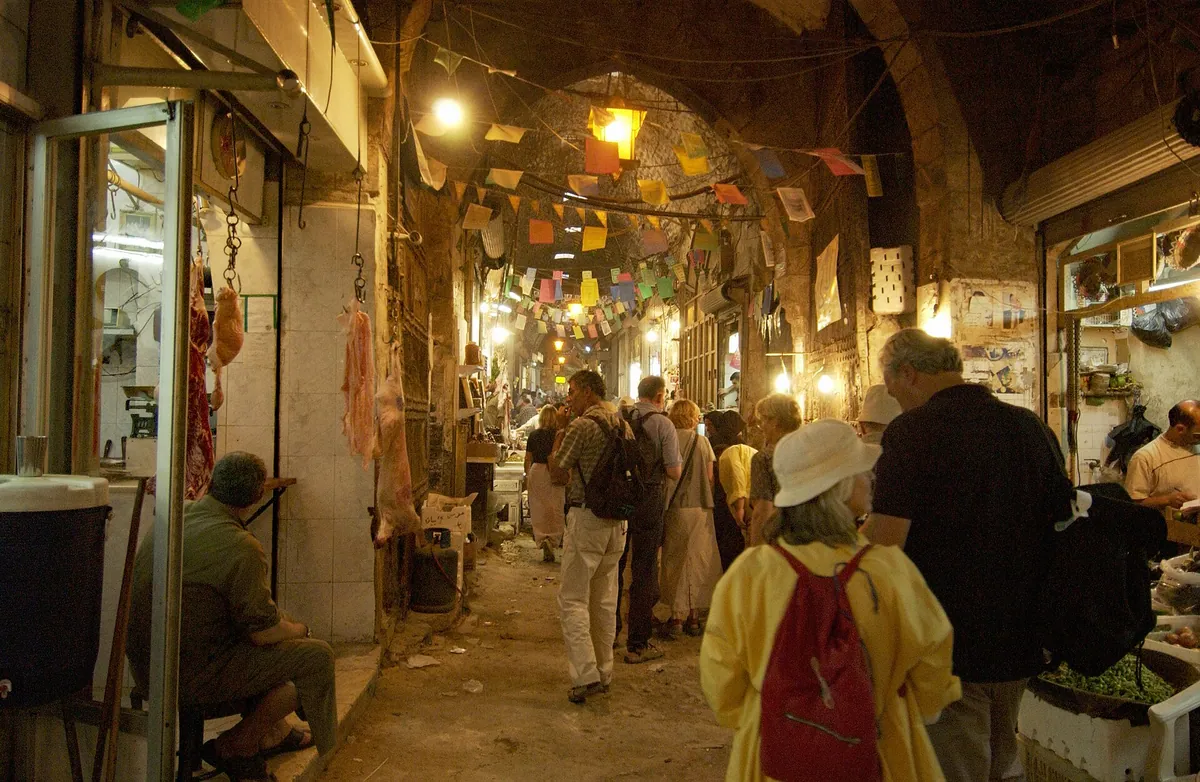
Aleppo, 2005-09-10 – Al-Madina Souq is located in Aleppo, Syria
Vorher 2005Nachher 2018
Aleppo · Vorher: Folkertherlyn · CC BY-SA 4.0 · Wikimedia Commons · Nachher: Hussam.shibli · CC BY-SA 4.0 · Wikimedia Commons
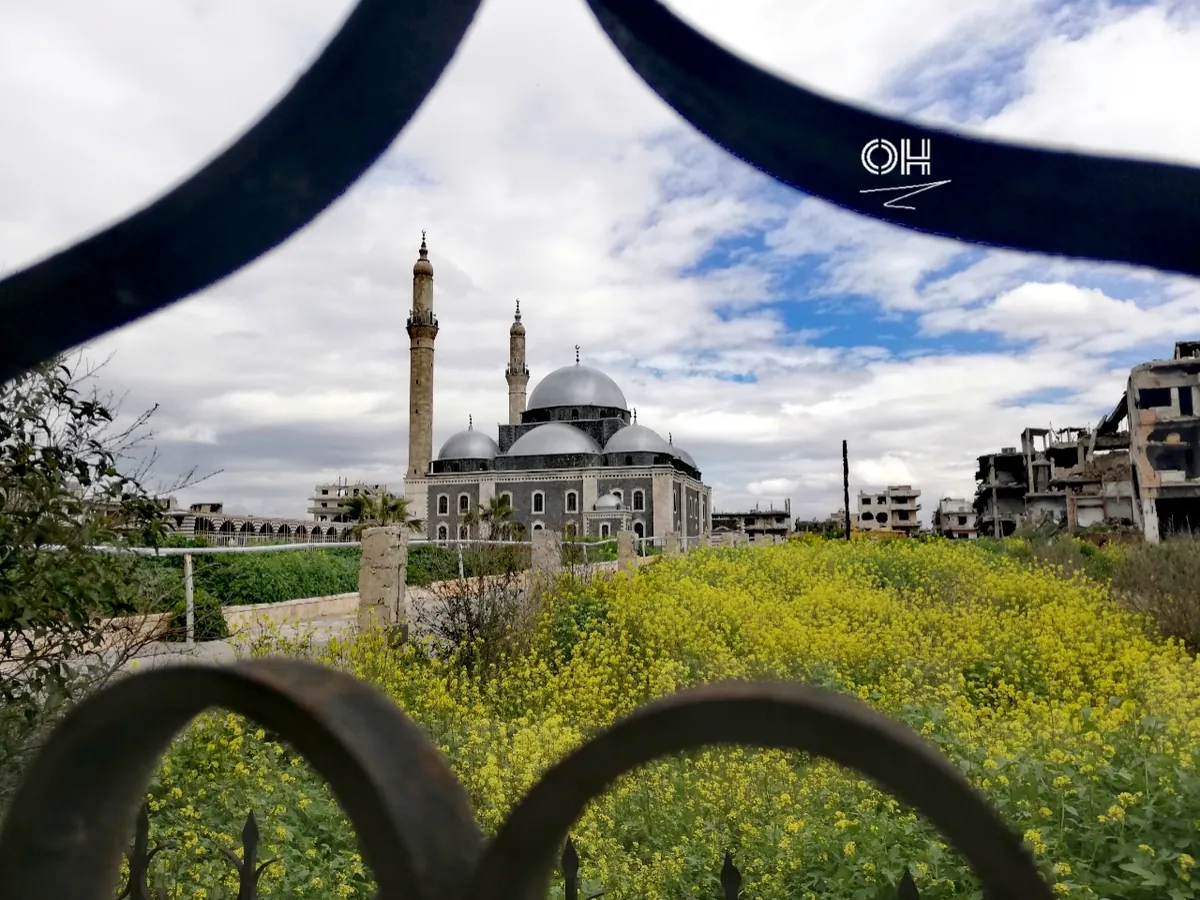
Homs, 2020-11-09 – Khalid ibn al-Walid Mosque | Homs city.
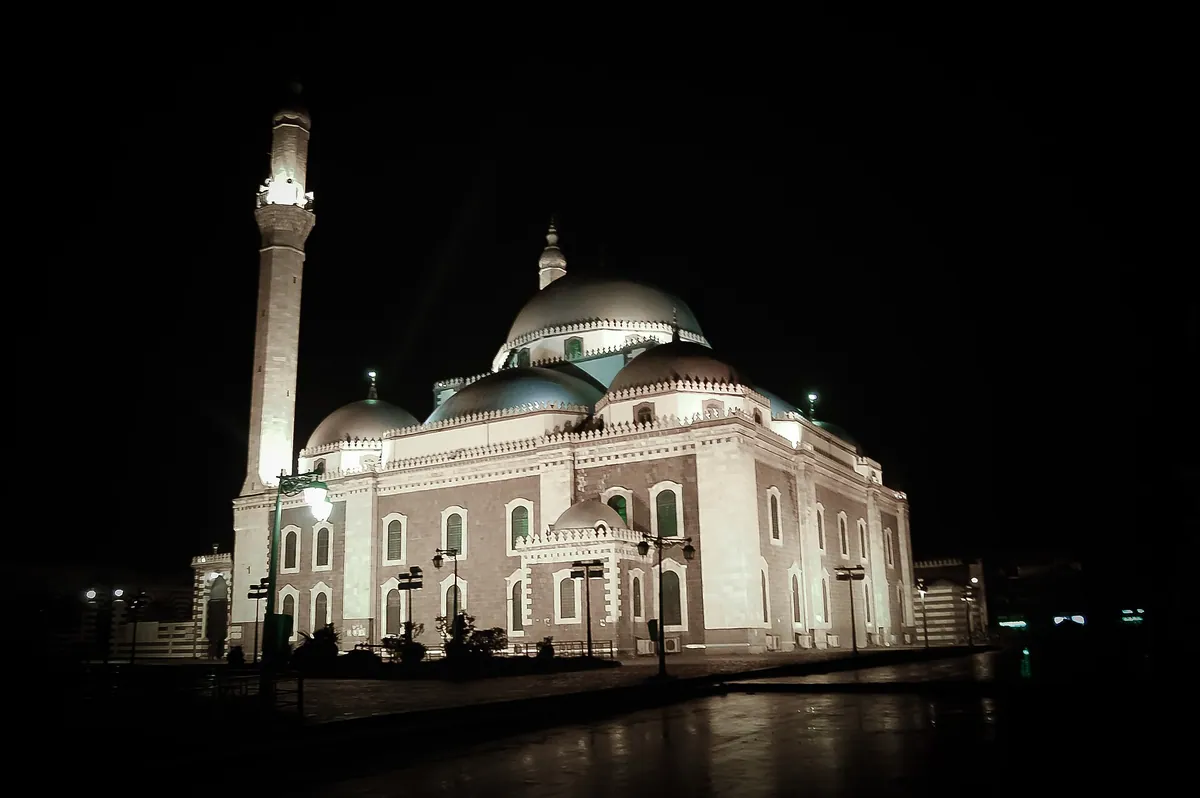
Homs, 2005-12-26 – Khalid ibn al-Walid mosque is located in the Khaldiya district of Homs , the third largest city in Syria . It is situated in a park alongsid
Vorher 2005Nachher 2020
Homs · Vorher: Abdulhadi Najjar · CC BY-SA 3.0 · Wikimedia Commons · Nachher: Oday Hassoun · CC BY-SA 4.0 · Wikimedia Commons
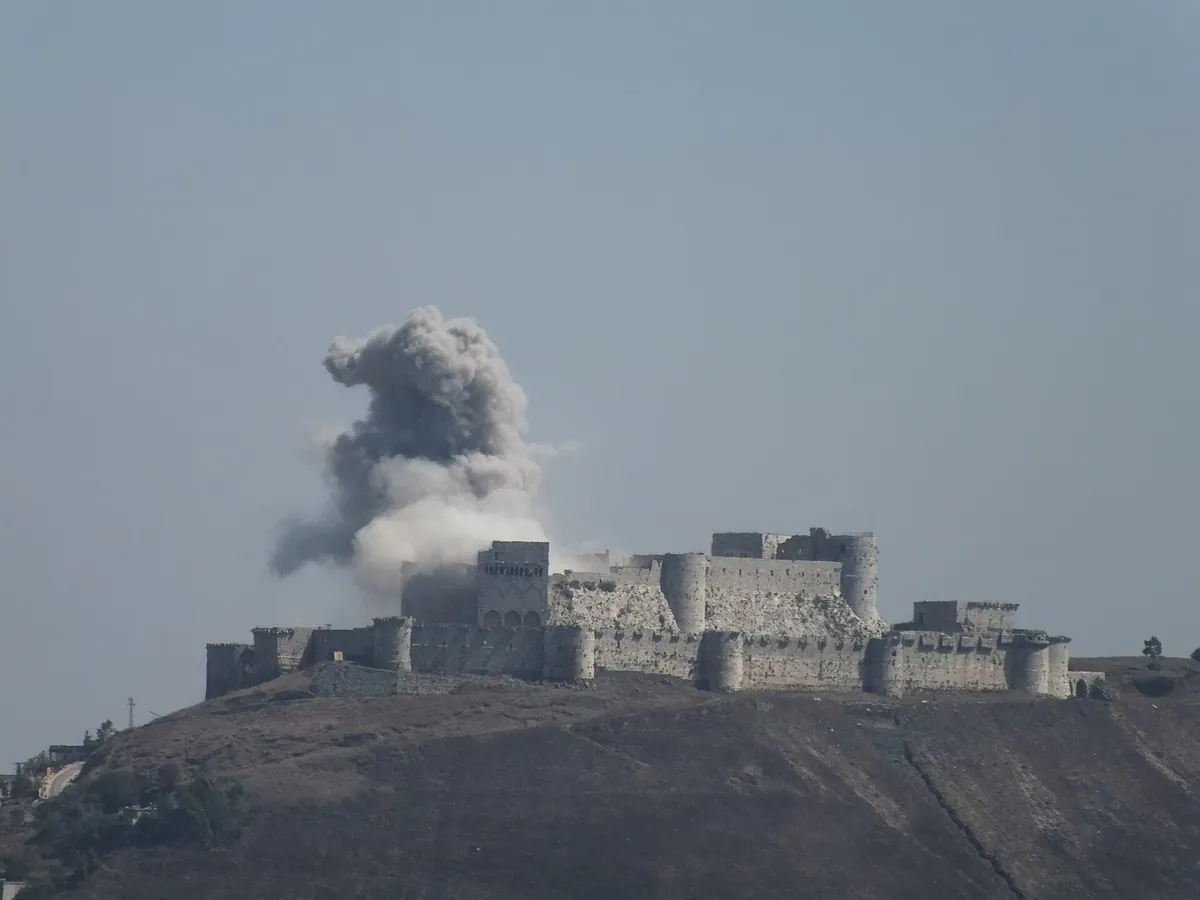
Krak des Chevaliers / al-Husn, 2013-08-18 – Smoke coming out from the castle
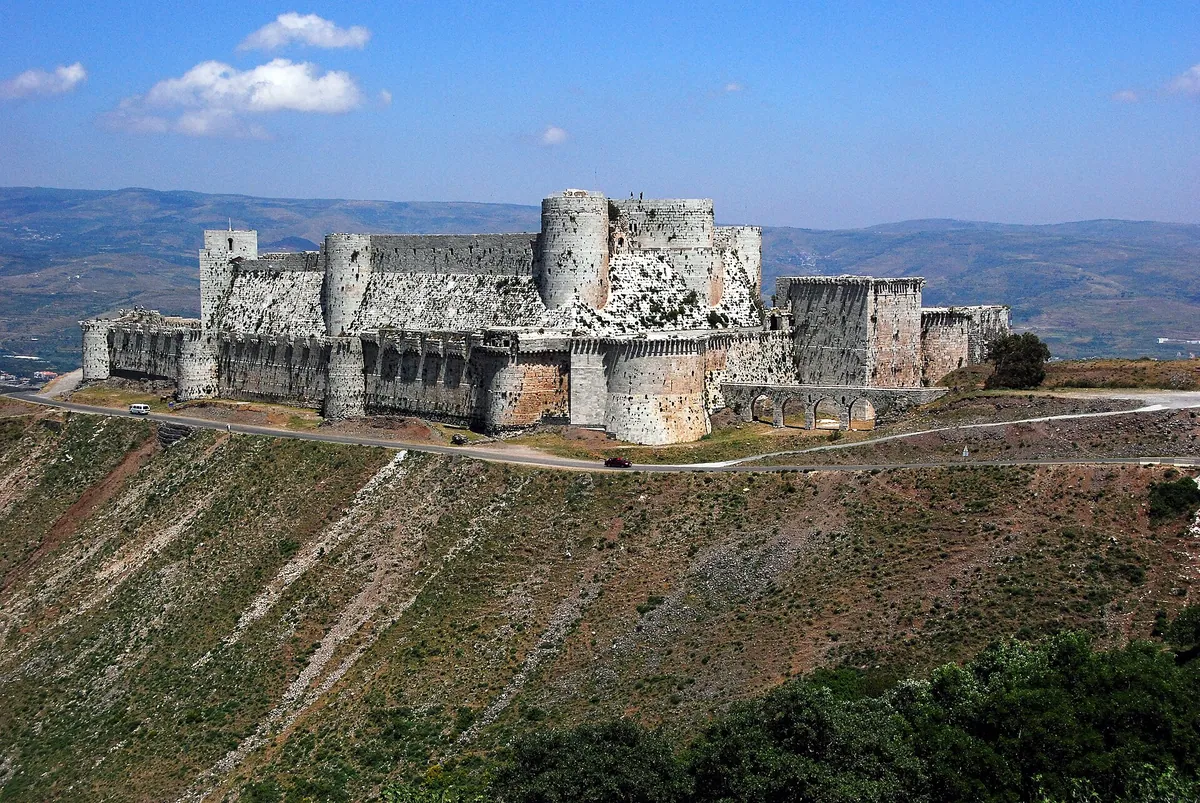
Krak des Chevaliers / al-Husn, 2008-05-05 – Krak des Chevaliers is a Crusader castle in Syria and one of the most important preserved medieval castles in the world. The site was first
Vorher 2008Nachher 2013
Krak des Chevaliers / al-Husn · Vorher: James Gordon from Los Angeles, California, USA · CC BY 2.0 · Wikimedia Commons · Nachher: Syria963 · CC BY-SA 3.0 · Wikimedia Commons
Aleppo, 2016-12-30 – Great Mosque of Aleppo in December 2016
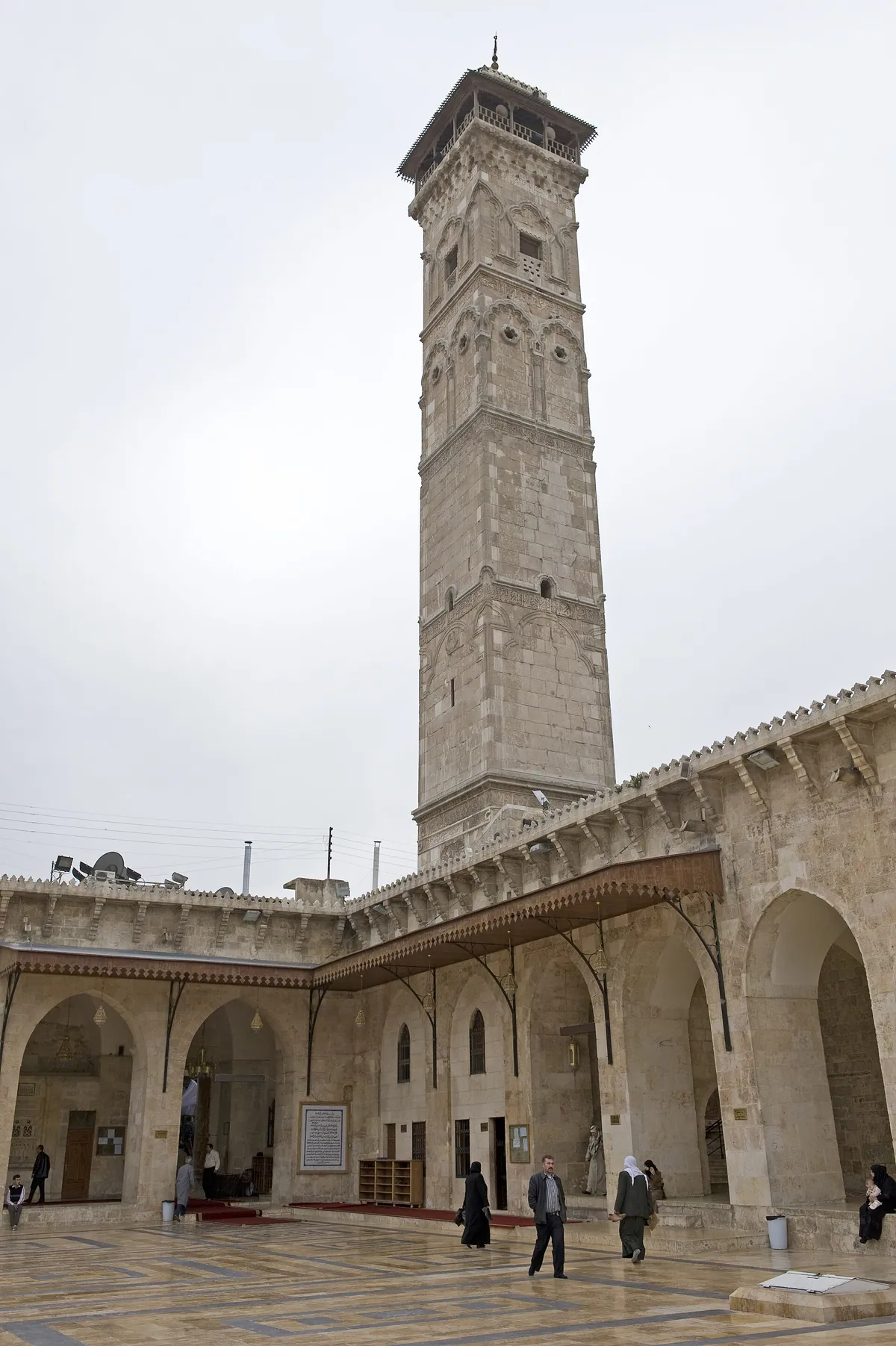
Aleppo, 2009-04-08 – One of pictures of the minaret from several spots, the name indicates roughly from where.
Vorher 2009Nachher 2016
Aleppo · Vorher: Dosseman · CC BY-SA 4.0 · Wikimedia Commons · Nachher: Fathi Nezam from Tasnim News Agency · CC BY 4.0 · Wikimedia Commons

Kriegsschäden und Wiederaufbau auf der Karte

Aleppo, old city souks · 44Palmyra (Tadmur) · 44Daraa · 22Houla (Taldou) · 1Yarmouk (Palestinian refugee camp), Damascus · 1Eastern and Western Ghouta (Zamalka, Ein Tarma, Moadamiyah) · 1Homs, Old City · 1Marea · 1Madaya · 1Kafr Zita (Wadi al-Aanz) · 1Ltamenah · 1Khan Shaykhun · 1Raqqa · 1Saraqib (eastern part) · 1Douma · 1Damascus · 1Saydnaya Military Prison and other detention centres · 1
  • Aufstand 2011
  • Krieg und Zerstörung
  • Beschädigtes Kulturerbe
  • Belagerung, Hunger und Kälte
  • Chemiewaffenangriffe
  • Vertreibung und Flucht
  • 8. Dezember 2024

Chemiewaffenangriffe

Belegte Vorfälle mit den Ergebnissen von UN und OVCW. Jeder Eintrag nennt die untersuchende Stelle und ihr Ergebnis.

  • 222 chemical attacks documented 23 Dec 2012 – 8 Dec 2024; 1,514 killed; 11,080 injured; 217 attributed by SNHR to Assad-government forces, 5 to ISIL (SNHR, 2026-08-21)
  • COI (Sept 2017) held the Syrian government responsible for at least 23 other chemical attacks since March 2013 (Al Jazeera 2017-09-06 reporting COI)

Ghouta, Damascus countryside: Ein Tarma and Zamalka (Eastern Ghouta), Moadamiyah (Western Ghouta)

sarin · surface-to-surface rockets

at least 1,144 killed (1,119 civilians incl. 99 children and 194 women; 25 fighters); about 5,935 injured (SNHR, 2026-08-21)

no casualty total given; mission confirmed use against civilians including children 'on a relatively large scale' (UN Mission (final report A/68/663–S/2013/735))

QuelleErgebnisVerantwortung zugeordnet durch
United Nations Mission to Investigate Allegations of the Use of Chemical Weapons in the Syrian Arab Republic (head: Åke Sellström)A/67/997–S/2013/553 · 2013-09-16Sarin found in impacted surface-to-surface rockets, environmental contamination and positive blood/urine samples; consistent epidemiology from >50 interviews.None – identifying perpetrators was not part of the mission's mandate.
United Nations Mission (as above)A/68/663–S/2013/735 · 2013-12-13Restates the Ghouta conclusion (paras 109–110).None (fact-finding mandate).
UN Independent International Commission of Inquiry on the Syrian Arab Republic (COI)2014-03-05Agents used in Ghouta and Khan al-Assal (19 March 2013) bore the same distinctive markers.No formal attribution; COI said the perpetrators 'likely had access to the chemical weapons stockpile of the Syrian military'.

Verantwortung zugeordnet durch: No UN or OPCW body has formally attributed this attack (status per sources opened 2026-10-30). The OPCW's attribution team (IIT) has not issued a report on Ghouta.

Other published tallies (e.g. governments, medical NGOs) differ widely; they were not verified in this run and are not reproduced.
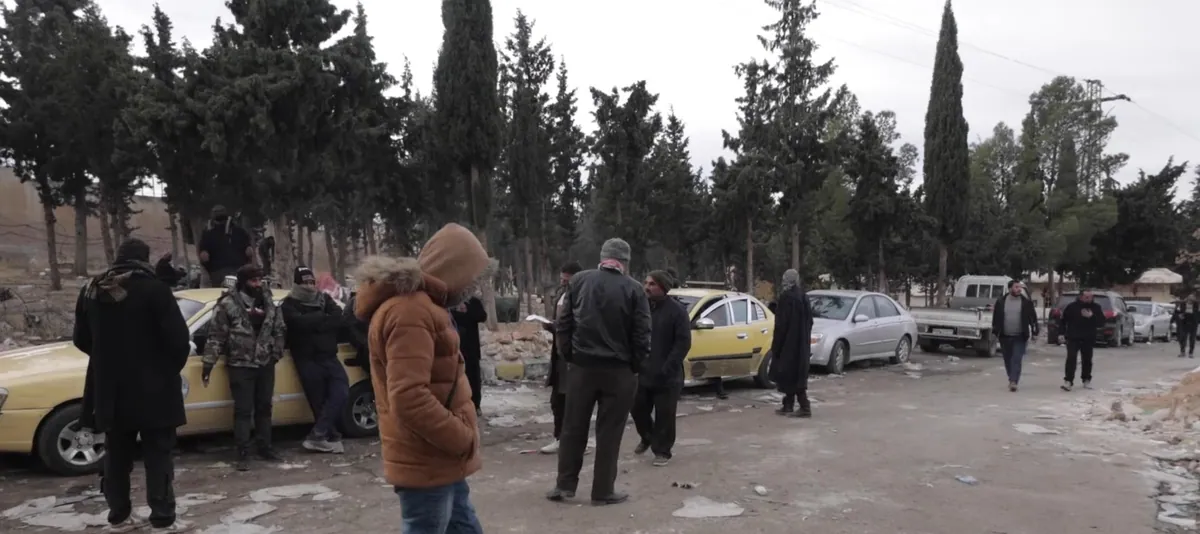
Marea

sulfur mustard · artillery shells modified to disperse a liquid payload

11 named individuals with symptoms consistent with sulfur-mustard exposure; no deaths reported (OPCW IIT 4th report)

QuelleErgebnisVerantwortung zugeordnet durch
OPCW Investigation and Identification Team (IIT)S/2255/2024 · 2024-02-22Sulfur mustard used during attacks aimed at capturing Marea.Reasonable grounds to believe that units of ISIL were the perpetrators; ISIL's Delegated Committee likely ordered the attack.

Verantwortung zugeordnet durch: ISIL (OPCW IIT, 2024).

Umm Hawsh

sulfur mustard · mortar shell (per JIM summary)

two women exposed (15 and 17 September 2016); no death toll given (UN Meetings Coverage SC/13060 (JIM))

QuelleErgebnisVerantwortung zugeordnet durch
OPCW-UN Joint Investigative Mechanism (JIM)S/2017/904 · 2017-10-26Sulfur mustard exposure confirmed.ISIL (Da'esh) held responsible.

Verantwortung zugeordnet durch: ISIL (OPCW-UN JIM, 2017). No town coordinates: Umm Hawsh not present in the OSM snapshot.

Kafr Zita (cave system in Wadi al-Aanz valley)

chlorine · yellow pressurised cylinder

35 named individuals injured, dozens more affected (OPCW IIT 5th report)

QuelleErgebnisVerantwortung zugeordnet durch
OPCW Investigation and Identification Team (IIT)S/2478/2026 · 2026-01-22Chlorine released when the cylinder ruptured.Reasonable grounds to believe that the Syrian Arab Air Forces were the perpetrators.

Verantwortung zugeordnet durch: Syrian Arab Air Forces (OPCW IIT, 2026). SNHR stresses this is not a judicial ruling.

Ltamenah

sarin · M4000 aerial bomb dropped by an Su-22 aircraft (departed Shayrat airbase)

at least 16 affected (OPCW IIT Coordinator's remarks, 2020-04-08)

QuelleErgebnisVerantwortung zugeordnet durch
OPCW Investigation and Identification Team (IIT)S/1867/2020 · 2020-04-08Use of sarin as a chemical weapon.Reasonable grounds to believe: 50th Brigade of the 22nd Air Division, Syrian Arab Air Force.

Verantwortung zugeordnet durch: 50th Brigade of the 22nd Air Division, Syrian Arab Air Force (OPCW IIT, 2020).

Ltamenah (hospital)

chlorine · cylinder dropped by a helicopter onto the Ltamenah hospital (departed Hama airbase)

at least 30 affected (OPCW IIT Coordinator's remarks, 2020-04-08)

QuelleErgebnisVerantwortung zugeordnet durch
OPCW Investigation and Identification Team (IIT)S/1867/2020 · 2020-04-08Use of chlorine as a chemical weapon.Reasonable grounds to believe: Syrian Arab Air Force.

Verantwortung zugeordnet durch: Syrian Arab Air Force (OPCW IIT, 2020).

Ltamenah

sarin · M4000 aerial bomb dropped by an Su-22 aircraft (departed Shayrat airbase)

at least 60 affected (OPCW IIT Coordinator's remarks, 2020-04-08)

QuelleErgebnisVerantwortung zugeordnet durch
OPCW Investigation and Identification Team (IIT)S/1867/2020 · 2020-04-08Use of sarin as a chemical weapon.Reasonable grounds to believe: 50th Brigade of the 22nd Air Division, Syrian Arab Air Force.

Verantwortung zugeordnet durch: 50th Brigade of the 22nd Air Division, Syrian Arab Air Force (OPCW IIT, 2020).

Khan Shaykhun

sarin · aerial bomb (COI: dropped by an Su-22, an aircraft only the Syrian air force operates)

at least 83 killed (about one third children), nearly 300 wounded (UN COI, 2017-09-06 (via Al Jazeera))

around 100 killed, about 200 affected (OPCW-UN JIM (UN Meetings Coverage SC/13060))

at least 87 killed (other sources) (Al Jazeera 2017-09-06, unnamed 'other sources')

QuelleErgebnisVerantwortung zugeordnet durch
OPCW Fact-Finding Mission in Syria (FFM)S/1510/2017 · 2017-06-30People were exposed to sarin.None – FFM mandate excludes attribution.
UN Independent International Commission of Inquiry on the Syrian Arab Republic (COI)2017-09-06Reasonable grounds to believe Syrian forces dropped an aerial bomb dispersing sarin; no evidence for the claim that an opposition depot was hit.Syrian forces.
OPCW-UN Joint Investigative Mechanism (JIM)S/2017/904 · 2017-10-26Sarin from a precursor very likely from Syria's original stockpile; crater most likely from an aerial bomb; no evidence of staging.The Syrian Arab Republic (no individual actors identified).

Verantwortung zugeordnet durch: Syrian Arab Republic (JIM 2017); Syrian forces (COI 2017). Syria denied responsibility.

Saraqib (eastern part)

chlorine · at least one cylinder dropped by a military helicopter

12 named individuals affected (OPCW IIT 2nd report)

QuelleErgebnisVerantwortung zugeordnet durch
OPCW Investigation and Identification Team (IIT)S/1943/2021 · 2021-04-12Chlorine released from a ruptured cylinder.Reasonable grounds to believe: a helicopter of the Syrian Arab Air Force under the control of the Tiger Forces.

Verantwortung zugeordnet durch: Syrian Arab Air Force / Tiger Forces (OPCW IIT, 2021).

Douma

chlorine · two yellow cylinders

43 named individuals killed, dozens more affected (OPCW IIT 3rd report)

more than 40 killed (medical workers at the time) (AP, 2019-03-01)

QuelleErgebnisVerantwortung zugeordnet durch
OPCW Fact-Finding Mission in Syria (FFM)S/1731/2019 · 2019-03-01Reasonable grounds that a toxic chemical containing reactive chlorine (likely molecular chlorine) was used as a weapon.None – FFM mandate excludes attribution.
OPCW Investigation and Identification Team (IIT)S/2125/2023 · 2023-01-27Toxic chlorine released from two cylinders.Reasonable grounds to believe that the Syrian Arab Air Forces were the perpetrators; at least one helicopter of the Tiger Forces Elite Unit dropped the cylinders.

Verantwortung zugeordnet durch: Syrian Arab Air Forces / Tiger Forces (OPCW IIT, 2023). Syria and Russia rejected responsibility.

Haft und Verschwundene

Dieser Abschnitt beschreibt Folter und Todesfälle in Haft. Er enthält keine drastischen Bilder. Fortfahren?

Geschichten aus Syrien

Veröffentlichte Berichte, in denen Überlebende und Angehörige zu Wort kommen – mit Link zum Original. Persönliche Geschichten nehmen wir erst nach Prüfung und mit Einwilligung auf.

Der Wiederaufbau ist ein fortlaufender Prozess; für viele Syrerinnen und Syrer ist das Leid nicht vorbei.

Deine Meinung zählt

Vorschläge, Beschwerden & Meinung

Hast du eine Idee, eine Beschwerde oder einen Fehler gefunden? Schreib uns – die Nachricht geht direkt an den Betreiber der Seite.

Worum geht es?